The Dabbāgh Family of Morocco: Twelve Centuries of Sharīfian Authority
The Dabbagh family lived and moved within a political order that the books of history know by a name no other Islamic state carried: the Sharifian Empire. Morocco's sovereignty after the Saʿdian consolidation was genealogical in its foundations. The sultan commanded because he descended from the Prophet ﷺ — and that same logic that elevated the sultan elevated every documented sharīfian family around him, positioning them within the only bloodline from which legitimate authority could flow.
This made ʿilm al-ansāb — the science of genealogy — a science with consequences. The shurafāʾ occupied a legally distinct category in the Sharifian Empire: exempt from certain taxes, eligible for royal stipends, protected by the niqāba, and situated within a lineage that the state's own legitimating ideology declared sacred. Their presence saturated the cities, the zawiyas, the mountains, and the shrines of Morocco in a density unmatched by any other Islamic polity. Lévi-Provençal observed that no country in the Islamic world equaled Morocco in the number of saints, righteous men, shurafāʾ, and those who gathered around them across every level of urban and rural society. That density was Morocco's distinction — and its permanent administrative challenge.
Ibn Khaldūn had seen the mechanism clearly: when sovereignty rests on genealogy, every genealogy connected to that claim becomes a site of contest. Morocco converted his observation into permanent institutional reality. The mutasharrifūn — those who claimed sharīfian descent without documentation sufficient to satisfy the genealogists — were a recognized social problem by the Marinids period, and had become by the early ʿAlawī centuries what the historian Muḥammad al-ʿImrānī describes as a chronic social affliction: forged certificates, fabricated chains, entire families absorbing a sharīfian nisba through proximity, marriage, or invention. Sultans from Mawlāy Ismāʿīl to Sīdī Muḥammad ibn ʿAbd Allāh to Mawlāy Sulaymān launched successive campaigns of genealogical verification, deploying the niqāba as an instrument of state control. Fez was the epicenter — the city where the shurafāʾ were most concentrated, documentation most contested, and the stakes of recognition most immediate. The Rif and Ghumāra mountains carried their own intensity: regions where Idrisid baraka had settled earliest and deepest, where sharīfian claims were woven into the fabric of local authority, and where the distance from the royal court made verification both more necessary and more difficult.
Against this landscape the Dabbagh position stands out. In an empire where sharīfian identity was simultaneously the highest social currency and the most frequently counterfeited, the Dabbaghs were never contested. Their nasab — Ḥasanī, Idrisid, traced through al-Mustanṣir billāh ʿĪsā ibn Idrīs II — was documented from Ibn al-Sakkāk (d. 818/1415) onward, confirmed by the unanimous consensus of the nassābūn across generations, and ratified in 1140/1727 by a certificate bearing eighty scholarly signatures under the hand of Shaykh al-Jamāʿa ʿAbd al-Qādir al-Fāsī. Al-Shaybānī called their chain silsilat al-dhahab — the golden chain — because it had never been broken, never disputed, never in need of repair.

“The Dabbagh sharifs bear the title “the Golden Chain” (silsilat al-dhahab), for their noble lineage stands confirmed by the unanimous consensus of the genealogists, transmitted through tawātur.”
That recognition was not a product of the Sharifian Empire — it predated it by centuries. Before the Saʿdian state reordered Morocco around sharīfian sovereignty, before the Jazūlī movement turned prophetic descent into mass devotional currency, the Dabbaghs had already established themselves at the summit of Islamic civilization in two distinct geographies. In 8th/14th-century Granada, Abū al-Qāsim al-Sharīf al-Gharnāṭī served as chief judge under the Nasrid sultans, taught Ibn Khaldūn and Ibn al-Khaṭīb, and earned from Ibn Zamrak — the poet whose verses were carved into the walls of the Alhambra — an elegy that addressed him as inheritor of prophetic lineage, uniting in himself knowledge, noble character, and noble blood, a son of the Messenger by whom one reaches the very summit of ascent. Centuries later, when Abū Fāris ʿAbd al-ʿAzīz ibn Masʿūd al-Dabbāgh (d. 1131/1719) received his fatḥ and Ibn al-Mubārak recorded it in Al-Ibrīz, the family behind that revelation had been confirmed by scholars, sultans, and the literary elite of two civilizations. Al-Ibrīz added a new dimension — the unseen ratifying what the seen had already established — but the foundation was already there.
A century after Al-Ibrīz, the family's self-understanding crystallized in a third register — no longer scholarly acclaim, no longer mystical fatḥ, but direct prophetic address. In the 13th/19th century, the scholar and mystic Muḥammad ibn ʿAbd al-Ḥadīdh al-Dabbāgh (d. 1291/1874), known as Abū Ṭarbūsh, encountered his Ancestor the Prophet ﷺ in daylight near Wādī al-Shurafāʾ in Fez — the valley whose very name mapped the city's sharīfian geography. As recorded by ʿAbd al-Ḥayy al-Kattānī in al-Maẓāhir al-Samiyya, the Holy Prophet ﷺ led him to Rāʾs al-Jinān — the Gate of Gardens — where they found a great quantity of the finest white flour. Asked his opinion of its quality, Abū Ṭarbūsh confirmed it was of the purest kind. The Prophet ﷺ then declared that the Dabbaghs were the best of his progeny. The white flour was a language any Fāsī scholar would read without difficulty: nasab without admixture, genealogy untouched by the mutasharrifūn. The Dabbaghs had been confirmed by the nassābūn, illuminated by kashf, and now ratified by the Prophet ﷺ himself — in broad daylight, in the full wakefulness that Sufi epistemology reserved for the highest grade of prophetic encounter. Three stages, three centuries, one unbroken claim.
This study traces how that foundation was constructed, layer by layer, across twelve centuries: through genealogical documentation that transformed nasab from claim into scholarly consensus, through economic endowments that freed the family from dependence on any single patron, through spatial concentration in Fez's sharīfian quarters and custodianship of its sacred sites, through simultaneous positioning across multiple institutional domains, and through the continuous production of recognized saints that demonstrated inherited charisma as renewable across generations. The account proceeds chronologically, from the Idrisid origins of al-Mustanṣir through the Andalusian centuries to the return to Morocco and the family's contemporary dispersal across Morocco and the Arabian Peninsula.
1. The Genealogical Foundation: From al-Mustanṣir to Sabta
The shurafāʾ of Morocco trace their authority to a single Quranic command: qul lā asʾalukum ʿalayhi ajran illā al-mawaddata fī l-qurbā — "Say: I ask of you no reward for this except love for my kin" (42:23). That verse established the theological foundation on which prophetic descent would operate across Islamic history — not merely as social distinction but as a claim on the hearts of believers, binding the community to the Prophet's ﷺ family by divine instruction. In Morocco more than anywhere else in the Islamic world, that binding became constitutional. The shurafāʾ were Morocco's permanent sacred class, and the Dabbaghs belonged to them by a lineage that no genealogist ever contested.
That lineage reached Morocco through flight. In 169/786, following the failed Ḥasanid uprising at Fakhkh near Mecca — in which the ʿAbbāsids crushed a revolt by the Prophet's ﷺ descendants — Idrīs ibn ʿAbd Allāh escaped westward across North Africa, finding refuge among the Awraba Amazigh tribes of the northern Maghrib. He founded the first independent Islamic state in Morocco and began building Fez before ʿAbbāsid agents poisoned him in 177/793. His son Idrīs II, born after his father's death and raised by his mother Kanza bint Isḥāq and the guardian Rāshid, completed Fez and consolidated Idrisid authority. In 192/808 he built al-ʿĀliyya on the western bank of Wādī al-Jawāhir, creating the twin-city structure that would make Fez the intellectual capital of the western Islamic world. When he too was assassinated in 213/828 — again by ʿAbbāsid poison — he left behind twelve sons and a state that had to survive without a center.
Kanza bint Isḥāq understood the lesson her husband's death had taught. Concentration had made the Idrisids vulnerable; dispersion would make them durable. She implemented a territorial distribution assigning each son a distinct region of Morocco, transforming the dynasty from a centralized state into a federated network of shurafāʾ governing the land their grandfather had brought into Islam. Al-Qāsim, the eldest, received Tangier and the northern coast — control over the strategic maritime passage between Morocco and al-Andalus. Muḥammad received Fez itself, the administrative and symbolic center, with nominal seniority over his brothers. And al-Mustanṣir ʿĪsā — the Dabbaghs' ancestor — received Tadla, Tamesna, Salé, and the territories extending toward Zāgora in the south.
Al-Mustanṣir was no subordinate amir waiting on instructions from Fez. His territories gave him direct control over the silver mines of Jabal ʿAwwām in the region of Khénifra — the raw material from which Idrisid coinage was struck. He administered justice, commanded military forces, and exercised full sovereign powers across his domains. The coins he struck at the Wazzaqur mint in 225/840 bore his name and his title: al-Mustanṣir billāh — a caliphal-register claim, reaching beyond the merely amirial into the register of independent Islamic sovereignty. The shurafāʾ of his branch were not provincial administrators; they were rulers.
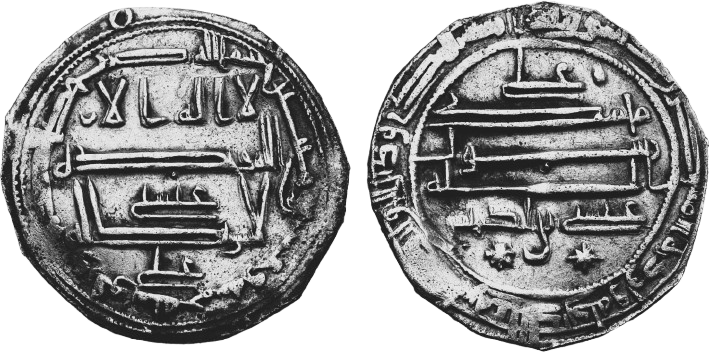
The Dirham of ʿĪsā al-Anwar — Sovereign Coinage of the Dabbāgh Ancestor
The coin is numismatic proof of ʿĪsā's full sovereign authority — his right to strike currency independently of the center in Fez, the act that triggered the military confrontation at Wādī al-ʿAbīd. Wazzaqur Mint, 225H/840CE.
When Muḥammad al-Khalīfa in Fez moved to centralize minting rights and assert nominal authority over his siblings, al-Mustanṣir refused to surrender what was his by right of the same Idrisid blood and the same maternal dispensation that had given Muḥammad Fez in the first place. The confrontation that followed was not al-Mustanṣir marching on Fez — it was Fez marching on him. Wādī al-ʿAbīd runs through the heart of Tadla, ʿal-Mustanṣir's own territory. The battle was fought on his ground, which means the army that crossed into it came from the center, not from the periphery. The sources record this as al-Mustanṣir's defeat — but those sources were written in the shadow of Fez's primacy, by scholars whose patronage depended on the city that Muḥammad's branch had held. What they frame as a rebellious amir brought to heel was a sovereign prince defending his territory against an invasion dressed up as administrative correction.
Al-Mustanṣir withdrew into the fortified interior rather than surrender — not because he was broken, but because the interior was his, and he knew it. He preserved his administration, his legitimacy, and his coins. The event that vindicated him came without his intervention. When Muḥammad and his brother ʿUmar were both assassinated in 221/836, al-Mustanṣir re-emerged, restored his emirate across Tadla and Tamesna, and expanded southward into the Sūs and the Atlas. The numismatic record does not lie the way chronicles can: between 266/880 and 279/893, descendants of al-Mustanṣir controlled Fez itself — coins struck in the city bearing names from his branch document the moment when the lineage of the prince Fez had tried to subordinate returned to govern the capital his grandfather had built.
From ʿĪsā al-Anwar descended numerous Idrisid lineages — the Manālis, the Buzidis, the ʿAmmuris, and others — all sharing the same Ḥasanī nasab, all belonging to the shurafāʾ of Morocco by birth. What would distinguish the Dabbagh branch from these related families was not descent itself, which was widely shared, but what the family built upon it across centuries: scholarly achievement accumulated generation by generation, mystical authority recognized by the tradition's most rigorous criteria, royal patronage secured and maintained across dynastic transitions, and institutional positioning that placed family members simultaneously across every domain that Moroccan Islamic civilization valued.
The collapse of centralized Idrisid authority in the late 3rd/9th and early 4th/10th centuries — pressed from the east by the Fatimids advancing across North Africa and from the north by the Umayyads of Córdoba extending their influence into Morocco — ended the Idrisid political project as a unified state. Other branches of the shurafāʾ responded with political ambition: descendants of ʿUmar ibn Idrīs crossed into al-Andalus and founded the Hammudid dynasty, pressing a direct caliphal claim against the Umayyads. The ancestors of the Dabbaghs made a different choice. They moved north toward the Rif and settled in Sabta — the fortified port commanding the southern shore of the Strait of Gibraltar — and rebuilt through scholarship rather than arms.
Sabta in this period was the last organized Idrisid stronghold, a city where shurafāʾ communities maintained genealogical consciousness through intermarriage, where proximity to the major scholarly centers of Tanja and the northern coast preserved the family's connection to Islamic learning, and where the Strait itself offered the possibility of crossing into al-Andalus when the moment came. The Dabbaghs did not reach Granada by accident. They positioned themselves, over generations, at the one place in the Maghrib from which that crossing was possible — and waited.
2. The Andalusian Period: Scholarship and Service in Granada
The shurafāʾ of the Dabbagh line did not cross into al-Andalus as refugees. They crossed as men whose company was sought. In 479/1086, Yūsuf ibn Tāshfīn — sovereign of an empire stretching from the Sahara to Zaragoza, commander of the most powerful army in the western Islamic world — prepared to cross the Strait and wage jihad against the Christian kingdoms pressing southward across Iberia. The sources specify his intention regarding the Dabbagh sharīf who accompanied him: bi-qaṣd al-tabarruk bihi — for the blessing of his proximity. That the Almoravids, at the height of their religious severity, would place a sharīf of this family at the head of their crossing is itself a document. Ibn Tāshfīn understood that sovereignty required more than military force — it required the baraka of prophetic descent flowing through the army. The sharīf he chose was Abū al-Ḥasan ʿAlī ibn ʿAbd al-Raḥmān ibn ʿĪsā ibn Aḥmad ibn Muḥammad ibn ʿĪsā ibn Idrīs — the one the sources call al-Dākhil, the one who entered, whose title commemorated the crossing and marked him as the ancestor of the family's entire Andalusian chapter.
Following the Almoravid campaigns, Abū al-Ḥasan ʿAlī settled in Granada. The family came not as displaced Maghribis seeking shelter but as shurafāʾ whose genealogical distinction placed them immediately within Granada's elite. Over the generations that followed, the family accumulated the scholarly credentials that would transform their nasab from social asset into institutional authority. The pattern was consistent and deliberate: use sharīfian standing to access the highest educational circles, then demonstrate competence sufficient to justify authority on grounds beyond bloodline alone. The names that accumulated in the family's lineage during the Nasrid period — Mindīl, ʿAllūsh, Kannūn — bear the marks of deep Amazigh-Andalusian integration, sociological evidence of a family that had woven itself into the fabric of Granada's civilization across two centuries before it produced its greatest figure.
“Their ancestor, the Sayyid ʿAlī ibn ʿAbd al-Raḥmān ibn ʿĪsā ibn Aḥmad ibn Muḥammad ibn ʿĪsā ibn Idrī, settled in Granada during the reign of Yūsuf ibn Tāshfīn al-Lamtūnī.”
Abū al-Qāsim Muḥammad ibn Aḥmad al-Sharīf al-Gharnāṭī was born in Sabta in 695/1296, in the reign of the Marinid sultan Abū Yaʿqūb Yūsuf al-Nāṣir. Sabta in this period was among the most active intellectual entrepôts of the western Islamic world — a city that had produced al-Qāḍī ʿIyāḍ, sheltered Andalusian scholars displaced by the Reconquista, and maintained dense networks of legal, literary, and Sufi learning connecting the Maghrib to al-Andalus. Abū al-Qāsim received his formation there, studying under his father Abū al-ʿAbbās Aḥmad ibn ʿAlī — a man of Quranic learning — and then under the leading scholars of the city: Muḥammad ibn ʿAlī al-Lakhmi al-Qurṭubī in the sciences of Arabic and ḥadīth, Muḥammad ibn Ḥurayth al-Balansī in language and rhetoric, the Qāḍī Ibrāhīm al-Ghāfiqī al-Ishbīlī in grammar, and Muḥammad ibn Rushd al-Fihrī — the traveler and muḥaddith whose Milʾ al-ʿAyba documented his own extensive scholarly journeys. The formation was rigorous and multi-disciplinary, covering grammar, Quranic sciences, prosody, jurisprudence, and the literary arts — the full curriculum of a scholar destined for the highest offices.
His crossing to al-Andalus was conscious repositioning. Sabta's scholarly environment, for all its density, was also competitive in ways that chafed. Abū al-Qāsim said so himself, in verses that remain among the most direct self-portraits in medieval Andalusian poetry:
إِنِّي بِأَنْدَلُسٍ آوِي إِلَى كِنَفِ * لِلْمَجْدِ رَحْبٍ وَظِلٍّ لِلْعُلَا عَمَمِ
In al-Andalus I shelter in a wing spacious for glory,
its shade spreading wide over eminence
وَإِنَّ غَرْنَاطَةَ الْغَرَّا حَلَلْتُ بِهَا * فَصِرْتُ مِنْ رَيْبِ هَذَا الدَّهْرِ فِي حَرَمِ
In splendid Granada I have settled,
and found myself in sanctuary from the vicissitudes of time
لَيْسَتْ كَأُخْرَى خَلَا رَبْعٌ بِهَا وَجَفَا * رَهْطٌ وَأُخْفِرَ مَا لِلْمَجْدِ مِنْ ذِمَمِ
Not like another place where dwellings emptied,
tribes grew distant, and glory's covenant was betrayed
وَأَنْكَرَتْنِي مَغَانِيهَا وَمَا عُرِفْتُ * إِلَّا بِقَوْمِيَ فِي أَيَّامِنَا الْقَدَمِ
Its haunts denied me, though I was known
only through my people in former days
لَوْلَا مَضَارِبُ مِنْ آلِ النَّبِيِّ بِهَا * وَهُنَّ مَا هُنَّ مِنْ طِيبٍ وَمِنْ كَرَمِ
Were it not for the tents of the Prophet's Family there
and what they are in fragrance and in generosity
وَفِتْيَةٌ مِنْ بَنِي الزَّهْرَاءِ قَدْ كَرَمُوا * لَهُمْ أَوَامِرُ مِنْ وُدٍّ وَمِنْ رَحِمِ
And youths from the descendants of al-Zahrāʾ,
noble souls, commanding loyalty and mercy
لَقُلْتُ لَا جَادَهَا صَوْبُ الْحَيَا * أَبَدًا إِلَّا بِنَاقِعِ سُمٍّ أَوْ عَبِيطِ دَمِ
I would say: may no rain cloud ever water it,
save poison's dregs or freshly spilled blood
لَا يُسْفَحَنَّ عَلَيْهَا الدَّمْعُ مِنْ جَزَعٍ * يَوْمًا وَلَا يُقْرَعَنَّ السِّنُّ مِنْ نَدَمِ
Let no tear fall upon it in grief, nor teeth gnash from regret
مَا ضَرَّنِي أَنْ نَبَا بِي أَوْ نَأَى وَطَنِي * مِنْهَا وَلِي شَرَفُ الْبَطْحَاءِ وَالْحَرَمِ
What harm if my homeland cast me out or grew distant
mine is the honor of al-Baṭḥāʾ and the Sacred Precinct
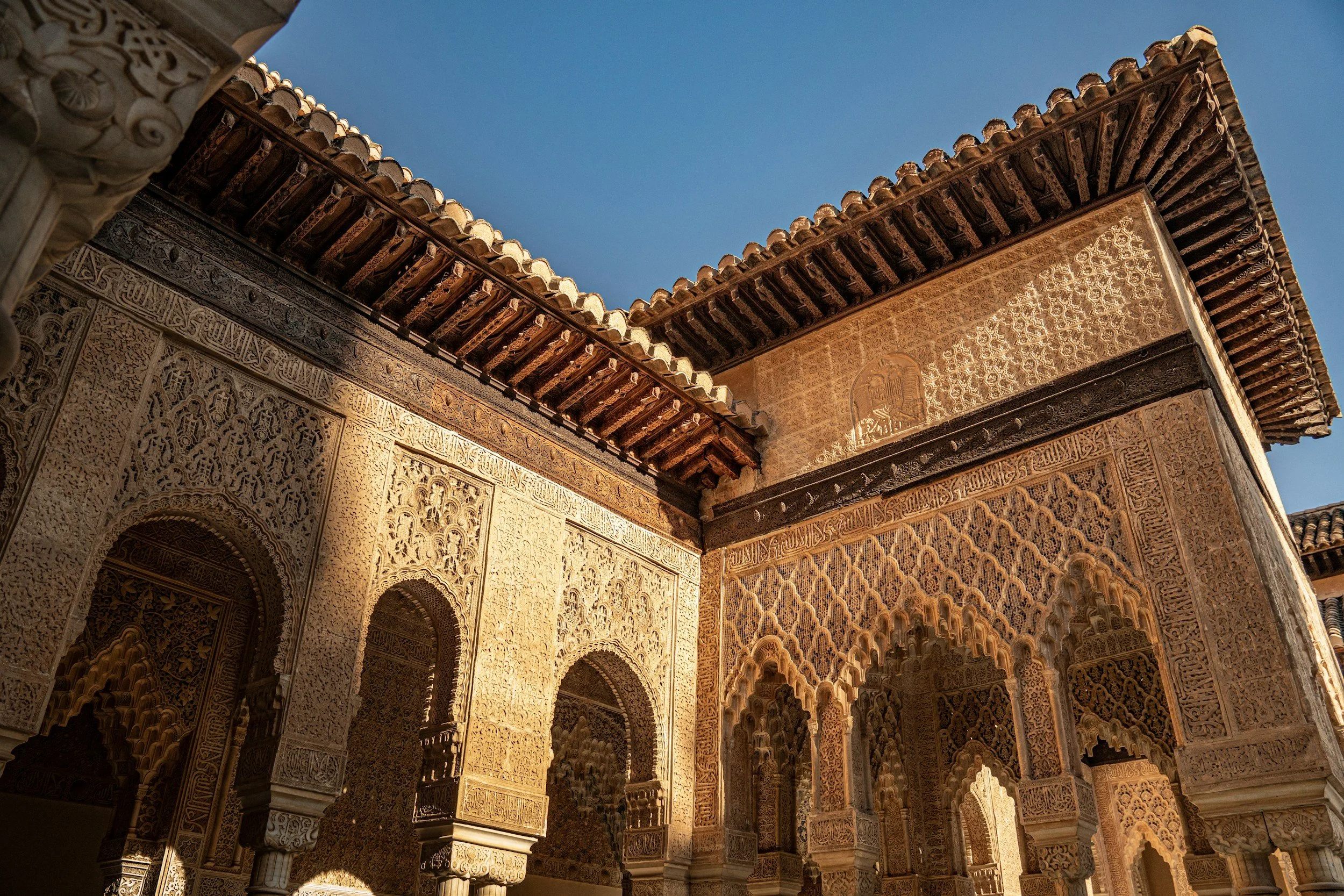
Figure 1: The Alhambra's carved stucco arcades — built by Fāsī craftsmen who had just completed the Bū ʿInāniyya madrasa in Fez, carrying the same geometric vocabulary across the Strait into Granada. When Abū al-Qāsim al-Sharīf al-Gharnāṭī served as chief judge of this city, these walls were being carved and his student Ibn Zamrak's verses were being pressed into their plaster. The Alhambra is not a Spanish monument that contains Arabic writing. It is a Moroccan architectural achievement that stands on Iberian soil.
The last line is the argument in miniature: whatever Sabta withheld, the sharīf carried his honor within himself. It was genealogical, portable, and inalienable.The shurafāʾ of this family were recognized in Granada's highest literary register — not through their own claims but through the public address of the men who administered the Nasrid state. That recognition extended to diplomacy. The Nasrid sultan Muḥammad V dispatched Abū al-Qāsim to the Marinid sultan Abū ʿInān in Fez in 757/1356, leading a delegation of Granada's senior scholars to mediate a delicate matter involving a Marinid ambassador who had remained in Granada against his sovereign's wishes. Ibn al-Khaṭīb, who was present at the Fāsī court when the delegation arrived, called it yawman mashhūdan — a witnessed day — and described his own teacher as shaykh al-dunyā in majesty, dignity, and leadership before the sultan. The same sharīfian authority that transcended Nasrid-Marinid rivalry had earlier been deployed in an embassy to the Castilian court of Pedro I, where Abū al-Qāsim represented Granada in political negotiations — his nasab and his eloquence together constituting credentials that different political authorities, Muslim and Christian, recognized as carrying weight.
“In royal assemblies and public gatherings, he bore a majesty of presence, a constancy of composure, and a sovereign restraint from haste in the face of opposition, that none among his peers could equal. When he withdrew to his private quarters and received his intimate companions, I saw him become — in his ease and his gracious descent — as though he were the most junior of his own students. He would frequently attend to his visitors himself, without recourse to his attendants, following the example of the imams of old, who held that it diminishes nothing in a sharīf to serve his guest with his own hand, to show deference to his sultan, and to humble himself before his shaykh.”
However, Ibn al-Khaṭīb — for all his admiration — made an error in his biographical notice on Abū al-Qāsim, tracing his lineage to Muḥammad ibn al-Ḥasan ibn ʿAlī ibn Abī Ṭālib, a line the nassābūn are unanimous in producing no descendants. Al-Faḍīlī al-ʿAlawī corrected the record in al-Durar al-Bahiyya: the correct lineage runs through ʿĪsā ibn Idrīs, as Ibn al-Sakkāk had documented two centuries earlier in Naṣḥ Mulūk al-Islām, providing the full chain: Muḥammad ibn Aḥmad ibn ʿAlī ibn Aḥmad ibn Hārūn ibn Muḥammad al-Shaykh known as Kannūn ibn ʿAbd Allāh known as Mindīl ibn ʿAlī al-Dākhil. The error was Ibn al-Khaṭīb's enthusiasm for the sharīf outrunning his genealogical precision — a telling inversion of the usual dynamic, where historians question rather than embellish prophetic descent.
Abū al-Qāsim died in Granada in Shaʿbān 760/1359 and was buried in the cemetery of Bāb al-Bayyāzīn. Ibn al-Khaṭīb mourned him as baqiyyat al-ashyākh wa-lisān al-ʿArab — the last of the masters and the tongue of the Arabs. His student Ibn Zamrak — the man whose verses the Alhambra's walls still carry — composed an elegy in which the sharīf's prophetic descent is the controlling theme from the first hemistich to the last:
مَاتَ الَّذِي وَرِثَ الْعُلَا عَنْ مَعْشَرٍ * وَرَثُوا تُرَاثَ الْمَجْدِ بِاسْتِحْقَاقِ
He has died — the one who inherited glory from a people
who bore the inheritance of greatness by right
رُفِعَتْ لَهُمْ رَايَاتُ كُلِّ جَلَالَةٍ * فَتَمَيَّزُوا فِي حَلْبَةِ السُّبَّاقِ
Their banners of majesty were raised on high,
and they stood apart in the arena of those who came first
عَلَمُ الْهُدَاةِ وَقُطْبُ أَعْلَامِ الْوَرَى * حَرَمُ الْعُفَاةِ لِمُجْتَنَى الْأَرْزَاقِ
The banner of those who guide, the axis of the world's luminaries
a sanctuary for those who seek, where provision is gathered
رَقَّتْ سَجَايَاهُ وَرَاقَتْ مُجْتَلًى * كَالشَّمْسِ فِي بُعْدٍ وَفِي إِشْرَاقِ
His qualities were tender, and his appearance delightful to behold
like the sun, both in its distance and its radiance
كَالزَّهْرِ فِي لَأْلَائِهِ وَالْبَدْرِ فِي * عَلْيَائِهِ وَالزُّهْرِ فِي الْإِبْرَاقِ
Like the flower in its gleaming, like the full moon in
its heights, like Venus in its blazing light
مِمَّا مَدَحْتُ سِوَاهُ قَيْدَ وَصْفِهِ * وَصِفَاتُهُ حَمْدٌ عَلَى الْإِطْلَاقِ
Whatever praise I have given others was bound by description
but his qualities are praise itself, unconditionally
يَا وَارِثًا نَسَبَ النُّبُوَّةِ جَامِعًا * فِي الْعِلْمِ وَالْأَخْلَاقِ وَالْأَعْرَاقِ
O you who inherited the lineage of prophethood,
uniting in yourself knowledge, noble character, and noble blood
يَا ابْنَ الرَّسُولِ وَإِنَّهَا لَوَسِيلَةٌ * يَرْقَى بِهَا أَوْجَ المَصَاعِدِ رَاقِي
O son of the Messenger — and what a means of approach it is,
by which one who ascends reaches the very summit of ascent
وَرَدَ الكِتابُ بِفَضْلِيكُم وَكَمالِكُم * فَكَفى ثَناءُ الواحِدِ الخَلّاقِ
The Book itself came bearing witness to your excellence and your perfection
sufficient is the praise of the One, the Creator
مَوْلَايَ إِنِّي فِي عُلَاكَ مُقَصِّرٌ * قَدْ ضَاقَ عَنْ عِلْمِ النُّجُومِ نِطَاقِي
My master, I fall short before your heights
my compass is too narrow to encompass even the knowledge of the stars
وَمَنِ الَّذِي يُحْصِي مَنَاقِبَ فَضْلِكُمْ * عَدُّ الْحَصَى وَالرَّمْلِ غَيْرُ مُطَاقِ
And who could enumerate the virtues of your excellence?
To count the pebbles and the grains of sand is beyond all power
The elegy carries a precise structural significance. Ibn Zamrak was addressing his teacher in the register of madīḥ nabawī — prophetic praise poetry — directing toward a human sharīf the vocabulary normally reserved for celebration of the Prophet ﷺ himself: yā bna al-Rasūl, wārithan nasab al-nubuwwa, the Book bearing witness to the family's excellence. This was not hyperbole from a grieving student. It was the most authoritative poetic voice of the Nasrid court making a public, permanent, stone-worthy declaration: the Dabbagh shurafāʾ carried lineage that the Quran itself had honored, and Granada's civilization had been shaped in part by that lineage's presence within it.
His son Abū al-Maʿālī al-Ṭayyib succeeded him as chief judge, demonstrating the family's capacity to reproduce elite status across generations through the combination of prophetic descent and demonstrated scholarly achievement. The Andalusian chapter had run for nearly three centuries. It had converted Sabta's genealogical consciousness into Granada's judicial authority. What came next was return — and the question of what a family carrying this weight would do when they crossed back into Morocco.
3. Migration and Marinid Patronage: Settlement in Salé
The Dabbagh shurafāʾ returned to Morocco as they had left it — by choice. Granada would not fall to the Catholic Monarchs until 897/1492 — more than a century after the family's crossing back to the Maghrib. What brought them home was calculation: political instability within the Nasrid succession, and the active recruitment of Andalusian sharīfs and scholars by a Moroccan dynasty that needed precisely what the Dabbaghs possessed.
The Marinids were Zanāta Berbers. They had unified Morocco by force, displaced the Almohads, and built some of the finest architectural monuments in the Islamic Mediterranean. But they were not sharīfs. They carried no prophetic genealogy, no Idrisid baraka, no connection to the founding sacred geography of the state they governed. The Almohads before them had grounded their authority in Mahdist ideology — Ibn Tūmart's claim to divinely appointed guidance — and when al-Maʾmūn renounced that ideology in 626/1229, the dynasty lost the metaphysical foundation it could not recover. The Marinids watched this collapse and drew a lesson they would spend nearly two centuries acting upon: in Morocco, legitimacy required proximity to the Prophet ﷺ, and proximity to the Prophet ﷺ meant proximity to his descendants. They could not become sharīfs, but they could gather sharīfs around them, endow them, honor them, and present themselves to Morocco as servants and protectors of the prophetic lineage rather than its rivals.
Into this political logic arrived Abū al-ʿAbbās Aḥmad ibn Abī al-Qāsim Muḥammad ibn Ibrāhīm ibn ʿUmar ibn Muḥammad ibn Aḥmad ibn Hārūn — known as al-Qādim, the one who came — in Salé in 790/1388. He was a cousin of Abū al-Qāsim al-Sharīf al-Gharnāṭī through the branch of ʿAbd al-ʿAzīz ibn Hārūn, descending from the same Hārūn ibn Kannūn who anchored the family's Andalusian genealogy. The sultan who received him was Abū al-ʿAbbās Aḥmad al-Mustanṣir billāh (r. 760–796/1359–1393) — a title first carried in Morocco by ʿĪsā ibn Idrīs himself, struck on his coins at Wazzaqur four centuries earlier. He honored Aḥmad al-Qādim with stipends from the royal treasury in recognition of his genealogy and the family's distinguished service to the Nasrid state. This was not charitable generosity but deliberate political investment — a dynasty purchasing sacred capital it could not inherit.
The specific form of support proved more consequential than anyone anticipated. Rather than irregular gifts or positions dependent on sultanic favor, the Marinids issued a royal decree dated 790/1388 assigning the family's stipend from the revenues of Dār al-Dabbāgh — the state-controlled tanning facility in Salé — in recognition of their noble lineage. From this administrative arrangement the family acquired their name. The genealogist ʿAbd al-Salām al-Qādirī al-Ḥasanī (d. 1110/1698) clarified the matter precisely in al-Durr al-Sanī:
“They were never known to practice the tanning craft. Rather, the reason for the name is what I found in a decree they still possess, dated 790/1388, ordering that their stipend be drawn from the revenue of Dār al-Dabbāgh in Salé when they resided there. Thus the name derived from the intensive form of dabgh on account of that.”
The poet Muḥammad ibn al-Ḥasan al-Tāzī confirmed the etymology in a verse from his elegy on Sīdī ʿAbd al-ʿAzīz al-Dabbāgh:
وَبالدَّباغِ يُدْعى لِزِقٍّ كَانَ * لَهُمْ بِدَارِ دَبْغِ سَلاَ مُنَامِ
And al-Dabbāgh he is called — for a lane in Salé that bore their name,
they who held the levy of its tannery by (Marinid) grant.
The tanning house from which this name derived was no marginal institution. Ibn Khaldūn identified leather-working alongside wool production as the two most important industries of the Marinid era. The Fāsī scholar al-Dukkālī al-Salawī, writing in al-Itḥāf al-Wajīz bi-Akhbār al-ʿAdwatayn, called Salé's tanning house dār al-dhahab — the house of gold — for the revenues it generated. Salé itself was the second city of Marinid Morocco after Fez, its port controlling Atlantic trade and its shores sheltering the royal necropolis of Chellah, where the Marinid sultans were buried amid Roman ruins transformed into sacred space. The family's endowment was drawn from this city's most productive institution — an economic independence that would sustain them through dynastic transitions no individual sultan's generosity could guarantee.
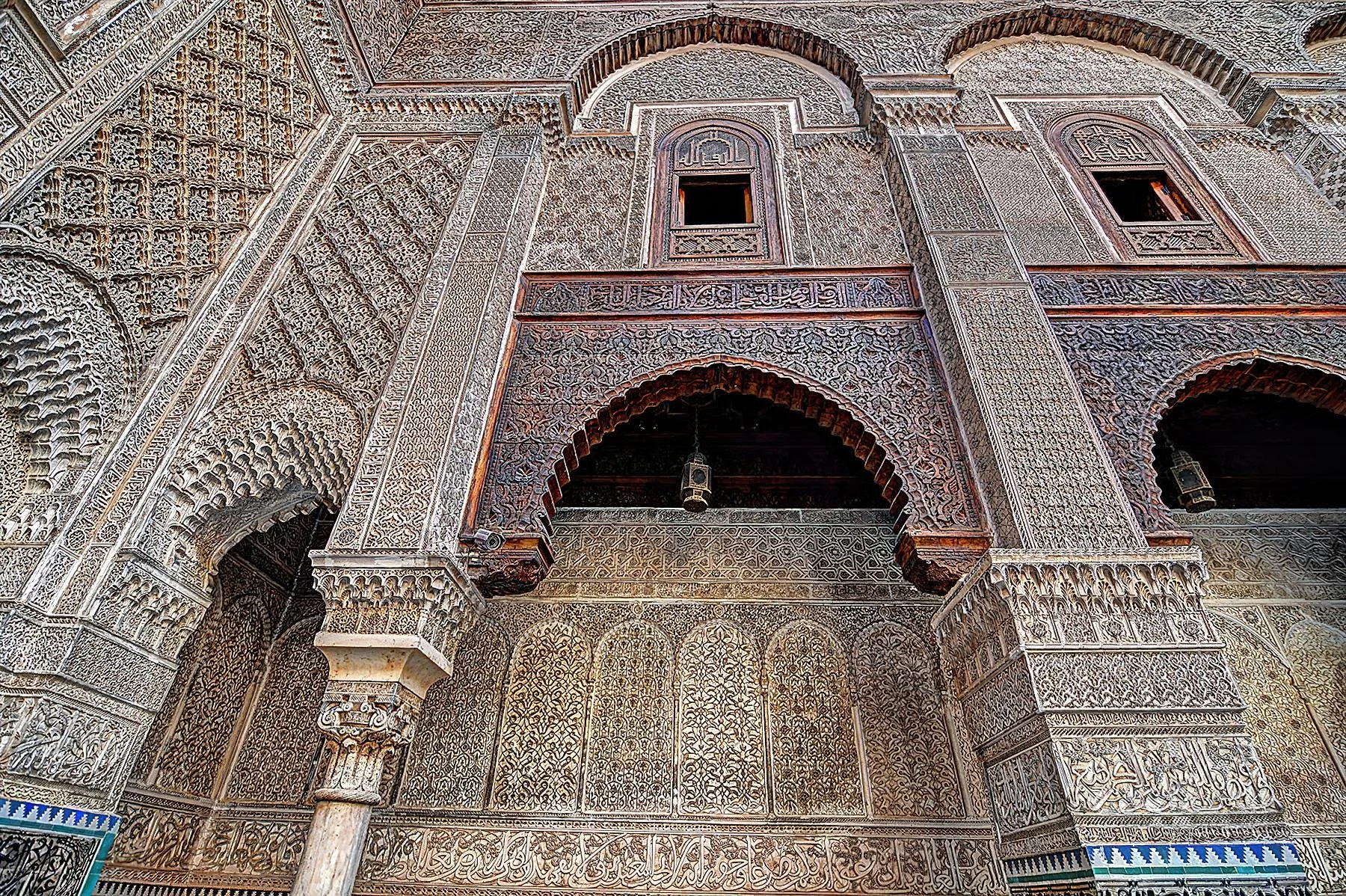
Figure 2: Al-Bū ʿInāniyya madrasa, completed by Sultan Abū ʿInān Fāris in 751/1350 — the Marinid masterwork whose craftsmen would cross the Strait to build the Alhambra. In 757/1356, Abū al-Qāsim al-Sharīf al-Gharnāṭī entered this city on a diplomatic mission to that same sultan, leading Granada's senior scholars to the Marinid court. Ibn al-Khaṭīb, present that day, called it yawman mashhūdan — a witnessed day. Around the same period, Ibn al-Sakkāk visited the Dabbāgh family in nearby Salé and documented their nasab.
One clarification the sources insist upon: Aḥmad ibn Abī al-Qāsim al-Qādim must not be confused with a contemporary of the same name and same epithet who appears in the Andalusian sources — the Aḥmad al-Dabbāgh al-Fāsī mentioned by Ismāʿīl ibn al-Aḥmar in Nathīr al-Jumān as his teacher in Granada and as poet in the service of Abū al-Walīd ibn al-Aḥmar, who was employed by al-Mustanṣir to collect the kharāj in Fez, and who composed verses in praise of the sword of Mawlay Idrīs al-Azhar kept in the minaret of the Qarawiyyīn mosque. One wonders whether Ibn al-Aḥmar — writing in the same Nasrid circles where Ibn al-Khaṭīb had already confused the family's genealogy once — was working from the same imprecision, or whether his identification is reliable. In this case, however, he is explicit: the figure he describes is Anṣārī Khazrajī — not Idrisid, not Ḥasanī. The shared name and shared epithet are coincidence, not kinship. The Dabbāgh who arrived in Salé in 790/1388 was an Idrisid sharīf descended from ʿĪsā al-Anwar; the Dabbāgh who served the Nasrid chancellery was of Anṣārī stock. Two men, one name, no relation.
In Salé, Aḥmad al-Qādim fathered al-Qāsim. The family's presence in the city was recognized by no less than the qāḍī al-jamāʿa of Fez and its muftī, Ibn al-Sakkāk, who visited the family when he came to Salé seeking blessing and visitation. In his Naṣḥ Mulūk al-Islām, Ibn al-Sakkāk recorded what he found among the shurafāʾ of Salé:
“Among those I met in Salé when I visited the city seeking baraka and ziyāra were the ʿĪsāwī shurafāʾ, descendants of Shaykh ʿUmar al-Dabbāgh ibn ʿAbd al-Raḥīm ibn ʿAbd al-ʿAzīz ibn Abī ʿAbd Allāh Hārūn... and among them our master the Sharīf Sīdī Abū al-Qāsim al-Gharnāṭī.”
Ibn al-Sakkāk's account reveals a shared world. He had himself met Abū al-Qāsim al-Sharīf al-Gharnāṭī in Morocco — they had visited together the shrine of Mawlay Idrīs ibn ʿAbd Allāh in Zarhūn — a detail situating the Dabbāgh family within the same intellectual and devotional networks connecting Fez, Salé, and the Nasrid court across the Strait. That the chief judge of Fez would come to Salé specifically to seek the baraka of this family and classify them among the highest rank of shurafāʾ documents their standing in the early Marinid period with precision no endowment charter alone could provide.
From Aḥmad al-Qādim descended al-Qāsim, then al-Qāsim ibn al-Qāsim, then Muḥammad, then ʿAbd al-Raḥmān — four generations rooted in Salé, holding their Marinid decrees. A century had passed since the crossing from Granada, the Marinid dynasty was collapsing, and the stipends were unreliable. There is a pattern in the Dabbāgh story that only becomes visible across the long arc: the earth of the Islamic west received this family generation by generation, each burial marking a station in a journey that was never flight but always positioning — ʿĪsā al-Anwar in Tadla, Abū al-Qāsim al-Sharīf at Bāb al-Bayyāzīn, a century of dead in Salé. Each city took what the family gave it. And from the inland capital, the light of Fez had begun to reach the living. It was ʿAbd al-Raḥmān who answered it, leading the family back to the city their ancestor's father had built.
4. The Return to the Ancestral Capital: The Dabbaghs in Fez
The Dabbāgh shurafāʾ did not arrive in Fez on a single decision. A century of structural pressure had been building since the death of Abū ʿInān Fāris in 760/1358 — the sultan whose Bū ʿInāniyya had represented the apex of Marinid ambition — after which the stipend system sustaining sharīfian families and zawiyas began its long unraveling. In 818/1415 the Portuguese seized Sabta, closing the strait that had once connected Morocco to Mediterranean civilization and turning the Atlantic coast into an exposed frontier. The Waṭṭāsids consolidated around Fez. And in 869/1465, the scholars of the Qarawiyyīn proclaimed an Idrisid sharīf — Muḥammad ibn ʿAlī al-ʿAmrānī al-Jūṭī — as sultan, placing prophetic descent at the explicit center of Moroccan legitimacy in a way that had not been seen since the Idrisid state itself. For a family of Idrisid shurafāʾ still holding Marinid decrees from the tanning house of Salé, still carrying the genealogical documentation that Ibn al-Sakkāk had classified among the highest rank of the Prophet's ﷺ descendants, the direction that history was pointing could not have been clearer.
Muḥammad ibn ʿAbd al-Raḥmān al-Dalāʾī (d. 1141H) captured the family's entire geographic arc in verses from his Durrat al-Tījān:
سَلِيلُ عِيسَى بْنِ إِدْرِيسَ الإِمَام * فِي بَيْتِهِ مِنْ نَجْلِهِ كِرَامُ
Descended from ʿĪsā ibn Idrīs the Imam,
noble sons filling his house across the generations
فَمِنْهُمُ الْبَيْتُ الرَّفِيعُ الْعَمَدُ * بَيْتُ الْعُلا وَالشَّرَفِ الْمُعْتَمَدُ
Among them stands a house of towering pillars,
the house of glory and the lineage that is relied upon
الدَّبَّاغِيُّونَ سَمَوْا وَاشْتَهَرُوا * وَفِي سَمَاءِ الْبَيْتِ نَجْمٌ أَزْهَرُ
The Dabbāghīs rose and became renowned,
and in the sky of their house a star shines bright
نِسْبَتُهُمْ ثَابِتَةُ الأُصُولِ * فِي حَسَبٍ وَشَرَفٍ أَصِيلِ
Their lineage stands firm at its roots,
in ancestry and in nobility that is authentic
مَنْزِلُهُمْ بِفَاسَ فِي الْعُيُونِ * مَنْزِلَةَ السَّوَادِ فِي الْعُيُونِ
Their dwelling in Fez is in al-ʿUyūn,
settled there as the pupil is settled in the eye
وَبِالْجَزِيرَةِ اسْتَقَرُّوا أَوَّلا * وَبَعْدَ ذَلِكَ اسْتَوْطَنُوا دَارَ سَلاَ
In Iberia they settled first,
then after that they made their home in Salé
فِي ثَامِنِ السِّنِينِ مِنْ أَعْوَامِ * حَسْبَمَا ثَبَتَ لِلأَعْلامِ
In the eighth century of years,
as the scholars have established
لَهُمْ بِهَا ظَهَائِرٌ سَنِيَّةٌ * حَتَّى أَتَوْا لِلْحَضْرَةِ السَّنِيَّةِ
Holding there their noble royal decrees,
until they came to the resplendent capital
Al-Faḍīlī al-ʿAlawī recorded the arrival with language that placed it in the register of sacred return rather than mere migration:
“They remained in Salé until Fez called them — and when it did, their souls answered. They arrived at the opening of the ninth century, the first Idrisids to return to the city their ancestors had founded. They settled in Ḥūmat al-ʿUyūn, in the house of ʿAyn al-Baghl, which their cousins’ descendants hold to this day. Fez knew them as the Salāwīs and the Dabbāghīs.”
The detail that the family carried two epithets upon entry into Fez — al-Sharīf al-Salawī recalling the century in Salé, al-Sharīf al-Dabbāgh recalling the Marinid endowment — and that Dabbāgh eventually prevailed, documents a process of identity consolidation within the city's sharīfian landscape. The name that had begun as an administrative notation in a royal decree had become, by the time the family arrived in Fez, their permanent mark — borne now not with the resistance the earliest genealogists had noted but as a recognized and honored nisba among the city's scholarly elite.
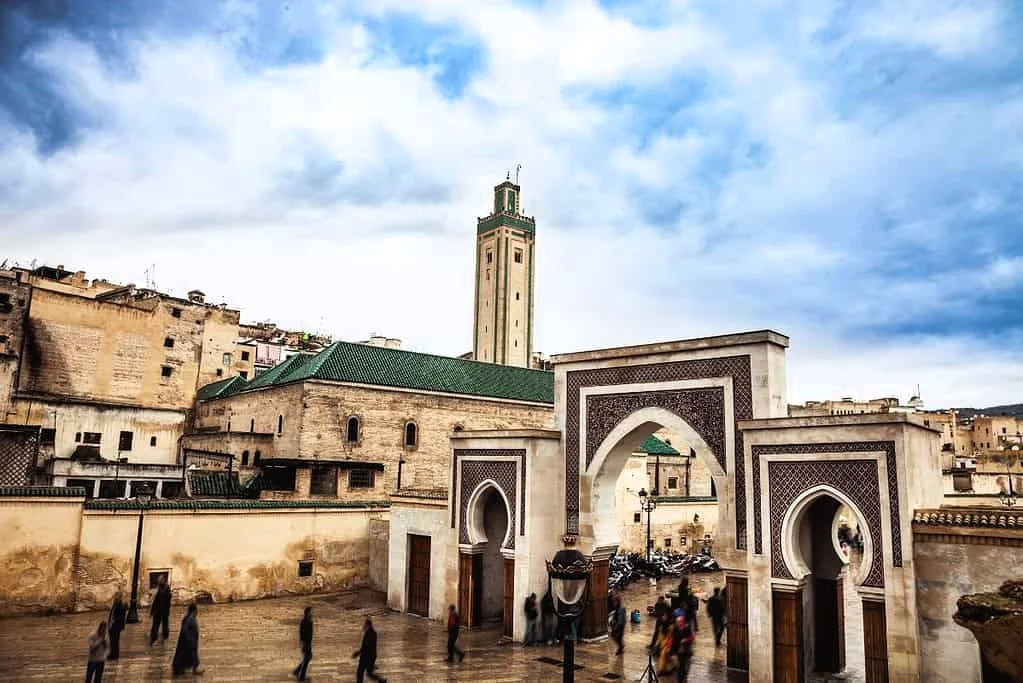
Figure 3: The al-Raṣīf square and mosque on the banks of Wādī al-Jawāhir in Fez al-Bālī, not far from Rāʾs al-Jinān where al-Fīshtālī had lived, prayed, and prepared the marriage that would produce the saint. It was through these streets that Mawlāy ʿAbd al-ʿAzīz ran during al-Barnāwī's test — from al-Raṣīf to al-Sharāṭīn to al-Shammāʿīn to al-Ṣaffārīn to al-Qarawiyyīn itself — the city refusing to let him escape what was being revealed to him. The return of the Dabbāgh shurafāʾ to Fez at the opening of the 9th/15th century brought them back to this geography — the river, the mosque, the quarter their ancestors had founded and from which they had been absent for centuries. Al-Raṣīf is where Fez moves. It is also where the city held its saints in plain sight.
Their presence in Fez was immediately felt. So visible did the family become within the city's sharīfian geography that ʿAbd al-Raḥmān al-Fāsī, in his Ibtihāj al-Qulūb, traced their lineage to the Jūṭī line — assuming they must be a branch of the family that had long supervised the Idrisid shrine. The error was an inadvertent compliment: the Dabbaghs had become so prominent in Fez that a genealogist of al-Fāsī's standing could not imagine they were anything other than an extension of the city's most established Idrisid house. The Jūṭīs themselves — who had controlled the shrine of Mawlāy Idrīs II since before the Marinid collapse — were their cousins in the broader Idrisid tree, descended from al-Qāsim ibn Idrīs rather than ʿĪsā al-Anwar, but sharing the same Fāsī sacred geography and the same prophetic bloodline one generation above. The competition between the two families for prestige within the city's sacred landscape was the competition of equals, not of newcomers pressing against incumbents. Al-Qādirī recorded what that standing looked like from the outside:
“They are of the Idrisids, widely renowned in sharīfian lineage and authentic in their exalted branch — regarded by high and low alike with the eye of reverence and honor, their noble descent universally accepted and acknowledged, their sharaf affirmed by those who came before them and those who came after. They stood as equals to their cousins the Jūṭīs, and were themselves among the celebrated and respected, holding high station and enjoying the favor of all.”
They settled at ʿAyn al-Baghl within Ḥūmat al-ʿUyūn — the Quarter of Springs on the Qarawiyyīn side of Wādī Fās — a residence that would remain in family possession for generations. The name itself carries a resonance that no genealogist would have missed: ʿAyn al-Baghl — the Spring of the Mule — marks the site where Mawlāy Idrīs II himself had kept his stables, the very ground where the founder of Fez had stood now opening its earth to receive the descendants of his own son ʿĪsā al-Anwar, returning after centuries to the city their ancestor had built and named and ruled. The naqīb Sulaymān al-Ḥawwāt al-ʿAlamī later devoted an entire work to documenting their presence there: Qurrat al-ʿUyūn fī al-Shurafāʾ al-Qāṭinīn bi-Ḥawmat al-ʿUyūn — testimony that their settlement in this quarter had become, over time, sufficiently established to constitute its own chapter in the literature of Fāsī sharīfian genealogy.
The quarter itself was a concentrated geography of Idrisid baraka — dense with related families whose proximity facilitated marriage alliances, mutual authentication of genealogical claims, collective assertion of sharīfian privileges, and coordination before successive governing authorities. The Qarawiyyīn mosque-university stood within walking distance, providing educational opportunities for family members and teaching positions for qualified scholars. The shrine of Mawlāy Idrīs II anchored the spiritual landscape. For descendants of ʿĪsā al-Anwar ibn Idrīs II, this was not merely a residential address but a homecoming to the city their ancestor's father had built — the sacred geography from which Idrisid authority had originally radiated and to which it now, in the family's person, returned.
“The house of the Dabbāghs in Fez stands in wide renown — their sharīfian lineage beyond question, their branch within the exalted Idrīsid tree beyond doubt.”
The Dabbaghs were among the first Idrisid shurafāʾ to return to Fez after the long dispersal that had followed the collapse of Idrisid political authority in the 4th/10th century. Their early return gave them temporal precedence in reoccupying sharīfian space — precedence that translated into endowment rights, scholarly positions, and social recognition that compounded across generations. What the Marinids had set in motion with a tanning house stipend in 790/1388, and what a century of Salé residence had consolidated into documented genealogical standing, now found its permanent home in the quarter the family would occupy for the remaining centuries of Moroccan history — rooted in the city their ancestors had founded, recognized by its scholars, honored by its saints, and waiting for the moment when one of their own would transform the family's inherited baraka into something the entire Islamic world would read.
5. The Fatḥ and Its Consequences: From Fāsī Sharīfs to a Global Name
5.1 What the Family Built, and What Descended Upon It
The opening at Bāb al-Futūḥ did not happen to a stranger. It happened to a man whose family had been positioned at that gate for generations — layer by layer, decree by decree, burial by burial — until the ground was ready to receive what descended.
It began before his birth. Abū Ḥāmid Muḥammad al-ʿArabī al-Fīshtālī — the saint of Rāʾs al-Jinān, who had studied under the greatest masters of his age and refused every judgeship offered to him — received from the Prophet ﷺ a glad tiding: a great walī would be born from his niece Fāriḥa, and he would bear the name ʿAbd al-ʿAzīz. Al-Fīshtālī understood what this required of him. He found Masʿūd al-Dabbāgh — the young sharīf from Ḥūmat al-ʿUyūn — proposed the marriage, bore all its expenses himself, and for years afterward placed two small silver coins each day in Masʿūd's hand after the ʿAṣr prayer to ensure the household's stability. Before he died — five years before the child was born — he prepared a ṭarbūsh and a pair of ṣabbāṭ, charged them with his baraka, and left them for the boy. Then he was buried outside Bāb al-Futūḥ.
The gate received its first preparation.
When ʿAbd al-ʿAzīz was born in Ḥūmat al-ʿUyūn in 1095/1684, the quarter his ancestors had settled two centuries earlier, his mother placed al-Fīshtālī's objects on him. What erupted was not metaphorical — heat tore through his body, tears filled his eyes, and the twelve-year search began. He moved from shaykh to shaykh across Fez finding pieces but never the whole, his hands working wool and silk while his heart had already crossed into another register entirely.
Meanwhile, his father Masʿūd ibn Aḥmad — jurist, grammarian, man of deliberate khumūl — held the family's institutional position. In 1081/1671, Sultan Mawlāy al-Rashīd issued him the ẓahīr appointing him custodian of the shrine of Sīdī ʿAlī ibn Ḥirzihim outside the city walls. The following year the sultan died and was buried there. From that moment the shrine became a royal mazāra — and the Dabbāghs became stewards of the space where ʿAlawī dynastic authority sought its legitimation through baraka. When Masʿūd himself died, he was buried beside the sultan who had honored him, at the shrine his family now administered.
His son inherited the custodianship and the Thursday nights. Every Thursday, ʿAbd al-ʿAzīz made his way to the shrine of Sīdī ʿAlī ibn Ḥirzihim — the shrine his father had overseen, where his father now lay — and spent the night reciting al-Burda until dawn. This was not a stranger visiting a holy site. This was a man returning each week to the place his family had been given to keep. And it was at the threshold of that shrine, under the consecrated lote tree beside its door, that one dawn a man appeared who spoke to him with a precision that told him immediately: this was one of the knowers. He asked for the wird. The man delayed until dawn, extracting from him a true resolve, then gave it: seven thousand invocations daily, calling upon the Prophet ﷺ by name, asking to be united with him in this world before the next.
Only after the death of ʿUmar al-Hawwārī — the shrine's caretaker, who had been present that night — was the identity revealed. ʿUmar said: "Do you know who the man was who transmitted the dhikr to you at the consecrated lote tree?" Al-Dabbāgh said no. ʿUmar said: "He was our master al-Khiḍr, peace be upon him."
Al-Khiḍr had waited at the shrine the Dabbāghs administered. Had the ʿAlawīs not given Masʿūd that ẓahīr in 1081H, the Thursday nights at Ibn Ḥirzihim's rawḍa never happen. Without those Thursday nights, al-Dabbāgh never sits under that lote tree at dawn. The dynasty's administrative act — a custodianship decree, one among many — was also a preparation whose spiritual consequence no sultan could have calculated.
Four years of the wird followed, recited without interruption, until Thursday the 8th of Rajab 1125/1713. That morning his wife sent him to the rawḍa of Sīdī ʿAlī ibn Ḥirzihim — his family's shrine, his father's burial place — to collect oil for frying fish. A domestic errand. He passed through Bāb al-Futūḥ on the road there.

The Ẓahīr of 1140/1728 — Sultan Mawlāy ʿAbd Allāh ibn Ismāʿīl Confirms the Dabbāgh Custodianship of Sīdī ʿAlī ibn Ḥirzihim
Ẓahīr sharīf issued in the reign of Sultan Mawlāy ʿAbd Allāh ibn Ismāʿīl (1140/1728), confirming the custodianship of the Dabbāgh family over the shrine of Sīdī ʿAlī ibn Ḥirzihim outside Bāb al-Futūḥ in Fez. The document bears the sultanic seal and is written in the Maghribi script characteristic of ʿAlawī royal chancery production. One of a continuous chain of nine sultanic ẓahīrs — from Mawlāy al-Rashīd (1081H) through Muḥammad V (1355H) — through which successive ʿAlawī sultans formally recognized the Dabbāgh family's authority over this royal mazāra. Original document held in the family archive.
The gate did what its name had always promised. A shiver entered him, then trembling, then his flesh tingled, then something emerged from his inner being like the steam of a couscous pot, and his inner being elongated until it became taller than anything tall. The seven earths spread before him with everything in them. Every village, every city, every creature. A Christian woman nursing her child in her lap, seen from a distance that was no distance. All the seas. The sky visible as if from above it. Then a light like branching lightning from every direction simultaneously — from above, below, right, left, before, behind — striking him with a cold so intense he believed he had died. He prostrated face-down and found that every limb of his body had become an eye. He never reached the shrine that day. He turned back toward the city, the oil uncollected, the opening permanent.
Al-Fīshtālī had been buried at that gate. His father was buried at the shrine on the road to it. The family had kept the threshold for forty years of Thursday nights. And it was on an errand to his father's burial place that the fatḥ descended — not in a mosque, not in a madrasa, not in a zāwiya, but on a road the family had walked for generations, at a gate that bore the name of what came through it.
The morning after, he went toward Mawlāy Idrīs — his ancestor, the man whose son ʿĪsā al-Anwar had founded the lineage, in the city ʿĪsā's father had built. He never arrived. In Simāṭ al-ʿUdūl he encountered al-Jīrūndī, the imam of Mawlāy Idrīs's mausoleum, who wept when he heard what had happened and said: "Four hundred years, and we have not heard anyone describe anything like this." Al-Jīrūndī died that same day and was buried inside Bāb al-Futūḥ. The gate kept receiving its witnesses.
As for Ibn al-Mubārak — the man who would record everything — the question of how he entered al-Dabbāgh's orbit answers itself once the geography is clear. He was not a stranger who wandered into a saint's circle. He moved through the same streets, the same scholarly networks, the same Fāsī environment that the Dabbāgh family had inhabited for two centuries. The family's documented standing — confirmed by Ibn al-Sakkāk in the 9th/15th century, certified by eighty scholarly signatures in 1140H, recognized by nine consecutive sultans — meant that when the fatḥ descended on ʿAbd al-ʿAzīz and the opening began scattering itself across the streets of Fez, it scattered into an environment already prepared to receive it. The scholars who heard Ibn al-Mubārak's private account of al-Dabbāgh's teachings said without exception: "this, by God, is the complete saint and the arrived knower." They said it because they already knew the name. They already knew the quarter. They already knew the family. The fatḥ did not introduce the Dabbāghs to Fez. It introduced Fez to what the Dabbāghs had been carrying all along.
“The blessed sharīf Abū Fāris Mawlay ʿAbd al-ʿAzīz ibn Masʿūd al-Dabbāgh... Their house in Fez enjoys wide renown. Our master, the learned ḥāfiẓ Sīdī Aḥmad ibn al-Mubārak al-Lamṭī al-Sijilmāsī, composed his biography describing him with the loftiest attributes of divine knowledge, recounting marvels of spiritual unveiling and prophetic mysteries in a work titled al-Ibrīz fī Manāqib al-Shaykh ʿAbd al-ʿAzīz, filling an entire volume with extravagant praise of his sanctity. The book claims al-Dabbāgh received knowledge from teachers unknown to any of us—neither we nor anyone in our time recognizes them! He states he encountered them in Fez. His disciples spread throughout Fez, Taza, and beyond, outdoing one another in lauding him and transmitting astounding miracles attributed to him. He was laid to rest outside Bāb al-Futūḥ near Rawḍat al-Anwār, between the tombs of al-Darrās ibn Ismāʿīl and ʿAlī ibn Ṣāliḥ. A dome was erected over his grave for pilgrims, standing intact to this very day.”
5.2 Al-Ibrīz and the Geography of Recognition
Mawlay ʿAbd al-ʿAzīz's spiritual authority, as presented in al-Ibrīz, combined several elements that proved revolutionary for Moroccan Sufism. His mystical knowledge was characterized as direct divine bestowal (fatḥ) rather than acquisition through human teachers, positioning him as recipient of unmediated illumination from God. He claimed no shaykh in the conventional sense, instead attributing his initiation to al-Khiḍr—the mysterious prophetic figure who in Islamic tradition serves as guide to those whom God chooses to teach directly.
This claim to Khiḍrian initiation was not unprecedented in Islamic mysticism, but Mawlay ʿAbd al-ʿAzīz articulated it with unusual specificity and theological sophistication. He described the mechanics of spiritual unveiling (kashf), the hierarchies of sainthood (wilāya), and the cosmic functions of prophets and saints in language that combined Sufi metaphysics with accessible narrative. His teachings emphasized that prophetic descent itself constituted not merely social distinction but metaphysical reality with implications for spiritual capacity and divine favor. This theological validation of sharīfian status had profound implications: it suggested that genealogical connection to the Prophet ﷺ created predisposition toward spiritual realization, though it did not guarantee it without personal effort and divine grace.
Al-Ibrīz presented detailed visions of the unseen world—descriptions of paradise, hell, the spiritual hierarchy of saints, and cosmic realities beyond ordinary perception. These were not abstract theological speculations but concrete descriptions claiming direct visionary access. Mawlay ʿAbd al-ʿAzīz described encountering the Prophet Muhammad ﷺ in visions, conversing with him, receiving instruction from him, and witnessing realities of the barzakh (the intermediate realm between death and resurrection).
The text addressed questions that troubled Moroccan Islam: How do saints know what they know? What is the relationship between Islamic law (sharīʿa) and mystical realization (ḥaqīqa)? Can prophetic guidance continue after the Prophet's ﷺ death? How should Muslims understand the intercession (tawassul) sought from saints and the Prophet's ﷺ family? Mawlay ʿAbd al-ʿAzīz's answers to these questions, grounded in claimed direct experience rather than mere textual interpretation, provided framework that would shape Moroccan religious culture for generations.
His explanation of baraka proved particularly influential. He argued that baraka was not metaphorical concept but real spiritual substance that flowed through prophetic lineage, accumulated in saints' bodies and tombs, and could be transmitted through physical contact, proximity, and devotional practices. This materialization of spiritual authority validated practices already widespread in Moroccan Islam—tomb visitation, seeking blessings from sharīfs, touching sacred objects—while providing them with sophisticated theological justification.
Al-Ibrīz achieved extraordinary circulation within decades of its composition. Manuscripts multiplied across Morocco and beyond, studied in Sufi lodges, taught in madrasas, copied by students seeking spiritual advancement. The text's accessibility proved crucial to its success: while containing sophisticated metaphysical doctrines, it was structured as dialogues between master and disciple, making complex ideas comprehensible to readers without advanced theological training.
The text influenced subsequent Moroccan Sufi authors profoundly. Later shaykhs cited al-Ibrīz as authoritative reference on contested questions of mystical doctrine. Aḥmad ibn ʿAjība (d. 1224/1809), whose own mystical writings would become influential, engaged extensively with Mawlay ʿAbd al-ʿAzīz's teachings. Mawlay ʿAbd al-ʿAzīz's explanations of spiritual stations, the nature of sainthood, and the relationship between sharīʿa and ḥaqīqa became standard reference points in Maghribī mystical discourse.
The text shaped how generations of Moroccan saints understood spiritual authority. It provided template for recognizing authentic saints: they possessed direct knowledge of unseen realities, demonstrated moral perfection, maintained scrupulous adherence to Islamic law despite their elevated spiritual states, and exhibited humility rather than claiming superiority. These criteria influenced how Moroccans evaluated subsequent claimants to spiritual authority, creating standards against which all would be measured.
Mawlay ʿAbd al-ʿAzīz's teachings emphasized the continuing spiritual presence of the Prophet Muhammad ﷺ and the possibility of direct access to prophetic guidance through vision and unveiling. This emphasis profoundly influenced the development of distinctly Moroccan forms of devotional practice. The proliferation of prophetic prayers (ṣalawāt ʿalā al-nabī), the centrality of dreams and visions in spiritual life, the expectation that saints could encounter the Prophet ﷺ directly—all these became characteristic features of Moroccan Sufism, shaped significantly by the model al-Ibrīz provided.
His insistence on the spiritual significance of sharīfian lineage contributed to the intensification of sharīfian veneration in 12th/18th and 13th/19th century Morocco. While respect for the Prophet's ﷺ descendants had always existed, Mawlay ʿAbd al-ʿAzīz's theological articulation of why sharīfian descent mattered spiritually provided intellectual framework that elevated this veneration from popular sentiment to theological necessity. Moroccan Sufism after al-Ibrīz increasingly emphasized love of Ahl al-Bayt as essential component of spiritual realization, not merely as pious sentiment but as pathway to accessing prophetic baraka.
Mawlay ʿAbd al-ʿAzīz's tomb at Bāb al-Futūḥ in Fez became important pilgrimage site immediately following his death. The shrine attracted visitors seeking baraka, intercession, and spiritual guidance from the deceased saint. Pilgrims reported miracles (karāmāt) occurring at the tomb: illnesses cured, problems resolved, spiritual states granted. These reports circulated orally and in writing, reinforcing belief in Mawlay ʿAbd al-ʿAzīz's continuing spiritual efficacy even after death.
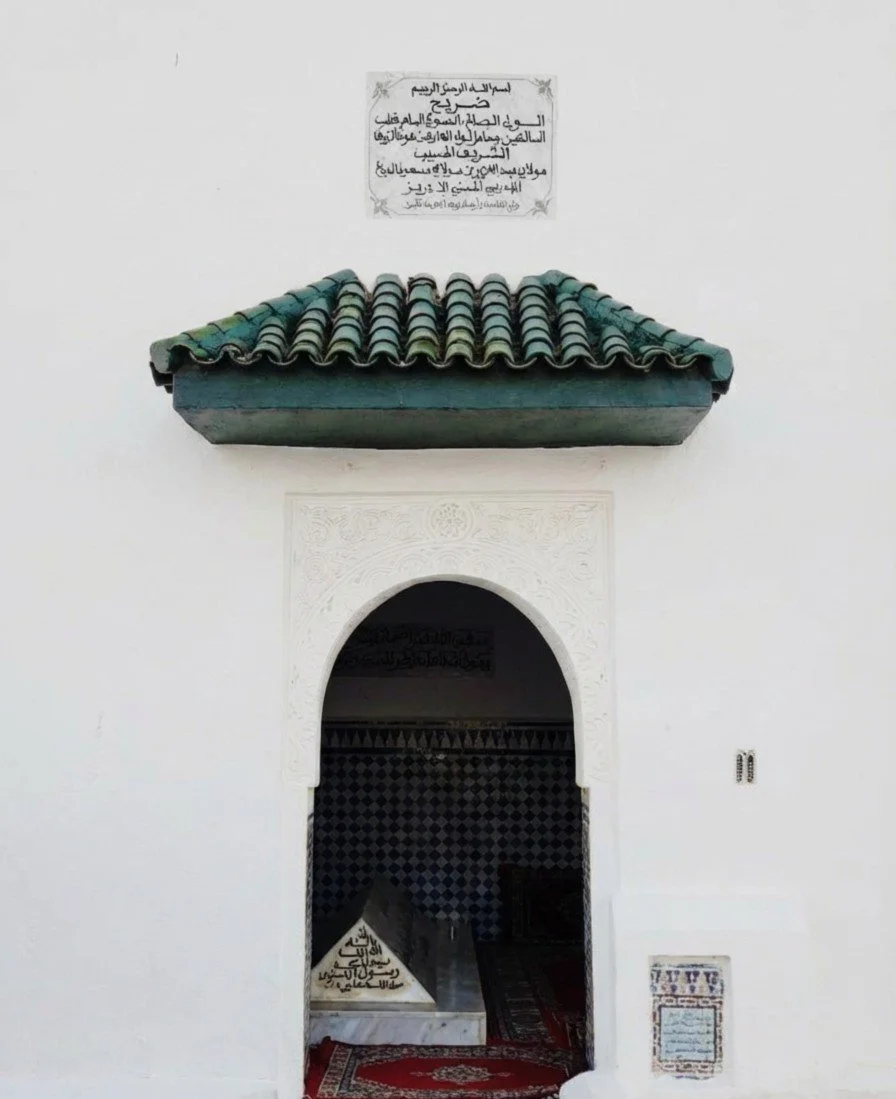
Figure 4. The threshold of the rawḍa of Mawlāy ʿAbd al-ʿAzīz al-Dabbāgh, Bāb al-Futūḥ, Fez. Above the carved stucco archway, the marble inscription names him in full: al-walī al-ṣāliḥ, al-ṣūfī al-bāhir, quṭb al-sālikīn wa-ḥāmil liwāʾ al-ʿārifīn, qūt al-zawwān — the righteous walī, the brilliant Sufi, the Pole of the sālikīn and bearer of the banner of the ʿārifīn, the nourishment of those who visit.
The tomb's location at Bāb al-Futūḥ positioned it within the urban fabric of Fez in ways that made it accessible to ordinary believers. Unlike remote rural shrines requiring special pilgrimage journeys, Mawlay ʿAbd al-ʿAzīz's tomb could be visited as part of daily urban life. This accessibility democratized access to his baraka, allowing not just elite scholars but common people to participate in devotional practices centered on his memory.
The shrine became site where multiple forms of authority intersected. Scholars came to pray before undertaking difficult intellectual work. Sufis came seeking spiritual inspiration. Ordinary believers came with practical needs—health, marriage, livelihood. The tomb functioned as multi-purpose sacred site accommodating diverse devotional needs while maintaining its identity as resting place of a saint whose spiritual authority derived from both genealogical distinction and mystical attainment.
Mawlay ʿAbd al-ʿAzīz's influence extended far beyond his immediate disciples and descendants. Al-Ibrīz shaped how Moroccan Islam conceived the relationship between visible and invisible worlds, between this life and the next, between human effort and divine grace. His teachings provided language for articulating experiences that had previously remained private or ineffable, creating shared vocabulary for discussing spiritual realities.
His model of sanctity—sharīfian descent combined with mystical realization, adherence to Islamic law united with visionary experience, humility despite extraordinary spiritual states—became template that subsequent Moroccan saints consciously or unconsciously emulated. Even saints who never read al-Ibrīz operated within religious culture that his teachings had shaped, responding to expectations and criteria his example had established.
The text's continuing relevance into the modern period demonstrates its capacity to speak across historical contexts. While produced in early 12th/18th century Fez, al-Ibrīz continued to be read, studied, and cited into the colonial period and beyond. Modern Moroccan intellectuals engaged with it as artifact of authentic Moroccan Islamic tradition, proof that Morocco had produced sophisticated mystical thought independent of Ottoman or Eastern influences.
For the Dabbagh family, Mawlay ʿAbd al-ʿAzīz's legacy created form of capital that transcended ordinary genealogical distinction. Where many sharīfian families could claim noble descent, the Dabbaghs could claim descent from a saint whose teachings had demonstrably shaped Moroccan religious culture. This gave them authority that mere bloodline alone could not provide—authority grounded in both genealogy and the continuing intellectual and spiritual influence of their most famous ancestor.
6. The Six-Branch Architecture: Geographic and Functional Diversification
The name al-Dabbāgh belongs to more than one family in Morocco and across the Islamic world. Some carry it from the craft of tanning, others from administrative connections to tannery revenues like the Fāsī line, and some Idrisid branches in Fez itself bear a similar epithet while descending from a different son of Idrīs II entirely. The family documented in this section — the six branches that spread from Fez to Marrakesh, the Ḥijāz, and the Arabian Peninsula — are the Ḥasanī Idrisid Dabbāghs of ʿĪsā al-Anwar's line, whose nasab was never a matter of dispute and whose documentary archive stretches from a Marinid decree of 790/1388 to a sultanic ẓahīr of 1355/1936. They are not the only family to bear the name. They are the family this article is about.
By the late 12th/18th and early 13th/19th centuries, this family had evolved from a concentrated lineage in Fez into a distributed network comprising six distinct branches. All six traced their lineage to a common progenitor — Abū Zayd ʿAbd al-Raḥmān ibn al-Qāsim ibn al-Qāsim ibn Abī al-ʿAbbās Aḥmad (active 931/ 1524) — the genealogical convergence point in Fez following the return from Andalusia. From this shared node the lineage unfolded into a multi-branch configuration spanning multiple regions and institutional settings. Each branch settled in a distinct geographic zone and cultivated a differentiated profile — urban scholarship, artisanal production, landholding, religious service, judicial office, or the transnational networks of the holy cities. Such differentiation reflected both organic demographic growth and an adaptive logic that embedded the family across the diverse social and economic fields of an empire stretching from the Atlantic coast to the Ḥijāz. Where disruptions affected one branch, the others continued. The name endured because it was never concentrated in a single place.
6.1. Descendants of Mawlay ʿAbd al-ʿAzīz ibn Masʿūd
This branch traces through Mawlāy ʿAbd al-ʿAzīz ibn Masʿūd ibn Muḥammad ibn Muḥammad ibn Aḥmad ibn ʿAbd al-Raḥmān. It did not mark the origin of the Dabbāgh lineage in Fez — which had already been established for generations before it — but rather the reorganization of descent into a clearly identifiable branch during the late Saʿdian and early ʿAlawī periods, crystallizing around the figure whose fatḥ would define the family's identity for all subsequent generations.
The ancestors of this branch were already embedded in Fez's scholarly and religious environment before that crystallization. Aḥmad ibn ʿAbd al-Raḥmān (active 931/1524) appears among the city's sharīfian families during the final Waṭṭāsid decades. His grandson Aḥmad ibn Muḥammad (active 956/1549) lived through the Saʿdian conquest of Fez. Muḥammad ibn Muḥammad (active late 10th/16th century) was present during the reign of al-Manṣūr al-Dhahabī. His son Aḥmad ibn Muḥammad (active 1075/1664) experienced the fragmentation that followed Saʿdian decline. Through these generations the family maintained its position through scholarly activity and association with established religious circles rather than political office — the pattern of deliberate khumūl that the sources consistently associate with the Dabbāgh line.
Masʿūd ibn Aḥmad (d. 1111/1699) consolidated this branch within Fez. A jurist and grammarian who avoided public office, he authored a commentary on Ibn Mālik's Alfiyya and other works on grammar and morphology that survive in the Ḥasaniyya Library. His scholarly profile placed him squarely within the Dabbāgh tradition of linguistic expertise that ran from al-Sharīf al-Gharnāṭī's commentaries on prosody in 8th/14th-century Granada to the quiet study circles of Ḥūmat al-ʿUyūn. His deeper orientation was Sufi — sources describe him as drawn to khumūl and marked by a baraka his contemporaries recognized even as he refused to cultivate it. In 1081/1671 Sultan Mawlāy al-Rashīd entrusted him with the custodianship of the shrine of Sīdī ʿAlī ibn Ḥirzihim — the appointment whose consequences, as the previous section established, shaped the spiritual biography of his son entirely.
“The Dabbaghs abound with saints and righteous men, virtuous scholars living their knowledge, marked by chastity and dignity, humility and devotion. In their midst stands the Axis of the Sphere, the Sun of Exalted Mysteries piercing the unseen of both worlds—Abū Fāris, our master ʿAbd al-ʿAzīz, son of the learned jurist and grammarian our master Masʿūd—through whom their nobility ascends to the very summit.”
With Abū Fāris ʿAbd al-ʿAzīz ibn Masʿūd (d. 1131/1719) the branch acquired its most consequential figure — discussed fully in Sections 4 and 5 above. What that fatḥ produced for the branch's subsequent history was a form of spiritual capital that no other Dabbāgh line possessed in quite the same form: descent not only from an Idrisid sharīf but from a saint whose cosmology had shaped Moroccan Islam, whose tomb had become a pilgrimage site, and whose barakaAḥmad al-Tījānī still invoked in the present tense a century after his death.
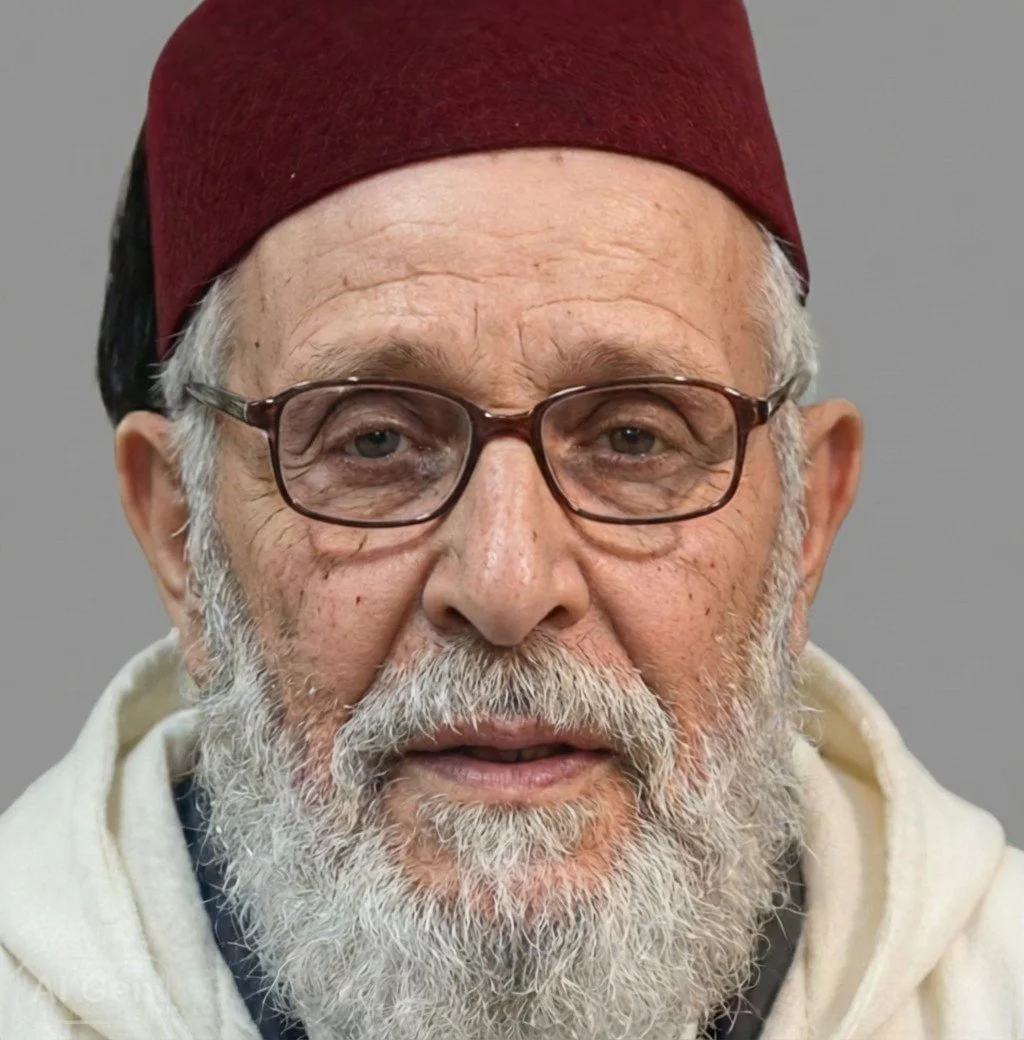
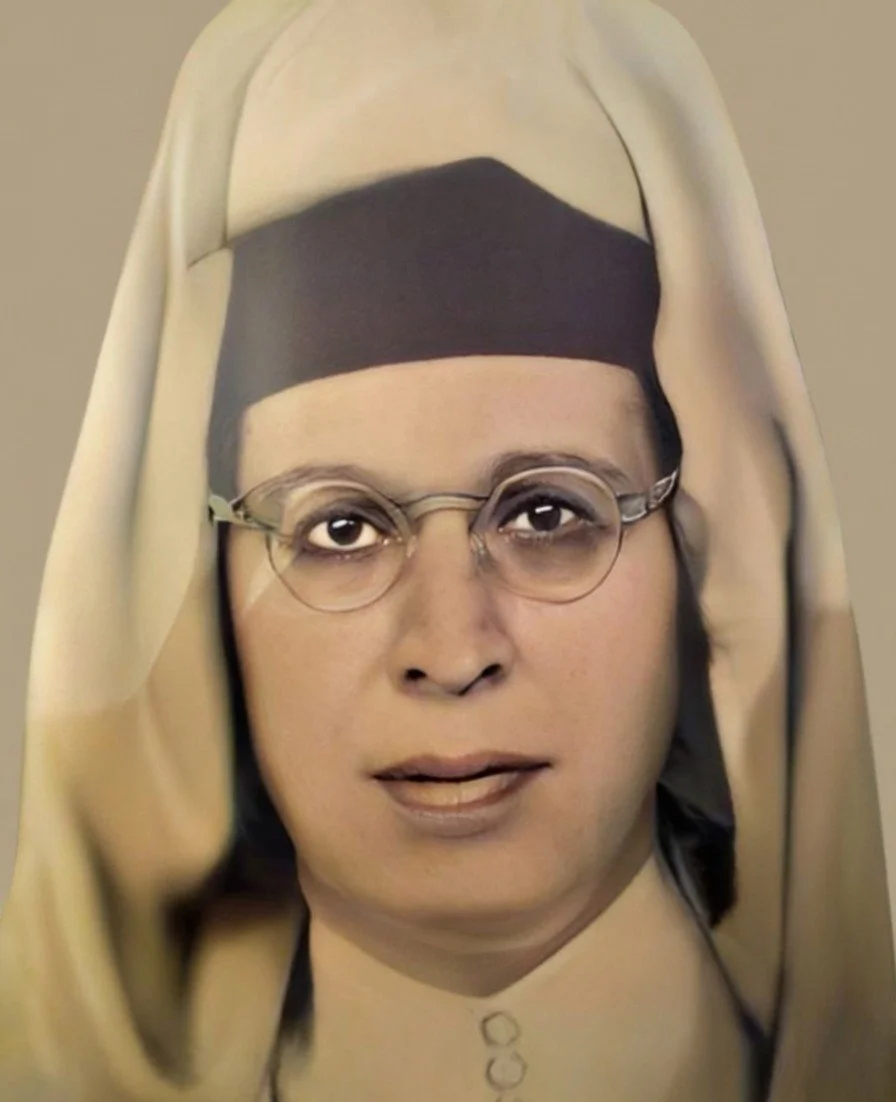
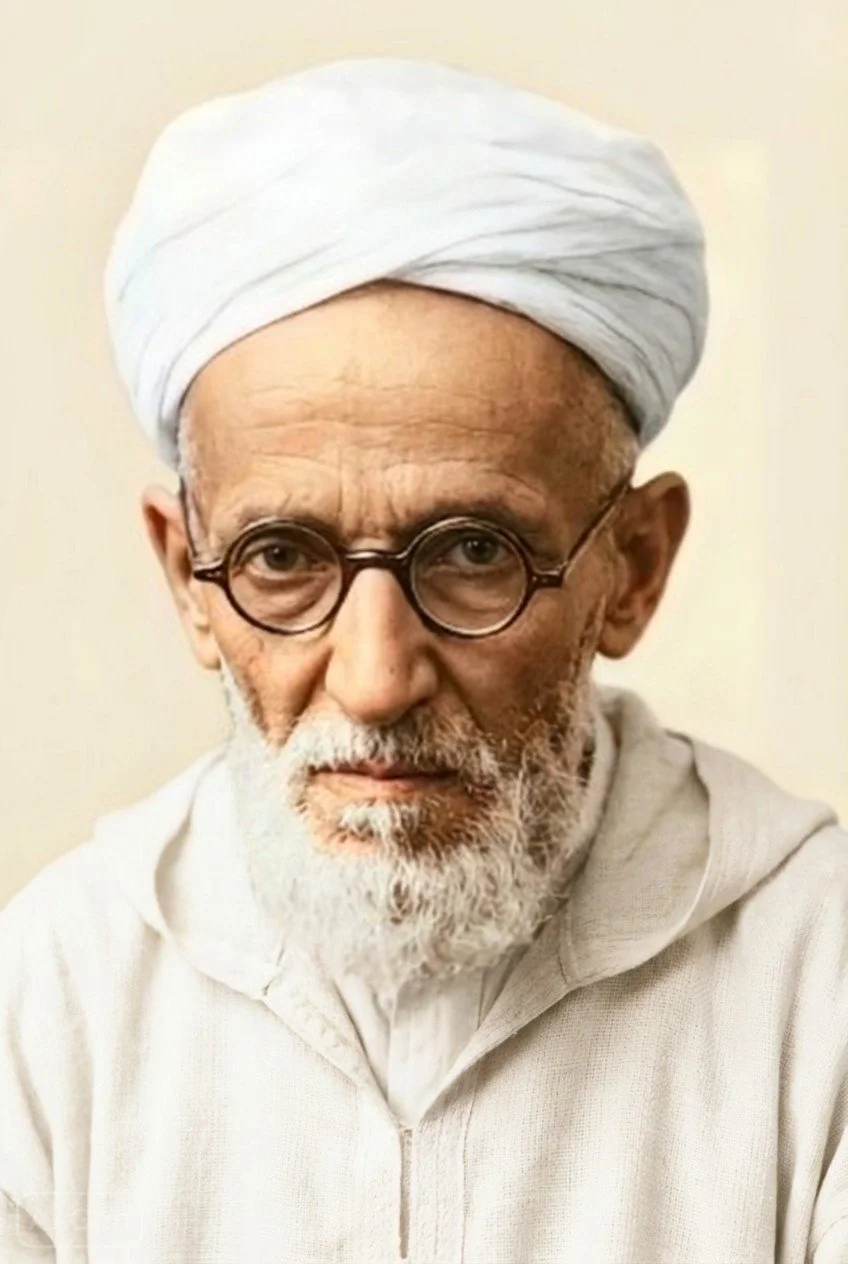
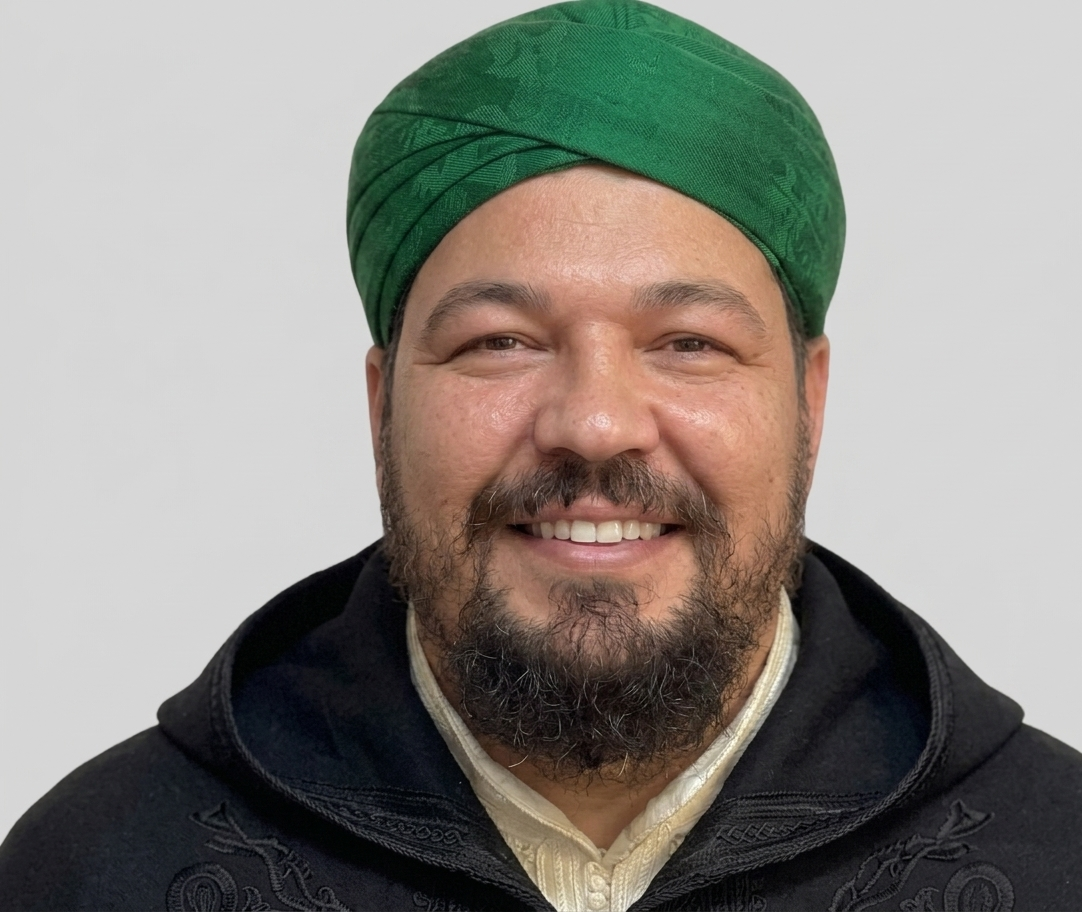
The branch unfolded from Mawlāy ʿAbd al-ʿAzīz through two lines — patrilineal through his son Idrīs, and matrilineal through his daughter Lalla Fāṭima — each producing consequences of its own. Through Idrīs came ʿUmar ibn Muḥammad ibn Idrīs, khaṭīb of Masjid al-Dīwān in Fez, companion of Aḥmad al-Tījānī (d. 1230/1815), and son-in-law of the noted scholar and poet Ḥamdūn ibn al-Ḥājj al-Sulamī (d. 1232/1816) — an alliance that embedded the branch simultaneously within the Tījānī networks then spreading across West Africa and within Fez's literary elite. Through Lalla Fāṭima's line came the Sharīf Ḥamīd, whose single act of directing the young ʿArabī al-Darqāwī (d. 1239/1823) toward ʿAlī al-Jamāl (d. 1192/1778) set in motion the emergence of the Darqāwiyya — one of the most influential Sufi movements of 19th-century Morocco. A hinge figure who appears in no title and held no office, yet through whom a major spiritual current passed.
“The most exalted sharīf, the most guarded of inner secrets — Sīdī Muḥammad, may God have mercy upon him, was a blazing sign among the signs of God. His days were filled with litanies and remembrances without ceasing. His baraka was known and spoken of by all. He gave with open hands whatever God placed before him, and there were nights — may God have mercy on him — when he lay down with nothing in his belly, having given away what he had. We kept his company for many years, and we drew from him and from his companionship a benefit whose measure God alone knows. We received from him certain litanies — may God make them among the deeds that avail.”
From ʿUmar ibn Muḥammad descended Muḥammad ibn ʿUmar (d. 1285/1868), a figure of considerable spiritual reputation in Fez — described in biographical sources as possessing extraordinary states of kashf, excellent character, and wide scholarly influence. He cultivated malāmatī spirituality, deliberately concealing his states beneath ordinary appearance, and claimed direct contact with al-Khiḍr — a claim that placed him in explicit continuity with his great-grandfather's founding experience. His announcement of the death of Shamharūsh al-Jinnī, followed by a funeral procession to a site outside Bāb al-Sharīʿa, divided the city between those who attended and heard the trembling of the assembled jinn and those who dismissed the affair entirely. It was a public episode that demonstrated both the branch's continuing capacity to generate figures of charismatic authority and the structural instability of such authority in a city where the scholarly establishment reserved its full endorsement.
Muḥammad ibn ʿUmar fathered three sons. Al-Ḥabīb ibn Muḥammad ibn ʿUmar (d. 1326/1908) became the consolidating figure of this lineage — a living repository of multiple transmission chains, transmitting the original Dabbāghī wird, Khiḍrian remembrances, and formal licenses in widely circulated devotional texts, effectively gathering into one person the diverse streams of spiritual authority the branch had accumulated across two centuries. Sulaymān ibn Muḥammad ibn ʿUmar (d. 1291/1874) maintained the family's spiritual traditions in Fez. ʿAllāl ibn Muḥammad ibn ʿUmar carried forward the family's presence in the city into the late 13th/19th century.
6.2. The Lineage of Mawlay al-ʿArabī ibn Masʿūd
This branch descended from Mawlay al-ʿArabī ibn Masʿūd, brother of Mawlay ʿAbd al-ʿAzīz. Al-ʿArabī was one of the heirs of his brother's secrets (wārith asrār akhīhi), demonstrating that the charismatic authority of Shaykh Abd al-ʿAzīz extended beyond his direct patrilineal descendants to other branches of the family through spiritual transmission. This spiritual inheritance positioned al-ʿArabī's descendants as carriers of the mystical knowledge that had made their uncle famous throughout Morocco. From al-ʿArabī descended al-Ṭayyib ibn al-Ḥasan ibn al-Ṭayyib ibn al-ʿArabī, who would father six sons and establish what became the most numerous and abundant of all the Dabbāgh branches, producing extensive progeny that would spread across both Morocco and the Ḥijāz.
Al-Ṭayyib's six sons each established distinct lineages. Al-ʿArabī ibn al-Ṭayyib produced a well-documented genealogical chain that remained in Fez. ʿAbd al-ʿAzīz ibn al-Ṭayyib (d. 1321/1903), the second son — known as Hazz — was described by Ibn Sūda in Itḥāf al-Muṭāliʿ as "religious, worshipful, devout, a master teacher." He died on the third of Shawwāl and was buried at his home in Burj al-Shurafāʾ in Fez al-Qarawiyyīn, adding another Dabbāgh grave to the city's sacred geography. According to Fihrist al-Shuyūkh, Hazz was the one who instructed Muḥammad ibn Jaʿfar al-Kattānī to teach at the Qarawiyyīn — a detail whose implications extend far beyond a single appointment, since al-Kattānī would become one of Morocco's most consequential scholarly figures of the late 19th and early 20th centuries. That a Dabbāgh sharīf directed his formation speaks to the branch's continuing spiritual weight in Fez's scholarly landscape.
Masʿūd ibn al-Ṭayyib (d. 1311/1893), the third son, migrated to the Ḥijāz during the reign of Sultan Mawlāy al-Ḥasan I, died in Mecca, and was buried there. His migration created the geographic split that would define this lineage for generations. His six sons pursued radically divergent paths: some returned to Morocco, others remained in Arabia and navigated the Hashemite-Saudi transition with remarkable adaptability — founding schools, serving as judges in Transjordan, teaching the sons of Saudi kings, and producing in Muḥammad Ṭāhir ibn Masʿūd a figure whom King ʿAbd al-ʿAzīz appointed Minister of Education, and in ʿĪsā ibn ʿAbd Allāh ibn Masʿūd a teacher whose students included King ʿAbd Allāh and King Fahd.
Al-Ḥasan ibn al-Ṭayyib (d. 1278/1862), the fourth son, established the line that became the institutional backbone of the family's Fāsī presence. He was naqīb of the entire Dabbāgh family in Fez — the man responsible for the collective genealogical archive, the keeper of the documents that nine sultans had issued across three centuries. His custodianship of the shrine of Sīdī ʿAlī ibn Ḥirzihim was active, not honorary: he oversaw renovations of the rawḍa of Mawlāy ʿAbd al-ʿAzīz al-Dabbāgh outside Bāb al-Futūḥ, purchased land around the shrine, and endowed it as a Dabbāgh cemetery — an act that transformed the family's connection to that sacred geography from inherited custodianship into permanent institutional foundation. He also built the small door in the western wall surrounding the Bāb al-Futūḥ cemetery, opposite Bāb al-Ḥamrāʾ — a physical mark of the family's hand on the landscape that still stands.
His marriage to Lalla Khadīja — great-granddaughter of Sīdī Aḥmad ibn al-Mubārak, the last surviving progeny of the faqīh who had recorded al-Ibrīz — was a union that concentrated in a single household the two lines most directly responsible for Mawlāy ʿAbd al-ʿAzīz's legacy: the bloodline of the saint and the bloodline of his witness. The manuscript of al-Ibrīz itself passed through this household.
From al-Ḥasan descended Jaʿfar (d. 1328/1908), who inherited his father's library and bore al-Ḥasan (d. 1398/1978) — a man who participated in the political clubs of Fez where Moroccan intellectuals debated the terms of the French Protectorate and the question of what modernity meant for a civilization whose identity was inseparable from its sacred heritage. From al-Ḥasan came ʿAbd al-ʿAzīz (d. 1438/2017), who inherited the library that held the Al-Ibrīz manuscript, maintained the family's custodianship of the Dabbāgh shrines, and became known in Fez in a register that his ancestors would have recognized as entirely consistent with the family's long tradition of inhabiting multiple worlds simultaneously: he gained wide fame as a player and coach of the MAS football club — carrying the Dabbāgh name through the streets of Fez in a century his ancestors had not imagined, with the same ease with which those ancestors had carried it from Tadla to Granada to Salé to Ḥūmat al-ʿUyūn. ʿAbd al-ʿAzīz fathered al-Ḥasan, who produced four children who continued the line in Fez: Aḥmad al-Kanz, Hāchim, Ismāʿīl, and El Mamun.
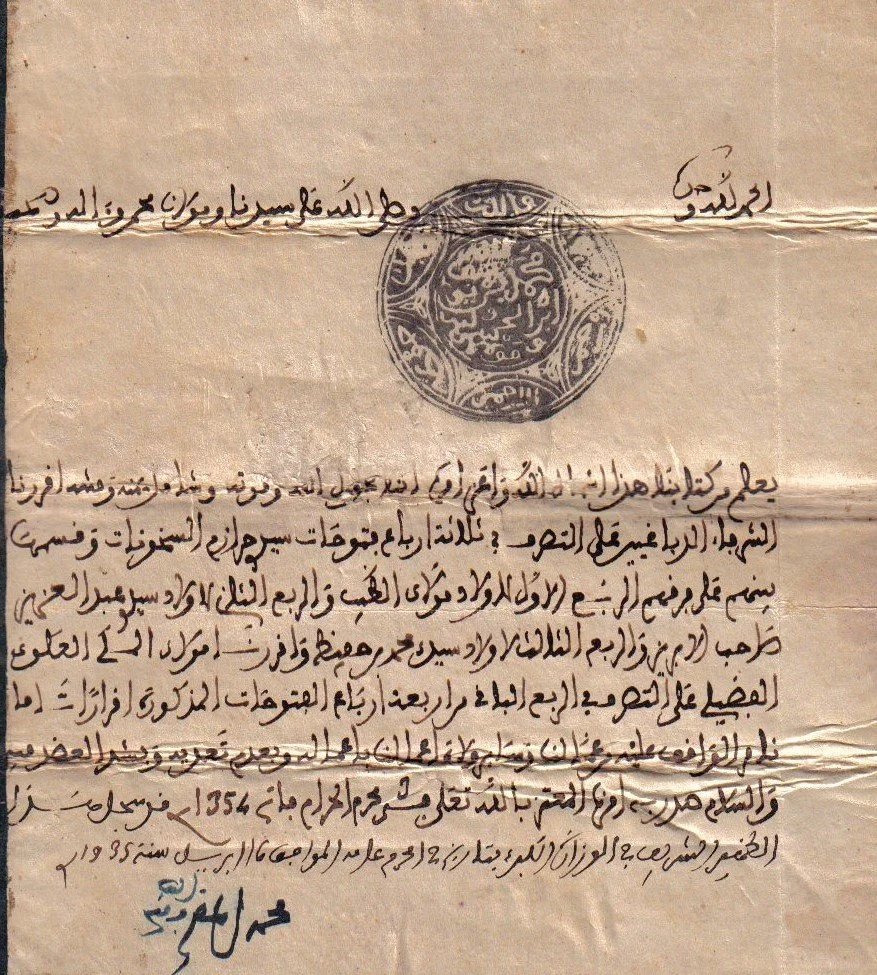
The Ẓahīr of 1354/1936 — Sultan Muḥammad V Confirms the Dabbāgh Custodianship of Sīdī Ḥarāzim
Ẓahīr sharīf issued under Sultan Muḥammad V in Muḥarram 1354/April 1936, bearing the royal seal and the signature of Grand Vizier Muḥammad al-Muqrī at the foot of the document. The ẓahīr formally reconfirms the Dabbāgh family's custodianship over the shrine of Sīdī Muḥammad ibn Ḥirzihim in Fez. Issued under the French Protectorate, it demonstrates that the family's recognized authority over this sacred site survived not only dynastic transitions — from Marinid through Saʿdian through ʿAlawī.
It is against this dispersed but coherent family structure that the ẓahīr of 1354/1936 must be read. By the time Sultan Muḥammad V pressed his seal onto that document — under the French Protectorate, signed by Grand Vizier Muḥammad al-Muqrī — al-Ṭayyib's six lines had spread across Fez, Marrakesh, Mecca, Medina, Riyadh, and Amman. The Arabian branches had produced ministers, judges, and royal teachers. The Fāsī branches had produced Hazz, who had shaped the scholarly formation of one of Morocco's most consequential families. The Moroccan sultanate, nine reigns after the first ẓahīr of 1081/1671, was still pressing its seal on documents confirming what that first decree had established — not out of bureaucratic habit but because the custodianship of Sīdī Muḥammad ibn Ḥirzihim remained a living institution requiring active recognition. The name the Marinids had attached to a tanning house stipend in 790/1388 now spanned two continents and four states, and the Moroccan state's formal acknowledgment of it persisted through dynastic transition, colonial administration, and the radical geographic dispersal that al-Ṭayyib's six sons had set in motion.
The branch exemplifies the family's pattern of maintaining both sedentary and mobile segments simultaneously. The Fez contingent ensured continuity of presence in Morocco's intellectual capital, preserving access to the Qarawiyyīn's educational resources and the spiritual geography centered on Mawlāy ʿAbd al-ʿAzīz's tomb. The Arabian contingent created networks spanning the Islamic world's most significant spiritual and political centers. Within a single generation of siblings, different members pursued radically different geographic strategies while maintaining the collective identity that the chain of sultanic ẓahīrs, renewed decade after decade, continued to recognize and formalize.
6.3. The 'Abd al-Rahman/Abū Tarbush Line in Fez
The third branch descends from ʿAbd al-Raḥmān ibn Muḥammad ibn Muḥammad ibn Aḥmad ibn Abī Zayd ʿAbd al-Raḥmān al-Jāmiʿ, and its historical significance crystallized in the figure of Muḥammad ibn ʿAbd al-Ḥafīẓ al-Dabbāgh (d. 1291/1874), known throughout Fez as Abū Ṭarbūsh — among the most prominently documented lines in the family's official record. When Sultan Muḥammad V issued his ẓahīr of 1354/1936 confirming the Dabbāgh custodianship of Sīdī Muḥammad ibn Ḥirzihim, this branch was named alongside the descendants of Mawlāy ʿAbd al-ʿAzīz and the descendants of Mawlāy al-Ṭayyib — three lines, one document, one unbroken recognition stretching back to the first ẓahīr of 1081/1671. That the Moroccan state, found it necessary to name all three branches explicitly speaks to the branch's standing: it was not a subsidiary line claiming association with a more illustrious cousin, but a recognized pillar of the family's collective institutional presence in Fez.
The principal sources for Abū Ṭarbūsh’s life are Salwat al-Anfās by Muḥammad ibn Jaʿfar al-Kattānī and Fihris al-Fahāris by ʿAbd al-Ḥayy al-Kattānī. Both authors were direct disciples who studied with Abū Ṭarbūsh and received ḥadīth transmissions from him, lending their testimony particular weight. These works consistently report that Abū Ṭarbūsh openly declared himself quṭb within the scholarly and Sufi circles of Fez—an assertion affirmed by contemporaries rather than shaped retrospectively by later hagiography.
During his formation, Abū Ṭarbūsh acquired several Sufi affiliations. Nevertheless, he attributed his spiritual authority primarily to his ancestor Mawlay Idrīs II, founder of al-ʿĀliyya and central source of Idrisid baraka in Fez. He claimed to consult Mawlay Idrīs on major matters and to receive instruction from him. When disciples sought permission to establish a zāwiya, Abū Ṭarbūsh reportedly replied that Mawlay Idrīs had refused, saying in Darija: Kathrū al-zawāwī wa-qalla man yudāwī (“Zāwiyas have multiplied, yet few are those who truly heal”). As a result, Abū Ṭarbūsh never founded a formal lodge, instead teaching and receiving disciples in various locations throughout Fez.
This claim served clear social and symbolic functions. It positioned Abū Ṭarbūsh above rival shaykhs by asserting unmediated access to Fez’s primordial source of baraka, while simultaneously legitimizing his refusal to institutionalize his following. Whether these consultations were experienced as visionary encounters or functioned as Abū Ṭarbūsh’s own authoritative reasoning attributed to a higher source is ultimately secondary; what matters is their role in structuring authority and insulating him from competition within an increasingly crowded Sufi landscape.
“My shaykh and my blessing, the righteous master, the sincere guide, the one who directs to God, who seeks in his spiritual path the presence of God, the exemplary invoker, the knower of God Most High, Abū ʿAbd Allāh Sīdī Muḥammad called Abū Ṭarbūsh—because he would place a ṭarbūsh (fez) on his head and nothing more... He would openly declare his sainthood, inform others of his great elevation and station, relate many of God’s blessings upon him, and mention some of what God had honored him with and bestowed upon him... He would also meet with our Master Mawlay Idrīs al-Azhar, asking him about many matters that arose, and Mawlay Idrīs would answer in ways that satisfied hearts. Among these instances: when a group of his companions asked permission to build a zāwiya where they could gather with him, he delayed them at that time. Then he informed them that he had seen our Master Mawlay Idrīs, may God be pleased with him, and sought his permission for this. Mawlay Idrīs told him: ‘O my son Muḥammad al-Dabbāgh! Do not build yourself a zāwiya. Let the cosmos be your zāwiya—zāwiyas have multiplied while those who truly heal have diminished.’ So he did not build a zāwiya, and continued meeting with them in various mosques, houses, gardens, and places of leisure, nothing more... People would seek him for their important needs, which would be fulfilled through the unseen and spiritual power (himma). Miracles and extraordinary occurrences manifested through him, many became his disciples, and great good appeared through his hands... He would recite the entire Ṣaḥīḥ al-Bukhārī annually during the three months at the zāwiya of Sīdī ʿAbd al-Qādir al-Fāsī, in the corner to the right of the prayer niche... I received from him the ḥadīth musalsla with the Prophetic handshake and interlocking of fingers; he shook my hand and interlocked fingers with me at the Idrīsid shrine... He would most often seek refuge in the Qarawiyyīn Mosque near the retreat cell, and at the shrine of our Master Mawlay Idrīs by the chair facing the courtyard pavilion, to the left of one facing the dome. A trustworthy person informed me that he vowed to visit our master Idrīs, may God be pleased with him, for forty days, asking God to let him meet the Pole of the Age. He said: ‘After completing the forty days, I happened to open a shop for buying and selling, having previously been a student of knowledge. As soon as I entered it, Sīdī Muḥammad al-Dabbāgh came to me, entered with me, sat down, and said: “People come to the Pole, and among them are those upon whom the Truth Most High bestows favor, so the Pole comes to them!”‘ He said: ‘I did not grasp the meaning of his words—that he was indicating to me that he was the Pole and that he had come to me—until some time later!’ Then this informant mentioned another story to me: Sīdī Muḥammad al-Dabbāgh came to someone, and that person said to him: ‘O master, I ask you by God to tell me where the Pole is at this time?’ and words to this effect. He replied: ‘Ḥawzī’ (in my possession). The man thought he was telling him the Pole was from the Ḥawz region, but he was actually indicating that the Pole’s station was in his possession and dominion, that he himself held it.”
Abū Ṭarbūsh’s outward appearance reinforced this ambiguity. He wore the red Moroccan ṭarbūsh rather than the scholarly turban, a choice that earned him his nickname and visually distinguished him from the formal ʿulamāʾ. Yet he also taught Ṣaḥīḥ al-Bukhārī annually during the three sacred months at the zāwiya of ʿAbd al-Qādir al-Fāsī, attracting students from Fez’s most prominent families. His profile thus combined charismatic spiritual claims with recognized scholarly competence, allowing him to appeal simultaneously to mystical and learned constituencies.
Upon his death, Abū Ṭarbūsh was buried in the zāwiya of ʿAbd al-Qādir al-Fāsī, specifically in the corner to the left of the prayer niche—the very place where he had taught. This burial effectively transformed his teaching space into a shrine, ensuring that his bodily presence remained embedded within the locus of his authority.
The location carried further significance. Abū Ṭarbūsh was interred alongside ʿAbd al-Qādir al-Fāsī himself and his son Abū Zayd. Beyond his spiritual stature, ʿAbd al-Qādir had served as Shaykh al-Jamāʿa of Fez and was the principal signatory of the 1140 genealogical certificate that authenticated the Dabbagh family’s sharifian descent through eighty scholarly signatures. That document confirmed their lineage from ʿĪsā al-Anwar and their hereditary custodianship of the shrine of Sīdī ʿAlī ibn Ḥirzihim.
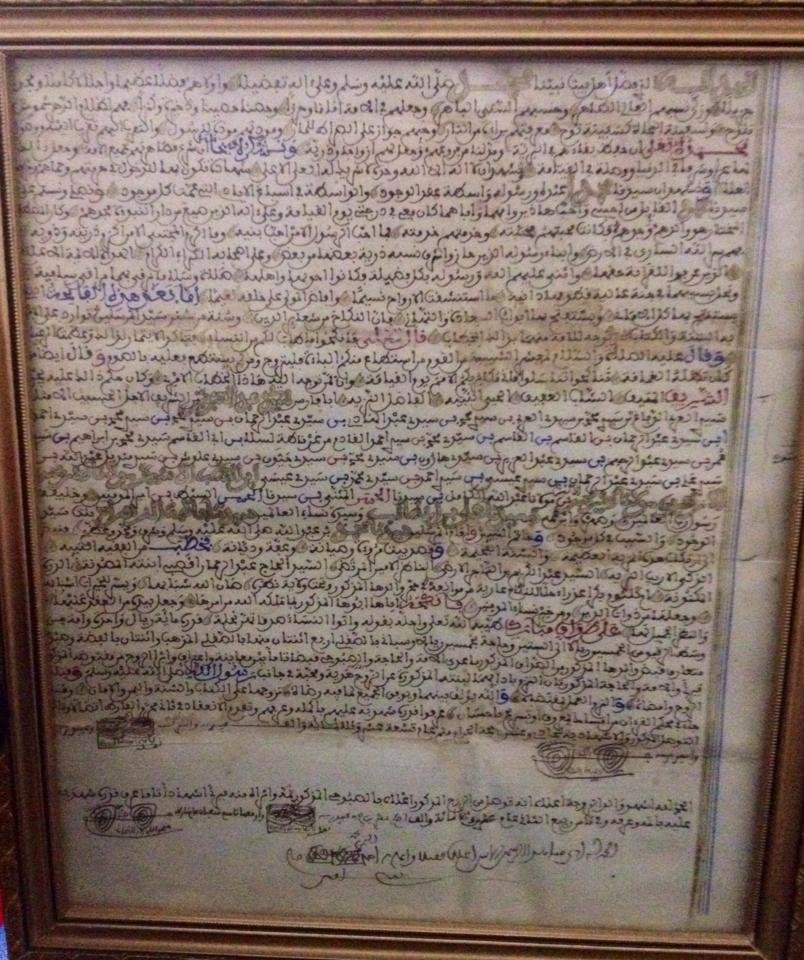
Marriage Contract of ʿAbd al-ʿAzīz al-Dabbāgh — A Fāsī Sharīfian Document from the 13th/19th Century
Marriage contract (ʿaqd nikāḥ) recording the union of ʿAbd al-ʿAzīz al-Dabbāgh — a descendant of the celebrated Fāsī mystic Abū Ṭarbūsh — and Umm Kulthūm Aqṣabī, written in Maghribi notarial script and bearing the seals of the ʿudūl and signatures of the contracting parties. Preserved framed in the family archive, Fez, 13th/19th century.
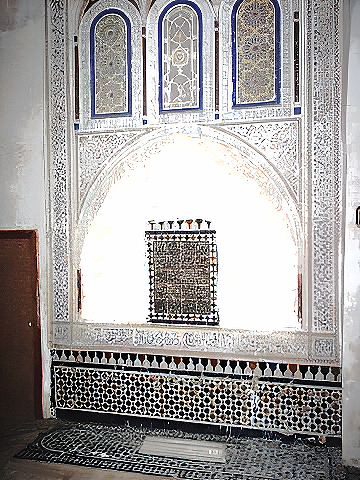

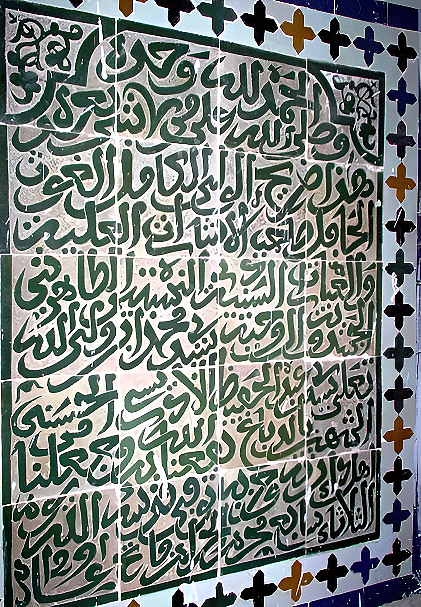
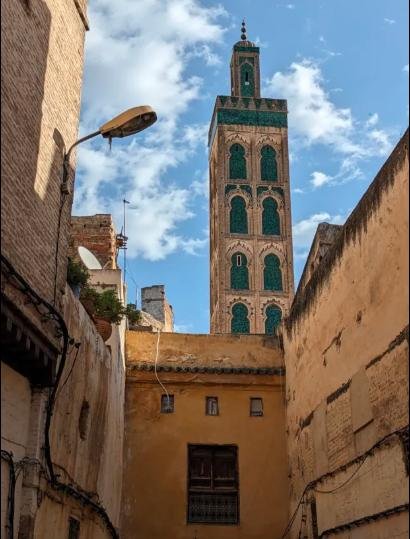
Securing burial for Abū Ṭarbūsh beside the scholar who had validated the family’s genealogy established a lasting spatial convergence between documentary legitimacy and charismatic authority. Visitors to the zāwiya encountered both forms of validation side by side: the grave of the administrator-scholar who certified bloodlines and the grave of the mystic who claimed direct instruction from Mawlay Idrīs II.
Finally, the vision at Wādī al-Shurafāʾ, in which Abū Ṭarbūsh reported that the Prophet ﷺ declared the Dabbaghs the finest of his progeny, became a narrative resource mobilized by both families in later generations. In particular, the connection with the al-Kattānī family proved decisive. As the Kattānīs rose to prominence within Fez’s scholarly elite, many attributed their ascent to the baraka transmitted through their discipleship with Abū Ṭarbūsh, embedding his legacy within the long-term reconfiguration of Morocco’s sharifian and scholarly hierarchies.
Later members of this branch sustained the family's religious authority. Ibrāhīm ibn Abī Ṭarbūsh (d. 1329/1911), emerges from sources as a figure of considerable scholarly standing. ʿAbd al-Ḥafīẓ ibn al-Ṭāhir al-Fāsī al-Fihrī devoted extended treatment to him in Riyāḍ al-Janna, describing him as "among the highest of his time in rank, and most noble in distinction, a great scholar, ḥadīth specialist, Sufi."
Ibrāhīm conducted annual recitations of Ṣaḥīḥ al-Bukhārī during Rajab and Shaʿbān for approximately forty years at the Fāsī zāwiya, completing the text in about forty sessions before assemblies of scholars and notables. ʿAbd al-Ḥafīẓ's father regularly attended these sessions. The account emphasizes Ibrāhīm's pleasant company, copious benefits, illuminated countenance, constant remembrance and worship, quick tears, humble heart, elevated spiritual aspiration, and abstinence. He was described as "venerated by elite and common people alike, greatly humble, gentle, loving toward people of goodness."
Ibrāhīm studied with multiple Fez scholars, particularly depending on Abū al-ʿAbbās al-Warghiyālī. From his father Muḥammad he received extensive training, hearing ḥadīth works from him repeatedly—Ṣaḥīḥ al-Bukhārī more than twenty times alone. During pilgrimage to Mecca, he received authorizations from Aḥmad Daḥlān, Abū al-Maḥāsin al-Qāwuqjī al-Ṭarāblusī (who transmitted from al-Sanūsī, al-Marghīnī, al-Baʿalawī, al-ʿAydarūs al-Saqqāf, al-ʿAṭṭās, and ʿAbd al-Qādir al-Kūhān), Ḥasan al-ʿAdawī (from whom he received the Shādhiliyya order), Aḥmad ibn Manṣūr al-Rifāʿī (from whom he received the Rifāʿiyya), and Aḥmad al-Dahhān in Mecca (from whom he received the Idrīsī divine names with their sciences, properties, and permissions for their use). His funeral attracted large crowds, and people greatly mourned his loss.
Muḥammad ibn Idrīs ibn ʿAbd al-Hādī ibn ʿAbd al-Raḥmān (d. 1350/1931) was described as a man of letters, poet, and well-read scholar from Fez. He was among the perfect knowers and righteous attainers, abundant in litanies and remembrances, performing night vigils, abstemious toward the world, devoted to his Lord, indifferent to worldly matters, finding intimacy with his Master in secret and private conversation, knowing the secrets of God's majesty, silent and dignified, speaking only when necessary, constantly contemplative, pure of heart, illuminated within, constantly engaged in righteous deeds, devoted to Quranic recitation, immersed in love of his grandfather the Messenger of God. He authored a significant work containing numerous prayers upon the Prophet ﷺ titled Miftāḥ al-Asrār fī-mā Yataʿallaq bi-l-Ṣalāt ʿalā Sayyid al-Abrār (The Key of Secrets Concerning Prayer upon the Master of the Righteous). The work survives in the National Library, comprising 189 pages. Ibn Sūda included his biography in Itḥāf al-Muṭāliʿ.
Muḥammad ibn al-Hādī ibn Muḥammad ibn ʿAbd al-Hādī ibn ʿAbd al-Raḥmān (d. 1284/1867) served as muqaddam of the Kuntiyya in Fez. The Kuntiyya represented one of several Qādiriyya branches active in Morocco, distinguished by its Saharan origins and extensive networks reaching into West Africa. His role provided institutional platform connecting the family to devotional networks extending beyond Fez.
Four brothers from an earlier generation—Aḥmad ibn ʿAbd al-Raḥmān, Idrīs ibn ʿAbd al-Raḥmān, Mḥammad ibn ʿAbd al-Raḥmān, and ʿAbd al-Mālik ibn ʿAbd al-Raḥmān—signed the bayʿa document for Sultan Mawlāy al-Yazīd ibn Muḥammad ibn ʿAbd Allāh (r. 1204–1206/1792–1795). Their inclusion demonstrates the branch's integration into Fez's class of notables whose endorsement was sought for dynastic transitions. That four brothers signed together indicates the family's collective political positioning.
A subsidiary line maintained presence in Fez through Muḥammad ibn ʿAbd al-ʿAzīz ibn Muḥammad (d. 1428/2008), who served as conservator of the Qarawiyyīn Library for over twenty-three years while authoring works on literature and history.
The branch remained concentrated in Fez's ʿUyūn quarter, maintaining the residential pattern that facilitated sharīfian networks and collective assertion of privileges.
6.4. The Marrakesh Lineage
The fourth branch descended from Idrīs ibn al-Qāsim ibn Abī Zayd ʿAbd al-Raḥmān, establishing itself in Marrakesh. The city functioned as Morocco's southern capital with distinct opportunities from Fez's saturated sharīfian landscape. Marrakesh possessed its own religious establishment, commercial networks, and patronage structures, allowing family members to build reputations independent of northern comparisons.
Muḥammad al-Dabbāgh (d. 1210/1795) served as judge of Agadir, demonstrating the branch's success in securing judicial appointments in southern Morocco's urban centers. The position required legal expertise and political networks extending beyond Marrakesh into the Sūs region.
Muḥammad ibn Muḥammad ibn al-Ḥasan, known as al-Faqīh ibn al-Ḥasan (d. 1371/1952), achieved appointment as shaykh al-jamāʿa of Marrakesh, the city's highest religious office. This occurred during the late colonial or early independence period, demonstrating sustained religious authority through political transformations. The position involved supervising mosques, madrasas, and endowments, requiring both scholarly credentials and administrative capacity. That he held this office into 1371/1952 suggests he navigated the transition from French protectorate to Moroccan independence while maintaining institutional position.
The branch's most dramatic adaptation appeared in Idrīs ibn al-Ṭayyib ibn Ibrāhīm al-Dabbāgh's career trajectory. He served as Morocco's ambassador to Italy (1959-1961) during the early independence period, then as Minister of Commerce, Industry, Mines, and Maritime Navigation (1963), and subsequently as vice-president of Banque Commerciale du Maroc. This progression from diplomacy through ministerial office to banking leadership demonstrates how sharīfian credentials could be translated into political and economic capital in postcolonial Morocco. The ʿAlawī monarchy's policy of promoting sharīfs into state positions created opportunities for families like the Dabbaghs to transition from traditional religious vocations into modern professional and political roles while maintaining their genealogical identity.
Descendants of ʿAbd al-ʿAzīz ibn al-Walīd ibn Muḥammad ibn Aḥmad ibn ʿAlī ibn ʿAbd al-Raḥmān ibn Aḥmad ibn Idrīs remained permanently established in Marrakesh into the contemporary period.
6.5. The ḥaramayn Mālikī Imams
Geographic expansion eastward produced the family's most distinguished institutional achievement: monopolization of the Mālikī imam position at Mecca's Sacred Mosque across multiple generations. This branch descended from Muḥammad al-Qāsim, known as shaykh al-Mālikiyya ibn Muḥammad al-Ṣaghīr ibn Aḥmad ibn Muḥammad ibn Muḥammad ibn Aḥmad ibn ʿAbd al-Raḥmān, who had entered Fez from Salé. In Meccan context, the family became known as al-Mālikis, their identity defined by institutional function rather than genealogical distinction alone.
The Mālikī imamate passed through successive generations, creating hereditary association between the Dabbagh name and this prestigious position. The complete genealogical chain demonstrates the family's careful documentation of their line:


ʿAbbās ibn ʿAbd al-ʿAzīz ibn Muḥammad ibn ʿAbd al-Raḥmān ibn Aḥmad ibn Muḥammad al-Qāsim (d. 1353/1935) held the Mālikī imam position while simultaneously serving in diplomatic capacities for Sharīf Ḥusayn ibn ʿAlī, the Hashemite ruler of the Ḥijāz. His diplomatic assignments took him to Jerusalem to supervise restoration of the Dome of the Rock and al-Aqṣā Mosque, and to Abyssinia to oversee mosque construction. These missions combined religious authority with political service, demonstrating how the family's Mālikī legal expertise and sharīfian status translated into trusted roles under Hashemite authority.
ʿAbbās ibn ʿAbd al-ʿAzīz ibn Muḥammad (1335-1391) succeeded his father in the imam position, maintaining the family's hold on this office through the dramatic political transition from Hashemite to Saudi rule over the Ḥijāz in 1924-1925. His ability to retain the position despite regime change suggests the family had established sufficiently deep roots in Meccan society that their institutional role transcended particular political authorities.
Muḥammad al-Ḥasan ibn ʿAlawī ibn ʿAbbās ibn ʿAbd al-ʿAzīz (d. 1425/2004) achieved particular prominence, earning the titles muḥaddith al-ḥaramayn al-sharīfayn and shaykh al-ṣūfiyya bi-l-Ḥijāz. When he died, funeral prayers were held in the Sacred Mosque, and he was buried in al-Muʿallāh cemetery in a majestic funeral. Crown Prince ʿAbd Allāh ibn ʿAbd al-ʿAzīz Āl Saʿūd (later King ʿAbd Allāh) attended the burial ceremonies on behalf of his brother King Fahd, indicating the family's continuing recognition at the highest levels of Saudi authority despite their Mālikī rather than Ḥanbalī affiliation and their historical associations with the displaced Hashemite rulers.
6.6. The Medinese Restoration
During Sultan Mawlay al-Ḥasan I's reign (1290-1311/1873-1894), Masʿūd ibn al-Ṭayyib ibn al-Ḥasan ibn al-Ṭayyib ibn al-ʿArabī ibn Masʿūd (d. 1311/1893) undertook pilgrimage to the Ḥijāz. The holy cities under Hashemite rule proved particularly welcoming to sharifs, and Masʿūd found the environment conducive enough to relocate his family. Sources describe him as a walī ṣāliḥ. He died and was buried in Mecca.
Masʿūd fathered six sons. Two returned to Morocco while four remained in Arabia, their descendants navigating the 1924-1925 transition from Hashemite to Saudi rule.
Muḥammad ibn Masʿūd (d. 1340/1922) remained in Fez, becoming a Tijānī muqaddam under al-ʿArabī al-ʿAlamī of Zarhūn (d. 1320/1902). His teachers included Muḥammad ibn al-Madanī Kannūn, Aḥmad ibn Bannānī, and ʿAbd al-Mālik al-ʿAlawī al-Ḍarīr. ʿAbd al-Ḥafīẓ al-Fāsī al-Fihrī described him as al-faqīh al-ṣūfī, al-khayr al-dhākir, al-mutaʿabbid al-ṣāliḥ al-waqūr, baqiyyat al-salaf. He composed versified Sufi works, including a poem on Sufi orders that Aḥmad ibn Muḥammad al-Khaḍīr al-ʿImrānī commented upon in Saʿd al-Shumūs fī Makārim al-Akhlāq wa-Qamʿ al-Nufūs. He was buried at Bāb al-Futūḥ.
“Muḥammad ibn Masʿūd was a Sufi jurist, a goodly invoker, a devout and dignified worshipper — a remnant of the pious forebears. He studied under Muḥammad ibn al-Madanī Gannūn, Aḥmad ibn Bannānī, and ʿAbd al-Mālik al-ʿAlawī al-Ḍarīr, among others. He devoted himself to worship and night vigil, and composed didactic poems and versified works in the science of Sufism — among them a poem on the Sufi orders, upon which Aḥmad ibn Muḥammad al-Khaḍīr al-ʿImrānī wrote a commentary titled ‘Saʿd al-Shumūs fī Makārim al-Akhlāq wa-Qamʿ al-Nufūs’. I was in frequent contact with him, and he would invoke God’s good upon me whenever we met.”
Abū al-Qāsim ibn Masʿūd (d. 1351/1931) established a household in the Ḥijāz before returning to Morocco to marry his cousin Lalla Ghīta, daughter of Jaʿfar ibn al-Ṭayyib al-Dabbāgh. He settled in Marrakesh. ʿAbd al-Ḥayy al-Kattānī mentioned him in Fihris al-Fahāris, noting his correspondence with scholars in Mecca.
“Abū al-Qāsim was among the renowned Dabbāgh sharīfs of Fez — a scholar of wide learning and ḥadīth, who lived by his knowledge and followed the Sunna. He performed the ḥajj, resided in the holy cities, and raised learned children there before returning to Morocco, where he moved between its cities until death found him in Marrakesh. I took from him and received his general oral authorization at our home. When the midday adhān was called and he began repeating it as is the Sunna, a scholar present cited a Companion’s view that repeating the muezzin’s words sufficed. Al-Dabbāgh responded with firmness: ‘A single Companion’s position does not constitute definitive proof — particularly when the matter is established in the Six Books. How can an explicit text be rejected on the basis of one Companion’s view?’”
Aḥmad ibn Masʿūd (d. 1394/1974) was born in Medina, memorized the Quran, and was appointed judge of al-ʿAqaba under Sharīf Ḥusayn ibn ʿAlī. After the Saudi conquest, he relocated to Transjordan, connecting with Amīr ʿAbd Allāh. He was appointed to education in Ṭufīla, then in 1383/1946 became chief judge there. He donated his library to the University of Jordan and maintained friendship with Prince al-Ḥasan ibn Ṭalāl. He died in Riyadh. Jordan's Ministry of Education named a school in Ṭufīla after him.
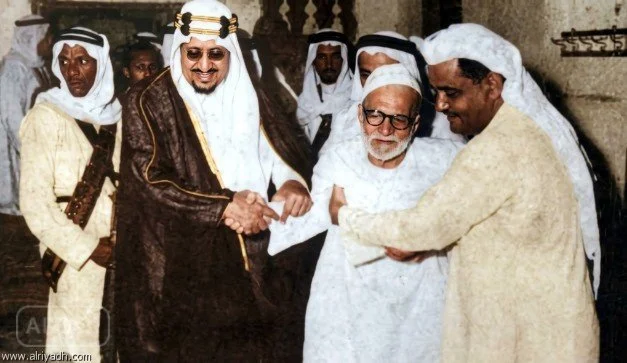
Muḥammad Ṭāhir ibn Masʿūd (d. 1378/1966) became pioneer of education in the Ḥijāz. King ʿAbd al-ʿAzīz appointed him Minister of Education. He established schools across regions and founded a school for preparing foreign scholarship students. Before unification, he served as Secretary-General of the Ḥijāzī National Party.
Al-Ḥusayn ibn ʿAbd Allāh ibn Masʿūd (d. 1381/1962) fled Mecca to Ḥaḍramawt when Saudi forces arrived. He founded Falāḥ schools across Ḥaḍramawt, al-Mukallā, ʿAdan, and Yāfiʿ. He adopted the title al-Dāʿī ilā Allāh and built military force. British authorities arrested him in 1380/1961 and delivered him to Saudi custody. He died in Jīzān prison the following year.
ʿĪsā ibn ʿAbd Allāh ibn Masʿūd (d. 1434/2013) joined teaching at age 16. He taught at Madrasat al-Anjāl in Riyadh, educating King ʿAbd Allāh, King Fahd, Prince Mutʿib, and Prince Ṭalāl. Crown Prince ʿAbd Allāh attended his burial in Ṭāʾif's cemetery of ʿAbd Allāh ibn al-ʿAbbās.
The branch's geographic distribution across Morocco, Jordan, and the Arabian Peninsula, combined with members' diverse responses to political upheaval—accommodation, resistance, or specialized service—demonstrates adaptive strategies ensuring family survival across multiple regimes.
7. Conclusion: Survival, Scholarship, Sanctity — and What Comes Next
The Dabbāgh family's fourteen-century trajectory from the Prophet Muhammad ﷺ through the Idrisid founding of Morocco to the present demonstrates how sharīfian families maintained position through embodying sanctity, scholarship, and social authority that political powers required for legitimacy. This was not royal power but something more durable: religious authority rooted in prophetic genealogy, scholarly transmission, and recognized baraka — authority that outlasted every dynasty that tried to harness it and every pretender who tried to imitate it.
Morocco remained fundamentally Idrisid regardless of which dynasty held political power. Fez was founded by Idrīs I, its sacred geography organized around Idrisid tombs and sanctuaries. Subsequent rulers — Marinids, Saʿdians, ʿAlawīs — governed Morocco politically, but the religious and cultural foundations remained Idrisid. Sharīfian families like the Dabbāghs maintained authority derived from that founding reality across nine sultanic reigns, two continents, and fourteen centuries of documented presence. They did not rule, but they occupied space rulers could not ignore. They did not command armies, but they commanded respect based on genealogy, knowledge, and baraka. The infrastructure they built — tombs, books, networks, documented genealogies, custodial ẓahīrs — functions still.
Three elements sustained this position. Sanctity created recognition that politics alone could not provide: Mawlāy ʿAbd al-ʿAzīz's tomb at Bāb al-Futūḥ became a pilgrimage site through popular recognition of his spiritual station; Abū Ṭarbūsh's burial alongside ʿAbd al-Qādir al-Fāsī linked the family to the scholar who had authenticated their nasab with eighty signatures; the vision at Wādī al-Shurafāʾ sealed what the documents had established. Scholarship provided indispensable services across changing regimes — judges, muftis, ḥadīth specialists, teachers, and in the 20th century a Minister of Education in Saudi Arabia and a teacher of kings. And prophetic descent commanded recognition across political boundaries, from Hashemite Ḥijāz to Jordanian Ṭufīla to the courts of Riyadh — a credential that transcended every regime transition its bearers survived.
That infrastructure now faces a challenge the family's ancestors did not anticipate: not political persecution, not dynastic displacement, not the loss of endowments — but the appropriation of the name. The good name of Mawlāy ʿAbd al-ʿAzīz al-Dabbāgh, and the spiritual capital accumulated across fourteen centuries, has become attractive to those who claim inheritance they do not possess. Figures presenting themselves as successors to the Dabbāgh baraka, conducting organized visits to the shrine at Bāb al-Futūḥ, building reputations and financial networks on the strength of an association the family never authorized — some exploiting the family's own hospitality to lend their claims the appearance of legitimacy. Among the most visible of these is a figure operating between UK and Pakistan who claims spiritual inheritance from Mawlāy ʿAbd al-ʿAzīz, makes annual visits to the shrine, and has built an organization around that claimed connection. He is among several mutasharrifūn of a new kind — not claiming genealogical descent, which the documentary record would immediately refute, but claiming spiritual succession, which is harder to disprove and easier to monetize. The family's response to this appropriation is not hostility but precision: the nasab is documented, the custodianship is documented, and the chain of transmission from Mawlāy ʿAbd al-ʿAzīz through his designated successor Ibn Ḥanīnī is documented. What is not documented cannot be legitimized by proximity to a shrine, frequency of visitation, or the generosity of a family that has always received visitors with the hospitality their ancestor modeled.
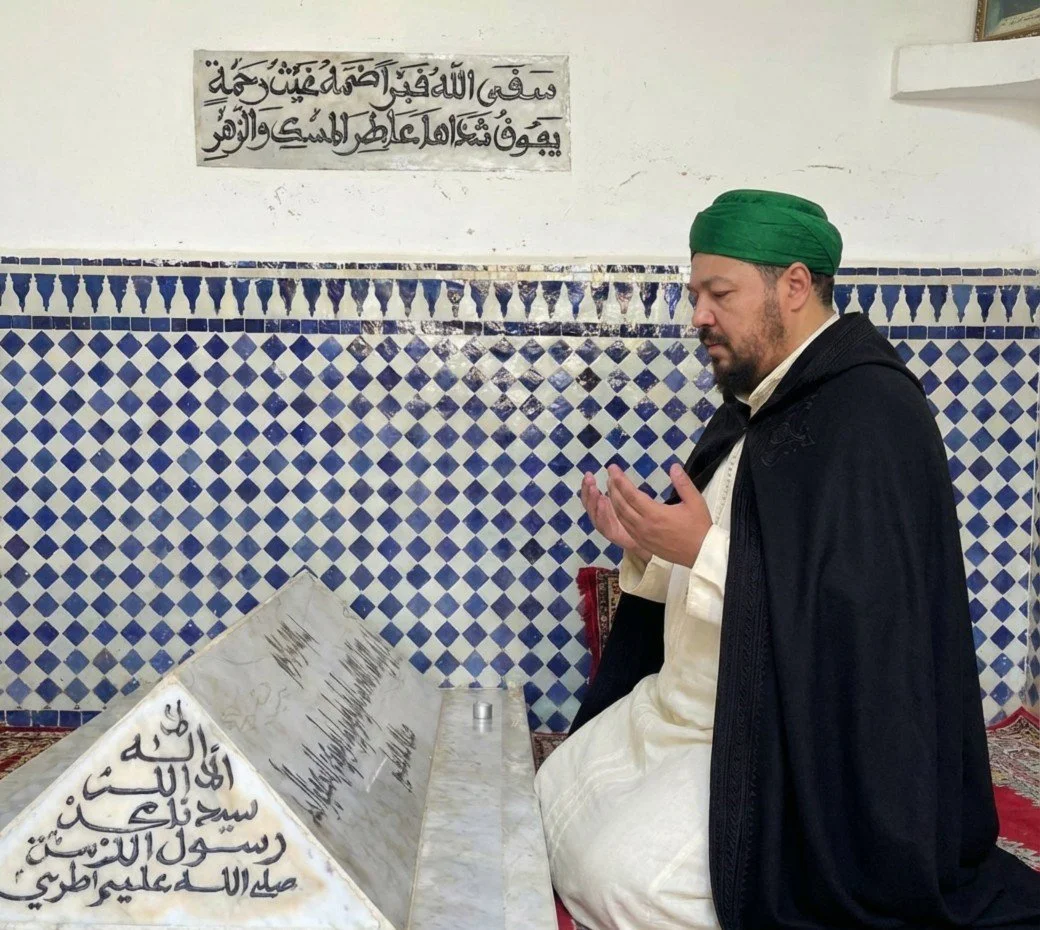
Rawḍa of Mawlāy ʿAbd al-ʿAzīz al-Dabbāgh, Bāb al-Futūḥ, Fez.
El Hassane Debbarh, founder of DAR.SIRR and descendant of Mawlāy ʿAbd al-ʿAzīz al-Dabbāgh, in supplication at the marble tomb of his ancestor inside the rawḍa outside Bāb al-Futūḥ, Fez.
Morocco faces a broader choice about what to do with its Idrisid heritage in the 21st century: between instrumentalizing it for tourism and state ceremony on one hand, and understanding it as a living intellectual and spiritual tradition that requires active custodianship on the other. The Dabbāghs embody that choice in concrete terms.
The three shrines associated with the family — the rawḍa of Mawlāy ʿAbd al-ʿAzīz al-Dabbāgh outside Bāb al-Futūḥ, the shrine of Sīdī ʿAlī ibn Ḥirzihim, and the shrine of Sīdī Muḥammad ibn Ḥirzihim — are sites of living devotion, not museum pieces. The family is working to establish annual mawāsim for all three shrines, restoring a tradition of organized collective visitation that the city's sacred calendar once sustained and that three centuries of quiet custodianship have kept alive without spectacle.
And the family is preparing something the reader of this article will not have encountered before. For three hundred years, certain asrār received by Mawlāy ʿAbd al-ʿAzīz — from the Prophet ﷺ directly, and from the shaykhs who formed him before the fatḥ — have remained within the family, unannounced and uncirculated. The wāẓifa and wird of the Shaykh, preserved in the manuscripts that passed through the family's hands from Ibn al-Mubārak's generation to the present, have never been recited publicly. That changes. The family intends to bring these asrār out of the archive and into the open — recited at the shrines, in the presence of those who come to the mawāsim, in the manner the Shaykh himself would have recognized: no institutional apparatus, no organization extracting revenue from his memory, no performance. Simply the wird at the threshold where al-Khiḍr once sat, at the gate where the fatḥ descended, before the tomb where three centuries of custodianship have kept the lamp burning. What was sealed is being opened. The asrār are coming home.
The textual heritage requires equivalent attention. The manuscripts of al-Ibrīz and Taysīr al-Mawāhib — including the copy that passed through the library of al-Ḥasan ibn al-Ṭayyib to ʿAbd al-ʿAzīz ibn al-Ḥasan — are among the most consequential documents in Moroccan Sufi literature. The family is working toward new critical editions of both texts, drawing on manuscript sources held within the family archive and in Moroccan public collections, to establish authoritative versions that can serve scholars, students, and practitioners for the generations ahead. DAR.SIRR is part of that effort: the family writing itself back into the documentary record with the same care that Ibn al-Sakkāk brought to Salé, that Ibn al-Mubārak brought to al-Ibrīz, and that nine sultans brought to the ẓahīrs that confirmed what the family already was.
The Dabbāghs did not survive fourteen centuries by accident. They survived because they understood that sharīfian distinction requires ongoing investment — in scholarship, in custodianship, in the documentation that distinguishes a name from a proof. That understanding is the conclusion this article is written to serve. The infrastructure they built functions still. The work of maintaining it continues.