From Ribāṭ to Empire — The Almoravids and the Counter-Fatimid Project
The rise of ʿAbd Allāh ibn Yāsīn and the Almoravids (al-Murābiṭūn) cannot be understood in isolation from the deep structural crisis that afflicted the Muslim world between the 4th/10th and 5th/11th centuries. This was not merely a period of political fragmentation, but one of competing claims to religious legitimacy, universal authority, and historical continuity. The Abbasid caliphate in Baghdad, the Fatimid caliphate in Ifriqiya and later Egypt, and the Umayyad caliphate of al-Andalus each advanced rival visions of Islam, sovereignty, and orthodoxy. Morocco, far from being a peripheral theater, became a contested frontier where these imperial grammars collided.
In the western Maghrib, this collision was sharpened by the unresolved legacy of the Idrīsids. Though politically weakened, Idrīsid legitimacy never disappeared. It survived as genealogy, memory, and latent claim, periodically resurfacing whenever central authority fractured. During the centuries of Maghrawa Zanata dominance (r. 375–462/985–1070) over Fez, Idrīsid descendants attempted repeatedly to reassert their position, often supported by urban notables and popular sentiment. These attempts failed not because Idrīsid legitimacy lacked resonance, but because it lacked a military and administrative apparatus capable of transforming lineage into sovereignty.
Maghrāwa control of Fez must therefore be understood as a holding pattern, not a stable order. Aligned politically with Umayyad Córdoba, Maghrāwa rulers governed the city while blocking both Fatimid penetration from the east and Idrīsid restoration from within. Fez functioned as a strategically neutralized space: Mālikī in practice, Umayyad in orientation, Idrīsid in memory, and deeply resistant to any comprehensive reorganization of religious authority. It was precisely this equilibrium that made Fez inhospitable to ambitious reformist projects.
At the same time, the Abbasid caliphate, having lost direct territorial control over much of the Islamic world, shifted from imperial administration to ideological counter-offensive. Faced with Fatimid success in Ifriqiya and the eastern Mediterranean, Baghdad launched a systematic Sunni consolidation campaign. This campaign did not rely primarily on armies, but on doctrine, law, and institutional alignment. Sunni orthodoxy was redefined, codified, and weaponized as an imperial language capable of containing Shiʿi expansion without direct conquest.
This Abbasid strategy operated through scholars, legal schools, and networks of transmission. It sought to impose a unified Sunni grammar that combined law, creed, and public order, and to export that grammar into contested regions. The Maghrib, where Fatimid influence had already succeeded once and where Umayyad power remained ideologically suspect to Baghdad, became a critical target. The problem was not the absence of Sunnism, but the absence of a Sunni state capable of enforcing it beyond the city.
Urban Morocco could not solve this problem. Cities such as Fez were saturated with history, habit, and negotiated authority. Jurists could teach, saints could be venerated, and reform could be admired, but no single vision could override the plural equilibrium sustained by Maghrāwa politics and Idrīsid memory. Reform inside the city remained symbolic and reversible. Any project aiming at territorial domination and uniform normativity required a different social substrate.
That substrate was found among the Sanhaja confederations of the Sahara and southern Morocco. Unlike Fez, the Sanhaja world was not locked into imperial memory or urban compromise. It was mobile, militarized, and socially cohesive, yet religiously under-structured. This made it uniquely receptive to a program that fused discipline, law, and obedience. What the Abbasid ideological campaign could not implant in the city, it could incubate in the desert.
The Almoravids emerged at the intersection of these global and local dynamics. They were not simply an indigenous Moroccan awakening, nor mere instruments of Abbasid policy. They were the first power in the western Maghrib to successfully translate imperial Sunni orthodoxy into territorial rule while remaining politically autonomous. Their achievement was not doctrinal originality, but execution: they solved the problem that scholars, cities, and dynasties before them could not—how to turn reform into rule in a world divided by rival caliphates and unfinished claims.
1. The World before the Almoravids: Geopolitics, Memory, and the Absence of Doctrine
The Maghreb in the late 4th/10th and early 5th/11th centuries occupied a uniquely exposed position within the Islamic world. It stood at the far western edge of a system whose traditional centers of gravity—Baghdad, Cairo, and Córdoba—were either weakening, relocating, or collapsing altogether. The Fatimid caliphate, having achieved its decisive breakthrough with the conquest of Egypt, transferred its capital from Mahdiyya to Cairo in 358/969, effectively downgrading Ifrīqiya from a caliphal heartland to a peripheral province. This shift was not merely administrative; it marked the withdrawal of sustained Ismaili missionary and imperial pressure from the central and western Maghreb. At the same time, al-Andalus, long the western Sunni counterweight to Fatimid ambitions, entered a period of terminal instability that culminated in the abolition of the Umayyad caliphate of Córdoba in 422/1031. What emerged was not a replacement order, but a constellation of ṭāʾifa principalities whose authority was local, competitive, and structurally incapable of projecting stability across the western Islamic space.
This simultaneous weakening of both Fatimid and Umayyad poles created a geopolitical vacuum rather than a clean succession of hegemonies. The Maghreb was no longer contested between rival caliphal projects; it was increasingly abandoned to secondary actors, local dynasts, and tribal coalitions. The disappearance of older heterodox containers further deepened this condition. The Kharijite emirate of Sijilmāsa, which had long regulated Saharan routes and provided a doctrinally coherent—if marginal—political structure in the south, collapsed by the mid-4th/10th century. The Barghawāṭa, whose Atlantic-based polity had represented a radical but territorially stabilizing form of heterodoxy, were already in irreversible decline. Their erosion did not produce orthodoxy in their place, but rather an open field in which no single doctrine, dynasty, or legal school could impose binding authority.
Within this fractured landscape, Morocco occupied a particularly precarious position. Unlike Ifrīqiya, it no longer benefited from proximity to an active caliphal center; unlike al-Andalus, it lacked a dense urban network capable of sustaining autonomous political cultures. The fall of the Umayyads in Córdoba did not liberate Morocco; it deprived it of an external axis of legitimacy to which local rulers, scholars, and cities had long been connected. The ṭāʾifa order that followed in Iberia exported rivalry and insecurity across the Strait rather than leadership. Fez, the principal urban center of Morocco, thus found itself governed in a world where caliphal symbolism had evaporated, imperial doctrine was absent, and political authority was reduced to city management rather than state formation.
The memory of the Idrīsids haunted this period without offering a viable solution. After their displacement from Fez, Idrīsid lineages survived largely on the margins: in the Rif mountains, in the Middle Atlas, and along the Atlantic coast, where some founded ribāṭs and saintly enclaves such as those later associated with the Amghars. Their continued presence preserved a powerful sharifian memory, but this memory functioned more as moral capital than as a political program. The Idrīsids could evoke descent, sanctity, and precedence, yet they lacked the military, administrative, and doctrinal apparatus required to reconstitute sovereignty. Their exclusion from the city transformed them into symbols of lost legitimacy rather than agents of restoration.
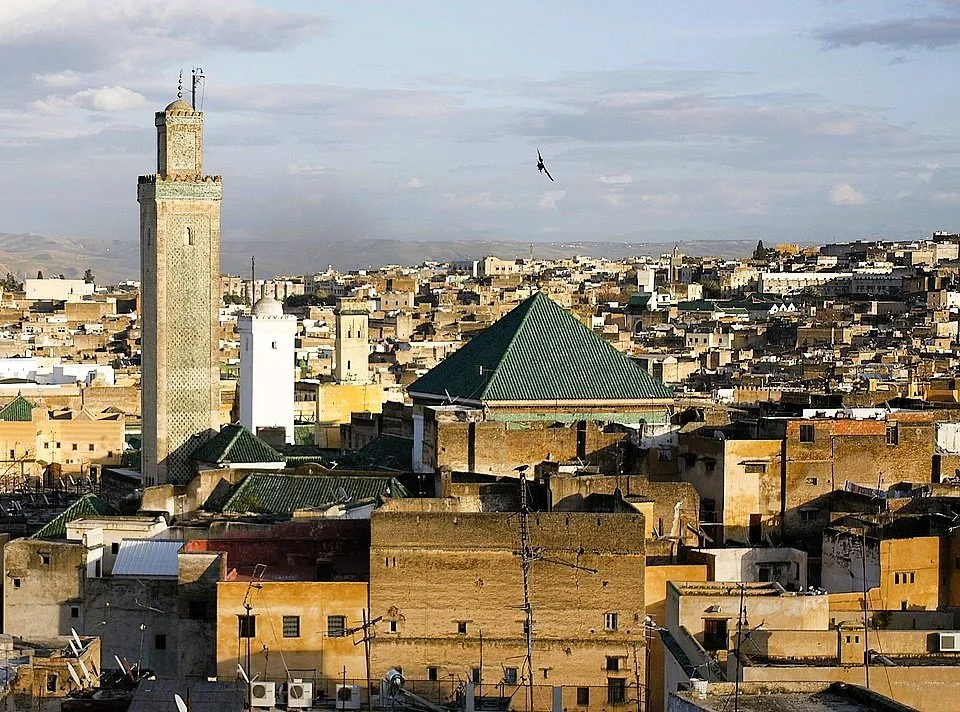
Panoramic view of the old city of Fez, showing the shrine of Mawlāy Idrīs al-Azhar (Idrīs II) adjacent to the Qarawiyyīn University, illustrating the sacred and urban core of the Idrīsid-founded medina.
Fez itself, during roughly eight decades of Maghrawa dominance, exemplified the limits of post-caliphal governance. The Maghrawa, a Zanata confederation allied historically with the Umayyads of al-Andalus, did not conquer Fez as founders of a new order; they inherited it as custodians of a collapsing one. Their rule was characterized by pragmatism rather than ideology. They maintained urban order, controlled access to institutions, and balanced competing religious actors, but they did not articulate a unifying doctrine—neither Sunni nor Shiʿi—capable of transforming control into sovereignty. In this sense, Maghrawa power was not accidental in its emergence but contingent in its nature: a regime of management rather than command.
This absence of a national or imperial doctrine was not the result of intellectual poverty. Mālikī jurisprudence was present in Morocco, as were traditions of asceticism, ribāṭ practice, and local sainthood. What was missing was the alignment of law, coercion, and legitimacy within a single political framework. Scholars could teach, saints could protect, and rulers could police, but no actor possessed the authority to bind these functions together. The Moroccan urban order thus oscillated between reverence for learning and fear of mobilization. Juridical activism, especially when connected to Ifrīqiya or the eastern Islamic world, appeared politically dangerous rather than stabilizing.
The failure of Tamīm ibn Zīrī (r. 454–501/1062–1108) in Ifrīqiya cast a long shadow over this atmosphere. His attempt to distance Zirid rule from Fatimid authority and construct a Sunni order with the support of Mālikī jurists ended not in restoration but in catastrophe, provoking the Fatimid unleashing of Banū Hilāl into the region. The lesson was unambiguous: doctrine without force was insufficient, and Sunni reform without imperial backing could invite destruction rather than consolidation. For Moroccan rulers in Fez, this episode transformed Mālikī scholars from potential allies into potential risks, reinforcing a strategy of containment rather than empowerment.
By the early 5th/11th century, Morocco thus stood at a crossroads defined more by absence than by conflict. There was no caliph to obey, no empire to resist, and no doctrine capable of organizing territory at scale. The Idrīsid memory endured without a state; the Maghrawa governed without a project; scholars operated without enforcement; and sanctity circulated without command. This condition did not yet produce a solution, but it defined the problem with clarity: Morocco required not simply rulers or jurists, but a political form capable of translating religious norms into territorial order. It is from within this void—geopolitical, doctrinal, and institutional—that the later Almoravid intervention would emerge as an answer rather than an accident.
2. Urban Authority without Sovereignty: Why Morocco Could Not Reform Itself
In the decades following the effective collapse of caliphal authority in the western Islamic world, Morocco revealed a paradoxical condition: religious capital was abundant, yet political transformation proved impossible. By the late 4th/10th and early 5th/11th centuries, cities such as Fez retained dense scholarly networks, active markets, and entrenched religious institutions, but they lacked the capacity to translate moral authority into enforceable order. Political rule, exercised by the Maghrawa Zanata rulers, remained managerial rather than constitutive. Governors could maintain security and fiscal balance, but they neither claimed nor generated a doctrine capable of reorganizing society at scale. The result was not instability but immobilization: a stable urban equilibrium that absorbed reformist impulses without allowing them to mature into sovereignty.
Fez functioned during this period less as a capital than as a negotiated space. Authority circulated among rulers, jurists, and saints, yet never consolidated. Major institutions such as Al-Qarawiyyin, despite their immense prestige, operated through consensus and customary authority rather than command. Their influence depended on recognition, not coercion. This institutional configuration made doctrinal innovation politically sensitive, even when framed in orthodox terms. Reform, particularly when articulated by jurists with trans-regional connections, threatened the balance upon which urban governance depended.
The life and career of Darrās ibn Ismāʿīl (d. 357/942) offer a precise illustration of this structural limit. Darrās was among the earliest and most authoritative Mālikī jurists of Fez, revered both during and after his lifetime as one of the city’s awtād al-arḍ—the “anchors of the earth” whose knowledge and ascetic discipline were believed to uphold the Shariʿa locally. He studied under leading Mālikī authorities of Ifrīqiya and the eastern Islamic world and played a decisive role in introducing al-Mudawwana al-Kubrā of Sahnūn ibn Saʿīd (d. 240/854) into Fez. Intellectually, Darrās represented the full maturity of Mālikī jurisprudence; socially, he commanded immense respect; spiritually, he was venerated as a saint.
Yet Darrās’s authority remained institutionally marginal. He did not teach in the principal congregational mosques of Fez but instead established a private mosque in the Andalusian quarter, from which he instructed students free of charge. This spatial marginalization was not accidental. His juridical activism—most famously his insistence on correcting the qibla orientation of prayer in opposition to established practice at al-Qarawiyyin—provoked sustained resistance from the city’s scholarly establishment. These disputes were not merely technical; they reflected anxiety over the political implications of legal reform. A jurist capable of redefining normative practice threatened to upset an urban order premised on balance rather than transformation.
The visit of Abū Yazīd al-Qayrawānī (d. 386/996) to Darrās in Fez further underscores this point. Abū Yazīd, one of the most authoritative Mālikī figures of Ifrīqiya, represented an external validation of Darrās’s standing within the broader Maghribi juridical world. This encounter signaled that Fez was not intellectually isolated; it was integrated into trans-regional networks of learning. Yet this recognition did not alter Darrās’s institutional position. The city could honor him as a scholar and later venerate him as a saint, but it could not permit his juridical vision to restructure its legal or political institutions. Mālikism, in other words, could be absorbed symbolically without being adopted as a governing regime.
What reinforced this urban caution was not the constant retelling of external failures, but the quiet internalization of their consequences. By the early 5th/11th century, Moroccan political elites no longer needed reminders of what had unfolded in Ifrīqiya in the previous generation. The lesson had already been absorbed into the grammar of rule: juridical mobilization without sovereign backing was destabilizing, and Sunni symbolism alone could not substitute for coercive authority. In Fez, this awareness translated into a reflex of restraint. Mālikī jurists were valued as guardians of normativity and social order, but they were deliberately prevented from becoming engines of political reorganization. Reform was tolerated as scholarship, not as program; as ethics, not as power. The city thus learned to preserve orthodoxy by neutralizing its transformative potential.
The same structural logic later shaped the experience of Abū ʿImrān al-Fāsī (d. 430/1039). His studies in Baghdad under Abū Bakr al-Bāqillānī (d. 403/221013)—the principal architect of Ashʿarī kalām in the service of Abbasid authority and the foremost polemicist against Fatimid Ismailism—and his connections to Qayrawān, endowed him with an intellectual reach that exceeded the city’s tolerance for doctrinal mobilization. His eventual marginalization and relocation were not expressions of hostility toward Mālikism as such, but manifestations of an urban order unwilling to risk a repetition of the Ifrīqiyan scenario. Scholars could teach, advise, and adjudicate, but they could not be allowed to become focal points of political reorganization.
Sainthood and ribāṭ culture offered no escape from this impasse. Atlantic and mountain ribāṭs preserved ascetic discipline, prophetic memory, and moral authority, particularly among Idrīsid-descended lineages pushed out of Fez after the decline of Idrīsid rule in the 4th/10th century. Figures associated with these spaces commanded loyalty and reverence, yet their authority functioned through persuasion and charisma rather than law and force. Saints could protect cities symbolically, but they could not legislate for them; their influence stabilized society without transforming it.
By the early 5th/11th century, Morocco thus presented a fully articulated but internally stalled religious order. It possessed jurists capable of independent reasoning, saints capable of mobilizing devotion, and rulers capable of administration, yet lacked the political form required to unify these capacities into a single, enforceable project. The case of Darrās ibn Ismāʿīl demonstrates with particular clarity that the failure was neither personal nor doctrinal, but structural. Urban Morocco could preserve orthodoxy and sanctity, but it could not produce sovereignty. Any resolution of this deadlock would have to emerge from outside the city, from a space where discipline, doctrine, and coercion could be fused without negotiation.
3. The Abbasids and the Sunni Confessional Turn
The failure of the first Abbasid attempt to impose Sunni order under al-Mutawakkil (r. 232–247/847–861) revealed a fundamental problem that would haunt the caliphate for over a century. Al-Mutawakkil’s strategy relied on empowering Ahl al-Ḥadīth, suppressing rational theology, and enforcing a crude traditionalism backed by coercion. While this temporarily crushed the Muʿtazila and restored the prestige of figures such as Aḥmad b. Ḥanbal (d. 241/855), it failed to produce a stable or exportable Sunni order. The policy radicalized internal Sunni rivalries, deepened social violence, and left the caliphate intellectually brittle. By the mid-4th/10th century, Sunnism possessed neither a unified doctrinal grammar nor a reliable political mechanism capable of confronting the expanding Shiʿi challenge.
This structural weakness became catastrophic after the Buyid seizure of Baghdad in 334/945. With the Abbasid caliph reduced to a ceremonial figure under Zaydi-Imami military domination, Sunni Islam entered a paradoxical phase: it retained symbolic authority but lacked sovereign force. At the same time, the Fatimids consolidated power across Ifrīqiya, Egypt, the Ḥijāz, and parts of Syria, while Ismāʿīlī daʿwa networks penetrated deep into the eastern Islamic world. The problem facing the Abbasids was no longer theological disagreement alone, but the absence of a Sunni imperial doctrine capable of disciplining internal fragmentation while mobilizing resistance against Shiʿi state power.
It was in this context that al-Qādir bi-llāh (r. 381–422/991–1031) launched what may be described as a second, more systematized Sunni restoration project. Unlike al-Mutawakkil, whose intervention relied on patronizing ḥadīth literalism and suppressing rival discourses, al-Qādir pursued a strategy of doctrinal reconfiguration aimed at stabilizing Sunnism from within before mobilizing it against external rivals. The core of this strategy was al-Iʿtiqād al-Qādirī, promulgated in 408/1017, which functioned not as a speculative theological text but as a caliphal act of confessional standardization, intended to define orthodoxy, discipline dissent, and restore Abbasid symbolic authority under conditions of political weakness.
This confessional act, widely known as the Qādirī mīthāq, operated as a binding covenant rather than a scholastic creed. It was publicly proclaimed in mosques and administrative centers, endorsed by judges, ascetics, and jurists, and enforced as a test of Sunni legitimacy. In both structure and function, it closely parallels the Niceno-Constantinopolitan Creed of 381 CE: it fixed a single orthodox confession, anathematized deviation, and subordinated doctrinal plurality to imperial unity. The Qādirī mīthāq did not merely articulate belief; it legislated belief, criminalized dissent, and fused adherence to creed with loyalty to the Abbasid order, transforming Sunnism from a loose constellation of schools into a regulated confessional bloc.

Map of the Islamic world c. 360/970 showing the Abbasid caliphate surrounded by Shīʿī powers: the Būyid Amirates (light green) controlling Baghdad, Iraq, and Iran; the Fatimid Caliphate (olive green) holding Egypt and extending toward Hijaz, Syria and Ifrīqiya; Shīʿī Ḥamdānids in Aleppo and Mosul; and Qarmaṭians (light yellow) in eastern Arabia. The Byzantine Empire and other Christian states (pink) border to the northwest. Other Muslim states (olive green) include the Samanids, Ziyarids, and Saffarids in the east. This encirclement explains why Caliph al-Qādir bi-llāh issued the Qādirī mīthāq in 408/1017—unable to fight militarily, he defined Sunni orthodoxy doctrinally, creating the confessional framework the Almoravids would later enforce in the far west.
Crucially, the mīthāq accomplished something unprecedented in Sunni history: it forged a compulsory alliance among four legal schools, selecting the Ḥanafī, Mālikī, Shāfiʿī, and Ḥanbalī madhhabs as the sole legitimate expressions of Sunni jurisprudence. This selection was not the recognition of an existing harmony but the termination of an ongoing civil war among Sunnis themselves. Prior to the mīthāq, the legal schools routinely excommunicated one another, cursed each other from pulpits, expelled rivals from mosques, burned institutions, and issued fatwas of disbelief. The Qādirī mīthāq forcibly ended this intra-Sunni warfare by re-directing hostility outward: the primary enemy was now defined as Shiʿism (Ismāʿīlī, Zaydi, Twelver) and rationalist theology (Muʿtazila, falāsifa). Unity was achieved not by reconciliation, but by externalization of enmity.
Alongside this juridical consolidation, the mīthāq re-established a single theological uṣūl: Ashʿarism, resurrected as the official doctrinal grammar of Sunnism after decades of marginalization between Muʿtazilī rationalism and Ḥanbalī literalism. This resurrection was not accidental. Its principal architect was Abū Bakr al-Bāqillānī (d. 403/1013), a Mālikī jurist and Ashʿarī mutakallim whose role within the Abbasid project cannot be overstated. Al-Bāqillānī supplied the mīthāq with its conceptual spine: affirmation of divine attributes without tashbīh (anthropomorphism) or taʿṭīl (negation), rejection of createdness of the Qurʾān, defense of al-jabr (predestination), and—most critically—the delegitimation of imāmate by divine designation. Ashʿarism thus became not merely a theology, but a state technology, capable of unifying Sunnis while disarming Shiʿi political theology.
Because the Abbasids lacked direct coercive power, enforcement of the mīthāq required delegated violence. This role was assigned to peripheral Sunni rulers, most notably Maḥmūd b. Sabuktigīn (d. 421/1030), the Ghaznavid ruler of Khurāsān and Transoxiana. Despite his adherence to Karrāmī doctrines, Maḥmūd was authorized by al-Qādir as a Sunni executioner: libraries were burned, Ismāʿīlī centers destroyed, Muʿtazilites imprisoned, philosophers anathematized, and the Qādirī creed publicly recited as law. Under Ghaznavid rule, the practices of al-Mutawakkil—predestination, takfīr, suppression of dissent—were revived and expanded, demonstrating that doctrinal purity was secondary to political utility within the Sunni counter-offensive.
The long-term effect of the Qādirī mīthāq was decisive. It stabilized Sunnism internally by freezing doctrinal boundaries, ending inter-madhhab warfare, and redefining orthodoxy as adherence to a fixed creed plus one of four legal schools. At the same time, it transformed Sunnism into a confessional bloc, structurally opposed to Shiʿism and hostile to philosophical inquiry. The Sunni world that emerged from al-Qādir’s reign—juridically plural but theologically centralized, legally diverse but politically uniform—was not a spontaneous tradition, but a constructed order, born of crisis and enforced through covenant.
Yet this Sunni confessional order—completed under al-Qādir and enforced in Khurāsān through delegated violence—remained geographically unfinished. In the Maghrib, no Abbasid army, Buyid proxy, or Ghaznavid executor could translate creed into obedience. Urban Morocco was fragmented, politically cautious, and marked by unresolved Idrīsi memory; cities such as Fez were spaces of doctrinal containment, not mobilization. What the Qādirī mīthāq required in this region was not further theological articulation, but a mechanism of enforcement without empire. It is at this precise structural impasse that the al-Murābiṭūn emerge: not as doctrinal innovators, but as territorial executors, transforming a finished Abbasid Sunni program into discipline, hierarchy, and control through the ribāṭ, the desert, and tribal militarization.
4. The Western Execution: From Qayrawān to the Sahara
The Qādirī mīthāq required enforcement beyond Baghdad's reach. In Khurāsān, this function was performed by Maḥmūd b. Sabuktigīn (d. 421/1030), whose Ghaznavid armies burned libraries, destroyed Ismāʿīlī centers, and imposed the Abbasid creed through systematic violence. In the far Maghrib, no such executor existed. The solution emerged not through caliphal appointment, but through the activation of an existing Maghribi infrastructure: Mālikī scholarly networks, Idrīsid sharīfian authority, ribāṭ discipline, and Ṣanhāja military capacity.
The operational sequence began in Qayrawān. Abū ʿImrān al-Fāsī (d. 430/1039), trained in Baghdad under Abū Bakr al-Bāqillānī (d. 403/1013), occupied a strategic position within this relay. Yet what Abū ʿImrān transmitted westward was not Ashʿarī kalām but pure Mālikī furūʿ—the practical jurisprudence that had defined Maghribi Islam since the 3rd/9th century. When Yaḥyā ibn Ibrāhīm al-Judālī (d. after 427/1036), a leader of the Judāla branch of the Ṣanhāja confederation, returned from pilgrimage seeking religious instruction for his people, Abū ʿImrān connected Saharan military power to Maghribi Mālikism, not to Baghdad's theological apparatus.
Abū ʿImrān redirected the request westward to Waggāg ibn Zallū (d. 445/1054), founder of the ribāṭ at Aklū near Tīznīt in Sūs. This choice was deliberate. Waggāg combined three forms of authority that urban Morocco could not integrate: Idrīsid sharīfian descent, Mālikī scholarly formation, and ribāṭ institutional leadership. What Waggāg taught was Mālikī law in its Maghribi form—uṣūl al-fiqh, ḥadīth, and the Mudawwana—stripped of kalām, stripped of falsafa, stripped of any speculative theology. This was the Islam of pure transmitted authority (naql), hostile to rationalist inquiry (ʿaql), and committed to the literal preservation of inherited juridical norms.
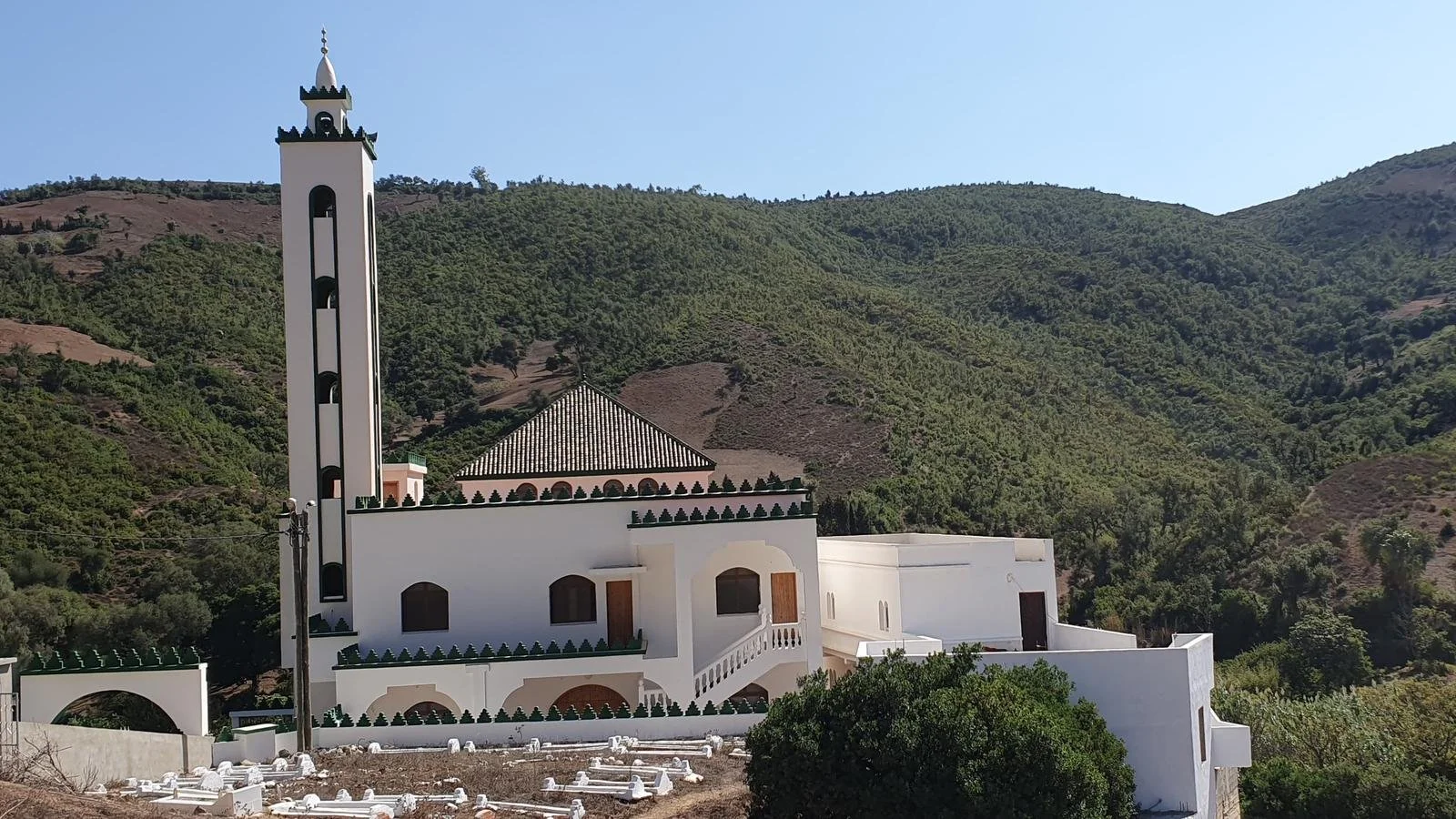
From Waggāg's ribāṭ emerged ʿAbd Allāh ibn Yāsīn (d. 451/1059), a member of the Jazūla, a Ṣanhāja tribal grouping spread along the Atlantic coast. What Ibn Yāsīn received was not the Ashʿarī synthesis that al-Bāqillānī had constructed in Baghdad, but the dry, uncompromising Mālikism that had resisted both Muʿtazilī rationalism and Ashʿarī moderation. This is why, generations later, Ibn Tūmart would demolish Murābiṭūn scholars in theological debate—they possessed no tools of kalām, no training in dialectical theology, no capacity to defend doctrine through rational argument. Their strength lay elsewhere: in mastery of furūʿ, in enforcement of ritual uniformity, and in the willingness to impose legal discipline through violence.
What followed was the systematic militarization of this juridical tradition. Ibn Yāsīn enforced ritual conformity, legal uniformity, hierarchical discipline, and collective punishment for violations. Initial resistance led to his expulsion, but reconsolidation followed. The location of his training ribāṭ remains disputed, but its function was clear: the transformation of Ṣanhāja warriors into enforcers of Mālikī law. By 446/1054, Ibn Yāsīn commanded a sufficient force to launch military operations on two fronts simultaneously.
In the Sahara, he seized Āzūgī, a date oasis described by al-Bakrī as containing twenty thousand palms and by al-Idrīsi as "the first ascent into the desert." Its location—near Adrār, somewhere in the Moroccan Saharan territories of Shinqīṭ—made it a forward base for operations against Ghāna. From Āzūgī, the Murābiṭūn extended control over trans-Saharan routes and eventually conquered the capital of Ghāna itself, though the precise chronology remains contested in modern West African historiography. What is clear is that Ibn Yāsīn operated with the same brutality as Maḥmūd b. Sabuktigīn. Al-Bakrī records that during the Āzūgī campaign (446/1054), Ibn Yāsīn executed a Qayrawānī Arab known for piety, Qurʾān recitation, and pilgrimage, solely because he had lived under the authority of Ghāna's pagan king. When Waggāg, alarmed by reports of mass killing and enslavement, wrote to rebuke him, Ibn Yāsīn's response was uncompromising: "You sent me to a people in a state of jāhiliyya... I have not transgressed God's law."
Simultaneously, Ibn Yāsīn moved northward into Morocco. By 447/1055, he had taken Sijilmāsa, the critical node linking Saharan gold routes to Mediterranean trade. The city had appealed for intervention against its Maghrāwa rulers, but Ibn Yāsīn's entry was conquest, not liberation. He enforced Mālikī law: destroying musical instruments, burning wine shops, abolishing mukūs taxes, and installing a Lamtūna governor with a Mulaththamīn garrison. When the population revolted, he returned and crushed resistance entirely. Sijilmāsa became the first Murābiṭūn urban base.
From Sijilmāsa, the movement expanded into Sūs, seizing Tarūdānt and the Jazūla and Māssīna territories by 448/1056. Tarūdānt presented a different challenge than the Zanāta Maghrāwa of Sijilmāsa. The city and its surroundings had been the center of the Bajliyya, a Twelver Shīʿī movement whose ribāṭ had controlled the corridor between the Sahara and northern Morocco for two centuries. Their presence was doctrinal as well as territorial: organized around the expectation that the Mahdī would emerge from Māssīna, they represented an alternative Islamic formation incompatible with the Sunni order Ibn Yāsīn was imposing. The Bajliyya resisted. When they were defeated, Ibn Yāsīn's treatment followed the Ghaznavid template precisely: mass killing, property seizure as war booty, and forced conversion for survivors. Two centuries of Shīʿī institutional presence in Sūs ended in a single campaign.
Ibn Yāsīn then seized Aghmāt (449/1057), the largest urban center in southern Morocco and the commercial hub linking trans-Saharan routes to the northern plains. For two months, he transformed it into al-Mulaththamīn's military headquarters while his forces consolidated control. The capture of Aghmāt was strategically decisive: it gave the movement an urban base with administrative infrastructure, established markets, and a sedentary population capable of sustaining prolonged campaigns. From Aghmāt, Ibn Yāsīn moved into Tadla, killing the Banū Yifran rulers he found there, then pushed into Tāmasnā. By 451/1059, he controlled territory stretching from the Senegal River to central Morocco—an achievement accomplished in less than a decade through systematic violence.
The final campaign targeted the Barghawāṭa, and here Ibn Yāsīn faced an enemy unlike any he had encountered. The Barghawāṭa were not Zanāta rivals or Twelver Shīʿīs but Ṣanhāja—his own tribal confederation, kinsmen who had taken a radically different path. Their origins lay in the great Berber revolt of 122/740, when Khārijī-inspired armies shattered Umayyad power at the Battle of the Nobles (Ghazwat al-Ashrāf) and expelled Damascus from the Maghrib permanently. While most Khārijī movements dissipated after their military victories, the Barghawāṭa consolidated into something unprecedented: an autonomous religious polity occupying the Atlantic plains between the Bū Raqrāq and Umm al-Rabīʿ rivers, with its own revealed scripture, its own prophet (Ṣāliḥ ibn Ṭarīf), its own ritual calendar, and its own legal system. For three centuries they had resisted every power that sought to subdue them—the Umayyads of Damascus, the Umayyads of Córdoba, the Idrīsids, the Fatimids, the Zanāta Maghrāwa—defeating or outlasting each in turn. No external force had ever broken them.
Ibn Yāsīn understood their elimination as a religious obligation superseding all other targets. But he was not prepared for what he faced. The Barghawāṭa were not a ribāṭ network waiting for eschatological deliverance like the Bajliyya, nor a fragmented urban population like Sijilmāsa. They were a militarized tribal society hardened by three centuries of existential warfare, defending territory they considered sacred and a dispensation they believed divine. The campaign was brutal on both sides. In 451/1059, near Krifla, Ibn Yāsīn fell in battle—killed by fellow Ṣanhāja who refused his vision of Islamic order. The man who had imposed Mālikī uniformity from Shinqīṭ to Tarūdānt died fighting his own kinsmen, his body a testament to the limits of enforcement when doctrine collides with entrenched conviction.
Ibn Yāsīn's death did not destabilize the movement. Leadership passed to Abū Bakr ibn ʿUmar al-Lamtūnī (d. 480/1087), who completed the destruction of the Barghawāṭa and confirmed that ribāṭ discipline had produced command structures capable of surviving their founder. But Abū Bakr's vision remained Saharan. He departed south to Āzūgī, leaving the conquest of northern Morocco to his cousin Yūsuf ibn Tāshfīn (d. 500/1106). Before departing, he divorced his wife Zaynab al-Nafzāwiyya—a woman of the Nafzāwa Berbers whose political intelligence, wealth, and networks had made her indispensable to Almoravid governance. She could not accompany him to the desert. Yūsuf married her, and with her came the counsel that would shape his rule.
Yūsuf ibn Tāshfīn built what we remember as the Murābiṭūn Empire—and he built it through thirty years of relentless warfare. He followed Ibn Yāsīn's methods precisely: mass killing, forced conversion, property seizure, the systematic elimination of anyone who resisted. In 455/1063, he entered Fez without battle, exploiting divisions among the Zanāta. When the city rebelled, he returned and besieged it, crushing resistance and exterminating the Maghrāwa and Banū Yifran who had ruled there. By 467/1075, he controlled everything between the Rif and Tangier. The campaign against Taza took six years—complicated by its alliance with the Fatimids—but it too fell. He destroyed Nakūr and its emirate, took Melilla and Guercif, crossed into the central Maghrib to seize Oujda, Tlemcen (killing its emir), Oran, and pushed east until he reached Algiers, where he built the Great Mosque. Only the Hammadid kingdom of Bijāya stopped his advance—its borders defended by the fierce Banū Hilāl and Banū Maʿqil, Arab tribes whose military capacity even the Mulaththamūn could not overcome.
With Morocco unified after thirty years of blood, Yūsuf made the decision that would define the empire's geography: he founded Marrakesh around 462/1070. The site was not Ṣanhāja territory but the heart of Maṣmūda land—a deliberate break from the Saharan base, positioning the empire's capital among populations whose loyalty could never be assumed. Marrakesh commanded the intersection of Atlas trade routes, the plains, and the mountain passes. It was strategic genius. But it planted Ṣanhāja power in soil that would eventually produce its destroyers.
With his capital established and Morocco secured, Yūsuf turned to al-Andalus. Al-Muʿtamid ibn ʿAbbād of Seville, facing Alfonso VI's advancing armies, wrote begging for intervention. Yūsuf's response was blunt: he would not cross until he held Tangier and Ceuta. In 469/1077, a force of twelve thousand Almoravid cavalry and twenty thousand tribal auxiliaries took Tangier. Now the strait was his. In 479/1086, he crossed to Iberia and shattered Alfonso VI at Zallāqa. Over the following decades, he systematically annexed the taifa kingdoms, eliminating their rulers and imposing Murābiṭūn administration.
Then Abū Bakr returned. After years campaigning in the Sahel and Western Africa, extending Murābiṭūn influence into the lands of Ghana, the nominal founder of the dynasty came back to claim what was his. He marched toward Marrakesh expecting to resume command of an empire his cousin had merely held in trust. Zaynab counseled otherwise. On her advice, Yūsuf rode out to meet Abū Bakr at the borders of the city—not with armies but with treasures. Gold, enough to purchase a kingdom. The message was clear: return to the desert. Abū Bakr accepted and turned south. He died in 480/1087 in the Sahara, fighting the wars he had chosen over the throne he had lost. Zaynab had won.
And then Yūsuf ibn Tāshfīn did what no Moroccan ruler had done since the Battle of the Nobles in 122/740. He sent Abū Bakr ibn al-ʿArabī to Baghdad—al-Ghazālī's student, the man who would carry the Niẓāmī synthesis westward, now serving as the Murābiṭūn's envoy to the caliph. He pronounced the bayʿa to al-Mustaẓhir (r. 487-512/1094-1118). He requested investiture—and received the title amīr al-muslimīn. It was less than Maḥmūd of Ghazna had received: Baghdad had lavished the eastern executor with yamīn al-dawla ("right hand of the state"), amīn al-milla ("trustee of the religious community"), the khilʿa (robe of honor), the parade, the poetry. Yūsuf asked for nothing but recognition—and recognition was enough. For Yūsuf, this was legitimation. For Baghdad, it was triumph. The lands where the Fatimids had first declared their caliphate, where they had recruited their armies, where they had launched their conquest of the East—these lands now pronounced the Abbasid name. The mīthāq had won.
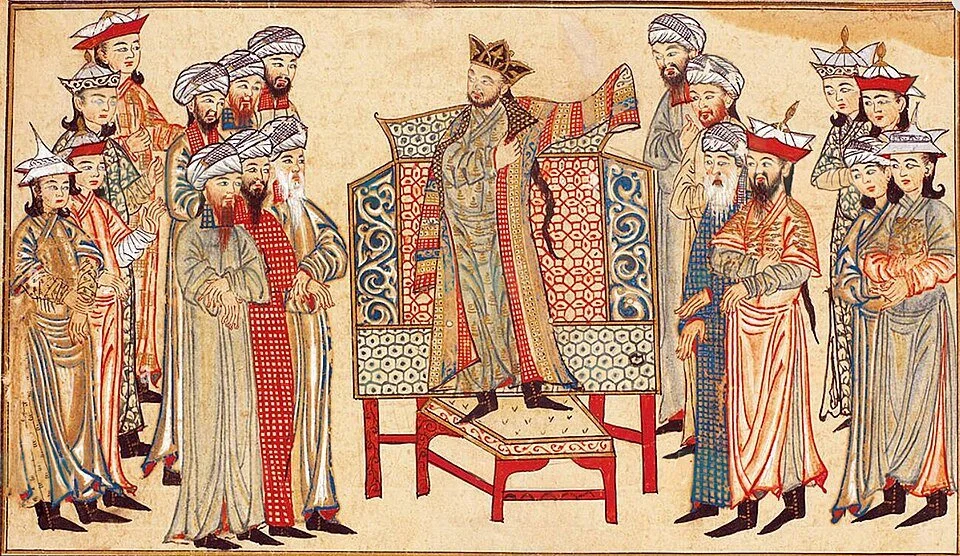
Miniature from Rashīd al-Dīn's Jāmiʿ al-Tawārīkh (714/1314) depicting Maḥmūd of Ghazna receiving a robe of honor (khilʿa) from Caliph al-Qādir bi-llāh in 391/1000. This investiture visualizes the Qādirī strategy: a caliph without armies delegating Sunni enforcement to distant sultans. Maḥmūd executed the strategy in Khurāsān. When Yūsuf ibn Tāshfīn pronounced the bayʿa to the Abbasid caliph al-Mustaẓhir in 479/1086—the first Moroccan recognition of Baghdad since the Battle of the Nobles in 122/740—he completed the western arc of the same project. The Almoravids never received a khilʿa from Baghdad; they received something more durable: the title amīr al-muslimīn, and a place in the Sunni order the Qādirī mīthāq had defined.
The weight of this act requires measuring against three centuries of history. Since the Battle of the Nobles in 122/740, when Berber armies shattered Umayyad power and expelled Damascus from the Maghrib forever, no eastern authority had commanded obedience west of Ifrīqiya. Mawlāy Idrīs I had fled Fakh in 169/786, the sole survivor of an Abbasid massacre that butchered his family on the slopes outside Mecca. He founded his state in the Maghrib al-Aqṣā precisely because it lay beyond Abbasid reach—a kingdom built on the corpses of his kinsmen, its very existence a repudiation of Baghdad's legitimacy. His descendants had ruled for two centuries without ever acknowledging the killers of their ancestors. The Fatimids, rising from Ifrīqiya, had declared their own caliphate and marched east to seize Egypt, treating the Abbasids as usurpers to be destroyed. The Umayyads of Córdoba had proclaimed their own counter-caliphate. For three hundred years, the far Maghrib had been the graveyard of eastern imperial ambition—unconquered, unsubmitted, defining itself against Baghdad as much as against any local rival.
Now the Mulaththamūn reversed it all. Yūsuf ibn Tāshfīn, veiled warlord from the Sahara, inscribed the Abbasid caliph's name on his coinage. The khuṭba pronounced in Fez—the city Mawlāy Idrīs II had built, the city whose congregational mosques had never named an Abbasid caliph—now declared allegiance to Baghdad. Marrakesh, Tangier, Ceuta, Seville, Córdoba, Granada: from the Atlas to the Pyrenees, the Friday prayer named the Commander of the Faithful in Baghdad. The Almoravids ruled as amīr al-muslimīn, commanders under a caliph, acknowledging a sovereignty they did not possess and did not seek to claim.
This was the triumph of the Qādirī strategy. Al-Qādir bi-llāh had reigned over a caliphate so diminished that Būyid amirs dictated his correspondence. Al-Bāqillānī had constructed the Ashʿarī synthesis in a Baghdad that could not defend its own provinces. Abū ʿImrān al-Fāsī had died in Qayrawān, expelled from the Fez he sought to reform, his life's work apparently in ruins. Waggāg ibn Zallū had operated from a ribāṭ in the Sūs, far from any center of power, training students for a jihād he would not live to see completed. None of them had commanded armies. None of them had conquered cities. None of them had seen the Maghrib bend to their vision.
But the network they built—the chain of transmission from Baghdad to Qayrawān to Aglū to the Sahara—had produced what Abbasid armies never could. The mīthāq drafted in 408/1017 to unify Sunni Islam against the Fatimids had found its executors in men who had never read it, warriors who knew only that they fought for God and the Sunna. The doctrine stabilized in Baghdad was now enforced from the Senegal to the Ebro. The Fatimids, confined to Egypt, their Maghribi homeland closed to them forever, would never return. The lands where they had first declared their caliphate, where they had recruited their armies, where they had launched their conquest of the East—these lands now pronounced the Abbasid name.
Maḥmūd b. Sabuktigīn had enforced the mīthāq in Khurāsān through massacre and terror. Abd Allāh ibn Yāsīn enforced it in the Maghrib through the same methods. East and West, the Sunni counter-revolution had triumphed through blood. The strategy conceived in weakness had achieved through proxies what the caliphate's own swords could never reach. From the borders of India to the shores of the Atlantic, the Qādirī settlement held.
The system had won.
By the early sixth/twelfth century, the Murābiṭūn had delivered everything Abbasid planners could have imagined: the permanent exclusion of Fatimid influence from the far Maghrib and al-Andalus, the enforcement of Mālikī jurisprudence as binding legal framework across an empire larger than any Morocco had known, the territorialization of Sunni orthodoxy from Sahara to Pyrenees. They were the western flank of a project conceived in Baghdad by men who would never see its fruits, executed through networks the caliphate itself could not have built, imposed by warriors who asked nothing from Baghdad except the legitimacy of its name. The Mulaththamūn had done what the Umayyads, the Abbasids, the Aghlabids, and the Fatimids had all failed to do: they had unified the Maghrib under a single confession, a single legal school, a single nominal allegiance.
But they had built their empire on contradictions they could not resolve. Dry Mālikī jurisprudence—hostile to kalām, hostile to falsafa, committed only to transmitted norms—possessed no intellectual apparatus to defend itself against theological challenge. The capital planted in Maṣmūda territory governed populations who owed the Ṣanhāja nothing. The violence that had built the empire could maintain it only so long as no alternative vision emerged. The muscle had done its job. Whether the structure could endure was another question entirely.
5. The Empire's Scholars — Law, Administration, and the Limits of Enforcement
The empire Yūsuf ibn Tāshfīn built required more than warriors to govern. It required scholars—men who could administer law, staff courts, issue fatwas, and provide the ideological apparatus that transformed conquest into legitimate rule. The Almoravids found these men among the Mālikī fuqahāʾ, and the fuqahāʾ found in the Murābiṭūn what they had never possessed: a state willing to enforce their rulings with the sword. The alliance was total. For the first time in Moroccan history, Mālikī jurisprudence became not merely the dominant legal school but the exclusive framework of governance, its competitors suppressed, its authority backed by state violence.
The Murābiṭūn constructed a judicial hierarchy unprecedented in the Maghrib. At its apex sat the chief qāḍī in Marrakesh, overseeing the entire system. Below him, each region possessed its qāḍī al-jamāʿa—one for Morocco, one for al-Andalus—administering the courts within their territories. The qāḍīs received expanded powers, institutional independence, executive authority, and generous funding. They supervised provincial governors' expenditure of state funds, particularly those designated for awqāf and public works. Each qāḍī maintained a consultative council of senior fuqahāʾ whose opinions guided rulings across the empire. Yūsuf ibn Tāshfīn articulated the philosophy in a letter to one of his judges: "Let no one be stronger in your eyes than the weak until you have secured his right, nor weaker than the strong until you have taken the right from him." This was not rhetoric. The Murābiṭūn state enforced it.
The champions of this order were formidable, and they believed in the Murābiṭūn project because the Murābiṭūn believed in them. Abū al-Walīd ibn Rushd (d. 520/1126), chief qāḍī of Córdoba, legitimated the annexation of the taifa kingdoms through fatwas declaring their rulers unfit to govern. Al-Qāḍī ʿIyāḍ (d. 544/1149) of Sabta defended Almoravid legitimacy until the bitter end and was exiled by the Almohads for his loyalty. Abū Bakr ibn al-ʿArabī (d. 543/1148), who had studied in Baghdad and Damascus, led the embassy—together with the Moroccan qāḍī Ibn al-Qāsim—that secured the Abbasid caliph's investiture of Yūsuf as Amīr al-Muslimīn. Abū al-Qāsim ibn ʿAbd Allāh al-Suhaylī (d. 581/1185) of Málaga produced works that would be studied for centuries. ʿʿAlī ibn Ḥarzihim (d. 559/1163) led the Ḥarāzimī rābiṭa in Fez, connecting the urban scholarly establishment to rural ribāṭ networks. ʿAbd al-Jalīl ibn Wayhān (d. 541/1147) of Aghmat, product of Ribāṭ ʿAyn al-Fiṭr and heir to a Baghdadi silsila through al-Jawharī, defended his town against Almohad expropriation and died rather than submit to ʿAbd al-Muʾmin's summons.
These scholars had spent generations marginalized—teaching in mosques, issuing opinions no ruler enforced, watching heterodoxy flourish in territories they could not reach. Now they possessed a state that burned books they deemed dangerous. When al-Ghazālī's Iḥyāʾ ʿUlūm al-Dīn arrived in the Maghrib, copies were gathered in Córdoba and set ablaze. The Iḥyāʾ represented everything the Murābiṭūn fuqahāʾ rejected: speculative theology, mystical experience as a source of authority, and the subordination of fiqh to a higher spiritual science. In Almoravid lands, there was jurisprudence and nothing else.
Yet beneath the legal apparatus, the empire produced something its fuqahāʾ could not fully control: saints. The Almoravid era witnessed Morocco's greatest flowering of sanctity—figures whose authority derived not from judicial appointment but from baraka, from demonstrated miracles, from chains of spiritual transmission that connected Dukkala to Baghdad, Fez to the Atlas, Marrakesh to the Sahara. In Fez, ʿAlī ibn Ḥarzihim trained students who combined legal expertise with spiritual discipline; Abū Yaʿazzā Yalannūr (d. 572/1177), the illiterate Berber whose baraka drew scholars from across the Maghrib, taught Abū Ghālib Ali ibn Khalaf al-Andalusī (d. 558/1163), Abū ʿAbd Allāh al-Tāwudī ibn Sūdah (d. 580/1184), and Aḥmad ibn Ali al-Barnūsī (575/1180) of Jabal Zalāgh; Abū Madyan Shuʿayb (d. 594/1198) received his formation here before fleeing to Bijāya. In Dukkala: Abū Innūr ibn Wakrīs al-Mashanzāʾī (known as Bannūr) (d. 550/1135), and Abū Shuʿayb al-Raddād (d. 561/1166). In the Chawiya: ʿAbd al-Raḥmān Mūl al-Majmar (c. 561/1166), a pupil of al-Raddād. In Asafi: Abū Muḥammad Ṣāliḥ al-Mājirī (d. 631/1234). In Marrakesh itself: Yūsuf ibn ʿAlī al-Ṣanhājī (d. 593/1196), the leper who lived in a cave outside Bāb Aghmāt, disciple of Abū ʿUṣfūr Yaʿlā—himself a student of Abū Yaʿzā—whose miracles drew the same people who had abandoned him when disease struck.
These saints did not challenge the state directly. They operated within its framework, benefited from the security its conquests provided, and built networks that would outlast it by centuries. The ribāṭ saints derived their authority from genealogy, service, and baraka operating in rural spaces the fuqahāʾ did not occupy. They did not challenge the juridical order; they simply operated where it could not reach. This made them tolerable—until ʿAlī ibn Yūsuf decided even their autonomy was too much.
ʿAlī ibn Yūsuf ibn Tāshfīn (r. 500-537/1106-1143) inherited an empire at its zenith and governed it into decline. Where his father had balanced conquest with consolidation, ʿAlī pursued centralization—the subordination of all competing authorities to the state apparatus. He moved against every source of autonomous power. The ribāṭs, with their independent economic base, their sharīfian legitimacy, and their capacity to mobilize tribal loyalty, represented exactly the kind of authority a centralizing state could not tolerate. ʿAlī imposed taxes on the Amghāri ribāṭ at ʿAyn al-Fiṭr—the institution whose sharīfian founders had welcomed the Murābiṭūn and blessed their conquests. He appointed Almoravid qāḍīs to oversee ribāṭ affairs, inserting state authority into institutions that had governed themselves for two centuries. When his tax collectors arrived at ʿAyn al-Fiṭr, the sharīf's curse struck down their commander. The story circulated across Morocco—confirmation that baraka still operated, that the saints retained power no sultan could seize.
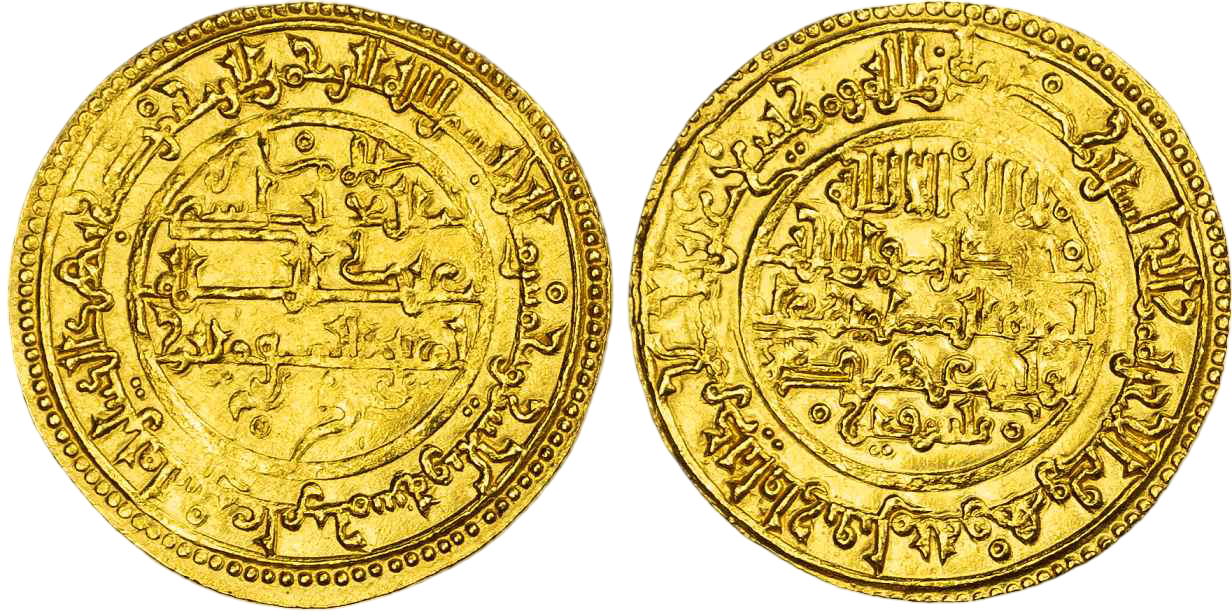
Gold dinar issued under the Almoravid ruler ʿAlī b. Yūsuf ibn Tāshfīn, bearing Almoravid inscriptions that reflect Mālikī-Sunni authority and Abbasid allegiance during the height of Almoravid rule in Morocco and al-Andalus.
The case of Ibn Barrajān (d. 536/1141) showed how far ʿAlī would go. Ibn Barrajān was an Andalusian Qurʾanic mystic whose authority operated entirely outside juridical command. He read the Qurʾān directly—through signs, cycles, symbolic cosmology, and inner kashf—bypassing the Mālikī mediation that the fuqahāʾ controlled. His tafsīr created a parallel source of legitimacy that law could not regulate. In ʿAlī's system, designed to suppress every autonomous authority, uncontrolled spirituality looked like a political risk. The conflict was structural, not personal: a centralizing state versus a mystic whose interpretive authority dissolved enforcement itself. Ibn Barrajān was arrested, transported to Marrakesh, and died in custody. No sword was raised publicly, but the result was the same: the elimination of a figure whose authority the system could not absorb.
ʿAlī ibn Yūsuf had achieved what no external enemy could: he had alienated the ribāṭ networks that had legitimated Almoravid rule, and he had demonstrated that the state would kill to preserve its monopoly. The policy was both logical and suicidal. Logical, because autonomous centers of authority threatened any centralizing project. Suicidal, because the fuqahāʾ who cheered Ibn Barrajān's elimination possessed no intellectual tools to defend their own doctrine. They had burned al-Ghazālī. They had suppressed kalām. They had forbidden the very speculative theology that might have armed them against challenge. When Ibn Tūmart arrived with mastery of dialectical argument, they discovered the cost of their choices.
The Murābiṭūn legal order was thus both a triumph and a trap. It achieved what no previous Moroccan state had managed: a uniform Mālikī administration from the Sahara to the Pyrenees, a scholarly class integrated into governance, and the suppression of juridical pluralism. But it achieved this through exclusion of kalām, of falsafa, of any intellectual tradition that might have provided tools for adaptation—and through violence against those who threatened its monopoly. The fuqahāʾ had wagered everything on a state that could enforce their rulings. When that state faced an enemy wielding theological weapons they had forbidden themselves to learn, they discovered the cost of their wager.
6. Marrakesh — The Capital and Its Contradictions
Yūsuf ibn Tāshfīn did not inherit a capital; he built one. The Almoravids had operated from Aghmat, the old Maṣmūda trading town at the foot of the Atlas where Zaynab al-Nafzāwiyya had accumulated her wealth and where the defeated Zanāta rulers had been confined. Aghmat possessed history, markets, and strategic position—but it was not theirs. It belonged to the peoples they had conquered, carried the memory of rulers they had displaced, and sat in a valley that could not contain what Yūsuf intended to build. Around 462/1070, with Morocco unified and the northern campaigns complete, he made the decision that would define Almoravid geography: a new capital, built from nothing, on the Hawz plain.
The site was a strategic genius. Marrakesh commanded the intersection of trade routes linking the Sahara to the Atlantic coast, the Atlas passes to the northern plains, the Sus to Fez. Caravans carrying gold, salt, and slaves from the south would pass through its gates. Armies marching north toward al-Andalus or east toward Tlemcen would stage from its walls. The Hawz itself—irrigated by the khettaras that channeled Atlas snowmelt underground—could feed an urban population and support the agricultural surplus an empire required. No previous Moroccan capital had occupied this position. Fez controlled the north; Sijilmāsa controlled the desert trade; Aghmat controlled the Atlas approach. Marrakesh controlled them all.
But the site was also a provocation. The Hawz plain lay in the heart of Maṣmūda territory—not Ṣanhāja land. The tribes surrounding the new capital owed the Almoravids nothing. They had not joined the movement in the Sahara, had not marched with Ibn Yāsīn against the Barghawāṭa, had not shared in the conquests that made the empire possible. The Almoravids were veiled Ṣanhāja from the desert; the Maṣmūda were settled mountaineers of the Atlas and its foothills, with their own scholars, their own saints, their own memory of independence. Yūsuf planted his capital among people who would never be his.
The city rose fast. Yūsuf constructed walls, a royal palace (the Qaṣr al-Ḥajar), mosques, markets, and the administrative infrastructure an empire demanded. He established the khettara irrigation system that would make the Hawz bloom. He built the first congregational mosque, later replaced by the Kutubiyya under the Almohads but originating in Almoravid design. The name itself carried sacred weight: Mūrākush—from the Tamazight “Mūr” (land) and “Akush” (God)—the Land of God. Marrakesh became what Fez had been for the Idrīsids: the center from which authority radiated. Europeans would later call the land "Morocco," and some have assumed the name derived from Marrakesh. It did not. Morocco was “Mauroi” to the Greeks, “Mauretania” to the Romans, the land of the “Moors” long before any Muslim set foot there. The Almoravids built a capital; the country already had its name.
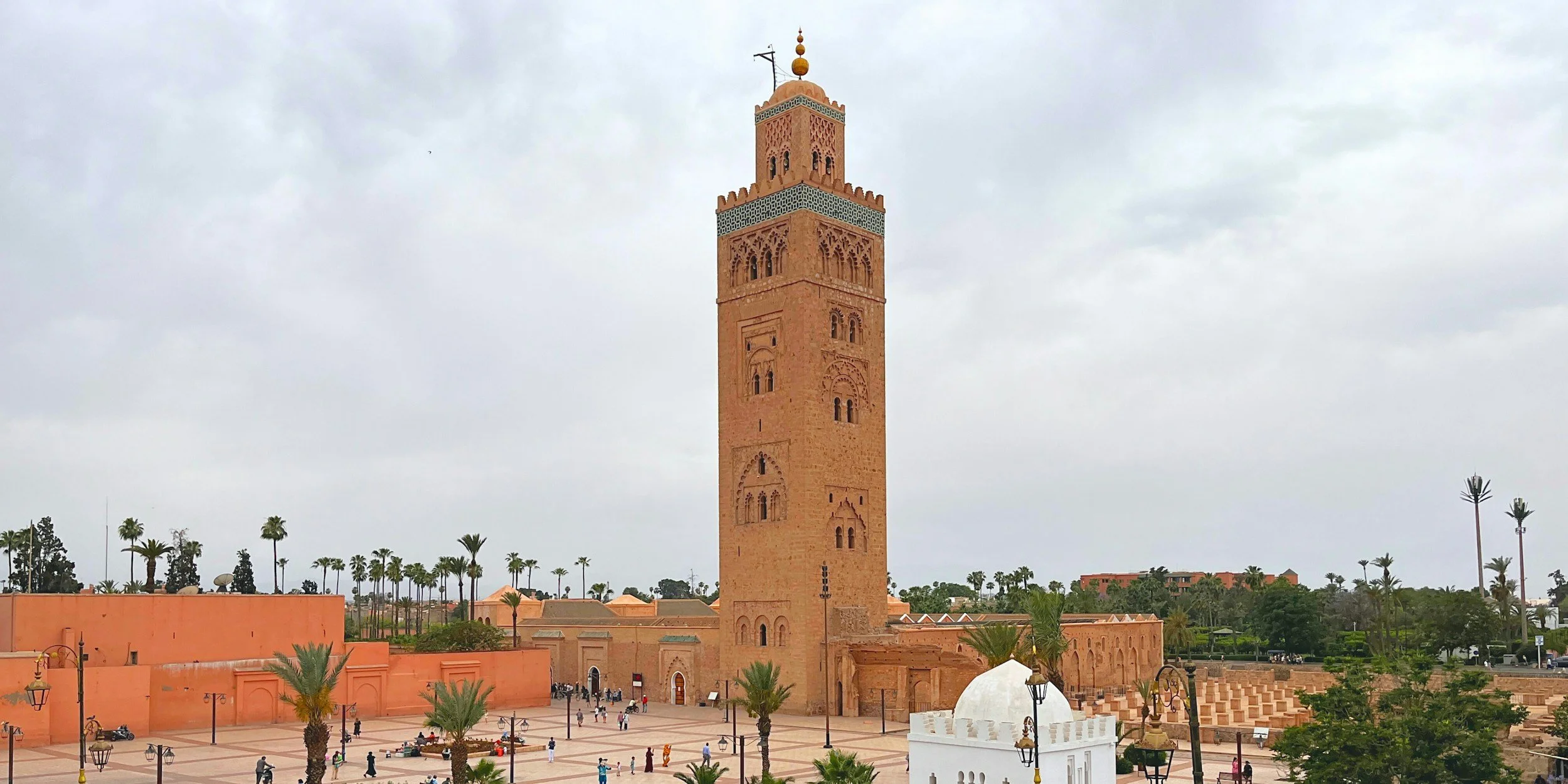
Kutubiyya Mosque in Marrakesh, with the iconic Almohad minaret rising behind the visible remains of the first Kutubiyya mosque in the foreground, illustrating the layered architectural history of the Almohad capital (6th/12th century).
Yet Marrakesh was not Fez. Fez had grown organically from Idrīsi foundations, its quarters developing over generations, its scholarly institutions accumulating prestige across centuries, its population rooted in the memory of Mawlāy Idrīs II. Marrakesh was an act of will—conjured from the plain by Ṣanhāja conquerors who lacked the genealogical legitimacy the Idrīsids possessed. The Almoravids ruled by conquest and legal enforcement, not by baraka and prophetic descent. Their scholars staffed the courts; their soldiers manned the walls; their governors administered the provinces. But the city's foundations rested on nothing deeper than their own power.
The relationship between Marrakesh and Fez encoded this tension. The Almoravids did not destroy Fez or strip it of significance—they could not afford to. Fez possessed al-Qarawiyyīn, the scholarly institution whose prestige no new foundation could match. Fez possessed the shrines of the Idrīsi imams, whose baraka continued to draw pilgrims regardless of who held political power. Fez possessed a population of scholars, merchants, and craftsmen whose expertise the empire required. The Almoravids needed Fez, but they did not trust it. They ruled from Marrakesh precisely because Marrakesh was theirs alone—a city without memory, without saints, without competing claims to authority.
ʿAlī ibn Yūsuf attempted to give Marrakesh what it lacked. He patronized scholars, built institutions, and encouraged settlement. Under his rule, the city acquired its own saints—figures like Yūsuf ibn ʿAlī al-Ṣanhājī, the leper of the cave, whose presence sanctified a city that had no Idrīsi shrine to anchor it. The network of disciples connecting Abū Yaʿzā to Abū ʿUṣfūr Yaʿlā to Yūsuf ibn ʿAlī created a spiritual geography centered on Marrakesh, independent of Fez's Idrīsi inheritance. These saints would later be celebrated as the Seven Men of Marrakesh (Sabʿat Rijāl Murrākush), their tombs defining the city's sacred topography—a deliberate construction paralleling the older pilgrimage circuits of Jabal al-’Alam in the north. The ʿAlawids would later add al-Suhaylī and al-Qāḍī ʿIyāḍ to the list, incorporating Almoravid-era scholars into the city's sacred canon centuries after the dynasty's fall.
But sanctity could not be manufactured by decree. The saints who flourished under Murābiṭūn rule derived their authority from sources the state did not control: chains of transmission linking them to earlier masters, baraka demonstrated through miracles, service to populations the makhzan could not reach. They sanctified Marrakesh despite the Murābiṭūn, not because of them. When ʿAlī ibn Yūsuf moved against the ribāṭs, when he taxed ʿAyn al-Fiṭr and killed Ibn Barrajān, he revealed that the state understood sanctity only as a threat to be contained. The saints of Marrakesh survived his reign; they did not depend on it.
The deeper problem was geographic. The Almoravids had built their capital in Maṣmūda territory, but they had not converted the Maṣmūda into Murābiṭūn. The tribes of the Atlas and its foothills remained distinct—their own languages, their own customs, their own networks of scholars and saints. When a Maṣmūda challenger arose, he would find an audience prepared to listen. The mountains ringing Marrakesh were not barriers protecting the capital; they were reservoirs of potential opposition, waiting for a leader who could articulate their grievances. Ibn Tūmart would emerge from those mountains. He would study in the East, master the kalām the Almoravid fuqahāʾ had forbidden, return to preach among the very Maṣmūda populations the Murābiṭūn had never absorbed. His movement would coalesce at Tinmal, in the High Atlas—close enough to Marrakesh to threaten it, remote enough to organize without interference.
Yūsuf ibn Tāshfīn had built his capital with strategic brilliance. He had chosen the site that commanded trade, agriculture, and military access. He had created a city that bore no other dynasty's memory, that belonged to the Murābiṭūn alone. But he had also planted Ṣanhāja power in Maṣmūda soil, surrounded his capital with populations that owed him nothing, and created a geography that invited challenge. Marrakesh was the Murābiṭūn achievement—and Marrakesh was the Murābiṭūn vulnerability. The city that commanded the empire also ensured that when the empire fell, it would fall there, conquered by men who descended from the mountains Yūsuf had thought to dominate.
7. The Andalusian Entanglement
The Murābiṭūn did not seek al-Andalus. Al-Andalus sought them.
By the late fifth/eleventh century, the Umayyad emirate of Córdoba had been dead for sixty years, its territories fragmented into petty kingdoms—the mulūk al-ṭawāʾif, the taifa kings—whose rulers combined cultural refinement with political fecklessness. They patronized poets, built palaces, accumulated libraries, and lost territory steadily to the Christian kingdoms of the north. Alfonso VI of León-Castile pressed southward with systematic aggression, extracting tribute (parias) from taifa rulers too weak to resist and too divided to combine. In 478/1085, Toledo fell—the ancient Visigothic capital, the symbolic heart of Iberian Islam. The taifa kings faced extinction.
Al-Muʿtamid ibn ʿAbbād of Seville, the most powerful of the remaining taifa rulers, convened a council to debate the unthinkable: inviting the Murābiṭūn to cross the strait. The risks were obvious. The Mulaththamūn were zealots—veiled Ṣanhāja from the Sahara who despised the wine-drinking, poetry-reciting, slave-girl-collecting culture of Andalusian courts. They would not come as mercenaries, content to fight and leave. They would come as conquerors. Al-Muʿtamid's advisors warned him. His response has echoed through the centuries: "I would rather be a camel-driver in Morocco than a swineherd in Castile."
Yūsuf ibn Tāshfīn's conditions were precise. He would not cross until he held both shores of the strait—until Tanja and Sabta were his. The taifa kings, who controlled Sabta, ceded it. The city was not merely a strategic port; it was the base of the Dabbāgh Idrīsids, the sharīfian lineage that had maintained its presence there since the fragmentation of the Idrīsid state. When Yūsuf prepared to enter al-Andalus in 479/1086, he invited Abū al-Ḥasan ʿAlī ibn ʿAbd al-Raḥmān—patriarch of the Dabbāgh sharīfs—to accompany him bi-qaṣd al-tabarruk bihi, for the purpose of seeking blessing through him. The sultan required an Idrīsī sharīf's presence not for military advice or juridical expertise but for baraka—supernatural capacity that Ṣanhāja swords and Mālikī fatwas could not replicate. This was the Almoravid solution to their legitimacy deficit: preserve sharīfian status, honor its bearers, seek their blessing for every major undertaking, while imposing Mālikī frameworks on governance. The custom endures in Morocco to this day—no sultan launches a significant enterprise without sharīfian company. The Almoravids did not invent the principle; they institutionalized it.
With his sharīfian companion secured, Yūsuf crossed with an army of Ṣanhāja cavalry, Maṣmūda infantry, and black African slave soldiers. At Zallāqa, north of Badajoz, he met Alfonso VI's forces and shattered them. The Christian king escaped with wounds; his army did not escape at all. The victory electrified the Islamic world. For a generation, the Christian advance halted.
But Yūsuf returned to Morocco immediately. While his army had crossed to al-Andalus, the Banū Ḥammād of Bijāya—his Ṣanhāja kinsmen who had blocked his eastern advance—seized the opportunity. They allied with the Banū Hilāl Arabs and raided Almoravid territories across the central Maghrib, withdrawing with plunder before Yūsuf could respond. The victory at Zallāqa meant nothing if the empire collapsed behind him. Yūsuf rushed back to secure his eastern flank, choosing diplomacy over war: the Ḥammādids were kin, and more critically, they formed a buffer against the Hilālī Arabs whose threat to Almoravid stability far exceeded anything the Ḥammādids themselves posed. He sent a letter reproaching the Ḥammādid amīr for allying with Hilālīs to raid Muslim lands while Christians threatened al-Andalus—then made peace and stationed forces across the Maghrib to prevent further incursions. The taifa kings breathed a sigh of relief. Yūsuf had come to fight geopolitics, not to govern Andalusian emirates—but he had also come to preserve an empire, and that empire's vulnerabilities lay in Africa, not Europe.

Map showing the fragmentation of al-Andalus into rival Ṭāʾifa kingdoms following the collapse of Idrisid Hammudi authority, illustrating the political division of Iberian Muslim states on the eve of Almoravid intervention (circa 427/1035).
The taifa rulers resumed their intrigues, their tribute payments to Alfonso, their internecine conflicts. Within three years, Yūsuf understood that half-measures would not hold. The taifa kings could not defend al-Andalus; they could only delay its loss while enriching themselves. In 483/1090, he returned—this time not as ally but as sovereign. One by one, the taifa kingdoms fell to Almoravid armies: Granada, Málaga, Seville, Badajoz, Valencia. Al-Muʿtamid, who had invited the Murābiṭūn to save him from Alfonso, was deposed, exiled to Aghmat, and died there in poverty, composing verses on the reversal of fortune. The man who had preferred Saharan camel-driving to Castilian swineherdry discovered that the Murābiṭūn offered a third option: imprisonment.
The Murābiṭūn fuqahāʾ provided the legal framework for annexation. Abū al-Walīd ibn Rushd issued fatwas declaring the taifa rulers unfit to govern—charges of alliance with Christians, failure to prosecute jihād, and moral corruption. The jurists who had dreamed of a state that would enforce their rulings now possessed one that spanned two continents. Mālikī law, already dominant in al-Andalus, became the exclusive legal framework. The same judicial hierarchy that operated in Marrakesh and Fez extended to Córdoba, Seville, and Granada. Qāḍīs appointed from Morocco staffed Andalusian courts. The empire was unified—Sahara to Pyrenees under a single legal order.
Yet al-Andalus was not Morocco. The Andalusians possessed what the Murābiṭūn lacked: centuries of accumulated high culture, philosophical sophistication, scientific achievement, and courtly refinement. Córdoba had been the largest city in western Europe when Marrakesh was empty plain. Andalusian scholars had translated Greek philosophy, advanced mathematics and astronomy, and developed architectural and artistic traditions that dazzled even their enemies. The taifa courts, for all their political failure, had cultivated poetry, music, and intellectual life to heights the Ṣanhāja warriors could not comprehend.
The encounter produced mutual contempt. The Andalusians saw the Almoravids as uncouth desert zealots—veiled barbarians who understood nothing of civilization, who burned al-Ghazālī and imprisoned Ibn Barrajān, whose scholars knew furūʿ and nothing else. The Almoravids saw the Andalusians as decadent hypocrites—wine-drinkers who hired Christian mercenaries, poets who praised patrons instead of God, rulers who paid tribute to infidels rather than fight. Both were right.
Yet al-Andalus was not Morocco. The Andalusians possessed what the Murābiṭūn lacked: centuries of accumulated high culture, philosophical sophistication, scientific achievement, and courtly refinement. Córdoba had been the largest city in western Europe when Marrakesh was empty plain. Andalusian scholars had translated Greek philosophy, advanced mathematics and astronomy, and developed architectural and artistic traditions that dazzled even their enemies. The taifa courts, for all their political failure, had cultivated poetry, music, and intellectual life—and many of those courts were themselves Amazigh: the Zīrids of Granada, the Afṭasids of Badajoz, the Dhūn-Nūnids of Toledo. But they were Ṣanhāja of the north, Miknāsa, Zanāta—not Ṣanhāja of the south. When the Mulaththamūn arrived from the Sahara, the taifa kings saw rivals from a hostile confederation, not kinsmen.
The administrative solution was segregation. The Almoravids governed through Moroccan appointees—qāḍīs, governors, military commanders drawn from Ṣanhāja ranks and Maghribi scholarly networks. Andalusian elites retained their properties, their cultural institutions, their social prestige, but not political power. The army remained Ṣanhāja; the administration remained Moroccan; the Andalusians were subjects, not partners. This preserved order but generated resentment. The poets who had celebrated taifa patrons now composed verses mocking the Murābiṭūn rusticity. The scholars who had debated falsafa and kalām found themselves ruled by men who considered such sciences heresy.
The cultural tension is mapped onto a geographic one. Al-Andalus required constant military attention—the Christian kingdoms did not cease their pressure because Zallāqa had been lost. Alfonso VI recovered, rebuilt, and resumed raiding. His successors pressed harder. The Murābiṭūn found themselves committed to a permanent frontier war that drained resources, demanded constant reinforcement from Morocco, and never reached resolution. Each campaign required crossing the strait, marching north, fighting, and returning—a logistical burden that exhausted the empire's capacity. The wealth that flowed from Andalusian cities—taxes, tribute, trade—flowed back out in military expenditure.
ʿAlī ibn Yūsuf spent his reign managing this hemorrhage. He crossed to al-Andalus repeatedly, fought campaigns that achieved tactical success but no strategic resolution, and watched the frontier erode despite his efforts. The Christians took Saragossa in 512/1118—a loss that demonstrated the limits of Almoravid power. The Andalusians blamed Murābiṭūn's incompetence; the Murābiṭūn blamed Andalusian treachery. Both blamed the other for a situation neither could resolve: an empire overextended across two continents, facing enemies on multiple fronts, governed by an elite that despised its most sophisticated subjects.
The entanglement proved fatal not because al-Andalus was lost—it would take another century for the major cities to fall—but because it consumed the resources and attention that might have addressed threats closer to home. While ʿAlī ibn Yūsuf campaigned north of the strait, Ibn Tūmart preached in the Atlas. While the Murābiṭūn armies marched toward Saragossa, the Almohad movement coalesced at Tinmal. The empire that had unified Sahara and Iberia discovered that unity across such distance was unsustainable. Al-Andalus had sought the Mulaththamūn to save it from the Christians. In the end, al-Andalus helped destroy the Murābiṭūn by distracting them from the enemy in their own mountains.
The taifa kings had calculated correctly, after a fashion. They had traded independence for survival, and survival they achieved—not as rulers but as subjects of an empire that could hold what they could not. The Murābiṭūn had calculated correctly too: al-Andalus was indefensible under taifa governance and strategically vital to any power claiming leadership of western Islam. But correct calculations produced an impossible situation. The Murābiṭūn won al-Andalus and lost themselves. The empire that had emerged from a ribāṭ in the Sahara, that had unified Morocco through thirty years of blood, that had pronounced the bayʿa to Baghdad and closed the Maghrib to the Fatimids—this empire bled out on the Iberian frontier while its foundations crumbled in the Atlas behind it.
8. The Almohad Challenge — When the System Met Its Negation
The Almoravids had built their empire on a simple formula: Mālikī law enforced by Ṣanhāja swords. They had suppressed kalām, burned falsafa, killed mystics whose authority escaped juridical control. They had created the most uniform legal order the Maghrib had ever known—and in doing so, they had disarmed themselves. When the challenge came, it came wielding precisely the weapons they had forbidden themselves to learn.
Muḥammad ibn Tūmart (d. 524/1130) was Maṣmūda—and sharīf, claiming descent from the Prophet ﷺ through the line of Mawlāy Idrīs. He was born in the Anti-Atlas, among the very populations the Murābiṭūn had conquered but never absorbed. His village, Īgīllīz, lay in the mountains south of Marrakesh—close enough to feel Almoravid power, remote enough to preserve Maṣmūda identity. He left Morocco young, traveling east in search of knowledge: Córdoba, then the Mashriq—Baghdad, Damascus, perhaps Cairo.
What he found in the East was a Sunni Islam transformed since the days of Abū ʿImrān al-Fāsī. The Niẓāmiyya revolution had reshaped the landscape of orthodox learning. Niẓām al-Mulk's madrasas—founded from Khurāsān to Baghdad—had institutionalized a new synthesis: Ashʿarī kalām as the defensive science of doctrine, Shāfiʿī fiqh as the legal framework, and Sufi ethics as the interior discipline. Al-Ghazālī had crowned this synthesis, reconciling law, theology, and mysticism in a system that could answer any challenge. This was the third Abbasid upgrade of Sunnism—after the Qādirī mīthāq that had defined orthodoxy, after the delegated enforcement that the Ghaznavids and Murābiṭūn had executed, now came intellectual completion. The Murābiṭūn had transmitted the first generation's program: Mālikī jurisprudence without kalām, enforcement without understanding. Ibn Tūmart absorbed the full upgrade.
He returned to the Maghrib around 510/1117. Ibn Khaldūn described what emerged: baḥran mutafajjiran min al-ʿilm wa-shihāban fī al-dīn—an ocean bursting with knowledge, a meteor in religion. He studied what the Mulaththamūn fuqahāʾ had banned: Ashʿarī kalām, the theological science that defended Sunni doctrine through rational argument; the works of al-Ghazālī, whose Iḥyāʾ the Murābiṭūn had burned; the methods of dialectical disputation that could demolish an opponent's position through logical necessity. ʿAbd al-Muʾmin ibn ʿAlī (d. 558/1163) attached himself to him; five others joined; they began commanding right and forbidding wrong across the Maghrib—seven men and their master, the nucleus of a movement that would destroy an empire.
Muḥammad ibn Tūmart’s message was theological, but its target was political. The Almoravids, he declared, were not merely bad rulers but unbelievers. Their scholars taught tashbīh—the attribution of human qualities to God. They described God as having hands, eyes, a face, taking Qurʾānic language literally rather than interpreting it according to proper tanzīh, the absolute transcendence that true tawḥīd required. This was not error; it was kufr. The Almoravid state was illegitimate, not because it governed badly, but because it was founded on theological corruption.
The accusation was devastating because the Murābiṭūn fuqahāʾ could not answer it. They knew furūʿ—the branches of law, the detailed rulings on prayer and commerce and inheritance. They did not know usūl. When Ibn Tūmart debated them, he deployed Ashʿarī categories they had never studied, logical techniques they had never practiced, theological distinctions they could not parse. The sources preserve accounts of these encounters: al-Murābiṭūn scholars reduced to silence, unable to respond, retreating to denunciation because they lacked the tools for refutation. Ibn Tūmart was not merely criticizing the regime; he was demonstrating its intellectual bankruptcy in public, before audiences who watched the empire's scholars humiliated by a single man from the mountains.
ʿAlī ibn Yūsuf understood the danger. He summoned Ibn Tūmart to Marrakesh for examination, hoping to discredit or eliminate him as he had eliminated Ibn Barrajān. But Ibn Tūmart was not Ibn Barrajān. Where the Andalusian mystic had operated alone, Ibn Tūmart was building a movement. Where Ibn Barrajān's authority derived from Qurʾānic interpretation accessible only to the spiritually prepared, Ibn Tūmart's authority derived from theological argument anyone could follow. The confrontation in Marrakesh produced no resolution. Ibn Tūmart was expelled from the city—not executed, not imprisoned, merely sent away. It was a half-measure that revealed the regime's paralysis. They could not answer him; they dared not kill him; they could only hope he would disappear.
He did not disappear. He went to the mountains—his mountains, the Maṣmūda highlands where the Murābiṭūn had never been welcome. At Tīnmal, high in the Atlas above Marrakesh, he established his community. He organized his followers according to a strict hierarchy: the ahl al-dār (people of the house), his closest companions; the ahl al-khamsīn (people of fifty), the next circle; concentric rings of loyalty radiating outward. He instituted the tamyīz—the "distinction," a purge that eliminated waverers and potential traitors, binding his movement through shared participation in violence. He declared himself al-Mahdī al-Maʿṣūm, the Infallible Guided One whose coming the Prophet ﷺ had foretold.
The Mahdī claim was the key. Ibn Tūmart was not merely a scholar criticizing Murābiṭūn theology; he was the eschatological figure destined to restore justice before the end of time. His ʿiṣma—infallibility—placed him beyond challenge. To question him was not disagreement but apostasy. To oppose him was not politics but war against God's appointed. The Almohads (al-Muwaḥḥidūn, "those who affirm divine unity") took its name from the theological principle Ibn Tūmart preached, but its power derived from messianic certainty. The Almoravids enforced law; the Almohads embodied destiny.
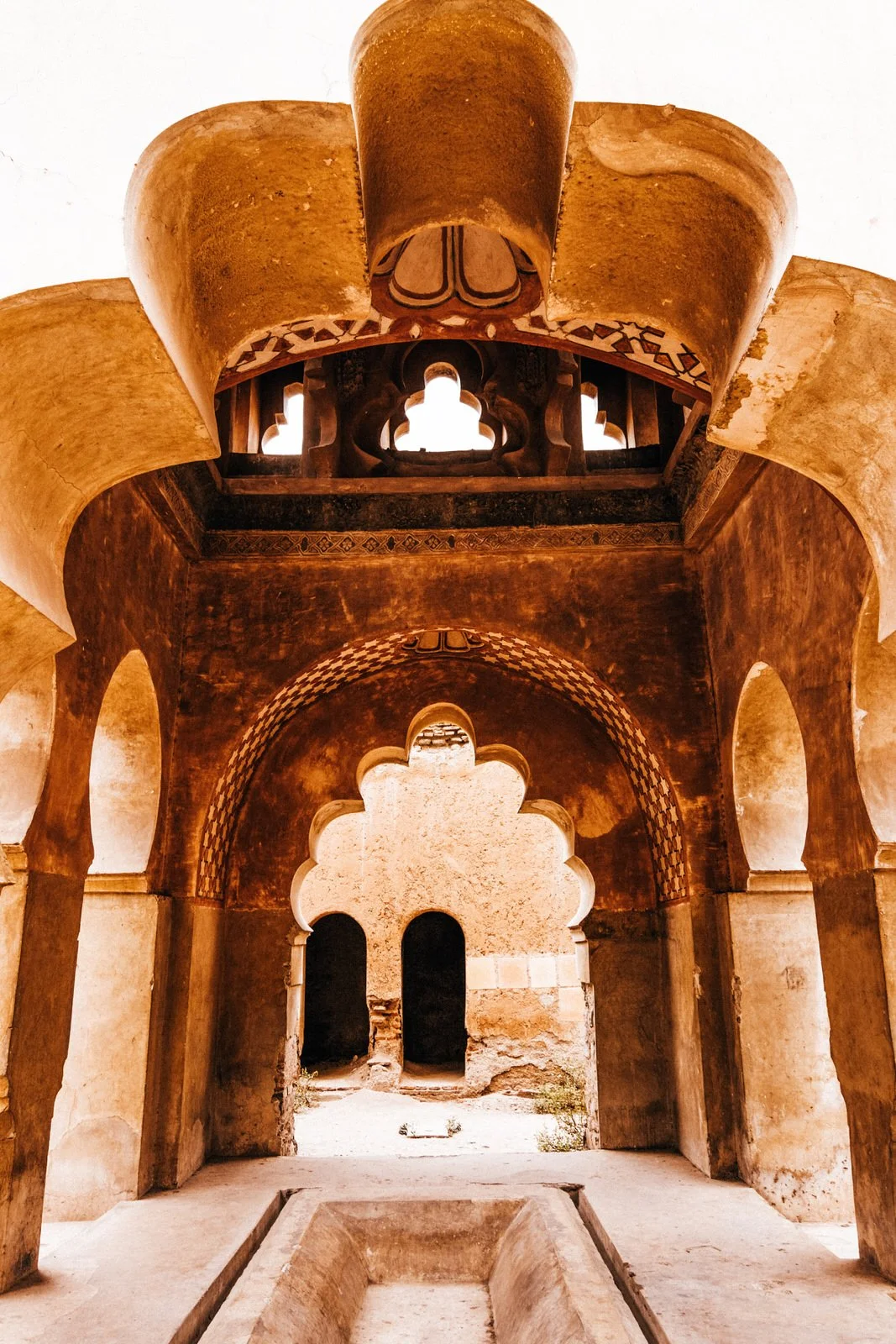
The Almoravid Koubba (Qubba al-Barūdiyyīn) in Marrakesh, a domed pavilion built in the early 6th/12th century (circa 511–519/1117–1125), the only surviving example of Almoravid architecture in the city, located near the Ben Youssef Mosque and originally serving as a ritual ablution structure with intricate floral stucco, calligraphy, and a distinctive star-shaped dome.
Here lay the deepest paradox. Ibn Tūmart had mastered the Niẓāmī synthesis—Ashʿarī kalām, Ghazālian ethics, the full apparatus of post-Qādirī Sunnism—only to deploy it against its own logic. His Mahdist claim was not a marginal heterodoxy; it was a frontal assault on the entire architecture of the Niẓāmī Triplex. Where the Niẓāmiyya model offered a religious authority bounded by scholarly consensus, earned through mastery of transmitted sciences, accountable to the collective judgment of the ʿulamāʾ, Ibn Tūmart presented an Imām whose authority was absolute, unmediated, and apocalyptic. He did not submit to the judgment of the scholars; he judged them, declaring the Almoravid fuqahāʾ ignorant of the very foundations of theology. The tools of Sunni orthodoxy became, in his hands, weapons against Sunni institutional order.
And Ibn Tūmart possessed what the Almoravids had always lacked: genealogy. He claimed descent from the Prophet ﷺ through the Ahl al-Bayt—specifically, through the line of ʿAlī and Fāṭima, making him a Hachimite. The claim was contested; the sources preserve both assertions and denials. But the claim itself mattered more than its verification. The Almoravids ruled as amīr al-muslimīn, commanders acknowledging Abbasid authority they did not share. Ibn Tūmart claimed the imamate itself, the right to lead the community that descended through Prophetic blood. Where Yūsuf ibn Tāshfīn had required sharīfian blessing from Idrīsi saints, Ibn Tūmart required nothing—he was the sharīf, the imam, the Mahdī. The Almoravids had built an empire on borrowed legitimacy; Ibn Tūmart proposed to replace it with legitimacy incarnate.
The military contest began while Ibn Tūmart lived, but he died in 524/1130 before its resolution—perhaps from illness, perhaps from the aftermath of a failed assault on Marrakesh. His death was concealed for years while his successor, ʿAbd al-Muʾmin ibn ʿAlī, consolidated control. ʿAbd al-Muʾmin was not Maṣmūda but Zanāta—an outsider who had attached himself to Ibn Tūmart during the return journey from the East. His succession demonstrated that the Almohad movement had transcended its Maṣmūda origins, that it operated now on ideological rather than tribal loyalty. He would prove a commander of genius, methodically conquering Morocco over two decades of warfare.
The Almoravid collapse, when it came, was total. The fuqahāʾ who had championed the regime died with it or fled. Al-Qāḍī ʿIyāḍ was exiled; others were executed. The judicial hierarchy that had administered law from Sahara to Pyrenees was dismantled and replaced. The dynasty that had unified Morocco, destroyed the Barghawāṭa, eliminated the Bajliyya, annexed al-Andalus, and pronounced the bayʿa to Baghdad—this dynasty ended in 541/1147 when ʿAbd al-Muʾmin entered Marrakesh. The last Almoravid amīr, Isḥāq ibn ʿAlī, died in the fighting. The city Yūsuf ibn Tāshfīn had built became the capital of those who destroyed his legacy.
The Almohads razed the Almoravid mosques and built their own—the Kutubiyya rising where Almoravid structures had stood, its minaret a declaration that the old order was not merely defeated but erased. They imposed their own creed, their own hierarchy, their own vision of Islamic order. The dry Mālikī jurisprudence the Mulaththamūn had enforced gave way to Muwaḥḥidūn tawḥīd; Ibn Tūmart's theological system made state doctrine. The fuqahāʾ who had burned al-Ghazālī now found themselves ruled by men who considered them anthropomorphists barely distinguishable from unbelievers.
Yet the Almohads inherited what they had conquered. The administrative apparatus remained—modified but functional. The trade routes still flowed through Marrakesh. The Andalusian frontier still demanded defense. The saints who had flourished under Almoravid rule continued under Almohad rule, transferring their networks to new political masters as they had done before. ʿAbd al-Jalīl ibn Wayhān died rather than submit, but most did not die. The ribāṭs continued teaching, healing, arbitrating. The scholars adapted. The empire changed hands; the structures endured.
The Almohad victory was thus both rupture and continuity. Rupture in ideology: the tashbīh the Almoravids had allegedly taught was suppressed, Ibn Tūmart's ʿaqīda enforced, the Mahdī's infallibility proclaimed. Rupture in legitimacy: the Abbasid bayʿa the Almoravids had pronounced was abandoned, the caliphate claimed for Ibn Tūmart's successors alone. But continuity in geography: Marrakesh remained the capital. Continuity in scope: the empire still stretched from Sahara to al-Andalus. Continuity in structure: the makhzan the Almoravids had built became the makhzan the Almohads wielded. The system that could not defend itself intellectually proved remarkably durable institutionally. The Almohads inherited an empire; they merely supplied new justifications for ruling it.
9. Collapse and Legacy — Why the Murābiṭūn Still Won
The Almohads destroyed the Almoravid state. They killed its last amīr, razed its mosques, exiled or executed its scholars, and imposed a theological system that declared Almoravid doctrine kufr. By any conventional measure, the Murābiṭūn lost—totally, definitively, catastrophically. Yet within a century of their fall, nearly everything distinctively Almohad had vanished, while the order the Almoravids had established endured. The victors inherited; the vanquished shaped what was inherited.
The ʿaqīda died before the state did. Al-ʿUqāb broke the spell in 609/1212—if the Muwaḥḥidūn carried divine mandate, why had God delivered them to slaughter? But the killing blow came from within. In 626/1229, the caliph Idrīs al-Maʾmūn (r. 626–629/1229–1232) stood in Marrakesh—a city he had taken with Fernando III's Christian cavalry—and pronounced Ibn Tūmart a liar. He struck the Mahdī's name from the coinage and the Friday sermon. He declared: "There is no Mahdī except ʿĪsā ibn Maryam. This was a bidʿa which we have removed." Then he called the founder and his companions kuffār. The Almohad caliph had excommunicated the Almohad movement.
Al-Maʾmūn thought he was solving a problem. Mahdism had calcified into obstacle—it alienated the Mālikī scholars, it made succession impossible to routinize, it demanded an absolutism no ordinary ruler could sustain. Remove the doctrine, keep the throne. But legitimacy is not arithmetic. What had been one became zero. If Ibn Tūmart was a fraud, why obey his successors? Abū Zakariyyāʾ Yaḥyā—the Almohad governor of Ifrīqiya, himself descended from one of Ibn Tūmart's original companions—asked the question and answered it by declaring independence. He founded the Ḥafṣid dynasty in Tunis, which would outlast the Almohads by three centuries. Tlemcen followed under the ʿAbd al-Wādids. The Maghrib that the Muwaḥḥidūn had unified shattered into three: Morocco shrinking around Marrakesh, Ifrīqiya gone to the Ḥafṣids, the central Maghrib gone to the ʿAbd al-Wādids. The provinces fell away not despite the repudiation but because of it. Al-Maʾmūn had pulled out the foundation and expected the building to float.
The Mālikī fuqahāʾ watched and waited. They had been humiliated, not destroyed. When the Muwaḥḥidūn theology collapsed, they were still there—in the mosques, in the markets, in the households where law was actually lived. By the time the Marinids took Marrakesh in 668/1269, no one remembered Ibn Tūmart's creed except as a cautionary tale. Mālikī jurisprudence—the jurisprudence the Muwaḥḥidūn had championed, the legal order the Muwaḥḥidūn had mocked as anthropomorphist ignorance—resumed its monopoly as if the interruption had never occurred.
The caliphal claim proved equally ephemeral—but not the title. The Muwaḥḥidūn had rejected the Abbasid bayʿa and claimed the caliphate for themselves—a Maghribi caliphate, independent of Baghdad, grounded in Mahdist revelation. The claim required the revelation. Once al-Maʾmūn declared the revelation false, the caliphate had no ground to stand on. Yet the title Amīr al-Muʾminīn endured—al-Maʾmūn himself retained it even as he denounced Ibn Tūmart. The Marinids kept it. The Saʿdians kept it. The ʿAlawids hold it still. What changed was the meaning. The Almohad Amīr al-Muʾminīn had claimed universal authority grounded in Mahdist mandate; his successors claimed leadership of the Moroccan Muslim community, grounded in sharīfian descent and scholarly recognition. The title survived; the absolutism died. Morocco would have its Commander of the Faithful, but he would rule through Mālikī consensus and sharifian baraka, not through prophetic revelation that placed him beyond question.
What the Muwaḥḥidūn could not escape was structure. They conquered an empire and found they had to run it. The trade routes still converged on Marrakesh. The fiscal apparatus still required administrators who knew how to collect taxes. The judicial system still needed qāḍīs who knew Mālikī law. The Muwaḥḥidūn modified, they renamed, they imposed their doctrinal requirements—but underneath, the machinery was Almoravid. The makhzan that would govern Morocco for centuries had taken shape under Yūsuf ibn Tāshfīn and ʿAlī ibn Yūsuf. The Almohads operated it. They did not replace it.
They kept Marrakesh. They could have moved back to Tīnmal, where the movement began, or to a new foundation that would bear no Almoravid memory. They stayed. The city was too valuable, too central, too perfectly positioned at the intersection of every route that mattered. The Almohads built the Kutubiyya, where an Almoravid mosque had stood. They built the Kasbah Mosque to house their own administration. But they built in an Almoravid city, on Almoravid foundations, accepting the geographic logic their enemies had established. The conquerors became tenants.
The saints continued. The Muwaḥḥidūn persecuted some—Mawlāy ʿAbd al-Salām ibn Mashīsh was killed around 625/1228, and sharīfian leaders who built ribāṭs too close to power were executed. But persecution revealed the limit. You could kill a saint; you could not kill sanctity. The networks ran through kinship and devotion, through zāwiyas embedded in villages the makhzan never reached, through chains of transmission that passed from master to disciple regardless of who sat in Marrakesh. Ibn Wayhān died rather than submit to ʿAbd al-Muʾmin; Sīdī Bannūr succeeded him; the Nūriyya continued. Abū Yaʿzā's disciples spread across the Atlas; their successors taught the men who would shape Moroccan Sufism for centuries. The Almohads discovered what the Almoravids had discovered before them: baraka cannot be commanded.
The settlement held. This was the Murābiṭūn's deepest achievement—not the state, which fell, but the orientation they imposed on Moroccan Islam. They had closed the Maghrib to Fatimid possibility, eliminated the Shīʿī networks that had persisted since the Idrīsid collapse, and aligned Morocco permanently with Sunni orthodoxy. The Muwaḥḥidūn maintained this orientation—their tawḥīd was anti-Shīʿī in implication even when it was anti-Murābiṭūn in argument. The Marinids maintained it. The Saʿdians and ʿAlawids maintain it still. Morocco is Sunni because the Murābiṭūn made it Sunni. The dynasty lasted ninety years. The confessional geography has lasted a millennium.
The sharīfian principle not only survived but deepened. The Muwaḥḥidūn had invoked it—Ibn Tūmart claimed Idrīsid descent—and thereby confirmed that genealogical legitimacy mattered in ways mere conquest could not replicate. The Marinids, Zanāta without Prophetic blood, understood. They patronized the Idrīsid shrines at Zarhūn and Fez, honored the sharīfian families the Muwaḥḥidūn had alternately courted and killed, and positioned themselves as custodians of a sanctity they could not claim. The Saʿdians were sharīfs themselves. The ʿAlawids are sharīfs still. The Almoravids had sought sharīfian blessing because they lacked sharīfian blood; every dynasty since has either possessed that blood or governed through those who do.
The Murābiṭūn lost the state and won everything else. The Mālikī monopoly they established became permanent. The administrative structures they built became the template. The capital they founded became Morocco's enduring center. The Sunni orientation they enforced became Morocco's identity. The sharīfian principle they honored became Morocco's constitutional foundation.
Their failure was intellectual, and it was fatal to them. They suppressed kalām and could not answer Ibn Tūmart. They burned al-Ghazālī and had no defense when a man who had mastered al-Ghazālī came to judge them. They built a legal order of unprecedented uniformity and left it naked before a theological assault. The dynasty paid the price.
But the dynasty was never the point. The point was the order—and the order survived. The Muwaḥḥidūn who destroyed the Murābiṭūn, spent a century trying to replace what they had conquered, failed, and watched their own creation repudiated by their own caliph. The Marinids who destroyed the Muwaḥḥidūn, did not try to replace anything. They administered what remained: Murābiṭūn structures, Murābiṭūn geography, Murābiṭūn law, and Murābiṭūn settlement. The Murābiṭūn had built more enduringly than they knew—or than their destroyers could admit.
10. Conclusion: The Murābiṭūn and the Making of Morocco
The Murābiṭūn did not intend to make Morocco. They intended to impose correct Islamic practice on Ṣanhāja nomads in the Sahara, to destroy the heterodoxies that defied Sunni order, to execute a juridical program transmitted from Baghdad through Qayrawān to a ribāṭ in the Sūs. They were instruments before they were rulers, executors before they were founders. The empire they built was not their design but the consequence of a strategy conceived by men who never held swords—al-Qādir bi-llāh in his diminished caliphate, al-Bāqillānī in his Baghdad study, Abū ʿImrān al-Fāsī in his Qayrawānī exile, Waggāg ibn Zallū in his coastal ribāṭ. The Murābiṭūn supplied what these men required: the capacity for violence on a scale and at a distance the caliphate could never achieve.
This is the first lesson of the Almoravid case: doctrine travels through networks, not armies. The Qādirī mīthāq articulated Sunni unity in 408/1017; the Murābiṭūn enforced it in the Maghrib half a century later without having read it. The chain of transmission—al-Bāqillānī to Abū ʿImrān to Waggāg to Ibn Yāsīn—carried not texts but orientation, not theology but purpose. Each node translated the message for its context: al-Bāqillānī constructed Ashʿarī synthesis for caliphal legitimation; Abū ʿImrān transmitted Mālikī jurisprudence for Maghribi application; Waggāg combined sharīfian baraka with juridical training for tribal mobilization; Ibn Yāsīn converted all of it into military discipline. The Murābiṭūn who conquered Morocco knew they fought for God and the Sunna. They did not know they were completing a project designed in Baghdad to contain the Fatimids. They did not need to know. The network had done its work.
This is the second lesson: execution without understanding can succeed—but it cannot adapt. The Murābiṭūn built the most uniform legal order the Maghrib had ever known. They suppressed alternatives, integrated scholars into administration, enforced Mālikī rulings from Senegal to Saragossa. But they built it by excluding everything that might have enabled flexibility. They banned kalām and could not answer Ibn Tūmart. They burned al-Ghazālī and could not defend their own legitimacy. They killed Ibn Barrajān and could not control the saints who operated beyond juridical reach. The intellectual poverty that made them effective enforcers made them vulnerable to any challenger who possessed what they lacked. The system worked until it met its negation; then it collapsed, because no one within it knew how to argue.
This is the third lesson: structures outlast the dynasties that build them. The Murābiṭūn ruled for ninety years; their order shaped Morocco for nine centuries. The Mālikī monopoly they established became permanent. The capital they founded became Morocco's center. The administrative apparatus they constructed became the makhzan every successor wielded. The confessional settlement they enforced—Sunni, anti-Fatimid, symbolically aligned with Baghdad—became Morocco's identity. The sharīfian principle they honored became Morocco's constitutional foundation. The Almohads who destroyed them, the Marinids who succeeded, the Saʿdians and ʿAlawids who followed—all ruled within frameworks the Murābiṭūn had established. The dynasty vanished; the architecture endured.
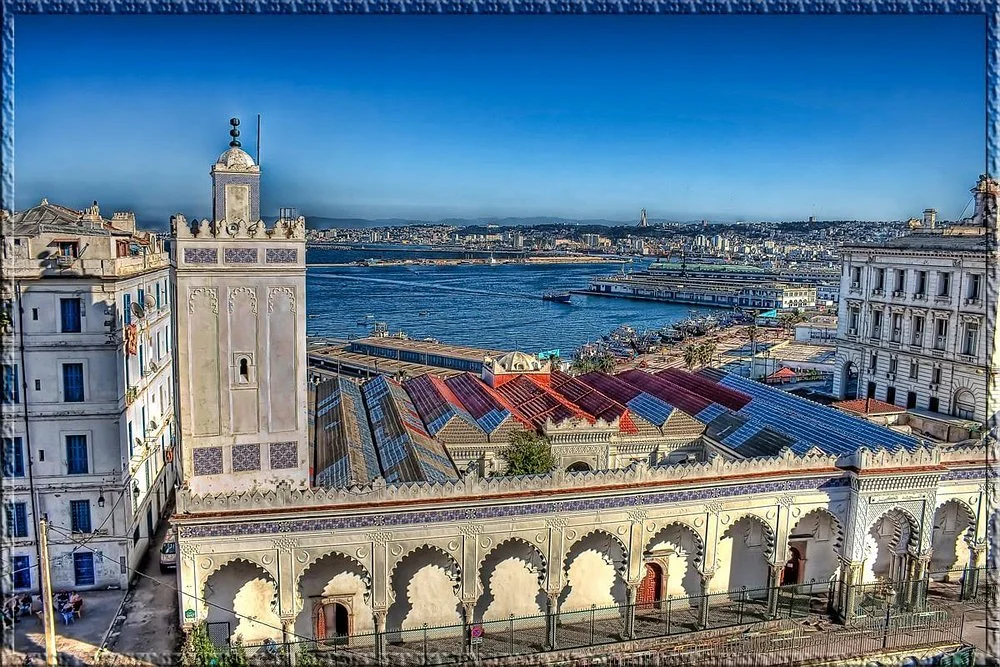
The Great Mosque of Algiers (al-Masjid al-Kabīr), founded by Yūsuf ibn Tāshfīn in 490/1097, marking the eastern limit of Almoravid expansion in the Maghrib. The Murābiṭūn advance halted here—stopped not by the Ḥammādids of Bijāya but by the Banū Hilāl and Banū Maʿqil Arabs who defended the approaches to Ifrīqiya.
This is the fourth lesson: the Maghrib was never merely peripheral. The standard narrative of Islamic history centers on Baghdad, Cairo, and Damascus—the metropolitan cores where caliphs ruled, and scholars debated. The Maghrib appears as a distant continent, a recipient of influences rather than a generator of events. The Murābiṭūn case inverts this framing. The Qādirī strategy required the Maghrib precisely because the caliphate could not accomplish its goals without it. Maḥmūd b. Sabuktigīn enforced Sunni orthodoxy in Khurāsān; the Murābiṭūn enforced it in the West. Both were necessary. The Fatimids could not be contained by eastern action alone—their Maghribi homeland, their recruiting ground, their symbolic origin had to be closed. The Murābiṭūn closed it. The far West determined what the center could not.
This is the fifth lesson: Morocco's distinctiveness was not deviation but design. For three centuries before the Murābiṭūn, the Maghrib al-Aqṣā had resisted every eastern power—Umayyads expelled at the Battle of the Nobles, Abbasids unable to project force across the distance, Fatimids departing for richer prizes in Egypt, Idrīsids building a state founded on opposition to Baghdad. The Murābiṭūn reversed this pattern. They pronounced the bayʿa to the Abbasid caliph, inscribed his name on their coins, and acknowledged a sovereignty they did not share. For the first time since Fakh, Morocco recognized the eastern caliphate. This was not submission but alignment—the western execution of an eastern strategy, undertaken by men who chose the alliance rather than having it imposed. Morocco became Sunni because Moroccans made it Sunni, through violence they initiated and structures they built. The settlement was theirs.
The Murābiṭūn emerge from this analysis not as founders of a vision but as executors of a program—and execution was enough. They did not innovate theologically; they enforced what others had stabilized. They did not create Mālikī jurisprudence; they made it mandatory. They did not invent the ribāṭ; they militarized a model Idrīsi sharīfs had developed two centuries before. Their originality lay not in ideas but in organization: the capacity to transform ribāṭ discipline into imperial conquest, to convert Ṣanhāja tribal confederation into a centralized state, to project power across distances no previous Moroccan polity had managed. They were technicians of violence and administration, not philosophers of order. But technicians can build what philosophers only imagine.
The empire they built carried its contradictions from the beginning. A Ṣanhāja dynasty ruling from Maṣmūda territory. A legal order hostile to the intellectual tools that might defend it. A capital planted among populations that owed it nothing. An Andalusian dependency that drained resources faster than it supplied them. A sharīfian legitimacy borrowed but not possessed. These contradictions did not cause the Almoravid fall—Ibn Tūmart caused the fall, with theological weapons and Maṣmūda armies the Murābiṭūn could not match. But the contradictions explain why the fall was so complete, why the dynasty could not adapt, why the system cracked rather than bent.
Yet what cracked was the dynasty, not the order. The Muwaḥḥidūn who replaced them inherited the contradictions along with the structures—and discovered that structures matter more than ideology. Muwaḥḥidūn theology faded; Murābiṭūn administration endured. Muwaḥḥidūn caliphal claims collapsed; Murābiṭūn geographic logic persisted. The Marinids, Saʿdians, and ʿAlawids who followed ruled Morocco from Fez or Marrakesh, administered through makhzan apparatus, enforced Mālikī law, honored sharīfian authority, maintained Sunni orientation—all of it recognizably continuous with what the Murābiṭūn had built. The veiled warriors from the Sahara, who had seemed so alien to the populations they conquered, created the template that made those populations Moroccan.
This is the final lesson, and the hardest: the Murābiṭūn won by losing. Their state collapsed; their order prevailed. Their dynasty ended in blood at Marrakesh; their settlement defined the empire that Marrakesh would rule. They were not remembered with love—the Muwaḥḥidūn saw to that, and the Andalusian poets they had despised shaped the literary memory. But they were remembered in structure, in law, in geography, in confession. Morocco is Sunni because the Murābiṭūn made it Sunni. Morocco is Mālikī because the Murābiṭūn made it Mālikī. Morocco is ruled from cities the Murābiṭūn founded or conquered, through institutions the Murābiṭūn built, according to principles the Murābiṭūn enforced. The Murābiṭūn did the job. Nine centuries later, the job remains done.