
About DAR.SIRR
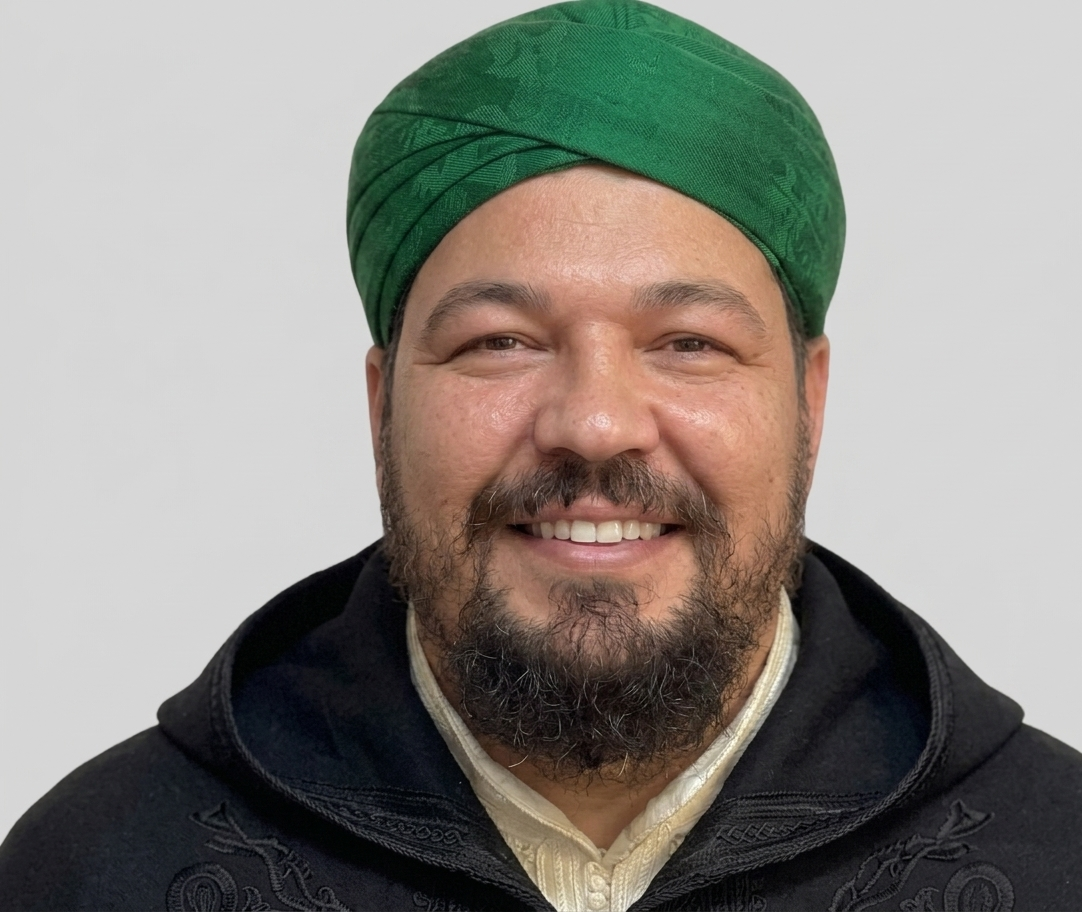
Bismi Llāhi al-Raḥmāni al-Raḥīm.
Wa al-ṣalātu wa al-salāmu ʿalā Sayyidinā Muḥammad wa ʿalā ālihi wa sallim.
There is a shrine outside Bāb al-Futūḥ in Fez. It holds Mawlāy ʿAbd al-ʿAzīz al-Dabbāgh — a young Idrīsid sharīf who received one of the greatest spiritual openings in the history of Moroccan Islam, died at thirty-six, and left behind a textual legacy that continues to travel three centuries later. I am his descendant. I hold the keys.
As Naqīb al-Ashrāf of the Dabbāgh family and Muḥāfiẓ (custodian) of the Shrines of Sīdī ʿAbd al-ʿAzīz al-Dabbāgh, Sīdī ʿAlī ibn Ḥirzihim, and Sīdī Ḥarazim in Fez— may Allah rest their souls, I carry an inherited responsibility — to the man buried outside the gate, to the tradition he embodied, and to those who come to the threshold seeking what he left. DAR.SIRR is what that responsibility looks like on the page.
This is a publication on Moroccan Sufism, Islamic heritage, and sacred authority in the Maghrib. It publishes long-form studies, critical analyses, and field-based research on the saints, zawāyā, ribāṭs, and sacred geographies that constitute the living archive of Moroccan Islam. It is not a neutral academic journal. It reflects a personal, critical, and committed reading of Islamic civilization — one that refuses to separate spirituality from makhzan, or history from its metaphysical depth. The work is rigorous. It is also warm — because the tradition it studies is alive, its people are real, and its stakes are high.
At the heart of DAR.SIRR stands our grandfather Mawlāy ʿAbd al-ʿAzīz al-Dabbāgh (may Allah sanctify his secret) himself — the quṭb, the ghawth, the walī whose authority rested not on institutional formation but on direct divine gift, who was opened at Bāb al-Futūḥ in 1125/1713 and whose entry into Fāsī sacred memory alongside Mawlānā Idrīs al-Azhar, Sīdī ‘Ali Ibn Ḥirzihim, Sīdī Abū ʿAbd Allāh al-Tāwudī, and Sīdī Aḥmad al-Tījānī remains one of the most significant events in the history of Moroccan Sufism. The ongoing scholarly work here includes critical studies of Al-Ibrīz and Taysīr al-Mawāhib, the genealogy of the Dabbāgh lineage across fourteen centuries, and the sacred geography of Fez as a living spiritual capital. I am personally involved in the restoration of the Dabbāghi Mausoleum— because the work does not stop at the page.
Moroccan history is read here not as a sequence of dynasties or legal schools, but as a slow intelligence formed through saints, routes, and lineages that preceded and conditioned every later institutional framework. Central to this reading is the Niẓāmī Synthesis — the system through which Seljuk-era Islamic governance fused scholarly legitimacy, Sufi authority, and political power into a framework the Marinids later adapted, and which ultimately gave way to the sharīfian takeover of the fifteenth century. Also central is the Sunni–Shīʿī fracture within Islam itself, and its decisive role in shaping authority, madhhab development, and the politics of sanctity in Morocco. DAR.SIRR reads Moroccan Sufism as a tradition that navigated this fracture from within — appropriating Shīʿī concepts of the imāma, the walāya, and the Seal of the Saints while remaining officially within Sunni orthodoxy. This is the key to understanding why Morocco produced Ibn ʿArabī, Ibn Mashīsh, and al-Jazūlī — and why the Tījāniyya emerged where and when it did.
DAR.SIRR also opens, for those who are ready, into a deeper dimension — the world of Asrār: the inner knowledge that the Moroccan Sufi tradition has always reserved for those who seek it with sincerity, preparation, and the right intention. This dimension centers on the Tījānī tradition and its most profound interior contents — al-Ism al-Aʿẓam, the inner dimensions of the awrād, the doctrine of the Seal, and the Asrār of baraka and transmission. This is not content for curiosity. It is for those who understand that knowledge of this order carries obligations.
Beyond the written work, DAR.SIRR organizes guided scholarly itineraries across Morocco's sacred towns and luminous shrines — Fez, Rabat, and Marrakesh. These are not devotional tourism. They are disciplined encounters with landscape, memory, and transmission, where knowledge is tested by presence and history is read on the ground.
My intellectual method combines historical criticism, textual philology, and comparative Sufi anthropology, informed by Plotinus, Pythagoras, Ibn ʿArabī, al-Ghazālī, and early Shīʿī-Sufi currents — without subordinating Moroccan experience to imported theoretical models. My professional background spans organizational transformation, digital strategy, and AI-driven content systems. I hold an MSc in Organization and Management from Hanken School of Economics and a BBA in International Business from Haaga-Helia University of Applied Sciences. I write between Helsinki and the Qarawiyyīn quarter.
DAR.SIRR takes its name from two words the Arabic language holds with particular care. Dār — a house, a dwelling, a place one is answerable for. Sirr — the innermost center of the human being, the locus where God addresses the heart directly, beyond word and form. Why name a publication after a secret? Because everything worth knowing in this tradition was first hidden before it was revealed. And those who hid it — the awliyāʾ of Morocco, generation after generation, from the first to the last quiet zāwiya still breathing in the medina — they did not hide it to keep it. They hid it so that only the one who truly enters would find it. This work stands at their door. May Allah sanctify their secrets.
Sharīf El Hassane Debbarh
Helsinki — Fez, 2026 DAR.SIRR