Abu Muhammad Salih al-Majiri: The Ghawth of Asafi and the Saint Who Linked Morocco to Mecca
Every Friday, the people of Āsafī still visit his shrine. The ribāṭ he founded on the Atlantic coast — where the Sūs trade route met the sea, where the Almohads built walls and madrasas, where the Marinids would later appoint his youngest son governor — stands as one of the most important pilgrimage sites in the Dukkāla and Ragrāga country. Three of his sons are buried beside him. His great-grandson wrote his biography. The poet who composed the most recited devotional poem in Islamic history — Sharaf al-Dīn al-Buṣayrī, author of the Burda — dedicated a separate qaṣīda to his silsila, naming every link from Āsafī back through Ibn Ḥirzihim to al-Ghazālī to al-Junayd to al-Ḥasan al-Baṣrī to ʿAlī ibn Abī Ṭālib, and calling him Ghawth al-Wujūd — Succor of Existence.
Yet outside the Dukkāla region and the circles of scholars who study the institutional history of Moroccan Sufism, Abū Muḥammad Ṣāliḥ al-Mājirī (d. 631/1234) remains a figure whose significance far exceeds his fame. He did not found a ṭarīqa that bears his name. He did not compose a litany recited across the Islamic world. He did not claim the title of Quṭb or Ghawth in the sources that survive — though al-Buṣayrī's verse would bestow it upon him posthumously. What he did was more consequential and less visible than any of these: he built the road.
Before Abū Muḥammad Ṣāliḥ, Moroccan pilgrims traveled to Mecca as individuals — exposed to the dangers of the road, dependent on the hospitality of strangers, arriving at the Holy Sanctuaries without institutional support, returning home without the networks that might have transformed a single journey into a permanent connection. After Abū Muḥammad Ṣāliḥ, they traveled as a community — organized into yearly caravans under the banner of al-Rakb al-Ṣāliḥī, supplied by a network of funduqs and buyūt al-Maghāriba stretching from Āsafī to Alexandria to Cairo to Mecca, Medina, and Jerusalem, protected by the solidarity of a ṭāʾifa whose members wore distinctive signs — the patched cloak, the staff, the felt cap, the rosary of a thousand beads — that identified them across borders and guaranteed them aid at every station. His sons institutionalized what he had begun: Sīdī Aḥmad made eleven journeys to the mashriq, established the funduq al-Maghāriba in Alexandria, and appointed administrators whose descendants managed the Egyptian terminus for generations. The Ṭāʾifa al-Ḥujjājiyya — the Pilgrimage Society his sons created by decoupling the caravan from the Sufi order — became the most important institutional innovation in Moroccan Sufism since the Banū Amghār's founding of the Ṣanhājiyya at Ribāṭ Tīṭ al-Fiṭr, and the most consequential infrastructure linking Morocco to the Two Holy Sanctuaries until the modern era.
He lived eighty-one years — born around 550/1150, dying on Thursday morning, 25 Dhū al-Ḥijja 631/1234 — spanning nine Almohad caliphs from ʿAbd al-Muʾmin to ʿAbd al-Wāḥid al-Rashīd, witnessing the arc from Almohad consolidation through the zenith of al-Manṣūr to the disintegration that followed al-ʿUqāb. He spent twenty years in Alexandria — nearly a quarter of his life in the mashriq, absorbing what the great centers of Islamic learning could teach, encountering Suhrawardī-type figures in Iraq and al-Shām, performing the ḥajj that would become the organizing principle of his life's work. He was sent by Abū Madyan al-Ghawth (d. 594/1198) to Baghdad, to Mawlānā ʿAbd al-Qādir al-Jīlānī, who put him through one hundred and twenty days of khalwa — three consecutive forty-day retreats — and nothing opened. Al-Jīlānī sent him back. The fatḥ came through the Maghribī chain, through the connection that ran back to the rābiṭa at Bāb al-Futūḥ and the school of the Ghawth in Bijāya.
And he raised the orphan. When Sīdī ʿAlī ibn Ḥirzihim — the man al-Tamīmī al-Fāsī placed first in al-Mustafād, the founder of the Ḥarāzimī rābiṭa — died leaving his son Sīdī Muḥammad ibn Ḥarāzim a child, it was Abū Muḥammad Ṣāliḥ who stepped into the void. The man who built the road east raised the man who would never walk it — the quiet saint at Ḥammat Khawlān who would one day receive al-Shādhilī at the rābiṭa and direct him to Jabal al-ʿAlam, setting in motion the ṭarīqa that would carry Moroccan Sufism from Fez to Jakarta.
This article reconstructs the life of a saint whose institutional achievement reshaped the relationship between Morocco and the mashriq, whose sons extended his work across three continents, whose silsila was certified in verse by the greatest devotional poet of Islam, and whose ribāṭ in Āsafī remains, eight centuries after his death, a living site of baraka, pilgrimage, and prayer.
1. Dukkāla and the Banū Mājir: The House That Bore Him
The land that produced Abū Muḥammad Ṣāliḥ was not marginal. Dukkāla — the Atlantic plain stretching south of Casablanca toward the Umm al-Rabīʿ river, bounded by the ocean to the west and the foothills of the Atlas to the east — had been one of Morocco's most productive agricultural regions since antiquity and one of its most spiritually dense since the Idrīsid period. The ribāṭs of Dukkāla — above all Ribāṭ Tīṭ al-Fiṭr (ʿAyn al-Fiṭr), founded by the Idrīsid Banū Amghār — had structured Moroccan Islam for four centuries before Abū Muḥammad Ṣāliḥ was born. The Ṭāʾifa al-Ṣanhājiyya that emerged from Tīṭ al-Fiṭr was the earliest documented Sufi organization in the Maghrib. The men who would militarize Mālikism into the Almoravid movement — ʿAbd Allāh ibn Yāsīn, trained at Ribāṭ Aglū under Waggāg ibn Zallū — had drawn on the same ribāṭ tradition that Dukkāla had incubated. When Abū Muḥammad Ṣāliḥ founded his own ribāṭ at Āsafī in the early seventh/thirteenth century, he was not introducing an institutional novelty to a barren landscape. He was planting in soil that had been producing saints for three hundred years.
His family, the Banū Mājir, belonged to this landscape. Al-Kānūnī describes the house as one of the greatest in Dukkāla — kānū akbar ahl Dukkāla, qadran wa-ashharahum dhikran — "the greatest of the people of Dukkāla in standing and the most renowned in mention." The name itself is Amazigh — Aḥmad al-Tawfīq glosses Mājir as meaning al-akābir, the great ones, the elders. The family belonged to the Banū Naṣr, a branch (fakhḍ) of the Banū Ḥayy, one of the afkhādh of the broader Banū Naṣr al-Mājirīyīn. The family settled in Āsafī in the mid-fifth/eleventh century — meaning they were established in the city a full century before Abū Muḥammad Ṣāliḥ's birth, rooted in the place that would become the base of his life's work.
The genealogical question is characteristic of Moroccan hagiographic literature — and revealing in what it claims and what it conceals. The author of the Minhāj al-Wāḍiḥ — Abū Muḥammad Ṣāliḥ's great-grandson Ibrāhīm ibn Aḥmad — attempted to invest his ancestor with a Qurayshī-Umawī genealogy, tracing the family's lineage through Banū Umayya, from the dhurriyya of ʿUmar ibn ʿAbd al-ʿAzīz. The claim is supported by multiple family testimonies: the uncle al-Ḥājj Abū Zayd ʿAbd al-Raḥmān ibn Aḥmad found the nasab written in the margin of al-Tashawwuf; Abū al-Rabīʿ Sulaymān ibn ʿAbd al-Malik at his zāwiya in Bijāya testified that he had heard the grandfather Ibrāhīm say "we are from Quraysh, from Banū Umayya ibn ʿAbd Shams." The Minhāj itself declares: fa-shaykhunā raḥimahu Allāh fa-Qurashī min Banī Umayya ibn ʿAbd Shams — and then adds the cautious formula: wa-shaykhunā ʿalā hādhā Qurashī ʿalā kull wajh wa-ʿalā kull taqdīr — "our shaykh is Qurayshī on every estimation."
Yet the actual tribal affiliation tells a different story. Al-Jalāwī — another family source — traces a nasab that runs not through Umayya but through Makhzūm: Ḥayy ibn Ṣabīḥ ibn Dāwūd ibn ʿAlī ibn Naṣr ibn Mājir ibn Yarzuq ibn Abī ʿAmr ibn Mughīra ibn ʿAbd Allāh ʿAmr ibn Makhzūm ibn Yaqẓa ibn Murra ibn Kaʿb ibn Luʾayy. This makes the family Qurayshī through a different line entirely — Makhzūm, the clan of Khālid ibn al-Walīd, not Umayya, the clan of the caliphs. The two genealogies cannot both be correct in their specifics, but they converge on the essential claim: the Banū Mājir were Qurayshī, noble in Arab lineage, even if the precise branch was contested.
The tension between these claims is itself significant. The Banū Mājir were Amazigh by settlement, language, and tribal embedding — Dukkālī, rooted in the Atlantic plain, part of the Maṣmūda confederation that constituted the demographic backbone of southern Morocco. The Qurayshī genealogy, whether through Umayya or Makhzūm, was a claim to Arab nobility grafted onto an Amazigh reality — not uncommon in Moroccan hagiographic literature, where the pressure to connect local saints to Prophetic or Companion lineages sometimes outpaced the historical record. What matters for the biography is not which genealogy is correct but what both genealogies confirm: the Banū Mājir were a family of established prestige, recognized standing, and sufficient social weight to produce a saint whose authority would be accepted from Āsafī to Alexandria to Mecca.
Al-Kānūnī preserves the most telling description of the house's standing: hādhā al-bayt min aʿẓam al-buyūtāt qadran, taʿaddud rijāluhu wa-fuḍalāʾuhu — "this house is among the greatest in standing, numerous in its men and its virtuous ones." The family was not merely a household; it was a bayt — a house in the dynastic sense, a lineage that produced scholars, fuqahāʾ, and men of spiritual distinction across generations. Abū Muḥammad Ṣāliḥ did not emerge from obscurity. He emerged from a house that Dukkāla already recognized as its own.
He was born around 550/1150 in Āsafī — the ancient fishing village on the Atlantic coast that the Almoravid and Almohad periods were transforming into a port of growing commercial and religious importance. Al-Kānūnī records that the city flourished under the Almohads: wa-fī dawlatihim taḥaḍḍarat Āsafī wa-ʿummirat wa-sūrirat bi-sūrayn wa-buniyat bihā al-maʿāhid al-dīniyya wa-l-ʿilmiyya, wa-inbathat bihā rūḥ al-maʿārif wa-l-ʿulūm — "under their dynasty Āsafī was urbanized, built up, walled with two walls, and religious and scholarly institutes were constructed there, and the spirit of knowledge and sciences spread through it." The city that bore him was not a backwater. It was a center rising — close to the capital Marrakesh, serving as the Atlantic port for the Sūs trade, positioned at the junction of rural ribāṭ networks and urban commerce. Into this setting — Amazigh in tribal identity, Mālikī in juridical formation, ribāṭ-sustained in spiritual life, Almohad in political subjection — the house of Banū Mājir produced the man who would link it all to Mecca.
2. At the Feet of the Quṭb: The Young Ṣāliḥ at Ribāṭ ʿAyn al-Fiṭr
The first formation of a saint is rarely spectacular. It is the daily walk, the weekly journey, the years of repetition before anything opens. Abū Muḥammad Ṣāliḥ's first master was the Quṭb Abū ʿAbd Allāh Amghār at Ribāṭ ʿAyn al-Fiṭr — the Idrīsid foundation in Dukkāla that had produced the Ṭāʾifa al-Ṣanhājiyya, the earliest documented Sufi organization in the Maghrib, and the institution whose sharīfian founders had blessed the Almoravid conquests before the Almoravids turned against them. The young Ṣāliḥ walked from Āsafī to Ribāṭ ʿAyn al-Fiṭr — a distance that required real commitment — and he came not daily but weekly, not because the distance was easy but because the thirst was greater than the road.
Ibn ʿAbd al-ʿAẓīm al-Azmūrī preserves the account. Abū Muḥammad Ṣāliḥ was a young man — shābban ṣaghīran — when he presented himself to the Quṭb. He said: "Yā Sīdī, I wish to study under you." But the distance between Āsafī and ʿAyn al-Fiṭr was great, and the boy could manage the journey only once a week. The Quṭb Abū ʿAbd Allāh Amghār — one of the Budalāʾ, a man whose station placed him among the axes of his age — responded with the words that define the Sufi pedagogy of patience: "Yā Abā Muḥammad, be trusting in God — kun wāthiqan billāh — there is no hardship for you in this. Indeed, you will reach here every time, and reach there every time, God willing." Then the shaykh placed his blessed hand on the boy's head and knee, and gave him leave to study. The Quṭb touched the child — and the child became, over the decades that followed, the man whose network would reach from that same ribāṭ to the Ḥaram al-Sharīf.
The touch was not symbolic. In the ribāṭ tradition, the shaykh's physical contact with the student — hand on head, hand on knee — constituted an act of transmission: baraka flowing through the body, authorization conferred not through certificate but through presence. Abū ʿAbd Allāh Amghār was reading the boy as Sīdī ʿAlī ibn Ḥirzihim had read Abū Madyan at the Qarawiyyīn, as al-Ghazālī had read the uncle Ṣāliḥ ibn Ḥirzihim near Jerusalem — the firāsa of the walī, the capacity to perceive the station of a seeker before the seeker himself knows what he carries. Abū ʿAbd Allāh Amghār saw something in the boy from Āsafī and authorized him on the spot.
But Abū ʿAbd Allāh Amghār's ribāṭ was not the only site of the young Ṣāliḥ's formation. The more sustained — and in scholarly terms more consequential — relationship was with the faqīh Abū al-Ṭāhir Ismāʿīl ibn Makkī ibn ʿAwf al-Zuhrī, a Mālikī jurist of the first rank whose madrasa in Alexandria would later become Abū Muḥammad Ṣāliḥ's base during his twenty years in Egypt. But before the riḥla east, the relationship with Ibn ʿAwf had already begun in Morocco — or, more precisely, the groundwork had been laid. The Minhāj records that Abū Muḥammad Ṣāliḥ studied the Tahdhīb al-Mudawwana — the foundational Mālikī legal text — and that he stayed with Ibn ʿAwf for twenty years, a period that spans both the Moroccan formation and the Egyptian sojourn.
The formation he received in Morocco, before the journey east, followed the pattern that had defined Dukkālī scholarship for generations: Qurʾānic memorization in the katātīb and mosques of Āsafī, the study of the basic sciences of language, literature, ḥadīth, fiqh, and uṣūl al-dīn. The Minhāj notes that this early learning took place fī katātīb wa-masājid masqaṭ raʾsihi — in the schools and mosques of his birthplace. It was the standard curriculum of a Mālikī student in Almohad Morocco — nothing exceptional in content, but laid down with a diligence and hunger that the sources consistently emphasize. He was not merely studying; he was preparing. The desire for more — raghbatuhu wa-taʿaṭṭushuhu fī al-mazīd min al-maʿrifa — drove him beyond what Āsafī could offer.
The intellectual profile that emerged from this early formation was distinctive in its balance. The faqīh Abū ʿAlī Tālīlt al-Maṣmūdī, when asked about Abū Muḥammad Ṣāliḥ, described him in terms that combine juridical competence with spiritual integrity: kāna shaykhan ʿāliman ʿāmilan mutawwariʿan — "he was a shaykh, learned, practicing, scrupulous." The description places him squarely within the tradition of the faqīh-ṣūfī — the scholar who combines sharīʿa with ḥaqīqa, legal mastery with spiritual realization — the same tradition that Sīdī ʿAlī ibn Ḥirzihim had embodied at the Ḥarāzimī rābiṭa a generation earlier and that Abū Madyan had carried to Bijāya. Abū Muḥammad Ṣāliḥ was formed in this mold from the beginning: not a wandering ecstatic, not a dry legalist, but a man whose feet were planted in the furūʿ and whose heart was oriented toward the unseen.
The Dukkālī soil in which this formation took root was not passive ground. The ribāṭ networks of the region — Tīṭ al-Fiṭr, Ribāṭ Shākir, the smaller ribāṭs scattered along the Atlantic coast and into the interior — constituted an educational infrastructure that operated independently of the Almohad state, funded by voluntary gifts and endowments, staffed by sharīfian and non-sharīfian scholars whose authority derived from ʿilm and walāya rather than from caliphal appointment. When Abū Muḥammad Ṣāliḥ walked from Āsafī to Ribāṭ Shākir as a boy, he was walking a road that generations of Dukkālī students had walked before him — the road between the port city and the rural ribāṭ, between commerce and contemplation, between the Atlantic and the Atlas foothills. The road itself was his first curriculum.
But Dukkāla, for all its density, was not enough. The young Ṣāliḥ's thirst for knowledge — dafaʿa bihi ilā ṭalab dhālika khārij bilādihi al-Maghrib — drove him beyond the borders of Morocco entirely. He left Āsafī, crossed to Alexandria, and settled there for twenty years. The boy who had walked weekly to Ribāṭ Shākir now crossed the sea to the greatest center of Islamic learning in the eastern Mediterranean. The ribāṭ had given him his foundation. Alexandria would give him the world.
3. Twenty Years in Alexandria: The Post-Fatimid Sunni Corridor and the Saint Who Mapped the Road East
Alexandria in the late sixth/twelfth century was not a neutral academic city. It was the deliberate creation of a post-Fatimid Sunni order — the city Ṣalāḥ al-Dīn al-Ayyūbī and his successors were consciously building as the Sunni gateway to the mashriq because Cairo, for all its size and wealth, remained saturated with two centuries of Fatimid-Shīʿī institutional memory that would take generations to erase. The great mosques of Cairo still bore the marks of Ismāʿīlī ceremonial. The daʿwa networks that had operated for two hundred years left traces in scholarly circles, devotional habits, and popular expectations that no amount of madrasa construction could immediately overwrite. Cairo was conquered territory; Alexandria was chosen ground.
The paradox was that Alexandria's Sunni credentials predated the Ayyūbid transformation. Under the Fatimids — whose Ismāʿīlī state was the most sophisticated in the Islamic world — Alexandria had maintained functioning Sunni madrasas, including one Mālikī institution under Ibn ʿAwf al-Zuhrī and one Shāfiʿī under al-Salafī. Al-Qāḍī al-Fāḍil could report to Nūr al-Dīn that "the port of Alexandria maintains the general madhhab of Sunna" even under Ismāʿīlī sovereignty. This was not Fatimid weakness but Shīʿī confidence — a state grounded in genealogical claims to Prophetic authority and possessing sophisticated theological systems could accommodate Sunni scholarship without perceiving existential threat. The Ayyūbids, inheriting this existing Sunni base, expanded it aggressively: new madrasas, imported scholars, endowed libraries, and — most consequentially — a deliberate policy of attracting Maghribī scholars and Sufis to a city positioned as the mashriq's western threshold.
When Abū Muḥammad Ṣāliḥ left Āsafī and crossed to Alexandria around 576/1180, he was entering this world — a city in the midst of transformation from Fatimid periphery to Ayyūbid showcase, where Mālikī scholarship that had survived two centuries of Ismāʿīlī rule was now being deliberately cultivated as part of a broader Sunni restoration. He was also walking a road that had been closed or complicated for two hundred years. The Fatimid counter-caliphate, stretching from Ifrīqiya to Egypt to the Ḥijāz, had blocked the overland Sunni corridor from the Maghrib to Baghdad — not through physical barriers but through the ideological weight of an Ismāʿīlī state that controlled the transit points. With the Fatimid collapse in 567/1171, that corridor was open for the first time since the mid-fourth/tenth century. Sunnism had won in Egypt, and the road east — from Āsafī through Alexandria through Cairo through the Ḥijāz to Baghdad — was clear.
But al-Mājirī came from a Sunnism that was not straightforward. Almohad Morocco was Ashʿarī in theology and Ghazālian in its acceptance of Sufi disciplines — but it was Mahdist in its foundational claim. Ibn Tūmart's doctrine rested on the infallibility of a divinely appointed corrector, a structure that orthodox Sunnism was designed to prevent. The Almohads had built their legitimacy on a claim that the east would have recognized as structurally Shīʿī — an imām whose interpretations were binding, whose authority was absolute, whose designation was divine. A Moroccan Sufi arriving in Ayyūbid Alexandria was thus a man coming from a doctrinally complicated world into a geopolitically triumphant but institutionally unfinished one. He carried the methods of al-Ghazālī — whose books the Almoravids had burned and whose synthesis the Almohads had partially absorbed — into a city where al-Ghazālī's Niẓāmī triplex was being deployed as state policy for the first time outside Baghdad.
Abū Muḥammad Ṣāliḥ did not pass through this world. He stayed. He settled. He made Alexandria his base for nearly twenty years — from approximately 576/1180 to 590/1194 — nearly a quarter of his life, spent in the city that the Ayyūbids were building into one of the greatest centers of Sunni learning in the Islamic world. He arrived a young man formed in the Dukkālī ribāṭ tradition. He left a scholar whose formation encompassed everything the mashriq could offer — and whose vision had crystallized around an idea that would reshape Morocco's relationship to the Two Holy Sanctuaries.
His principal teacher in Alexandria was Abū al-Ṭāhir Ismāʿīl ibn Makkī ibn ʿAwf al-Zuhrī — the very scholar whose Mālikī madrasa had survived the Fatimid period and whose institution now flourished under Ayyūbid patronage. Ibn ʿAwf was not a minor provincial scholar but a figure of the first rank — al-Fāḍil, ʿumdat ahl zamānihi — the support of the people of his age. Under Ibn ʿAwf, Abū Muḥammad Ṣāliḥ studied at a madrasa in Alexandria for twenty years, reading the Tahdhīb al-Mudawwana — the Mālikī legal compendium that constituted the juridical backbone of North African Islam. Twenty years on a single text, under a single master. The duration itself is a statement: this was not the formation of a man collecting certificates but the immersion of a man whose relationship to the law was contemplative, not transactional. He sat with Ibn ʿAwf the way the students of the Dukkālī ribāṭs had always sat with their masters — not to acquire and move on but to absorb until the text became second nature.
But Ibn ʿAwf was not his only teacher. In taṣawwuf, the decisive encounter was with Abū Muḥammad ʿAbd al-Razzāq ibn Maḥmūd al-Maṣmūdī al-Jazūlī — known in Egyptian devotional memory as Sīdī ʿAbd al-Razzāq al-Wafāʾī (d. 592/1177) — a Maṣmūda Moroccan, from the same Amazigh confederation as al-Mājirī himself, who had preceded him to Egypt. Al-Jazūlī had studied under Abū Madyan in the Maghrib, then traveled to Alexandria in 575/1179 — a year before al-Mājirī's own arrival — and settled at the very same institution: the ʿAwfiyya madrasa of Ibn ʿAwf al-Zuhrī, where he studied ḥadīth and fiqh before turning to the propagation of taṣawwuf and the call to God. By the time al-Mājirī met him, al-Jazūlī had become one of the most prominent Moroccan Sufis in the mashriq — al-ʿĀrif bi-Llāh, al-Quṭb, al-Walī al-Shahīr — a man whose teaching drew students from across Egypt and Upper Egypt, whose circle would produce the saints that defined the sacred geography of the Nile Valley.
His shrine stands on Shāriʿ al-Nabī Dāniyāl — the ancient Canopic Way, Alexandria's most iconic avenue — facing the shrine of the Prophet Daniel, beside the Roman amphitheater. Alexandrians still visit. They call him al-Wafāʾī. Morocco knows he was al-Jazūlī.
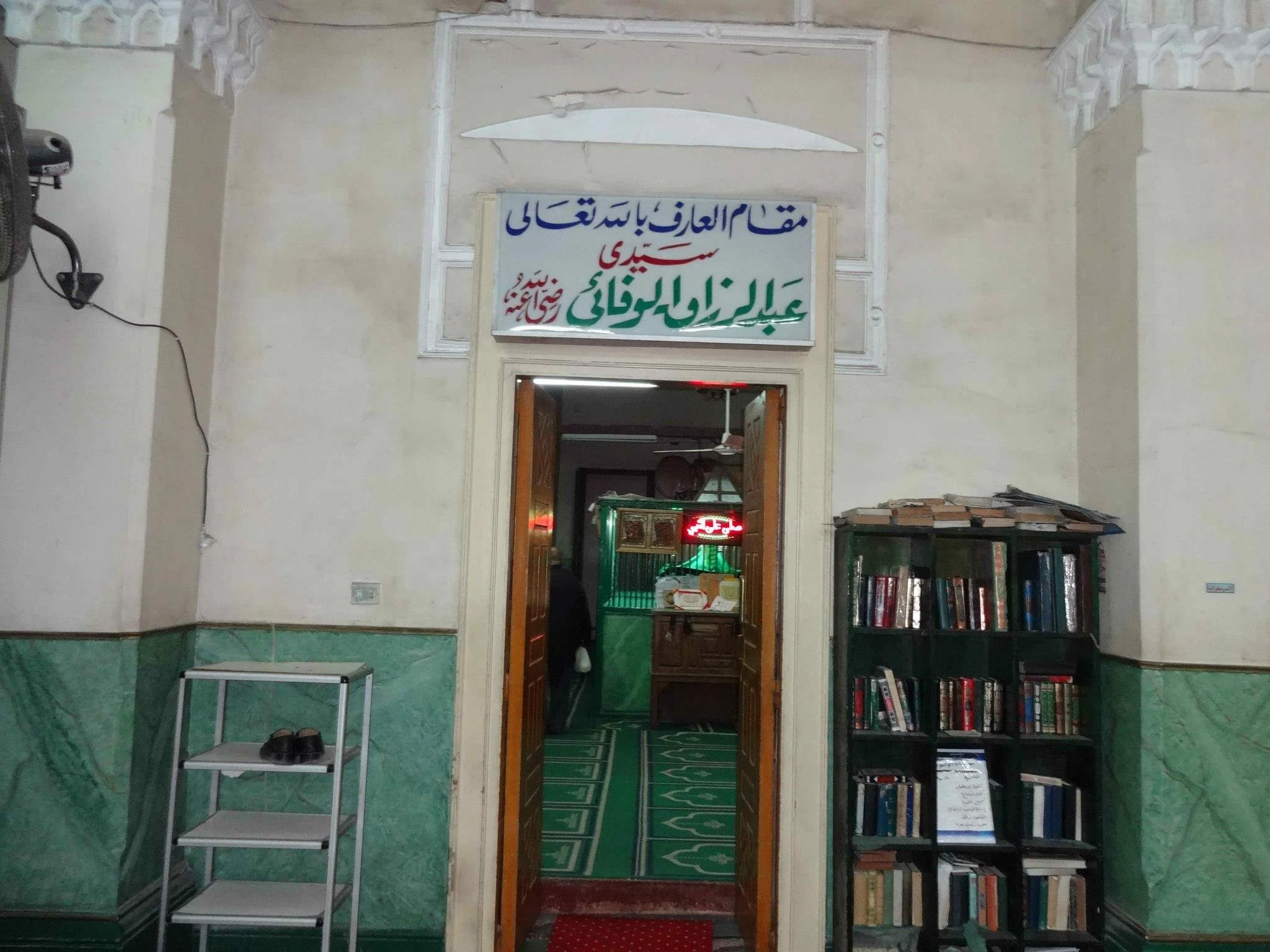
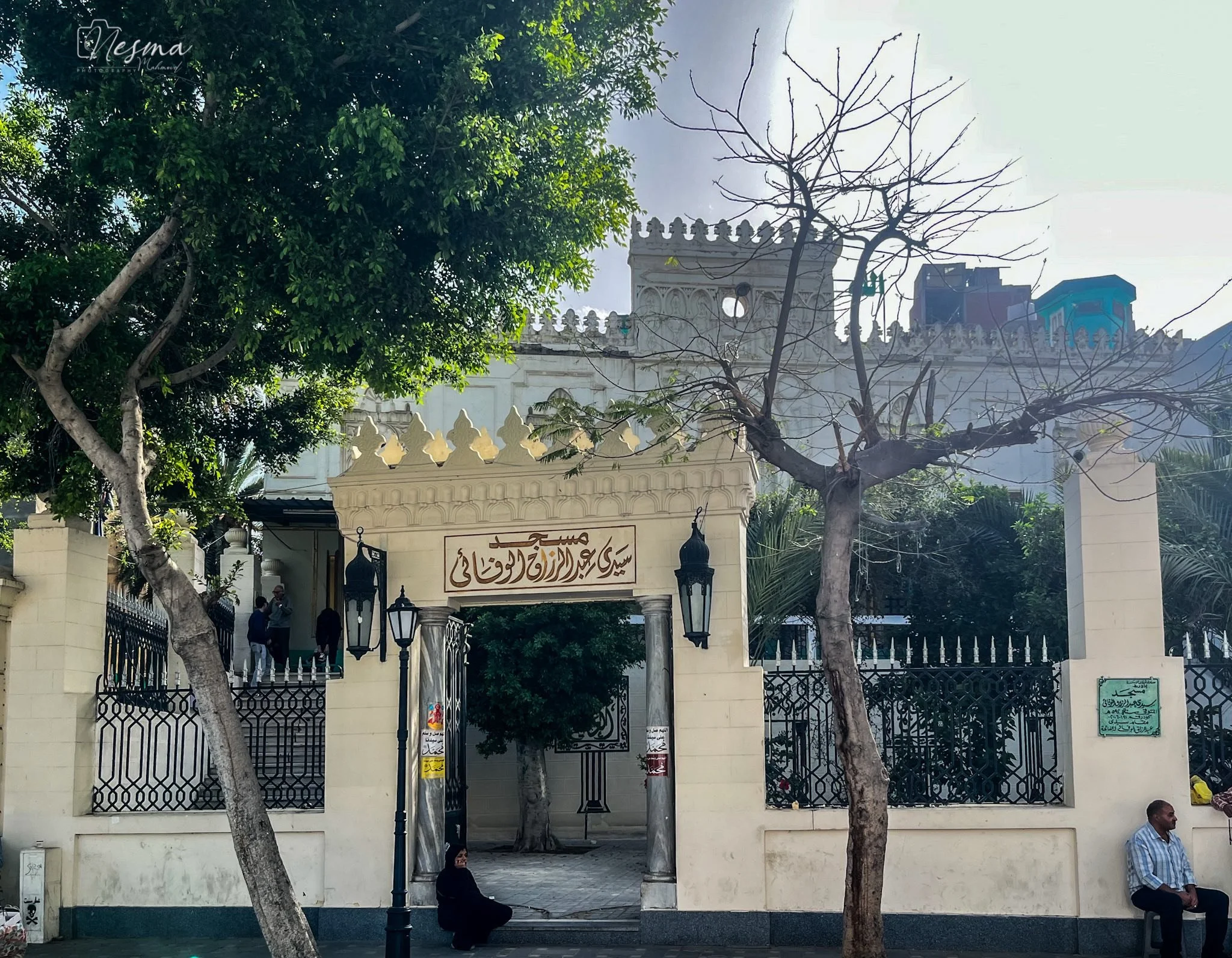
Al-Jazūlī's circle in Alexandria, acting as the eastern outpost of Abū Madyan’s Moroccan lineage, produced saints whose shrines would define the sacred geography of the Nile Valley for centuries. Abū al-Ḥajjāj al-Uqṣurī (d. 642/1244) — an Iraqi from Baghdad who migrated south — settled at Luxor, while ʿAbd al-Raḥīm al-Qināwī (d. 592/1196) — a Moroccan from Sabta — was buried at Qinā. Their shrines remain among the most visited in Upper Egypt to this day. And they were formed before the ṭarīqas that history associates with Egyptian Sufism had even arrived — before Abū al-Fatḥ al-Wāsiṭī (d. 632/1234) directed his Rifāʿī disciples Aḥmad al-Badawī (d. 675/1276) and Ibrāhīm al-Dusūqī (d. 676/1278) southward, before al-Shādhilī (d. 656/1258) settled in Alexandria and built the order that would carry his name across the Islamic world.
And it was in the circle of this shaykh, this planter of Egypt's saints, that Abū Muḥammad Ṣāliḥ received the Madyanī transmission: the chain that ran from Abū Madyan through the Ḥarāzimī rābiṭa at Bāb al-Futūḥ back to al-Ghazālī and al-Muḥāsibī. The connection was not incidental but structural: master and disciple had both studied under Ibn ʿAwf at the same madrasa, both were Maṣmūda, both carried the Madyanī chain, and both had come to Alexandria for the same reason — because the post-Fatimid Sunni corridor had opened, and the city that Ṣalāḥ al-Dīn was building into a Sunni center was drawing Moroccan saints the way the Ḥaramayn drew pilgrims. The Minhāj confirms that al-Jazūlī's silsila was mashhūra — famous, well-attested — and that the isnād connecting Abū Muḥammad Ṣāliḥ to Abū Madyan through al-Jazūlī was accepted without dispute: ṭarīqa mashhūra, wa-ʿinda al-fuqarāʾ mashhūra madhkūra.
The most significant aspect of al-Jazūlī's teaching was his doctrine of al-khāṭir al-awwal, the "first impression." In order to attain an advanced level of mystical realization, the disciple had to enjoy in advance a "good intention" (al-niyya al-ḥanasa) that arose in heart and mind. Though details of al-Jazūlī's version of this method are not fully preserved in extant sources, its preparatory stages — fasting, khalwa, dhikr — correspond closely to the disciplines that Abū Madyan had outlined in his Bidāyat al-Murīd. Abū Muḥammad Ṣāliḥ absorbed this method in Alexandria, carried it back to Morocco, and embedded it in the formation he offered his own disciples at Ribāṭ Āsafī.
Alexandria was also where Abū Muḥammad Ṣāliḥ studied kalām — speculative theology — adding a dimension to his formation that most Dukkālī-trained scholars did not possess. The combination was rare and powerful — and it was, in effect, the Niẓāmī triplex absorbed not through a state-built madrasa but through the lived formation of a single saint: Mālikī fiqh through Ibn ʿAwf, Sufi tarbiya through al-Jazūlī, kalām through the Alexandrian scholarly circles that the Ayyūbid transformation was rapidly expanding. The Minhāj notes that his religious formation — al-tarbiya al-dīniyya allatī tamma zarʿ budhūrihā al-ūlā fī nafsihi bi-Āsafī — had been planted in its first seeds at Āsafī, but that it "grew and deepened with further study of the sharīʿa sciences, fiqh, taṣawwuf, tafsīr, and ḥadīth, and their specialization in Egypt."
But the twenty years in Alexandria were not spent exclusively in study circles. The post-Fatimid Sunni corridor was open, and Abū Muḥammad Ṣāliḥ walked its full length. He traveled through Egypt, then journeyed to the Ḥijāz to perform the ḥajj — li-adāʾ farīḍat al-ḥajj li-yantaqila bayna marākiz al-ʿIrāq wa-l-Shām — moving between the centers of Iraq, al-Shām, and the Arabian Peninsula, encountering Sufi masters of the Suhrawardī type at every station. This was the road that had been blocked for two centuries by the Fatimid counter-caliphate — the road from the Atlantic to Baghdad, from Dukkāla to the Ḥaramayn, from the Maghrib to the mashriq. For the first time since the mid-fourth/tenth century, a Moroccan Sufi could travel it without passing through Ismāʿīlī-controlled territory. Al-Mājirī was among the first generation to walk this newly opened road — and he was mapping it as he walked, identifying the stations, routes, and communities that would sustain the pilgrimage caravan he had not yet imagined but was already, in his movements, preparing to build.
It was during these travels — or perhaps toward the end of his Alexandrian residence, as the idea matured — that the vision seized him. The Minhāj records that Abū Muḥammad Ṣāliḥ was "struck by the possibility of using the institution of the pilgrimage as a means of increasing his people's knowledge of Islam." The ḥajj gathered believers from every part of the Muslim world. It offered a unique opportunity for Muslims to interact with and learn from one another. It brought peoples from the periphery — from Dukkāla, from the Atlantic coast, from the Amazigh mountains — into contact with the Muslim heartland. And it fostered the standardization of interpretation that the ʿulamāʾ of the period ardently desired.
The insight was organizational, not mystical — and that is precisely what made it revolutionary. Other saints received visions. Other shaykhs taught methods. Abū Muḥammad Ṣāliḥ saw an institution — the ḥajj itself — and understood that it could be transformed from an individual obligation into a communal infrastructure. The ḥajj was the one act that connected every Muslim to every other Muslim, the one journey that every believer aspired to make, the one institution that no caliph could forbid and no dynasty could monopolize. If you organized it — if you built the road, staffed the stations, funded the travelers, protected the route — you created a network that operated above and beyond any political order. The Almohads could burn books, imprison saints, tax ribāṭs, and assassinate sharīfs. They could not stop the ḥajj.
And the infrastructure was already partially in place. Ṣalāḥ al-Dīn's endowment of the Moroccan Quarter — Ḥayy al-Maghāriba — adjacent to the Ḥaram al-Sharīf in Jerusalem after the victory at Ḥiṭṭīn in 583/1187 had created a permanent institutional base for Maghribī presence in the mashriq. The buyūt al-Maghāriba and funduqs that al-Mājirī's sons would later establish in Alexandria, Cairo, Mecca, Medina, and Jerusalem were not built from nothing — they were planted in soil that Ṣalāḥ al-Dīn's post-Fatimid order had prepared. The Ayyūbid transformation had created the political conditions; al-Mājirī would create the institutional infrastructure that made those conditions permanent.
The idea did not arrive fully formed. It would take the return to Morocco, the founding of the ribāṭ at Āsafī, the creation of the Mājiriyya, and the work of his sons to bring it to institutional maturity. But the seed was planted in Alexandria — in the city where al-Jazūlī had shown that a Moroccan saint could build a following in the mashriq, where Ibn ʿAwf had demonstrated that twenty years of patient study could produce a scholar capable of operating across civilizational boundaries, where the Ayyūbids were constructing the Sunni world order that would make the ḥajj caravan possible, and where the road east — closed for two centuries — was open again.
He married in Alexandria — or during his eastern travels. His first wife was a woman named Tākūlī — kānat imraʾa ṣāliḥa jalīla al-qadr wa-lahā faḍāʾil, the Minhāj records: a righteous woman of great standing, possessed of virtues. She bore him four sons: Muḥammad, Aḥmad, ʿAbd Allāh, and Yaḥyā. When Tākūlī died, the shaykh married her niece, and from this second marriage came two more sons: ʿĪsā and ʿAbd al-ʿAzīz.
On his way back to Morocco — fī nihāyat al-qarn al-sādis wa-rubamā fī maṭlaʿ al-ʿaqd al-akhīr minhu, at the end of the sixth century or perhaps in the opening of its last decade, around 590/1194 — he stopped in Tunis, where he connected with Sufi shaykhs and scholars. One wonders if a young Abū al-Ḥasan al-Shādhilī was already sitting in these transitioning circles, catching the first ripples of the network. Then he passed through Bijāya, where — according to the Minhāj — he met Abū Madyan at his house. He carried back more than books and isnāds. He carried a plan. Even as the shadow of Almohad power loomed over these regions and transformed how networks operated, his blueprint remained clear. The man who had walked weekly from Āsafī to Ribāṭ ʿAyn al-Fiṭr as a boy had crossed the entire post-Fatimid Sunni world and returned with the blueprint for a network that would connect his Atlantic birthplace to the Kaʿba itself. The road from Dukkāla to Mecca had been mapped — in his feet, in his relationships, in the funduqs where he had slept and the scholars under whom he had sat. What remained was to build it.
4. The Ṣuḥba with Abū Madyan: The Bond Between the Ghawth and His Disciple
The question of whether Abū Muḥammad Ṣāliḥ met Abū Madyan directly has generated disagreement among scholars for centuries — and the disagreement itself is revealing, because it exposes how deeply the sources care about establishing the authenticity of this particular bond.
The Minhāj insists on the meeting. The account is specific: Aḥmad ibn Ibrāhīm records that an initial encounter took place between the two shaykhs and that it served as a test of ʿaqīda — a mutual examination of doctrinal soundness, the kind of verification that the Sufi tradition required before one master would acknowledge another. The setting was Āsafī. The shaykh of Tlemcen came to the shaykh of Āsafī. The Minhāj preserves the exchange:
“A man from Sijilmāsa — al-Shaykh al-Fāḍil Abū al-Rabīʿ Sulaymān ibn Yanṣāran — entered with a group of fuqarāʾ from his town upon the Shaykh Abū Muḥammad Ṣāliḥ at Āsafī. They spoke one day about his meeting with Abū Madyan. He said: “When I came upon him I found him in khalwa with some of his intimate companions. When I greeted him and took his hand, he asked me where I was from. Then he said: ‘Do you recite anything?’ I said: ‘Yes.’ He said: ‘And what do you recite?’ I said: shahida Allāhu annahu lā ilāha illā huwa wa-l-malāʾikatu wa-ulū al-ʿilmi qāʾiman bi-l-qisṭ — then he was silent toward me and did not inform me of anything.” Then the shaykh remained silent for an hour. Someone in his presence asked him about his question and his silence. He said: “What shall I say to a man who has known God to the point of true knowledge?””
The verse is Qurʾānic — Āl ʿImrān 3:18 — the verse of divine testimony: God bears witness that there is no god but He, and the angels and those possessed of knowledge, standing firm in justice. Al-Mājirī recited it not as an answer to a catechism but as a statement of station — and Abū Madyan's silence was not confusion but recognition. The silence was the test's result: the man from Āsafī already knew God. There was nothing to add. Mā ʿasā an aqūla li-rajulin qad ʿarafa Allāha taʿālā ḥaqqa maʿrifatihi — "What shall I say to a man who has known God to the point of true knowledge?"
Aḥmad ibn Ibrāhīm confirms further that Abū Madyan was among the shaykhs of qudwa — exemplary authority — for Abū Muḥammad Ṣāliḥ: "His shaykh, upon whom he relied for exemplary guidance, and to whom every virtue was attributed whenever mentioned — the Shaykh of Shaykhs in his age, the Imām of the Muḥaqqiqīn in his time and place — Abū Madyan Shuʿayb ibn al-Ḥusayn al-Qaljīrī al-Andalusī."
Against this insistence stands the reserve of Ibn Qunfudh (d. 810/1407), who in his al-Uns al-Faqīr wa-ʿIzz al-Ḥaqīr does not deny the connection but does not affirm it with the certainty the Minhāj demands. His account acknowledges the contact — yaqirru bi-l-ittiṣāl alladhī ḥadatha bayna al-shaykhyayn — but his tone carries the caution of a scholar who distinguishes between what is transmitted with certainty and what is reported through family sources whose interest in the claim is evident.
Among modern researchers, the study identifies three positions. The first — represented by Michaux-Bellaire and Georges Drague — confirms the meeting occurred, treating the Minhāj's testimony as historically reliable. The second — represented by ʿAbd al-Laṭīf al-Shādhilī — is more cautious, suggesting that Abū Muḥammad Ṣāliḥ was trained primarily under al-Jazūlī in Alexandria and may have connected with Abū Madyan's teaching indirectly rather than through face-to-face ṣuḥba. The third position rejects direct talammudh entirely.
The Minhāj itself provides the silsila that settles the matter — at least for those who accept the family's testimony. The chain of Abū Muḥammad Ṣāliḥ in taṣawwuf rises through Abū Madyan, through Ibn Ḥarāzim, through Abū Bakr ibn al-ʿArabī (d. 543/1148), through al-Ghazālī (d. 505/1111), through — link after link — al-Junayd (d. 297/910), al-Sarī al-Saqaṭī (d. 253/867), Maʿrūf al-Karkhī (d. 200/815), Dāwūd al-Ṭāʾī (d. 165/781), down to Imām ʿAlī ibn Abī Ṭālib, may God ennoble his face. This is the chain al-Buṣayrī would later versify in his qaṣīda — naming every link from Āsafī to the gate of the city of knowledge. And the chain runs through Abū Madyan. If Abū Muḥammad Ṣāliḥ's connection to Abū Madyan were only indirect — through al-Jazūlī alone — the silsila would reflect that intermediacy. It does not. It places Abū Madyan as the direct link.
The chronology permits the meeting. Abū Muḥammad Ṣāliḥ returned from Alexandria to Morocco around 590/1194. Abū Madyan died in 594/1198 at al-ʿUbbād near Tlemcen, summoned by al-Manṣūr (r. 580–595 / 1184–1199) to Marrakesh — dying on the road between the two worlds he had connected. The Minhāj notes that on his return journey, Abū Muḥammad Ṣāliḥ stopped in Tunis and then passed through Bijāya, where — according to the text — he met Abū Madyan at his house. If the return was around 590/1194 and Abū Madyan died in 594/1198, a meeting in Bijāya falls within the possible window.
But the deeper significance of the bond does not depend on whether two men sat together in a room in Bijāya in a particular year. It depends on what the tradition understood the bond to mean. When Aḥmad ibn Ibrāhīm says that Abū Madyan was the shaykh upon whom Abū Muḥammad Ṣāliḥ relied for qudwa — for the exemplary model of what a walī should be — he is making a statement about spiritual genealogy that transcends physical proximity. The man who had been sent to Shaykh ʿAbd al-Qādir al-Jīlānī (d. 561/1166) in Baghdad by Abū Madyan and returned unopened, the man who had stayed with Abū Madyan until the waqt arrived and the fatḥ descended — this man's entire spiritual architecture was Madyanī. His methods, his orientation, his understanding of the relationship between sharīʿa and ḥaqīqa, his conviction that the fatḥ comes through the Maghribī chain and not through the eastern khalwa — all of this came from Abū Madyan, whether through years of direct ṣuḥba or through the transmission that flowed from Abū Madyan through al-Jazūlī and the Alexandrian circle.
Ibn ʿAbd al-ʿAẓīm al-Azmūrī, in Bahjat al-Nāẓirīn, records the testimony of those who narrated from the Walī al-Zāhid Abū Muḥammad Ṣāliḥ as tilmīdh al-Shaykh Abī Madyan — "the disciple of the Shaykh Abū Madyan." And al-Najm al-Thāqib identifies him as one of Abū Madyan's closest and greatest students — min akhṣṣ aṣḥābihi wa-akbar talāmidhatihi Abū Muḥammad Ṣāliḥ al-Dukkālī. The tradition settled the question long before modern scholars reopened it: Abū Muḥammad Ṣāliḥ was a Madyanī. His shaykh was Abū Madyan. The Ghawth recognized the man from Āsafī as one who had already known God — and the man from Āsafī spent his life building an institution that extended what the Ghawth had begun.
The bond between them was not merely pedagogical. It was structural — the link that connected the Ḥarāzimī rābiṭa in Fez to the ribāṭ at Āsafī, the chain that ran from Sīdī ʿAlī ibn Ḥirzihim through Abū Madyan through al-Mājirī and from al-Mājirī back to the orphan Sīdī Muḥammad ibn Ḥarāzim whom al-Mājirī would raise. Abū Madyan was the hinge — the man who had been formed at the rābiṭa, who had met al-Jīlānī, who had sent al-Mājirī to Baghdad, who had received him back and waited with him for the opening. Without this bond, the Mājiriyya would have been a local Dukkālī institution. With it, it was a branch of the most complete Sufi network the Maghrib had ever produced — the network whose roots were in Bāb al-Futūḥ and whose branches reached from Āsafī to Mecca.
5. The Ribāṭ of Āsafī and the Ṭāʾifa al-Mājiriyya: A City Consecrated by a Saint
When Abū Muḥammad Ṣāliḥ returned to Morocco around 590/1194, he did not return to the Āsafī he had left. The city had grown under the Almohads — walled, urbanized, connected to the Sūs trade routes, positioned as the Atlantic port the empire needed. But the man who returned was not the boy who had left. He had spent twenty years absorbing the Niẓāmī triplex in Alexandria, had been tested by al-Jīlānī's khalwas in Baghdad, had received his fatḥ through Abū Madyan, had walked the entire post-Fatimid Sunni corridor from Egypt to Iraq to the Ḥijāz. He came back with a plan — and the plan required a base.
He built two ribāṭs. The first was at Āfūghāl — a site whose significance the sources do not elaborate but whose future would confirm al-Mājirī's instinct for sacred geography: two and a half centuries later, the Imām Muḥammad ibn Sulaymān al-Jazūlī (d. 869/1465), ṣāḥib Dalāʾil al-Khayrāt, would take this same site as his headquarters and base of operations, the command center from which the Jazūliyya would mobilize the networks that raised the Saʿdian dynasty to power. Al-Mājirī planted; al-Jazūlī harvested. The ground the saint from Āsafī chose in the late sixth/twelfth century became the ground from which Morocco's political future would be decided in the ninth/fifteenth.
Then he built his second ribāṭ — at Āsafī itself — and the sources are explicit about what he built. This was not a traditional Dukkālī ribāṭ in the manner of Tīṭ al-Fiṭr or Ribāṭ Shākir — rural, organically evolved, structured by tribal custom and sharīfian genealogy. Abū Muḥammad Ṣāliḥ constructed his ribāṭ ʿalā shākilat al-khawāniq al-Niẓāmiyya al-muntashira fī al-sharq — on the model of the Niẓāmī khānqāhs spread across the east. The architectural layout followed the institutional pattern he had absorbed in Alexandria and during his mashriq travels: the shaykh's quarters and the servant's quarters, the prayer space, the sitting areas, the siqāya (water fountain), the kitchen — each function assigned its proper place within a designed whole, not accumulated over generations but planned from the foundation as a coherent institutional space.
This was the Niẓāmī model transplanted to the Atlantic coast — not by a state, not by a sultan's decree, not by imported scholars, but by a saint who had lived inside the eastern system for twenty years and understood both its power and its adaptability. What the Marinids would attempt decades later through massive state investment in madrasa construction — the introduction of the Niẓāmī institutional form to Morocco — Abū Muḥammad Ṣāliḥ had already accomplished at Āsafī through the authority of his own walāya. The ribāṭ remained active from its founding until the early tenth/sixteenth century, when the Portuguese destroyed it and obliterated its features. It was rebuilt under the ʿAlawī sultans — likely under Mawlāy Ismāʿīl (r. 1082–1139/1672–1727) or his grandson Sīdī Muḥammad ibn ʿAbd Allāh (r. 1171–1204/1757–1790) — based on the architectural style of the surviving structure: the square pyramidal wooden dome (barshalaʾ) with carved and painted decoration, the stucco ornamentation (al-satāshrī), the geometric, vegetal, and calligraphic inscriptions including poetry, executed in fine natural pigments.
From this ribāṭ, Abū Muḥammad Ṣāliḥ founded the Ṭāʾifa al-Mājiriyya — a multi-ethnic Sufi community that was, by the testimony of the sources, the best-organized spiritual institution in Morocco during the first half of the seventh/thirteenth century. The Mājiriyya was not merely a teaching circle or a devotional gathering. It was a community with a method, a discipline, a visible identity, and an organizational reach that extended far beyond Dukkāla.
The method was grounded in what al-Mājirī had received: the Madyanī tarbiya transmitted through al-Jazūlī, the Ghazālian ethic of combining sharīʿa and ḥaqīqa, the practical discipline of tawakkul and dhikr that Abū Madyan had outlined in his Bidāyat al-Murīd. The Minhāj describes his doctrinal orientation as practical rather than speculative — no complete madhhab in theoretical taṣawwuf, no cosmological theories about the relationship between the servant and his Creator. His approach was characterized by yaqīn ṣādiq — sincere certainty — expressed in language free of complexity and taʾwīl. He was not a philosopher of the path. He was a builder of communities who taught through presence, through service, through the lived demonstration of what a life devoted to God looked like when it was organized, sustained, and transmitted.
He copied and taught from the canonical works of the tradition: al-Maqṣad al-Asnā of al-Ghazālī, Bidāyat al-Hidāya of al-Ghazālī, al-Risāla al-Qushayriyya, al-ʿAqīda al-Jibrāniyya, Farāʾiḍ al-Ṣalāt of al-Ṣiqillī. Ibn Qunfudh records that he copied these works in his own hand — bi-khaṭṭ al-Shaykh Abī Muḥammad Ṣāliḥ — and taught from them at his ribāṭ. He also authored his own work — Talqīn al-Murīdīn — a compilation drawn from the Sufi classics that al-Bādisī praised for its arrangement and usefulness: allafa al-Shaykh Abū Muḥammad Ṣāliḥ kitāban fī al-taṣawwuf ḥasan al-tartīb, kathīr al-fāʾida, naqalahu ʿan kutub al-taṣawwuf sammāhu Talqīn al-Murīdīn.
His teaching was not confined to the ribāṭ. The Minhāj records that he was in the station of al-taʿlīm wa-l-talqīn — teaching and instructing — particularly at Āsafī and in other centers he had visited, and that this activity was undertaken fī iṭār iqāmat wa-injāḥ mashrūʿihi al-ṣūfī al-mutammaththil fī taʾsīs ṭāʾifatihi wa-tabannī mabādiʾihā — "within the framework of establishing and advancing his Sufi project, embodied in the founding of his ṭāʾifa and the adoption of its principles." The language is institutional — mashrūʿ, project; taʾsīs, founding; mabādiʾ, principles — the vocabulary of a man building something that would outlast him.
And Āsafī itself was transformed by his presence. Al-Kānūnī records the city's standing in terms that make the saint inseparable from the place: the ribāṭ became the de facto capital of the Dukkāla-Ragrāga region, drawing students, pilgrims, travelers, and seekers from across southern Morocco. The city that had grown under the Almohads as a commercial port was now consecrated as a spiritual center — not through royal decree but through the baraka of a saint whose network stretched from the Atlantic to the Ḥaramayn.
6. The Muraqqa'a, the ʿAṣā, and the Tasbīḥ of a Thousand Beads: The Visible Signs of a Sacred Community
The Mājiriyya did not hide. In an age when Almohad surveillance made institutional independence dangerous and visible solidarity suspicious, Abū Muḥammad Ṣāliḥ's ṭāʾifa announced itself — through dress, through symbols, through markers that identified its members across borders and guaranteed them recognition at every station from Āsafī to Mecca.
The fuqarāʾ of the Mājiriyya wore the muraqqa'a — the patched cloak that the eastern Sufi tradition had adopted as the sign of voluntary poverty, the garment whose patches declared that its wearer had chosen God over comfort, service over acquisition, the next world over this one. They carried the ʿaṣā — the staff — and the rakwa — the pouch. They wore the shāshiya — the soft felt cap. They shaved their heads. And they carried what appears to have been Abū Muḥammad Ṣāliḥ's own innovation: a large tasbīḥ of a thousand beads — tasbīḥ kabīr min alf ḥabba — worn around the neck when not in use.
These were not decorations. They were a uniform — the visible signs of a sacred community whose members could be identified at a glance, whose solidarity was embodied in shared dress, whose organizational coherence was announced to every town and encampment they entered. When the Mājiriyya caravan approached a settlement, its members formed a procession and chanted — Yā Allāh, yā Raḥmān, yā Raḥīm! — until they reached their lodging. Local boys and young men followed the procession, attracted by the commotion or by the displays of Sufi fellowship. The newcomers were invited to eat supper with the fuqarāʾ, introduced to the teachings of Abū Muḥammad Ṣāliḥ and Abū Madyan, and encouraged to continue to the mashriq as pilgrims. The Minhāj records this with the precision of institutional documentation — not hagiographic embellishment but the description of a functioning recruitment and propagation system.
The Almohad authorities watched with suspicion. The visible signs of group solidarity — shaved heads, distinctive clothing, the thousand-bead rosary — were exactly the kind of institutional markers that the Almohad state regarded as threats to its monopoly on public religious expression. The tarsīm — the formalization of Sufi teaching under state oversight — was al-Manṣūr's method of containing such expressions. The Mājiriyya's uniform was, in effect, an act of institutional independence: declaring membership in a community whose authority derived from its shaykh and its silsila, not from the caliph's appointment or the state's recognition.
The criticism came not only from the state but from the Mālikī establishment. The Minhāj preserves the controversy in detail. A large number of scholars and fuqahāʾ condemned the Mājiriyya's distinctive practices as riyāʾ wa-sumʿa — ostentation and reputation-seeking. The fuqarāʾ, they argued, were maghrūrūn — deluded — or majānīn — insane — following a path other than the path of the believers, displaying an outward appearance different from ordinary people that could only be shunʿa — ugliness. The accusation was serious: if the visible signs of the Mājiriyya were bidʿa — innovation without precedent in the Prophetic sunna — then the entire ṭāʾifa was operating outside the boundaries of legitimate Islam.
The Minhāj's response is systematic and Qurʾānic — a defense mounted with the rigor of a legal brief, not the emotion of a hagiographic apology. The author structures his argument around six aʿlām — six markers the ṭāʾifa had adopted — and defends each through Qurʾānic evidence, Prophetic precedent, and the practice of the Companions and the early community.
The first and most comprehensive defense concerns the muraqqa'a. The Minhāj cites the Qurʾānic verse on clothing — qad anzalnā ʿalaykum libāsan yuwārī sawʾātikum (Q 7:26) — and the ḥadīth traditions about the Prophet ﷺ and the Companions wearing patched and humble garments. The argument is not merely permissive but affirmative: wearing the muraqqa'a is not tolerated but commended, an act of obedience to the Qurʾānic instruction that libās al-taqwā dhālika khayr — the garment of taqwā, that is best.
The defense extends to the broader principle of distinctive signs. The Minhāj cites Q 5:97 — jaʿala Allāhu al-Kaʿbata al-Bayta al-Ḥarāma qiyāman li-l-nās — arguing that God Himself established visible markers (shaʿāʾir) for the benefit and safety of people. The Kaʿba is a qiyām — a standing sign. The hadī — the sacrificial animal marked with a garland — is a sign of the pilgrim's sacred state. The months of ḥarām are signs of temporal sanctity. If God established visible markers to distinguish the sacred from the profane, the pilgrim from the traveler, the consecrated from the ordinary — then the Mājiriyya's distinctive dress served the same divine function: identifying the fuqarāʾ as people of religion and worship, distinguishing them from people of harm, providing them safety and recognition on the road.
The Minhāj then cites Q 33:59 — the verse commanding the Prophet's ﷺ wives and daughters to draw their garments close, dhālika adnā an yuʿrafna fa-lā yuʾdhayna — "that is more likely that they will be recognized and not be harassed." The Qurʾānic logic is explicit: distinctive dress serves recognition, and recognition serves protection. The Mājiriyya's uniform operated on exactly this principle — identifying its members as people under the protection of a recognized shaykh, people whose solidarity guaranteed their safety, people whose visible piety served as both shield and invitation.
The defense was necessary because the stakes were real. The Almohad state could — and did — move against Sufi communities whose visible solidarity threatened its control. But Abū Muḥammad Ṣāliḥ had built something the state could not easily dismantle: a community whose primary function was facilitating the ḥajj — the one act no caliph could forbid. The muraqqa'a and the thousand-bead rosary were not merely spiritual symbols. They were the uniform of an institution whose purpose was too sacred to suppress. The Almohads could not stop the pilgrimage to Mecca — and the Mājiriyya had made itself inseparable from that pilgrimage.
7. Al-Rakb al-Ṣāliḥī and the Ṭāʾifa al-Ḥujjājiyya: The Caravan That Carried Morocco to the Ḥaramayn
This was the work for which Abū Muḥammad Ṣāliḥ is remembered — and the work that justifies calling him the saint who linked Morocco to the Two Holy Sanctuaries.
The Rakb al-Ṣāliḥī — the Caravan of Abū Ṣāliḥ — was a yearly pilgrimage caravan organized, staffed, and sustained by the Mājiriyya and its networks. It departed from Āsafī on the Atlantic coast and crossed North Africa through a chain of stations — funduqs, buyūt al-Maghāriba, ribāṭs, and friendly Bedouin encampments — that al-Mājirī and his disciples had established or identified during his twenty years in the mashriq. The caravan crossed Ifrīqiya, entered Egypt, passed through Alexandria and Cairo, continued to the Ḥijāz, and reached Mecca, Medina, and Jerusalem — the full circuit of Islam's sacred geography, walked annually by Moroccan pilgrims under the protection of the Mājiriyya's organized fellowship.
The system was comprehensive. All aspirants to the Mājiriyya were required to perform the ḥajj before being initiated as fuqarāʾ — the pilgrimage was not optional but foundational, the prerequisite for full membership in the community. As the number of disciples grew, Abū Muḥammad Ṣāliḥ sent the more capable among them to the towns and cities of the central and eastern Maghrib, where they joined Sufis from related groups and created support networks that provisioned and sheltered pilgrims traveling on their own. Aspirants who could not finance their own pilgrimage were supplied with provisions by Ribāṭ Āsafī and traveled to the mashriq in groups, spending the night in friendly encampments or in hostels established for this purpose.
The Minhāj records the operational detail with the precision of institutional documentation. Upon reaching the outskirts of a settlement, the fuqarāʾ formed a procession, chanting Yā Allāh, yā Raḥmān, yā Raḥīm! until they arrived at their lodging. Local youth followed, attracted by the commotion or by the displays of fellowship. The newcomers were fed, taught, and — wherever possible — recruited to continue to the mashriq as pilgrims. The system was simultaneously devotional and organizational: every stop on the road was an opportunity for daʿwa, every meal was an occasion for teaching, every encampment was a potential node in the expanding network.
By the time of Abū Muḥammad Ṣāliḥ's death in 631/1234, the Rakb al-Ṣāliḥī had developed to such an extent that his sons decided to open it to pilgrims who lived beyond the confines of Dukkāla and Ragrāga. This expansion was conceived by his son and heir Sīdī ʿAbd Allāh (d. 651/1253), who directed his brother Sīdī Aḥmad (d. 660/1262) to establish centers for the assembly and instruction of pilgrims at Dādis, Haskūra, Sijilmāsa, Aghmāt, Hintāta, and northern Dukkāla — a network covering the full arc of southern Morocco from the Saharan oases to the Atlas piedmont to the Atlantic plain.
Sīdī Aḥmad then took the decisive institutional step: he decoupled the pilgrimage caravan from the Mājiriyya Sufi order and created a separate organization — the Ṭāʾifa al-Ḥujjājiyya, the Pilgrims' Society. To oversee it, he appointed a separate network of officials whose primary function was to facilitate the flow of pilgrims back and forth from the mashriq rather than to guide disciples in taṣawwuf. This was organizational genius — recognizing that the pilgrimage infrastructure served a broader population than the Sufi community, that the ḥajj was a universal obligation not limited to the fuqarāʾ, and that separating the logistical apparatus from the spiritual one would allow both to grow without constraining each other.
Sīdī Aḥmad himself made eleven journeys to the mashriq, establishing the funduq al-Maghāriba in Alexandria and appointing his own son Sīdī Ibrāhīm as chief administrator. Ibrāhīm's descendants managed the Egyptian terminus of the pilgrimage for several generations — creating a permanent Moroccan institutional presence in Alexandria that predated and prepared the ground for al-Shādhilī's settlement there. The buyūt al-Maghāriba and funduqs extended from Alexandria to Cairo to Mecca, Medina, and Jerusalem — the physical infrastructure of a Moroccan presence in the mashriq that outlasted every dynasty that had created or contested it.
The Ḥujjājiyya was, by the testimony of the sources, the most important institutional innovation in Moroccan Sufism since the Banū Amghār's establishment of the Ṣanhājiyya at Ribāṭ Tīṭ al-Fiṭr. It created what no state had created and no dynasty could claim: a permanent, organized, self-sustaining link between Morocco and the Ḥaramayn, funded by voluntary gifts and the solidarity of the fuqarāʾ, protected by the visible identity of the Mājiriyya's uniform, staffed by officials whose authority derived from the shaykh's baraka rather than from caliphal appointment. The Almohads could not suppress it because its primary function was facilitating the most sacred obligation of Islam.
But the Marinids did not try to suppress it. They absorbed it. When the Marinid sultans consolidated Morocco after 668/1269, they recognized in the Ḥujjājiyya what no amount of madrasa construction could replicate: an existing, functioning infrastructure linking Morocco to the Ḥaramayn through tested routes, established stations, and proven logistics. Rather than competing with the Mājiriyya's network, the Marinid state adopted the rakb as a state affair — deploying officials and envoys alongside the pilgrimage caravan, sending letters and funds to saints and scholars stationed along the road to Mecca, transforming what had begun as a Sufi institution into a vehicle of royal diplomacy and sovereign piety. The yearly caravan that Abū Muḥammad Ṣāliḥ had organized through the baraka of his ṭāʾifa now traveled under the banner of the sultan — carrying not merely pilgrims but the makhzan's presence into every city between Āsafī and the Ḥaram al-Sharīf.
The practice outlasted the Marinids. The Saʿdian sultans maintained it. The ʿAlawī sultans continued it — dispatching the rakb with royal letters, charitable endowments, gifts for the custodians of the Two Holy Sanctuaries, and stipends for Moroccan scholars residing in the mashriq. What Abū Muḥammad Ṣāliḥ had built as an act of walāya became an act of sovereignty — the road he had mapped with his own feet became the road the kings of Morocco walked through their envoys, their officials, and their gold. The institution that had answered to Mecca and not to Marrakesh now answered to both — and in doing so, it bound the Moroccan throne to the Ḥaramayn with a bond no dynasty has severed to this day.
p8. The Blessed Sons: The Heirs of the Ribāṭ
Abū Muḥammad Ṣāliḥ was blessed with six sons from two wives — and each son fulfilled a distinct calling within the network their father had built, as though the ribāṭ itself had distributed its functions among them.
From Tākūlī — the woman whom the Minhāj describes as imraʾa ṣāliḥa jalīla al-qadr wa-lahā faḍāʾil — came four sons: Muḥammad, Aḥmad, ʿAbd Allāh, and Yaḥyā. When Tākūlī died, the shaykh married her niece, and from this second marriage came ʿAbd al-ʿAzīz and ʿĪsā.
The prophecy of the walī Abū ʿAlī ʿUmar ibn Abī ʿUmar al-Ṣanhājī — one of the kibār al-awliyāʾ of his age — had foretold the second marriage and its fruit. When the mother of the shaykh's children died, the fuqarāʾ consulted Abū ʿAlī ʿUmar about the shaykh's future. He told them: "Return, for the shaykh will marry the girl his old wife raised. And he will have two sons — one of the Budalāʾ and one of the Awliyāʾ." ʿAbd al-ʿAzīz became the Badal; ʿĪsā became the Walī. The prophecy was not hagiographic embellishment but the tradition's way of marking what the family itself understood: that these sons were not accidents but appointments, each assigned a station before birth.
Sīdī Aḥmad (d. 660/1262) was the most prominent — jalīl al-qadr, ʿaẓīm al-khaṭar, of great standing and immense consequence. When he was born, the shaykh said he saw a light descend from heaven and cover the child's face — and he knew from that moment that the boy was of the Budalāʾ. When the shaykh was asked who would succeed him, he said: "My son Aḥmad — he has reached in mujāhada more than I reached, and he has made the ḥajj more than I made it. He made eleven pilgrimages, and I made only one." The Turkmen youth episode on the road to Medina — a young man found injured under a tree, carried by the fuqarāʾ to the city, healed by the shaykh who rubbed oil on him, then seen standing in the Rawḍa al-Mukarrama at the Prophet's ﷺ tomb in istighfār — demonstrates the reach of Sīdī Aḥmad's baraka and the operational range of the Ḥujjājiyya. He died on Sunday, 14 Jumādā al-Ūlā 660/1262, and was buried behind his father's grave at the ribāṭ in Āsafī.
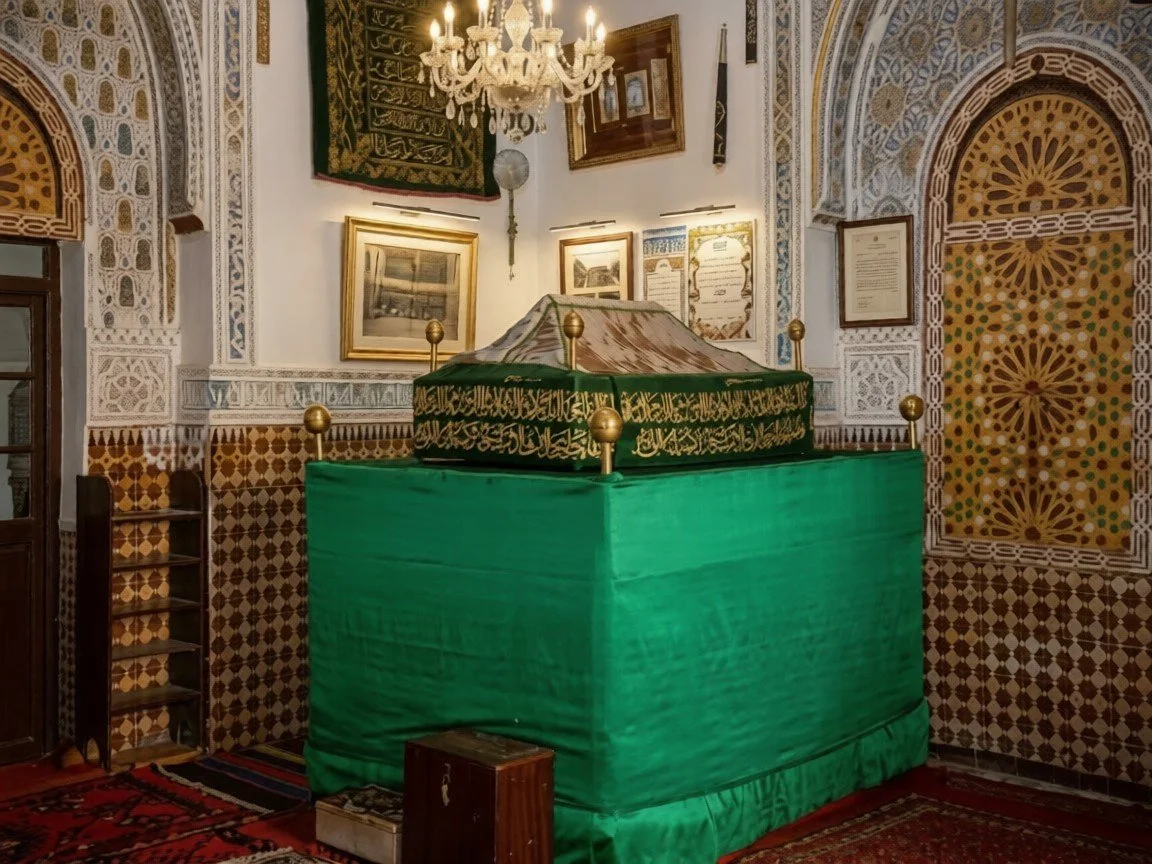
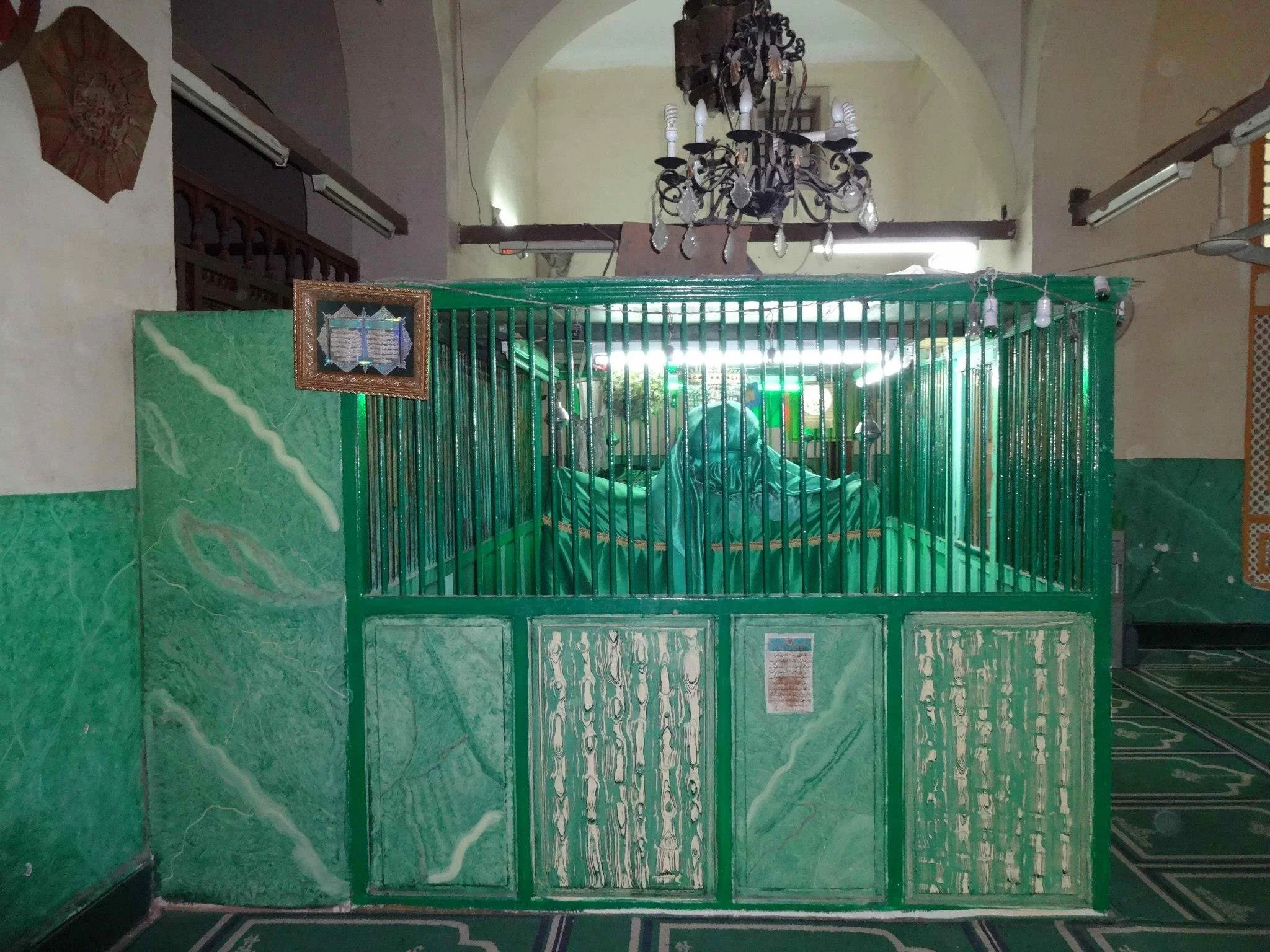
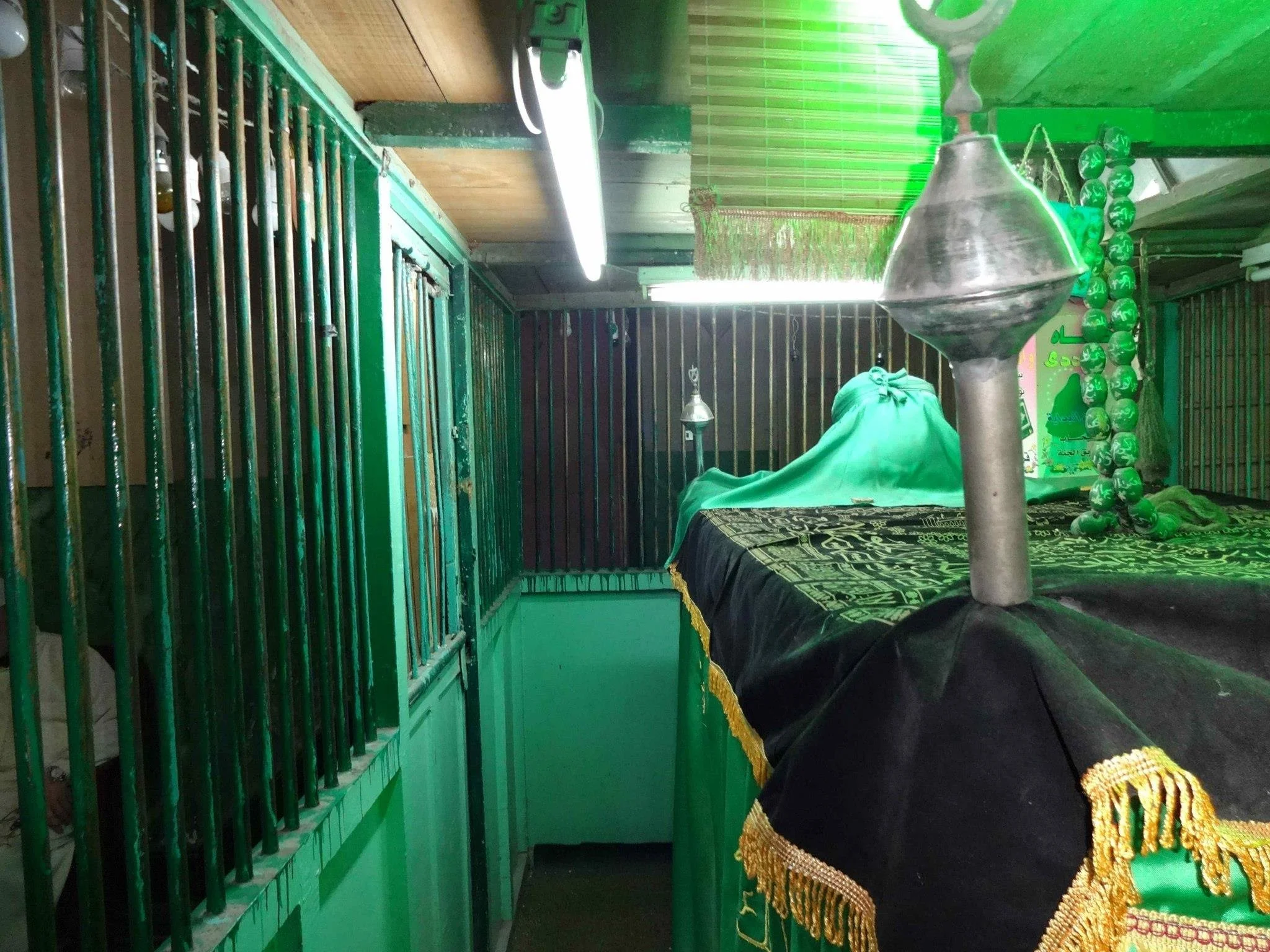
Figure 2. The Burial Sanctuary of Abū Muḥammad Ṣāliḥ al-Mājirī inside the Ribāṭ of Āsafī. Located on the Atlantic coast, this site marks the spiritual fortress of Abū Muḥammad Ṣāliḥ. As the influential head of the Ṭāʾifa al-Ḥujjājiyya, al-Mājirī established a vital network that secured and facilitated the pilgrimage routes to Mecca for Jerusalem.
Sīdī ʿAbd Allāh (d. 651/1253) managed the ribāṭ after his father — qāma bi-amr al-ribāṭ dahran — maintaining its operations for nearly two decades. He was a ḥājj fāḍil — a pilgrim of distinction. The Haskūra recognized his authority, and the Almohad state, in its final decades, imprisoned him in Marrakesh — deploying against the son of Sīdī Muḥammad ibn Ḥarāzim's guardian the same instrument it had deployed against Sīdī Muḥammad's own father a century earlier. He died on the night of Tuesday, 1 Ṣafar 651/1253, and was buried at his father's ribāṭ, to the left of the entrance, in front of his brother Abū ʿAbd Allāh.
Sīdī Muḥammad was fāḍil ʿālim — learned and virtuous, attached to his father, never performing the ḥajj. The sources preserve little beyond his devotion and his presence at the ribāṭ. He was the son who stayed, the quiet keeper of the home while his brothers walked the road east.
Sīdī Yaḥyā died young — drowned at sea in childhood. The Minhāj records the fact without elaboration, a single line of loss in a narrative of expansion.
Sīdī ʿAbd al-ʿAzīz — the watad whose birth the walī had prophesied — became one of the kibār al-awliyāʾ. The Minhāj describes him as possessing baraka of manifest distinction — min kibār al-awliyāʾ, mimman lahu barakāt ẓāhira wa-ṣafwa wa-shāhira. The Shaykh al-Fāḍil al-Musin al-Sharīf al-Ḥusaynī Abū Muḥammad ʿAbd al-ʿAzīz al-Dārīnī testified about him at his mawḍiʿ in Cairo, in the zuqāq of the date-palm sellers. Poems were composed about him. His grave was called a tiryāq — an antidote, a proven healing site. He fulfilled what had been foretold of him: the station of the Awrad al-Ard, the substitutes upon whose shoulders — according to the tradition of the Dīwān — the world's order rests.
Sīdī ʿĪsā (d. 678/1279) — the Friend of Allah whose birth completed the prophecy — became governor (walī al-imāra) of Āsafī under the Marinids. He was intensely pious and severe in his governance — shadīd al-tawarruʿ, shadīd al-saṭwa fī imāratihi. When the Marinid Sultan Abū Yūsuf al-Marīnī consolidated control after the conquest of Marrakesh in 667/1269, he appointed ʿĪsā as governor — the youngest of Abū Muḥammad Ṣāliḥ's sons, the last to serve, the man through whom the Marinid dynasty formally recognized the family's standing by entrusting them with the governance of the city their father had consecrated. He died after the prayer of Ṣubḥ on Friday, 8 Shaʿbān 678/1279, in Fez, and was buried there.
Three of the sons — Sīdī Aḥmad, Sīdī ʿAbd Allāh, and Sīdī Muḥammad — are buried beside their father at the ribāṭ in Āsafī. The Minhāj closes the family's entry with a verse in mutaqārib meter: "Like honey and fragrance, their fame is the sweetest — and like musk, their stations are visited, and their graves are the most fragrant."
9. Under Nine Caliphs: The Saint and the Almohad State
Abū Muḥammad Ṣāliḥ lived eighty-one years — from approximately 550/1150 to 631/1234 — spanning nine Almohad caliphs: ʿAbd al-Muʾmin ibn ʿAlī (d. 558/1163), Abū Yaʿqūb Yūsuf (d. 580/1184), Yaʿqūb al-Manṣūr (d. 595/1199), Muḥammad al-Nāṣir (d. 610/1213), Yūsuf al-Mustanṣir (d. 620/1224), ʿAbd al-Wāḥid al-Makhlūʿ (d. 620/1224), ʿAbd Allāh al-ʿĀdil (d. 624/1227), Idrīs al-Maʾmūn (d. 629/1232), and ʿAbd al-Wāḥid al-Rashīd (d. 640/1242). The Minhāj provides this table of contemporaries — caliph by caliph, date by date — as though the biographer wanted the reader to see, in a single glance, the political landscape through which the saint had moved.
It was a landscape of ascent and collapse. The first four caliphs — ʿAbd al-Muʾmin through al-Nāṣir — represented the arc from Almohad consolidation through al-Manṣūr's zenith. The remaining five, packed into seventeen years (610–629/1213–1232), represented the disintegration. Al-Mājirī's childhood was spent under the regime that imprisoned Sīdī ʿAlī ibn Ḥirzihim and killed Abū ʿAbd Allāh ibn al-Aṣamm. His maturity coincided with al-Manṣūr's co-optation — the caliph who learned to absorb Sufi authority rather than crush it, who summoned Abū Madyan to Marrakesh in 594/1198 (the Andalusian died en route), who built schools for Sufis and allocated budgets for saints. His old age witnessed the unraveling — al-ʿUqāb in 609/1212, the rapid succession of weak caliphs, the assassination of Mawlāy ʿAbd al-Salām ibn Mashīsh (c. 625/1228) on Almohad orders through Abū al-Ṭawājīn, the al-Maʾmūn crisis of 626/1229 when the caliph declared Ibn Tūmart a fraud and removed him from the khuṭba and the coinage.
The Minhāj also provides a table of al-Mājirī's scholarly and Sufi contemporaries — and the list reads like a catalogue of the men the Almohad state celebrated, co-opted, imprisoned, or killed: Ibn Ḥirzihim, Abū Yaʿazzā, Abū ʿUmar al-Salāljī (d. 574/1178), al-Suhaylī (d. 581/1185), al-Ḥijrī al-Sabtī (d. 591/1194), Ibn Rushd al-Ḥafīd (d. 595/1198), Abū al-ʿAbbās al-Sabtī (d. 601/1204) ʿAbd al-Salām ibn Mashīsh, al-ʿAzafī (d. 633/1236), and al-Shādhilī. The saint from Āsafī shared the century with every major figure of Moroccan Sufism — and outlived most of them.
The Almohad state's relationship with the Mājiriyya was defined by the tension the Minhāj: the authorities could not suppress an institution whose primary function was facilitating the ḥajj, but they could not ignore an organization whose visible solidarity, trans-Almohad reach, and independent authority made it a potential rival for the allegiance of the Maṣmūda populations who formed the Almohad base. The Mājiriyya's uniform — the muraqqa'a, the staff, the thousand-bead rosary — was a standing provocation to a regime that demanded doctrinal monopoly and visual conformity. The ṭāʾifa's activities extended far beyond the Almohad perimeter: its caravans crossed territories the caliphate did not control, its funduqs in Alexandria and Cairo operated under Ayyūbid and then Mamlūk sovereignty, its members wore signs of solidarity that announced their identity across borders the Almohad state claimed but could not seal.
The conflicts were real. Al-Mājirī's struggles with the Almohad administration in Marrakesh are documented — the state's suspicion of the Mājiriyya's institutional independence, its attempts to contain a community whose reach exceeded its control. The imprisonment of Sīdī ʿAbd Allāh in Marrakesh — the son who managed the ribāṭ after his father — demonstrated that the Almohads deployed against al-Mājirī's heirs the same instrument they had used against Sīdī ʿAlī ibn Ḥirzihim a century earlier: forced relocation to the capital, containment through proximity to the seat of power. The competition with the Banū Amghār at Ribāṭ Tīṭ al-Fiṭr compounded the pressure — two ribāṭ-based institutions, the oldest and the newest in Morocco, contending for the organizational leadership of the Sufi landscape of post-Almohad Dukkāla.
And yet al-Mājirī outlasted the caliphs who surveilled him. He died two years before the al-Maʾmūn crisis — he did not live to see the caliph declare the Mahdī a fraud. But the regime that had tried to contain his ṭāʾifa was already dissolving around him in his final years. The Ḥafṣids had seceded. The ʿAbd al-Wādids were consolidating Tlemcen. The Marinids were advancing from the east. The Almohad order that had imprisoned his father's master and assassinated the Quṭb of the West was tearing itself apart — and the Mājiriyya, with its independent funding, its trans-regional networks, its self-sustaining pilgrimage infrastructure, would survive the collapse intact. The Marinid Sultan Abū Yūsuf would confirm the family's standing by appointing al-Mājirī's youngest son ʿĪsā as governor of Āsafī — completing the transition from Almohad containment to Marinid recognition.
10. Al-Buṣayrī's Qaṣīda: When the Poet of the Burda Honoured the Silsila from Āsafī to ʿAlī ibn Abī Ṭālib
In 696/1297 — sixty-five years after Abū Muḥammad Ṣāliḥ's death — a Dukkālī man named Saʿīd Makhlūf stood in Cairo al-Maḥrūsa and recited a qaṣīda. The poem had been composed by Sharaf al-Dīn Abū ʿAbd Allāh Muḥammad ibn Saʿīd ibn Ḥammād al-Buṣayrī (d. c. 694/1295) — the man whose al-Burda had already become the most recited devotional poem in Islamic history. Al-Buṣayrī was himself a Ṣanhāja Berber — of Almoravid tribal background — born in Egypt but carrying the Moroccan identity in his blood and in his poetic sensibility. He had studied under Abū al-ʿAbbās al-Mursī (d. 686/1288), the direct successor of al-Shādhilī in Alexandria, making him a product of the same Moroccan Sufi current that al-Mājirī had helped plant in Egyptian soil. And he chose to compose a separate qaṣīda — not the Burda, not a general poem of Prophetic praise — but a poem specifically dedicated to the silsila of Abū Muḥammad Ṣāliḥ al-Mājirī, naming every link in the chain from Āsafī to ʿAlī ibn Abī Ṭālib.
The poem is preserved in the Minhāj al-Wāḍiḥ. Its opening verses speak from longing — longing for the west, for the Maghrib, for a homeland the poet carries in his blood but cannot reach:
قَفَابِي عَلَى الْجِرْعَاءِ مِنْ جَانِبِ الْغَرْبِ * فَفِيهَا حَبِيبٌ لِي يَهِيمُ بِهِ قَلْبِي
He halted with me on the graveled plain, from the side of the west
close to my secret, yet far from what I seek.
وَإِنْ سُحِبَتْ فِي الْأَرْضِ فَضْلُ ذُيُولِهِ * وَجَدْتُ لَهَا فِي الْمَحْلِ فَضْلًا عَلَى الْمُصْبِ
And if at dawn a breath of it should brush upon my heart,
I remain my heart ablaze with longing.
فَيَا نَسَمَاتِ الْغَرْبِ مِنْ نَحْوِهِ هُبِّي * وَتَنْتَرِحُ الْأَرْوَاحُ مِنْ طِيبِ عُرْفِهَا
When the western wind blows from the draught of his dwelling,
the very universe is perfumed by that draught.
Then the qaṣīda ascends the silsila — naming each link as a devotional act, a litany of masters whose chain connects the Atlantic coast to the Prophet's ﷺ own gate:
فَمِنْهُمْ أَبُو حَسَنٍ سَلِيلُ حَرَازِمٍ * أَتَى فِي الْعُلَا وَالْفَضْلِ فَاتِحَةَ الْحِزْبِ
Among them is Abū al-Ḥasan, descendant of Ḥarāzim
he came in eminence and grace, the opening of the gathering.
This is Sīdī ʿAlī ibn Ḥirzihim — the founder of the rābiṭa, the man al-Tamīmī placed first in al-Mustafād. Then:
وَمِنْهُمْ أَبُو بَكْرٍ الْعَرَبِيُّ قَدْ سَمَا * بِمَا رَسَمُوا فِيهِ عَلَى الْعُجْمِ وَالْعَرَبِ
And among them Abū Bakr al-ʿArabī, who rose high
by what they inscribed through him upon both the non-Arab and the Arab.
Then Abū Ḥāmid ḥasbī — al-Ghazālī himself, the architect of the Niẓāmī synthesis. Then Abū al-Qāsim al-Junayd — the sayyid of the ṭāʾifa. Then al-Sarī — al-Saqaṭī. Then Maʿrūf al-Karkhī. Then Dāwūd. Then Naṣr al-Ṭāʾī. Then Abū Ḥabīb al-ʿAjamī. Then al-Ḥasan al-Baṣrī. And the chain culminates in ʿAlī ibn Abī Ṭālib — wa-faḍlu ʿAlī karrama Allāhu wajhahu — the gate of the city of knowledge.
At the chain's summit, al-Buṣayrī names the saint himself:
أَبُو مُحَمَّدٍ غَوْثُ الْوُجُودِ بِأَسْرِهِ * لَهُ فِي الْمَعَالِي أَعْلَى عَالِيَةِ الرُّتْبِ
Abū Muḥammad, Succor of Existence in its entirety,
an imām whose mention keeps my tongue moist and fresh.
إِمَامٌ عَدَا رَطْبًا لِسَانِي بِذِكْرِهِ * عَلَى أَنَّهُ أَذْكَى مِنَ الْمَنْدَلِ الرَّطْبِ
An imām whose mention keeps my tongue forever moist,
though he is more fragrant than fresh aloe-wood.
مُرَادٌ يَخْرُجُ الْمَوْتَ فِي كُلِّ جَذْبَةٍ * وَتِلْكَ سَبِيلُ الْوَاصِلِينَ مَعَ الْجَذْبِ
One sought by God, who draws death out in every ecstatic pull
for that is the path of those who arrive through divine attraction.
And the poem names the Dukkāla — wa-mā anā min Dukkāla — connecting the saint to the land, the tribe, the Atlantic plain. It names Sīdī Aḥmad — Abū al-ʿAbbās Aḥmad sayyid — the son who made eleven pilgrimages, the man who built the funduqs, the heir who carried the Ḥujjājiyya to its institutional maturity. The poem does not merely praise — it certifies. It fixes the silsila in verse, making it memorizable, recitable, transmissible — a chain that can be carried in the mouth of any Dukkālī man who stands in any city and speaks.
The significance of this poem reaches beyond literary history. Al-Buṣayrī — the author of the single most influential devotional text in Islamic literary history — chose to compose a separate work specifically certifying the al-Mājirī silsila. This was not a casual mention, not a passing reference, not a line in a longer poem. It was a dedicated qaṣīda, recited publicly in Cairo in 696/1297, naming every link from a ribāṭ on the Atlantic coast through the masters of Baghdad to the cousin of the Prophet ﷺ. The Burda's author was certifying a Dukkālī saint's chain in verse — declaring that the silsila running from Āsafī through Ibn Ḥirzihim through al-Ghazālī through al-Junayd to ʿAlī was as authentic, as venerable, as worthy of poetic commemoration as any chain in the Islamic world.
And the poem was recited by a Dukkālī — Saʿīd Makhlūf — in the capital of the Mamlūk sultanate, in the city where al-Shādhilī had built his ṭarīqa and where al-Mājirī's sons had established their funduqs. The Moroccan Sufi current that had planted Egypt's sacred geography through al-Jazūlī's disciples was now being celebrated in Egypt's own literary idiom, through the pen of Egypt's greatest poet, in verses that traveled back to the Maghrib and were preserved in the family's own biographical tradition. Morocco gave Egypt its saints. Egypt gave Morocco the poem that sealed their authority.
The saint from Āsafī did not live to hear the poem. He did not need to. He had built the road — from Dukkāla to Mecca, from the Atlantic to the Ḥaramayn, from a ribāṭ on the coast to the funduqs of Alexandria and the buyūt of Jerusalem. He had raised Sīdī Muḥammad ibn Ḥarāzim. He had endured the khalwas of Baghdad and received his fatḥ through the Maghribī chain. He had dressed his fuqarāʾ in the muraqqa'a and armed them with the rosary of a thousand beads and sent them singing Yā Allāh, yā Raḥmān, yā Raḥīm! across the breadth of the Islamic world. Nine caliphs had come and gone. The Almohad state had imprisoned his son, surveilled his ṭāʾifa, and collapsed. The Marinids had absorbed his institution and made the rakb a state affair. And sixty-five years after his death, a Ṣanhāja poet in Mamlūk Cairo was naming every link in his chain — from the Atlantic to the gate of the city of knowledge.
The caliphs are forgotten. The poem endures. The chain is intact.
11. The Child He Raised: Sīdī Muḥammad ibn Ḥarāzim and the Trust of the Rābiṭa
What was the ultimate consequence of everything Abū Muḥammad Ṣāliḥ built — the twenty years in Alexandria, the ribāṭ at Āsafī modeled on the Niẓāmī khānqāhs, the Ḥujjājiyya's yearly caravans, the funduqs from Alexandria to Jerusalem, the six sons deployed across three functions, the muraqqa'a and the thousand-bead rosary carried singing across North Africa? The answer is not the Mājiriyya alone. The answer is the Shādhiliyya — the ṭarīqa whose litanies are recited today in zawāyā across the Islamic world, from the Atlantic coast to Southeast Asia. Not because al-Mājirī founded it — he died in 631/1234, years before its founder arrived in Fez. But because every station in al-Shādhilī's trajectory was a station al-Mājirī had planted, connected, or prepared.
Consider the trajectory. Al-Shādhilī (d. 656/1258) was born in Ghumāra, near Tiṭwān, into an Idrīsid family. He traveled with his father to Tunis in his youth and grew up there — formed in the Almohad urban milieu of a city that was already one of the Maghrib's major centers of Mālikī learning. When he came of age, he traveled east to Ayyūbid Egypt — and what he found in Alexandria was not a blank canvas but a city already saturated with Moroccan walāya. Al-Jazūlī's mosque on Shāriʿ al-Nabī Dāniyāl. Al-Jazūlī's students anchoring the sacred geography of the Nile Valley — al-Qināwī (d. 592/1196) at Qinā, al-Uqṣurī (d. 642/1244) at Luxor. The traces of al-Mājirī's twenty years — the scholarly networks, the Mālikī connections, the institutional memory of a Moroccan presence that had preceded al-Shādhilī by a generation. He met Abū al-Fatḥ al-Wāsiṭī (d. 632/1234) and studied under him, yes. But the rising Rifāʿiyya was not what this Idrīsid from Ghumāra was seeking. What he saw in Alexandria was that the Maghribī current had already outpaced the eastern ṭarīqas in planting Egypt's deepest spiritual roots — and that the source of this current was not in Egypt but in Morocco.
The traditional narrative says al-Wāsiṭī told him to return home — that the master he sought was in the Maghrib, not the mashriq. The hagiographic convenience of this account is evident: it makes the return look like obedience to an eastern master's instruction, preserving the hierarchy that places mashriq authority above Maghribī initiative. But the evidence of al-Shādhilī's own trajectory suggests something more compelling. He did not need to be told. Alexandria itself told him. The city was full of what Morocco had planted — al-Jazūlī's legacy, al-Mājirī's infrastructure, the Madyanī chain operating through scholars and saints whose formation ran back to the rābiṭa at Bāb al-Futūḥ. Al-Shādhilī recognized that the mashriq had already been shaped by a Moroccan hand — and that to become what he intended to become, the Maghrib's own manifestation in the east, he needed to go to the source. Not because al-Wāsiṭī commanded it, but because the ground beneath his feet in Alexandria pointed west.
He came to Fez — the spiritual capital. He had read Abū Madyan's writings. He knew the story — how the orphan from Cantillana had arrived with nothing, had sat at the feet of Sīdī ʿAlī ibn Ḥirzihim at the Qarawiyyīn, had heard words that came from the heart and entered the heart, and had been transformed into the Ghawth of the Maghrib. Al-Shādhilī was not searching blindly. He was looking for the Ḥarāzimī rābiṭa — for the institution that had formed Abū Madyan, that had raised al-Mājirī's network, that had connected the Maghrib to the mashriq through chains no dynasty could sever. He was looking for al-Mājirī's world — and more precisely, for its most important living manifestation.
He found Sīdī Muḥammad ibn Ḥarāzim (d. c. 633/1235) — the child Abū Muḥammad Ṣāliḥ had raised. Makhlūf records the fact: tarakahu wāliduhu ṣaghīran wa-intafaʿa bi-aṣḥābihi ka-Abī Madyan wa-Abī Muḥammad Ṣāliḥ. Al-Shādhilī was seeking to enter the current that had produced Abū Madyan — to sit where Abū Madyan had sat, to be read by the rābiṭa's heir the way the rābiṭa's founder had read the Ghawth a century earlier. We do not know whether Sīdī Muḥammad dressed like the Mājiriyya fuqarāʾ — whether he wore the muraqqa'a, carried the thousand-bead tasbīḥ, shaved his head. He was a scholar of the Qarawiyyīn, a man of civic standing and juridical learning, whose authority operated through the urban scholarly register. But his formation was al-Mājirī's. His capacity to read a seeker and direct him to the precise destination — that was the gift transmitted through years of guardianship under the saint from Āsafī.
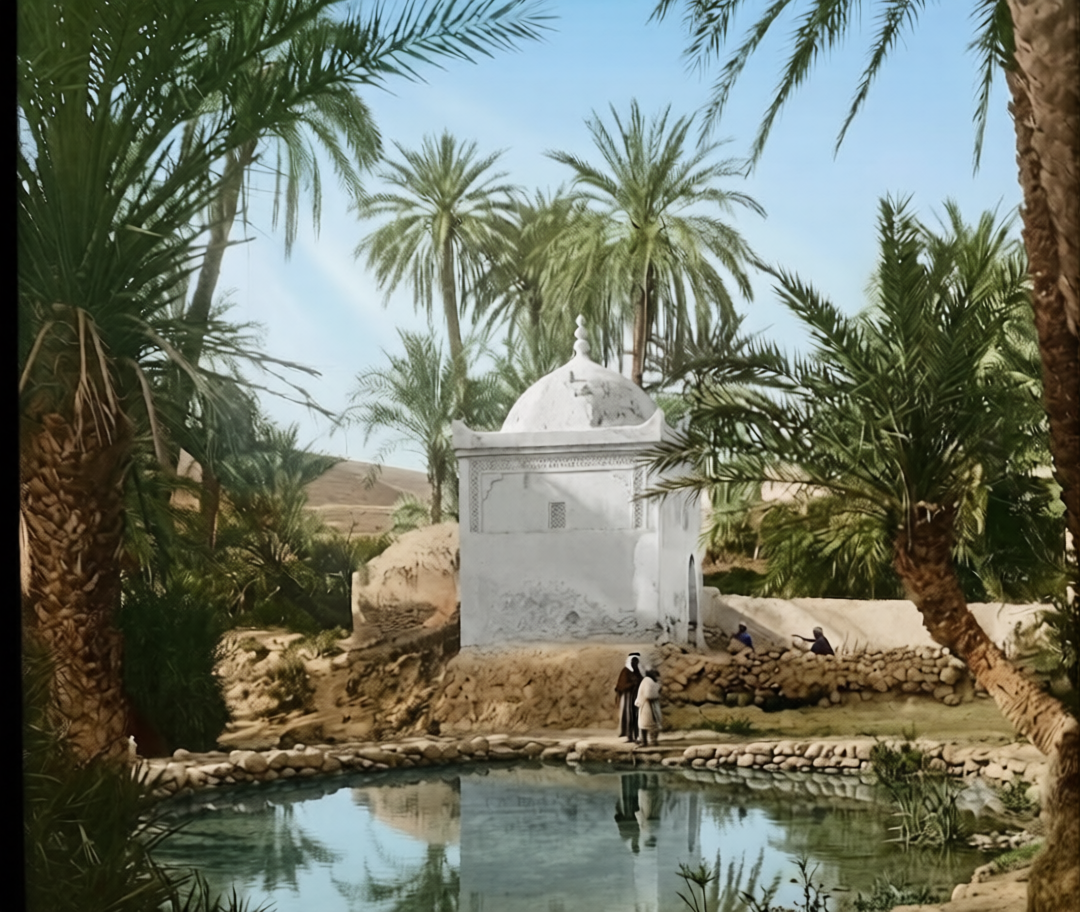
Figure 3: The shrine of Sidi Muhammad ibn Harazim near the thermal waters of Ḥammat Khawlān, southeast of Fez, surrounded by palm groves and oasis vegetation. The image evokes the sacred landscape connected to Sīdī Muḥammad ibn ʿAlī ibn Ḥirzihim, student of Abū Madyan and teacher of Abū al-Ḥasan al-Shādhilī, whose memory became inseparable from the spring that still bears his name.
Sīdī Muḥammad received al-Shādhilī and gave him the khirqa — wa-huwa awwal ashyākhihi. Then he directed him north, to Jabal al-ʿAlam, to Mawlāy ʿAbd al-Salām ibn Mashīsh (d. c. 625/1228). Al-Kattānī would later recognize this function by granting Sīdī Muḥammad the title of al-Quṭbāniyya — the axial station, the compass that identifies where the pole stands. The Quṭb at Bāb al-Futūḥ identified another Quṭb in the Rif. The compass read the seeker and pointed him to the mountain.
Here the silsila opens questions this article can mark but not close — questions that belong to a future study of the Shādhilī chain and its deliberate enigmas.
Why did some authors link Abū Madyan directly to Ibn Mashīsh in a single chain, claiming Ibn Mashīsh was Abū Madyan's student? The chronology does not support it — Abū Madyan died in 594/1198, Ibn Mashīsh was martyred around 625/1228 — and the sources do not document direct relationship. But the impulse is intelligible: the tradition sensed that the current flowing from the rābiṭa at Bāb al-Futūḥ to Jabal al-ʿAlam was continuous and sought to make the connection explicit by collapsing the intermediaries. The intermediaries — Sīdī Muḥammad ibn Ḥarāzim, who linked the rābiṭa to al-Shādhilī; al-Mājirī, who raised Sīdī Muḥammad — were too quiet to generate their own hagiographic weight. The tradition remembered the poles and forgot the compass.
And this is precisely why the Buṣayrī qaṣīda matters — not as literary ornament but as evidence. Al-Buṣayrī was not an outsider praising al-Mājirī from a distance. He was a student of al-Mursī (d. 686/1288), al-Shādhilī's direct successor in Alexandria. He stood inside the Shādhiliyya. And from inside the Shādhiliyya, he chose to certify not the Shādhilī chain but the Mājirī chain. The question is obvious: why would the greatest poet of the Shādhiliyya dedicate a separate qaṣīda to a Dukkālī saint who died before al-Shādhilī was born?
The verses answer:
أَبَا مَدِينٍ غَوْثُ الْوُجُودِ وَقُطْبُهُ * فَنَاهِيكَ مِنْ غَوْثٍ وَنَاهِيكَ مِنْ قُطْبِ
Abū Madyan, Succor of Existence and its Axis
what a Succor, and what an Axis.
أَبَا مَدِينٍ أَوْرَدْتَنِي مَاءَ مَدِينٍ * مِنَ الْحُبِّ حَتَّى فُزْتُ بِالْمَنْهَلِ الْعَذْبِ
O Abū Madyan, you brought me to the waters of Madyan
waters of love, until I won the sweet spring.
وَأَنَسْتُ تَارًا مِنْ جَنَابِكَ لِلْهُدَى * بَدَتْ فَامْحَلَتْ عَنِّي بِهَا ظُلَمُ الْخَطْبِ
And I found solace, time and again, in your presence toward guidance
a light that appeared and swept from me the darkness of affliction.
The water al-Buṣayrī drank came from Abū Madyan. The spring that fed the Shādhiliyya is the spring that fed al-Mājirī. The poet knew what the collapsed silsilas had obscured — that the current ran through the saint of Āsafī before it reached Alexandria. Al-Buṣayrī knew what the collapsed silsilas had obscured: that the current ran through al-Mājirī before it reached al-Shādhilī, that the compass preceded the pole, that the road was built before the traveler walked it.
What is not mysterious is the infrastructure. When al-Shādhilī — after Ibn Mashīsh's martyrdom on Almohad orders through Abū al-Ṭawājīn — left Morocco for Tunis and then settled in Alexandria, he found a city where al-Mājirī's work was still alive. The scholarly networks were functioning. The funduqs were operational. The routes the Ḥujjājiyya had mapped were in use. Al-Jazūlī's legacy permeated the city's Sufi landscape. Al-Shādhilī built the Shādhiliyya on ground al-Mājirī had cultivated — ground he had recognized as Moroccan the first time he set foot on it, ground whose western roots had drawn him back to Fez and then returned him to Alexandria with the formation he needed to become what he had seen was possible: the Maghrib's manifestation in the east.
Both Sīdī Muḥammad ibn Ḥarāzim and Mawlāy ʿAbd al-Salām ibn Mashīsh would have been absorbed into the silence that swallows most saints if al-Shādhilī had not carried what he received from them to Tunis and Alexandria. The Shādhiliyya made them visible. Without al-Shādhilī, Sīdī Muḥammad would be a line in Makhlūf and a thermal spring. Without al-Shādhilī, Ibn Mashīsh would be a martyred sharīf on a Rif mountain. The Shādhiliyya rescued both from oblivion — and in doing so, it revealed the roadmap al-Mājirī had drawn: Fez first, then Jabal al-ʿAlam. The rābiṭa first, then the pole. The compass first, then the destination. The infrastructure first, then the harvest. The ground was Moroccan. The seed was Moroccan. And the man who prepared that ground, who planted that seed, who raised the compass and built the road — was the saint from Āsafī whose shrine stands today where it has stood for eight centuries, at the ribāṭ he built on the Atlantic coast, beside three of his sons, in the city he consecrated.
12. Return to Āsafī: Death, Burial, and the Shrine That Endures
Abū Muḥammad Ṣāliḥ died on the morning of Thursday, 25 Dhū al-Ḥijja 631/1234, at the age of eighty-one. He died at Āsafī — the city of his birth, the city he had consecrated, the city whose ribāṭ he had built on the model of the Niẓāmī khānqāhs and filled with the methods of al-Ghazālī and Abū Madyan and the Ḥarāzimī rābiṭa. He was buried at his ribāṭ at the place of his worship, the site where he had taught, prayed, organized the caravans, trained the fuqarāʾ, and built the institution that would outlast him by centuries.
Three of his sons were buried beside him: Sīdī Muḥammad, Sīdī Aḥmad, and Sīdī ʿAbd Allāh. The Minhāj closes their entry with the verse:
فَكَالشَّهْدِ وَالرَّاحِ أَعْلَامُهُمْ وَأَعْلَامُهُمْ مِنْهَا أَعْذَبُ
Like honey and fragrance, their fame is the sweetest
وَكَالْمِسْكِ تُزْبُ مَقَامَاتُهُمْ وَتُزْبُ قُبُورُهُمْ أَطْيَبُ
and like musk, their stations are visited, and their graves are the most fragrant.
The ribāṭ he built survived him by nearly three centuries — functioning continuously from its founding until the early tenth/sixteenth century, when the Portuguese conquered the Atlantic coast and destroyed it, obliterating its features as they obliterated the features of every Islamic institution they encountered. But the destruction was temporary. The ʿAlawī sultans rebuilt the shrine — likely under Mawlāy Ismāʿīl or Sīdī Muḥammad ibn ʿAbd Allāh — and the structure that stands today preserves, in its square pyramidal wooden dome and its carved stucco and its calligraphic inscriptions, the memory of the man who planted it.
The Mājiriyya itself continued to operate long after its founder's death. The recognition of its preeminence by the Banū Amghār saints of Ribāṭ Tīṭ al-Fiṭr — the oldest ribāṭ-based institution in Morocco, the community whose Ṣanhājiyya had predated the Ḥarāzimī rābiṭa by over a century — ensured that it remained the most influential ribāṭ-based organization in central Morocco. The Ḥujjājiyya continued to organize the yearly caravan. The funduqs in Alexandria and Cairo continued to shelter Moroccan pilgrims. The buyūt al-Maghāriba in Mecca, Medina, and Jerusalem continued to provide the infrastructure al-Mājirī had envisioned during his twenty years in the mashriq.
And the site he chose first — Āfūghāl, where he built his first ribāṭ before founding the one at Āsafī — would become, two and a half centuries later, the headquarters of the Imām Muḥammad ibn Sulaymān al-Jazūlī (d. 869/1465), the man who would complete the synthesis of ribāṭ and ṭarīqa that the Marinid state had sought for two centuries but that only a saint trained in both traditions could achieve. Al-Jazūlī's Dalāʾil al-Khayrāt would become one of the most widely circulated devotional texts in Islam. His networks would raise the Saʿdian dynasty to power. His revolution would prove that the institutional seed al-Mājirī had planted — the Niẓāmī khānqāh adapted to Moroccan soil, the organized ṭāʾifa with its visible solidarity and its trans-regional reach — could generate not merely spiritual authority but political sovereignty.
The saint from Āsafī did not live to see this. He did not need to. He had built the road — from Dukkāla to Mecca, from the Atlantic to the Ḥaramayn, from a ribāṭ on the coast to the funduqs of Alexandria and the buyūt of Jerusalem. He had raised Sīdī Muḥammad ibn ʿAlī ibn Ḥirzihim. He had endured the khalwas of Baghdad and received his fatḥ through the Maghribī chain. He had dressed his fuqarāʾ in the muraqqa'a and armed them with the rosary of a thousand beads. He had earned the title al-Buṣayrī would bestow upon him in verse: Ghawth al-Wujūd — Succor of Existence.
May God be satisfied with him and benefit us through his baraka.