Against the Corrected Shaykh: Imam Al-Jazuli and the Politics of Prophetic Proximity
Somewhere in the Hāhā foothills of the High Atlas, in the final years of his life, Muḥammad ibn Sulaymān al-Jazūlī addressed the mass of followers gathered around his ribāṭ at Āfūghāl and said something that no Sufi of his generation had dared to say so plainly: "He who follows me is the Prophet's follower, but he who does not follow me will never be his follower. I have heard the Prophet ﷺ say: 'You are the Mahdī. He who desires to be saved must come to you.'"
The man who spoke these words was not a marginal figure or a desert eccentric. He had studied Mālikī jurisprudence at the Ṣaffārīn madrasa in Fez, spent years in Sufi formation at the ancient ribāṭ of ʿAyn al-Fiṭr on the Dukkāla coast, performed the ḥajj and visited the Prophet ﷺ in Medina, studied at al-Azhar in Cairo, and returned to Morocco to compose one of the most widely recited devotional texts in Islamic history. He was learned, disciplined, and fully aware of what he was claiming. When he declared that the Prophet's ﷺ authority — ḥukmuhu — was in his hands, that salvation required following him specifically, that the dawla of the saved had already arrived and he stood at its center, he was not speaking in the heat of spiritual ecstasy or the loose rhetoric of the devotional gathering. He was making a structural claim about the nature of authority in Morocco — about who possessed it, where it came from, and why no institution and no scholar could either grant it or revoke it.
Within thirteen years of returning to Morocco, he had attracted more than twelve thousand followers. Within a generation of his death, the networks he built had raised a dynasty. Within a century, every major Sufi order in Morocco traced itself to his movement or defined itself in opposition to it. The popular title his followers gave him — Mūl al-Dalīl, the Lord of the Guide — merged the man and the text into a single nisbah that has never fully come apart. In Marrakesh today, his body is not buried under his catafalque but behind the wall — placed there by the Saʿdians who understood, correctly, that if his remains were accessible they would be dug up and carried on campaigns as a talisman of victory, as they had been for the twenty years between his death and his first burial. Even in death, the state could not simply bury him.
What made al-Jazūlī so difficult to contain — and so dangerous to ignore — was not karāma in the ordinary sense of the saintly miracle, not the wonders that hagiographers routinely attached to any figure of spiritual reputation. Morocco had produced miracle-workers before him and would produce them after. What made him structurally different was the nature of the authority he claimed and the precision with which he understood that claim's implications. He claimed sharīfian nasab— not as an honorific, not as a genealogical decoration attached to a spiritual reputation built by other means, but as the primary and sufficient credential of authority itself. In his framework, sharīfian nasab was not supplementary to the isnād; sharīfian nasabwas the isnād — the transmission chain that connected him to the Prophet ﷺ not through a list of named intermediaries subject to biographical verification, but through the unbroken biological line that made prophetic baraka present in his person regardless of what any scholar said about it. His sharīfian nasab — however contested at its documentary edges, however uncertain whether it ran through the Ḥasanid or Ḥusaynid line of the Prophet's ﷺ family — was the claim that preceded all other claims, the authority that no amount of isnād critique could dissolve, because its verification did not operate by the rules that isnād critique was designed to apply.
This is what Aḥmad Zarruq (d. 899/1484) could not reach. Zarruq was among the most rigorous legal minds of his generation, a Sufi reformer of genuine depth whose critique of the Jazūliyya was as technically precise as it was politically urgent. He saw clearly what al-Jazūlī was doing: gathering the ignorant and the vulgar, male and female, through head-shaving and communal feasting and collective dhikr, building a movement that told its followers that so-and-so was their master and there was no other master save him. His Radd ʿalā ahl al-bidʿa named the pathology with clinical accuracy — a faction that had overrun rural and urban Morocco alike, that had persuaded the masses that the ʿulamāʾ were obstructing the way to God, that had made saʿāda — salvation itself — contingent on personal loyalty to a single shaykh. Everything Zarruq identified was real. His diagnosis was correct. What he could not supply was a counter-claim that operated at the same level as the thing he was critiquing. Zarruq corrected the shaykh. Al-Jazūlī had already made correction irrelevant — not by evading scholarly standards but by grounding his authority in something that scholarly standards had no jurisdiction over. You cannot critique a sharīfian nasab with an isnād. The tools do not reach.
The argument of this article is that al-Jazūlī's movement was not, at its core, a devotional or mystical phenomenon that happened to acquire political consequences. It was a political theology from the beginning — a systematic claim about where authority in Morocco resided, how it was transmitted, and why its holder required no institutional verification. That theology operated on two registers simultaneously. At the epistemological register, sharīfian nasab functioned as the highest form of isnād — blood as transmission chain, prophetic proximity as credential, genealogy as the authority prior to all other authority. At the eschatological register, al-Jazūlī was not announcing himself as a future hope but as a present reality: the dawla he described — the polity of saʿāda, entry into which required attachment to the family of the Prophet ﷺ — was already constituted, already operative, already Morocco's deepest political fact. The Mahdī, in his framework, had been institutionalized. Morocco was already the Mahdī's polity. What remained was to make that fact politically legible — and the Dalāʾil al-Khayrāt, the Jazūliyya network, the fourteen rules of repentance, the bayʿa sworn to him personally as imām, and ultimately the tābūt that won battles without a living shaykh were all instruments of that legibility.
Against this, Zarruq offered the corrected shaykh — the saint verified by law, the authority grounded in demonstrated conformity to scholarly standards, the spiritual master whose legitimacy was in principle available to anyone who could satisfy the criteria and revocable from anyone who failed them. It was a coherent answer. It was, in the tradition the Marinids had spent a century trying to introduce through their madrasa network, the orthodox answer. Morocco did not choose it — not because Moroccan Muslims were indifferent to law or hostile to scholarship, but because al-Jazūlī had offered something that institutional architecture, for all its magnificence, structurally could not provide: the one credential that could not be manufactured, could not be revoked, and could not be critiqued out of existence. sharīfian nasab. The politics of qurb. The shaykh who did not need to be corrected because he had already arrived.
I. The Problem of Authority After the Marinids
The year 869/1465 produced two deaths that Morocco has never fully separated. In June, Muḥammad ibn Sulaymān al-Jazūlī collapsed during his morning prayer at Āfūghāl and was almost certainly poisoned — the suddenness of his death, the absence of any prior illness, and the political temperature of the moment left his followers in no doubt about the cause. Months later, Sultan ʿAbd al-Ḥaqq II was pulled from his palace and killed in the streets of Fez by an uprising that had gathered around al-Qarawiyyīn like water around a drain. The scholar who led it chose his replacement not from among the learned, not from among the militarily capable, not from among the administratively proven — but from among the sharīfs. Muḥammad al-ʿAmrānī al-Jūṭī, an Idrīsī descendant of al-Qāsim ibn Idrīs II, was proclaimed sultan inside the mosque. His qualification was his blood.
To understand why this verdict fell when it did, one must understand the structural trap that had been closing around every Moroccan dynasty since the Almoravids. Morocco was never simply a Moroccan problem. It was the western anchor of an Islamic civilization whose northern frontier — al-Andalus — demanded permanent military investment, permanent financial hemorrhage, and permanent political attention that no Moroccan center could sustain indefinitely while simultaneously governing the south. The Almoravids won at Zallāqa in 479/1086, shattered the Castilian advance, and saved al-Andalus for a generation — and exhausted themselves doing it. The Almohads won at al-Arāk in 591/1195, the greatest Moroccan military triumph since the conquest, and were broken at al-ʿUqāb in 609/1212 when the two-front reality finally overwhelmed them. The Marinids won at Dūniyāla in 674/1275, drove into the heart of Castile, and spent the next century bleeding out through the Strait of Gibraltar while their eastern flank — the Zayyanids of Tlemcen, now sometimes allied with Aragon, sometimes with the Ḥafṣids — required a second permanent war that no treasury could sustain alongside the first. Fighting two frontiers had killed every Moroccan dynasty that attempted it. The center always collapsed before either frontier was secured.

The world that made al-Jazūlī
The province of Guzzūla (Jazūla) in the far south — the Sūs piedmont between the High Atlas and Anti-Atlas where the Idā-u-Simlāl Ṣanhāja moved their flocks and where al-Jazūlī was born around 807/1404. North along the Atlantic coast: Āsafī, where he would establish his zāwiya on the ruins of al-Mājirī's ribāṭ; Tīṭ (ʿAyn al-Fiṭr), where he spent seven years in khalwa under Amghār al-Ṣaghīr; and Āfughāl in the Ḥāḥā foothills, where he built his final ribāṭ, gathered twelve thousand followers, and was assassinated during the morning prayer. Portuguese Fort Santa Cruz at Agadir marks the Iberian threat that gave the Jazūliyya its jihād imperative. The map is al-Jazūlī's entire biography in geography.
By the time the Wattasids inherited the wreckage in 876/1471, the geopolitical situation had deteriorated beyond anything their Marinid predecessors had faced. They controlled only northern Morocco — the south had already begun organizing its own sharīfian politics around the Sus and the Drāʿa valley. Their alliance with the Ottomans, who had absorbed the eastern Maghrib into their imperial orbit and stationed themselves in Wahran after the Iberian conquest of 904/1509, made them deeply unpopular among Moroccan populations who saw Ottoman suzerainty as a humiliation no legitimate sultan would accept. The Portuguese, meanwhile, had not stopped at Sabta and Tangier — they had taken Āsafī, Azammūr, and were pressing toward the Atlantic interior, establishing feitorias that redirected Moroccan trade southward along the West African coast and bypassed Moroccan merchants entirely. The Atlantic ports — the economic lungs of the Moroccan state — were in Iberian hands or under Iberian threat. The Wattasid sultan could not protect them.
And al-Qarawiyyīn? Al-Qarawiyyīn added salt to every wound. The scholars who had been trained on Marinid endowments, who sat in chairs funded by Marinid waqf revenues, who had been gathered into Fez by two centuries of sharīfian patronage — these scholars opposed every political maneuver that might have given the Wattasids room to govern. Trade agreements with Christian powers, tax arrangements with tribal confederations, political accommodations with the Ottomans — each one generated a fatwa, a sermon, a letter of condemnation. The ʿulamāʾ who could not protect a single port from Portuguese cannon could paralyze a sultan's diplomatic options with a Friday sermon. The institutional infrastructure the Marinids had built to sustain legitimate governance had become, in the hands of scholars with no stake in the dynasty's survival, a mechanism for binding the hands of whoever sat on the throne.
Two centuries of Marinid investment — the Bū ʿInāniyya, the ʿAṭṭārīn, the systematized al-Qarawiyyīn, the restored shrines, the gathered sharīfian families, the introduced ṭarīqas, the endowed waqf system that would outlast every dynasty that touched it — had produced, as its final verdict, the recognition that none of it could substitute for prophetic descent. The Marinids had built the infrastructure of legitimate governance. They had not been able to build legitimacy itself. That, Morocco had decided, was not buildable. It was inherited or it was absent.
The Wattasids who followed would spend eighty-three years learning the same lesson at greater cost. They patronized the same scholars, funded the same institutions, honored the same saints, and watched Portugal take Agadir in 916/1510. Morocco watched, noted the absence of sharīfian nasab, and waited. Into this vacancy — structural, theological, geopolitical, irreducible to any institutional remedy — al-Jazūlī had already placed his answer. Not an answer about governance. An answer about ontology. The question was not who should rule. The question was what kind of authority Morocco recognized as real. His answer, spoken from Āfūghāl while the Marinid dynasty was still technically alive, was the one Morocco had been waiting six centuries to hear stated plainly.
2. Jazūla, the Atlantic Ribāṭs, and the Man They Made
Before al-Jazūlī was a saint he was a geography.
The region of Jazūla — the Sūs piedmont between the High Atlas and the Anti-Atlas, the coastal plains above Tiznit where the Idā-u-Simlāl Ṣanhāja moved their flocks between highland summer pastures and Atlantic winter lowlands — was not neutral terrain. It had been a theater of Mahdist, Fāṭimid, and ʿAlid insurrection for three centuries before he was born. The blood running in it was charged. The Ḥusaynid line of sharīfs had made repeated attempts to establish authority in Jazūla precisely because the region's social structure — segmentary, acephalous, without a fixed political center, organized around weekly markets and seasonal migration — made it permeable to the kind of authority that genealogy rather than force could supply. A man who carried the Prophet's ﷺ blood and could mediate between competing tribal confederations, protect trade routes, adjudicate blood disputes, and teach the Qurʾān in Arabic to Tamazight-speaking pastoralists was not an outsider imposing a foreign order. He was the answer to a structural problem that no Berber tribal assembly had been able to solve on its own.
Into this landscape, al-Jazūlī was born around 807/1404 as Abū ʿAbdallāh Muḥammad ibn Sulaymān ibn Abī Bakr al-Jazūlī al-Simlālī. His nisba told the story before any biographer could: Jazūlī from the Jazūla region, Simlālī from the Idā-u-Simlāl tribe, and somewhere in the genealogical claim — contested at its edges, uncertain whether it ran through Jaʿfar or Sulaymān ibn ʿAbdallāh al-Kāmil, through the Ḥasanid or Ḥusaynid line — a connection to the Prophet ﷺ through the Idrīsī sharīfs who had been Morocco's deepest political fact since Mawlāy Idrīs I arrived among the Awraba in 172/788. Even al-Mahdī al-Fāsī, al-Jazūlī's principal biographer writing two centuries later in Mumtiʿ al-Asmāʿ, could only conjecture that the line might run through a daughter of ʿAlī Zayn al-ʿĀbidīn — the son of the martyred Ḥusayn — which would make al-Jazūlī Ḥusaynid rather than Ḥasanid. The uncertainty did not matter to the twelve thousand followers who gathered around his ribāṭ at Āfūghāl. What mattered was the claim, and the claim was performed with a completeness that made verification feel beside the point.
Jazūla's southwestern coast was already sacred geography before al-Jazūlī organized it. At Ribāṭ Āsafī — the port that served as Marrakesh's Atlantic gateway — Abū Muḥammad Ṣāliḥ al-Mājirī (d. 631/1234) had built in the twelfth century what was arguably the most organizationally sophisticated Sufi institution in the medieval Maghrib: al-Ṭāʾifa al-Mājiriyya, which combined a local ṭarīqa of Maṣmūda Amazigh disciples with al-Rakb al-Ṣāliḥī — an organized annual pilgrimage caravan to Mecca, Medina, and Jerusalem, routing through Moroccan coastal towns, Alexandria, and Cairo, maintained by permanently stationed representatives in the great cities of the Islamic East. Abū Muḥammad Ṣāliḥ's three doctrinal pillars — tawba, dhikr, ṣalāḥ — would become al-Jazūlī's own. His staff, pouch, and distinctive muraqqa'a cloak would become the Jazūliyya's initiatic vestments. His ribāṭ's ruins would become the site of al-Jazūlī's own first zawiya. The geography was already waiting.
North of Āsafī, on the Atlantic coast of Dukkāla near present-day El Jadida, sat the institution that would form al-Jazūlī more decisively than anything else in his biography: Ribāṭ ʿAyn al-Fiṭr — the Spring of Sustenance — founded in the late fourth/tenth century by Ismāʿīl, a descendant of ʿAbdallāh ibn Idrīs II, and governed for four centuries by the Banū Amghār lineage. This was no peripheral institution. The Tamīm ibn Zīrī edict of 409/1018 — the earliest documentary evidence of how a Maghribī state formalized its relationship with a ribāṭ — was addressed to Abū Jaʿfar Isḥāq Amghār at ʿAyn al-Fiṭr, authorizing him to receive a share of the agricultural tax from Sanhāja Azammūr in exchange for arbitration, teaching, and tribal legitimation. When the Almoravids came, Abū ʿAbd Allāh Amghār refused their summons to Marrakesh, saying he was too indifferent to the world to travel — and they accepted his refusal, because they needed his blessing more than he needed their recognition. He held the rank of badīl, one of ten in the Amghār lineage who were considered candidates for Quṭb al-Zamān. His nickname was Abū al-Abdāl — Father of the Substitutes.
It was here, under Muḥammad Amghār al-Ṣaghīr, that al-Jazūlī spent seven years between 843 and 850/1439–1446. The ribāṭ's silsila by this point had integrated the Shādhilī transmission — Amghār al-Ṣaghīr's own master Saʿīd al-Hartanānī had received it from ʿAbd al-Raḥmān al-Ragrāgī, who traced authority through Egyptian channels back to al-Shādhilī himself through Aḥmad al-Qarāfī and Aḥmad ʿAnūs al-Badawī. The silsila itself testified to a prior Moroccan presence in Egypt: Abū Muḥammad Ṣāliḥ's Mājiriyya had sent al-Mājirī to Baghdad for a forty-day retreat under ʿAbd al-Qādir al-Jīlānī, and the Ḥarāzimī rābiṭa in Fez — led by Muḥammad ibn ʿAlī ibn Ḥirzihim, trained by al-Mājirī himself — had become the institutional node directing advanced students to appropriate formations across Morocco. It was Muḥammad ibn Ḥirzihim who directed Abū al-Ḥasan al-Shādhilī to Jabal al-ʿAlam and Mawlāy ʿAbd al-Salām ibn Mashīsh — the Idrīsī sharīf whose Ṣalāt Mashīshiyya remains the prayer that precedes the Dalāʾil al-Khayrāt in every Shādhilī ceremony to this day. The chain that formed al-Jazūlī was not a simple lineage. It was an accumulated architectural decision, made over three centuries of institutional cross-pollination between the Atlantic coast of Morocco and the scholarly centers of Egypt and Baghdad.
What ʿAyn al-Fiṭr gave al-Jazūlī was the dhātī logic of authority made experiential. The Banū Amghār did not derive their governance of souls from their silsila — though they had one. They derived it from their Idrīsī genealogy, from the baraka that flowed through blood rather than through pedagogical transmission, from the sharaf al-dhātī that Ibn al-Mashrī would later theorize as the ceiling above which no amount of earned excellence could climb. Seven years inside this institution — watching how a ribāṭ governed through presence rather than argument, how tribes brought their deepest disputes to a man whose authority rested not on his learning but on what he carried in his lineage, how the sharīfian baraka of a single person could hold together a social order that no administrative apparatus could have sustained — formed al-Jazūlī's political theology before he wrote a word of it.
But before ʿAyn al-Fiṭr, there was Fez. And before Fez, there was the Maṣmūda landscape that made everything else possible.
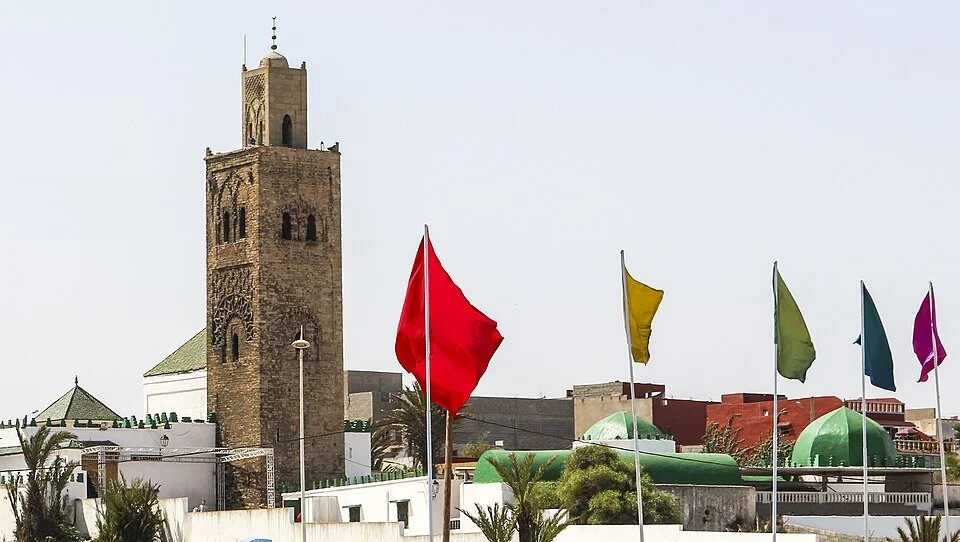
Figure 1. Ribāṭ ʿAyn al-Fiṭr on the Atlantic coast of Dukkāla — founded by a descendant of ʿAbdallāh ibn Idrīs II and governed for four centuries by the Banū Amghār. Al-Jazūlī spent seven years here in khalwa under Muḥammad Amghār al-Ṣaghīr before departing east for Medina, Cairo, and al-Azhar. When he returned to Morocco, he chose not to go back to ʿAyn al-Fiṭr but established his own zāwiya at Hāhā on the ruins of Abū Muḥammad Ṣāliḥ al-Mājirī's ancient ribāṭ — the site from which the Dalāʾil al-Khayrāt would reach the world.
The Maṣmūda Berbers of the High Atlas and its Atlantic foothills had already demonstrated, a generation before al-Jazūlī, what happened when a man claiming Idrīsī sharīfian descent combined genealogical authority with a total renovation of Islamic practice and a mass movement of tribal followers. Muḥammad ibn Tūmart (d. 524/1130) — himself claiming descent through the Idrīsī line — had emerged from the Hargha sub-tribe of the Maṣmūda in the same High Atlas foothills that would shelter al-Jazūlī's ribāṭ at Āfūghāl three centuries later. Ibn Tūmart had declared himself al-Mahdī al-Maʿṣūm — the Infallible Guided One — had organized his Maṣmūda tribal following into a hierarchical movement through a combination of genealogical legitimacy, doctrinal radicalism, and military discipline, and had built from this combination the Almohad empire that unified the Maghrib and al-Andalus. The memory of this was not abstract in al-Jazūlī's landscape. It was the living precedent that the Maṣmūda carried in their political imagination: that the sharīf who claimed Mahdist authority and organized tribal devotion around it could do what no sultan's army could accomplish alone.
And in the Atlantic foothills beneath this landscape — in the territory between Āsafī and Hāhā where the Ragrāga Maṣmūda maintained their own ancient institution at Ribāṭ Shākir on the northern bank of the Tansīft — the memory of the Barghawāṭa was still alive. The Barghawāṭa confederacy had maintained for three centuries a heterodox Islam that combined Qurʾānic language with pre-Islamic Amazigh practice, their own prophet, their own revelation in Tamazight, their own calendar — a complete religious civilization that neither Idrīsīs nor Almoravids had dismantled without sustained violence. The Almoravid destruction of the Barghawāṭa in 448-449/1056-1057 had cleared the terrain between Āsafī and Āzammūr that the Mājiriyya and the Ṣanhājiyya ribāṭs then occupied. Al-Jazūlī was building in a landscape still marked by the scar of that elimination — a territory that had recently learned what happened when heterodox authority resisted the sharīfian synthesis, and what happened when it accepted it.
He arrived at the Ṣaffārīn madrasa in Fez as a young man from this charged landscape — a Ṣanhāja Amazigh from a region of endemic violence and Mahdist memory, carrying a sharīfian genealogical claim of uncertain but politically charged provenance, entering the most sophisticated institutional apparatus the Islamic West had produced. He studied the Mukhtaṣar of Ibn al-Ḥājib, walked the corridors between the Ṣaffārīn and al-Qarawiyyīn through the narrow street of Bū Twīl, and according to the tradition preserved in Mumtiʿ al-Asmāʿ, spent long periods alone in his room with the door locked — the word mawt written on the walls, his father arriving from Jazūla to find his son in a state of qabḍ so profound that the madrasa's caretaker had suspected him of hoarding money. The sharīf from the Anti-Atlas was not meditating on jurisprudence. He was preparing himself for something the Ṣaffārīn madrasa had no curriculum to describe.
When he left Fez — for Medina, for Cairo, for the years under ʿAbd al-ʿAzīz al-ʿAjamī at al-Azhar where he absorbed the Qādirī transmission and encountered the Egyptian Shādhilī networks that Moroccan sharīfs had built under the Ayyubids — and returned to Morocco around 857/1453, he returned as a man who had absorbed everything the ṭarīqa tradition could offer and had decided, apparently without difficulty, that it was not sufficient on its own. He established his zawiya at Āsafī on the ruins of Abū Muḥammad Ṣāliḥ's ancient ribāṭ — not on a new site, not in a city, not adjacent to a madrasa — and began organizing a movement that wore the ṭarīqa's form while operating through the ribāṭ's ontological logic. The silsila was real. The bay'a was real. The fourteen rules of repentance were real. And behind all of it, more real than any of it, was the sharīfian inheritance — the wirātha that al-Dabbāgh would later map as the borrowed robe: the Ghawth receives 366 of the Prophet's ﷺ 124,000 spiritual essences; the household receives more, because their nature alone was fashioned from clay nearest to his.
Al-Jazūlī was not claiming to be the Ghawth. He was claiming the more precise and more politically explosive thing: that his created constitution, his fiṭra, his position within the circles of election that converge on the Muḥammadan source — all of this placed him within the inner register of dhātī authority that no silsila, however authentic, could reach. Zarruq's isnād critique was designed to test what had been acquired. Al-Jazūlī's claim was that the most important thing about him had not been acquired at all. It had been given — before creation, through the geometry of election, through the blood that made his nature a vessel for what others could only approach from outside.
This is what the arrested transition actually was. Not a compromise between two institutional forms. Not a pragmatic combination of ribāṭ function and ṭarīqa organization. An ontological declaration: that the ṭarīqa's epistemology of acquired authority was real and valuable and insufficient, and that Morocco needed the thing the Marinids' century of institutional investment had been unable to manufacture — the man whose authority did not require the institution's endorsement because it preceded the institution entirely.
3. The Book That Put Morocco on the Map
Mawlāy ʿAbd al-Salām ibn Mashīsh (d. 625/1227) left one prayer. A single ṣalāt — compressed, elliptical, devastating in its precision — that named the Prophet ﷺ as the source from which all secrets split open and all lights burst forth: Allāhumma ṣalli ʿalā man minhu inshiqqat al-asrār wa-nfalaqat al-anwār wa-fīhi irtaqat al-ḥaqāʾiq wa-tanazzalat ʿulūm Ādam fa-aʿjaza al-khalāʾiq. O God, bless him from whom secrets split open and lights burst forth, in whom realities ascended and the sciences of Adam descended, confounding all creation. Ibn Mashīsh was not describing a historical figure. He was naming a cosmological fact — the Prophet ﷺ as the first mirror in which the divine saw itself, the source from which all being overflows, the ʿAql al-Faʿʿāl of Plotinus given a name, a body, a tomb in Medina, and descendants still walking the earth in the Rif mountains where ibn Mashīsh himself had been born and would be martyred.
His student Abū al-Ḥasan al-Shādhilī carried that prayer to Egypt. His student's student Ibn ʿAṭāʾ Allāh al-Sakandarī compressed its cosmology into ḥikam that Moroccan scholars would study for centuries. And two centuries after ibn Mashīsh was killed by a false prophet on Jabal al-ʿAlam, a young man from Gazūla sat alone in his room in the Ṣaffārīn madrasa in Fez with the word mawt written on the walls, preparing himself for the task of painting what ibn Mashīsh had only titled.
The Dalāʾil al-Khayrāt was that painting.
It was not a liturgical anthology. It was not a collection of devotional borrowings assembled from the eastern ṭarīqas — though al-Jazūlī, with the diplomatic precision of a man who had spent years inside the Egyptian devotional world, inserted al-Jīlānī's al-Ṣalāt al-Ṣughrā into the Wednesday section and incorporated the Ḥizb al-Barr of al-Shādhilī into the weekly cycle. These insertions were gestures — a fraction of the whole, acknowledgments that linked the Dalāʾil to the living devotional world of the nascent ṭarīqas without subordinating it to any of them. The architecture was elsewhere entirely.
What al-Jazūlī built was a cosmological portrait — the most architecturally complete attempt in Islamic devotional literature to render visible the source of the fayḍ. Its 201 alqāb — sobriquets of the Prophet ﷺ modeled on the 99 Beautiful Names of God — did not describe the Prophet ﷺ as a historical figure of exemplary piety. They remade him as the cosmic macanthropos: insān ʿayn al-wujūd wa-l-sabab fī kull al-mawjūd — the human paradigm of Existence and the proximate cause of everything that exists. God, the angels, the heavens, the entire created order — all placed by the Dalāʾil's language in permanent orientation toward this single figure. The seven daily sections did not rotate through a calendar of saints or a curriculum of legal topics. They rotated around a single axis: the Prophet ﷺ as the first overflow of the divine into being, the source from which all fayḍ descends, the point at which the One becomes accessible to creation without ceasing to be One.

Figure 2. A Saʿdian-era copy of al-Jazūlī's Dalāʾil al-Khayrāt (1007/1599), the prayer book that remade Moroccan devotional life. The left folio carries the text in polychrome Maghribī — red, green, gold, and black ink marking liturgical divisions — while the right folio presents the schematic of the Prophetic burial chamber (al-ḥujra al-sharīfa) in Medina, situating the tombs of the Prophet ﷺ, Abū Bakr, and ʿUmar. This visual apparatus was integral to the Dalāʾil's function: it trained the reciter's imagination on the Prophet's ﷺ physical presence, collapsing the distance between Morocco and Medina. Copyist: Aḥmad ibn Ibrāhīm. Bibliothèque nationale de France, Arabe 1181
This was the answer to the question Plotinus had answered in Greek and Ibn Mashīsh had answered in a single compressed prayer. What is the ʿAql al-Faʿʿāl — the Active Intellect, the Nous, the first mirror in which the divine sees itself and through which all subsequent being emerges? For al-Jazūlī the answer was not philosophical. It was devotional, genealogical, and politically explosive: the Prophet ﷺ — and the sharīfs who carried his blood were the living instantiation of that source in every generation, permanently, by divine decree, prior to all institutional arrangement.
The Dalāʾil was the instrument that made this claim experiential rather than merely theoretical. To recite it was not to petition a saint from a distance. It was to enter the cosmological field of the Muḥammadan Reality — to participate, through the accumulated weight of praise, in the source of being itself. Aḥmad al-Rifāʿī (d. 578/1182) — ʿAlawī through the line of Imām Mūsā al-Kāẓim, his grandfather a resident of Seville before the family's migration to Baghdad, the first master in Islamic Sufism to systematize the ḥizb as collective devotional instrument — had understood this before al-Jazūlī. His mashāhid in Medina — the Prophet ﷺ extending his hand from the tomb for al-Rifāʿī to kiss — was the same wine: the living Prophet ﷺ present, accessible, responsive to the sharīf who carried his blood. Inna al-nabī ﷺ ftaḥa bāb al-irshād ilayya — the Prophet ﷺ opened the door of guidance to me. Al-Rifāʿī spoke after the Fāṭimid collapse, into the vacuum left by the dismantling of the Shīʿī cosmological order. Al-Jazūlī spoke after Granada, after the Portuguese Atlantic advance, after the Marinid exhaustion — into a vacuum far larger and far less containable. The Andalusian poet Abū al-Ḥasan al-Shushtarī, himself from Meknès, formed in this same Atlantic-Maghribī world, named what both were drinking: min khamra sharibahal-Ḥallāj wa-sayyidī al-Rifāʿī — from the wine that al-Ḥallāj drank, and my master al-Rifāʿī.
Same wine. Different world. Al-Rifāʿī spoke inside the Abbasid institutional framework — weaponized against the Fāṭimids, venerated by the Ayyubids, his shrine honored by the Mamluks who governed around his legacy without surrendering sovereignty to it. Al-Wāsiṭī — al-Rifāʿī's heir, trainer of al-Badawī and al-Shādhilī, grandfather of al-Dusūqī — stated what the Nizāmī tradition preferred to suppress: that al-Jīlānī was not sharīf by descent, that the sharīfian claim of the Qādiriyya was introduced by his children after his death, that the tradition which carried the Muḥammadan inheritance constitutionally was the Atlantic-Maghribī Ahl al-Bayt current — not the Baghdādī madrasa apparatus. But even this current, in the east, was contained. Al-Badawī's drums beat above the heavens in Ṭanṭā. The Mamluk state built his mawsim and continued ruling Egypt. The mashāhid were real. The institutions remained sovereign.
Morocco in 857/1453 had no such institution. The Marinid state was dying. The Wattasids held only the north. The Portuguese were at the ports. Into this vacancy al-Jazūlī placed not al-Rifāʿī's mashāhid — the hand extended from the tomb, the Prophet ﷺ present but distant — but something more total: anẓurū mawlākum fa-huwa maʿī, lā naẓara lī illā bihi, kamāluhu qad malāʾa ṣadrī wa-ḥayātī — Regard your Master, for he is with me. I have no spiritual insight except through him. His perfection has filled my breast and my life. Al-Rifāʿī had reached the hand. Al-Jazūlī had become the vessel. And the Dalāʾil was the proof — not argued but recited, not demonstrated but performed, daily, collectively, in the Moroccan manner that Ibn Tūmart had established for the Qurʾān itself.
“Reputation is not secured through wealth or children; it is measured by one’s standing before the Lord of Lords... A person is not great because of the greatness of his tribe or his desire for high rank; he is great because of the greatness of nobility (sharaf) and lineage (nasab)... anā sharīfun fī al-nasab—my lineage is noble. My ancestor is the Messenger of God ﷺ, and I am closer to him than all of God’s creation. My reputation is eternal, dyed in gold and silver. O you who seek gold and silver—follow us. For whoever walks in our path abides in the highest ranks of ʿIlliyyūn in this world and the next. The nations of old longed to be admitted into our polity, yet none may enter it unless he has already tasted salvation (saʿāda). Our polity is the realm of those who strive and contend in the path of God—those who stand against the enemies of God. The sultans of the earth are in my hands and beneath my feet.”
This is the innovation that completed everything and put Morocco on the map of Islamic civilization permanently. Ibn Tūmart — the Mahdī of the Maṣmūda, the man who had organized the High Atlas foothills into an empire — had introduced into Morocco the practice of collective Qurʾān recitation: aloud, in organized assembly, in memorized musical rhythm, as a communal rather than individual act. This was not the practice of the Islamic world at large. It was distinctly, stubbornly, irreducibly Moroccan. No other Muslim civilization recites the Qurʾān collectively in this way. Al-Jazūlī did for the Dalāʾil what Ibn Tūmart had done for the Qurʾān. The al-Dalīl reciters — gathered in collective assembly after the ḥizb of the Qurʾān, reciting the book of Muḥammadan praise aloud, in memorized musical rhythm, making the Dalāʾil the second scripture of Moroccan devotional life. Not a supplement to the Qurʾān. Its living complement — the ʿitra paired with the Book, exactly as the Prophet ﷺ had declared at Ghadīr Khumm and confirmed in the ḥadīth al-thaqalayn: two things inseparable until the Final Hour, the textual transmission and the genealogical transmission, the Book and the household, the Dalāʾil and the sharīf who wrote it.
The definitive copy — al-nuskha al-Sahliyya — was presented to Muḥammad al-Ṣughayyir al-Sahlī in 862/1457-8, seven years before al-Jazūlī's death. That it was still being revised so late confirms it was a living instrument — assembled and refined across the same years in which the Jazūliyya network was organized, the bayʿa sworn, the followers gathered. Text and movement grew together. By the time the nuskha was sealed, the popular title had already fixed itself: not Kitāb al-Dalāʾil but al-Dalīl — the Guide — and its author had become Mūl al-Dalīl, the Lord of the Guide. Text and person had merged into a single nisbah. The Dalāʾil was al-Jazūlī. And al-Jazūlī, who declared anā sharīfun fī al-nasab, jaddī rasūl Allāh ﷺ wa-anā aqrab al-khalq ilayhi, was the vessel through which the source of all fayḍ — named by ibn Mashīsh, painted by the Dalāʾil, performed collectively by twelve thousand followers in the Hāhā foothills — became present in Morocco not as memory, not as theology, but as living political fact.
Zarruq's isnād critique had no jurisdiction here. You cannot apply a biographical instrument to a cosmological claim. You cannot verify with a transmission chain what has already been given at the source. The Dalāʾil was not the product of a silsila. It was the product of a vessel — and the vessel was sharīfian nasab, dhātī, prior to all acquisition, sealed before any scholar could open his mouth.
4. Assassination and the Body Politic
On 4 Dhū al-Qaʿda 869/28 June 1465, Muḥammad ibn Sulaymān al-Jazūlī collapsed during his morning prayer at Āfūghāl and died without prior illness, without warning, without the slow diminishment that age or disease produces. He was surrounded by thousands of followers. He had given no sign. The suddenness was the sign. His disciples knew immediately what had happened — the same thing that had happened to Mawlāy Idrīs I, to Rāshid the regent, to Mawlāy Idrīs II — and the knowledge did not diminish the movement. It confirmed it. The state that poisons its saints has already confessed that it cannot answer them.
The Marinid sultan ʿAbd al-Ḥaqq II, who would himself be killed in the streets of Fez months later, had every reason to fear what had gathered around al-Jazūlī's ribāṭ at Āfūghāl. Not twelve thousand mystics sitting in contemplation. Twelve thousand followers — Banū Maʿqil Arab tribesmen, Ṣanhāja pastoralists, Maṣmūda agriculturalists, disciples trained in the fourteen rules of repentance and sworn by bayʿa to an imām whose ḥukm came directly from the Prophet ﷺ — organized, armed in their tribal capacity, and ideologically committed to a dawla that had already declared the existing political order forfeit. Al-Jazūlī had told the governor of Āsafī: “I am the one who will go away from you, but you will follow me as well”. The governor had fled for his life two years later when the city declared its independence. The pattern was visible to anyone paying attention.
What happened immediately after the death reveals the structural reality the bayʿa had created and the limits it had not yet solved. Al-Jazūlī's followers split into two irreconcilable camps the moment his body was wrapped in its burial shroud. The fuqarāʾ — his trained Sufi disciples, the men who had received the full formation, who understood the Dalāʾil as cosmological instrument and the bayʿa as initiatic commitment — wanted to bury him properly, establish his tomb, organize the transmission of his order through the silsila he had built. The muḥibbīn — the tribal affiliates, the Banū Maʿqil bedouins who had followed him not as Sufi disciples but as the divinely appointed Imām of a living dawla — refused. For them al-Jazūlī was not a Sufi master whose teachings could be transmitted through a chain of disciples. He was a sovereign whose bodily presence was the source of authority itself. They would not surrender that presence to a grave.
The fuqarāʾ lost. They were expelled from Āfūghāl. The trained disciples, the institutional continuers, the men who understood the theology — driven out by the unlettered tribesmen who understood something the theology could not fully contain: that al-Jazūlī's authority had never been primarily institutional. It had been bodily. sharīfian nasab was dhātī — essential, present in the flesh, not transferable through pedagogical chains. The muḥibbīn were, in their violent illiterate way, making a correct theological point.
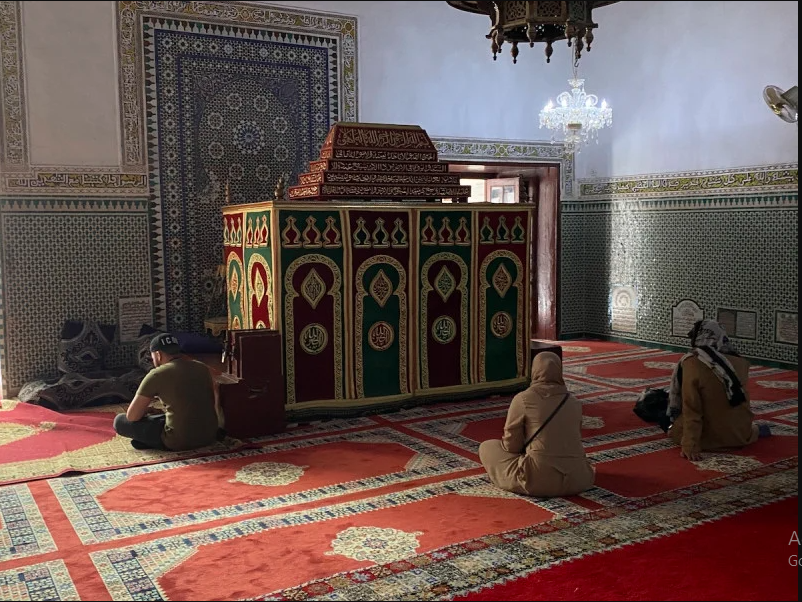
Figure 3. The tomb chamber of Sīdī Muḥammad al-Jazūlī in Marrakesh — one of the Sabʿat Rijāl. Visitors sit before the catafalque, but the saint's body is not beneath it. The Saʿdians placed it behind the wall — because they understood that if al-Jazūlī's uncorrupted remains were accessible, they would be carried on campaigns again, as they had been for twenty years after his assassination in 869/1465.
What followed was extraordinary. The body of al-Jazūlī was placed in a tābūt — a movable ark — rather than buried. ʿAmr ibn Sulaymān al-Sayyāf, the tribal commander who led the revolt that now controlled Āfūghāl and the surrounding Hāhā and Shiyāẓma regions, carried the ark on campaigns. The uncorrupted body of the sharīf, present on the battlefield, proved more effective than any battle standard. Al-Sayyāf never lost a battle while the ark containing al-Jazūlī's body was with him. The sources — including Zarruq himself in his al-Kunnāsh, the most hostile witness available — confirm this with remarkable consistency. The body functioned as a sovereign. The dawla al-saʿāda continued operating without a living shaykh because its authority had never depended on the shaykh being alive. It depended on his blood being present.
This lasted twenty years. Al-Sayyāf was finally killed in 890/1485 — murdered by his own wife after she discovered him in bed with her daughter. The body passed through various hands, its location never fully controlled by any state or institution, its presence a continuous problem for every power that wanted to claim Morocco without claiming the Jazūlī legacy. The Saʿdian sharīf Aḥmad al-Aʿraj finally resolved the problem in 940/1525 by transferring al-Jazūlī's uncorrupted body to Marrakesh, installing him as one of the Sabʿat Rijāl — the Seven Saints whose collective presence organized the sacred geography of the imperial capital. This was presented as honor. It was containment. The Saʿdians understood, as no previous power had managed to act on, that the only way to domesticate al-Jazūlī's body was to make it the foundation of their own dynastic legitimacy — to claim his dawla as their inheritance rather than their threat.
Even this was only partially successful. The tomb in Marrakesh was constructed with the body not under the catafalque where visitors pay their respects but behind the wall — placed there precisely because the Saʿdians knew that if the body were accessible it would be dug up again, carried on campaigns again, weaponized again by the same tribal logic that had made al-Sayyāf invincible for twenty years. The saint the state could not answer in life could not be simply buried in death. The tābūt had demonstrated something that no institutional arrangement could undo: that al-Jazūlī's authority was not organizational but ontological — present in his body, present in his blood, present in the descendants and disciples who carried his transmission forward, immune to the biological fact of death in a way that no acquired authority, however great, could match.
The fuqarāʾ whom the muḥibbīn had expelled from Āfūghāl did not disappear. Their banishment proved, as al-Jazūlī's principal biographer observed, to be an advantage — it dispersed them across Morocco, carrying the Dalāʾil, the aḥzāb, the fourteen rules of repentance, and the bayʿa into every region the single ribāṭ at Āfūghāl could never have reached. The scattering was the network. The assassination had not ended the Jazūliyya. It had made it impossible to locate — and therefore impossible to kill.
5. The Men Who Proved the Model Could Outlive Its Maker
The first thing al-Jazūlī's successors had to demonstrate was that his model was not him — that the hybrid of ribāṭ ontology and ṭarīqa organization he had built could survive the body, the tābūt, the twenty-year revolt, and the scattering of the fuqarāʾ across Morocco. The second thing they had to demonstrate was harder: that sharīfian nasab as the vessel of authority could operate through transmission — not merely through the biological presence of a single sharīf but through a chain of inheritors whose organizational coherence and devotional discipline made the Jazūliyya reproducible in every region, every generation, every tribal context that Morocco contained.
They demonstrated both within forty years.
Muḥammad al-Ṣughayyir al-Sahlī (d. 917/1511) was the textual heir — the man to whom al-Jazūlī had presented the nuskha al-Sahliyya in 862/1457-8, the keeper of the definitive copy upon which every subsequent edition of the Dalāʾil al-Khayrāt would be modeled. Al-Sahlī was not the organizational leader. He was something more structurally necessary: the guarantor of textual continuity, the man whose possession of the master copy ensured that the Dalāʾil could not be altered, inflated, or appropriated by competing claimants. The Sahlī copy became the muṣḥaf of the Jazūliyya — the fixed text against which all transmission was measured, the textual equivalent of the genealogical record that fixed sharīfian nasab against fraudulent claims. Without al-Sahlī, the Dalāʾil would have dissolved into a hundred regional variants within a generation. With him, it remained a single instrument — identifiable, attributable, belonging to al-Jazūlī and to no one else.
ʿAlī Ṣāliḥ al-Andalusī (d. 903/1488) was the doctrinal heir. A Granadan refugee driven to Morocco by the Christian advance, he was initiated into the Jazūliyya not by al-Jazūlī himself but by al-Tabbāʿ in Fez — where al-Tabbāʿ had traveled to give lectures on Sufism and lead recitations of the Dalāʾil al-Khayrāt at Madrasat al-ʿAṭṭārīn. Al-Andalusī founded the second urban zawiya of the Jazūliyya in the Wattasid capital and became the order's first systematic voice: his Kitāb Sharḥ Raḥbat al-Amān — the Commentary on the Terrain of Safety — articulated the ʿilm al-kāmil, the complete knowledge, as the epistemological foundation of the Jazūlī shaykh's authority — knowledge not acquired through curriculum but flowing from the Muḥammadan source itself, complete and self-authenticating, requiring no scholarly verification because it preceded all scholarly categories. The theoretical vocabulary he established — the shaykh al-wāṣil, the actualized master who draws wisdom from the divine source of prophecy itself — would be developed by al-Ghazwānī into the Jaras, the Bell Saint whose reverberation organized the cosmos. Al-Andalusī was also the man who recognized al-Ghazwānī when the young bedouin arrived in Fez and sent him south to al-Tabbāʿ in Marrakesh — placing the vessel that the Jazūliyya's next phase required into the hands that would shape it.
ʿAbd al-ʿAzīz al-Tabbāʿ (d. 914/1499) was the organizational heir — and the most consequential of the three for the movement's political future. Al-Tabbāʿ was not merely al-Jazūlī's successor as shaykh al-ṭarīqa. He was the man who understood that the Jazūlī model required two things the master's charismatic authority had rendered invisible during his lifetime: institutional discipline and tribal alliance. Al-Tabbāʿ consolidated the Jazūliyya's scattered zawāyā under his direction in Marrakesh, brought al-Ghazwānī — the bedouin from the Shāwiya — into the order and set him to work cultivating crops and tending orchards as tarbiya nabawiyya, prophetic training through agricultural labor. He sent al-Ghazwānī to Muḥammad ibn Dāwūd, the leader of the Shāwiya Arabs — the Banū Hilāl confederation that the Wattasids had hounded mercilessly — with the coded message we need some fat, the summons that turned a tribal chieftain into a Jazūlī disciple who exchanged his rich clothes for Sufi garb, turned his lance point downward, and pledged loyalty to the order. The Shāwiya alliance was not spiritual fellowship. It was military infrastructure — the tribal base that would enable the Jazūliyya to challenge first the Wattasids and eventually any power that stood between sharīfian authority and political sovereignty.
Al-Tabbāʿ's own mashāhid confirmed the sharīfian logic in the register the Jazūliyya understood best. His poem Salāʾil al-Anwār — Offspring of Light — traced his spiritual genealogy and declared: My banner covers the Spiritual Axes and is raised above them, and Sīdī ʿAbd al-Qādir al-Jīlānī is a heaven in my firmament. This was not Qādirī submission. It was Jazūlī supremacy articulated through Qādirī vocabulary — making al-Jīlānī himself a star in a sky that al-Tabbāʿ claimed to span. The sharīfian interpretation of authority that al-Jazūlī had stated in his muḥādathāt — that the shaykh who carries sharīfian nasab exercises spiritual authority by divine right — was, as the Hagiography Bank noted, an important hallmark of the Jazūliyya. Al-Tabbāʿ did not merely repeat this. He enacted it organizationally, building the first functioning Jazūlī network that operated through institutional structure rather than through one man's bodily presence.
Then came Muḥammad al-Hādī ibn ʿĪsā al-Fahdī al-Ḥasanī (d. 933/1518) — al-Tabbāʿ's student, patron saint of Meknès, founder of the ʿĪsāwiyya, and the proof that the Jazūlī model could generate entirely new orders without losing its structural identity. Ibn ʿĪsā inherited from al-Tabbāʿ the Ḥizb Subḥāna al-Dāʾim — the litany al-Jazūlī had composed exclusively for his own family, reserved, restricted, not meant for general circulation. Ibn ʿĪsā took it and made it the ritual identity marker of a new ṭarīqa that would outlast every other Jazūlī branch institutionally. The ḥizb that was supposed to stay inside the sharīfian household escaped through the transmission chain within a single generation — and founded an order that maintained the Jazūlī distinction between fuqarāʾ and muḥibbīn into the present day. The ʿĪsāwiyya was not a deviation from the Jazūlī model. It was evidence that the model was generating offspring beyond its founder's intention or control — that the dawla al-Jazūlī had declared already constituted was producing institutional realities its constitution had not foreseen.
Abū al-ʿAbbās Aḥmad al-Ṣufyānī al-Ḥārithī (d. 918/1513), ʿAbd al-Karīm al-Fallāḥ (d. 933/1518), and the unnamed dozens who established zawāyā from Hāhā to Fez to the Rif — each repeated the same structural demonstration: the Jazūlī model was reproducible. Not because its organizational form was easily copied — any ṭarīqa could copy a structure — but because its ontological claim was inheritable. The sharīfian nasab that al-Jazūlī had declared the vessel of Muḥammadan authority did not end with him. It continued in every descendant, every sharīf who entered the order and brought with him the dhātī legitimacy that no amount of organizational discipline could manufacture. The fuqarāʾ provided method. The sharīfs provided the vessel. The two were inseparable — which is why the Jazūliyya remained structurally distinct from every other Moroccan ṭarīqa that tried to reproduce its success without reproducing its genealogical claim.
When al-Fallāḥ convened the shaykhs of the Jazūliyya at al-Tabbāʿ's tomb to determine who should lead the order, the scene al-Mahdī al-Fāsī preserved in Mumtiʿ al-Asmāʿ reads like a constitutional convention for the dawla al-saʿāda. Each claimant spoke. Saʿīd ibn ʿAbd al-Muʾmin al-Hāhī recounted his paranormal states. Raḥḥāl al-Kūsh — the Malāmatī, the founder of the Raḥḥāli order — announced: anā rākib al-ʿarāʾis, man lam yarkab ʿarūsahu lam yarkab, innī anā ṣāḥib al-ighātha fī al-barr wa-l-baḥr — “I am the vehicle of bridegrooms, he who has not ridden his bride is not meant to ride, I am the Master of Rescue on land and sea”. ʿAlī ibn Ibrāhīm al-Būzīdī claimed mastery of outward and inward states. Al-Fallāḥ himself claimed to be the provision of the order. Throughout all of this, al-Ghazwānī remained silent. When asked what he possessed, he replied with the sentence that settled the matter: anā sulṭānukum wa-ḥākim ṣamtikum, bī waḥdī tuḍrabūn, man ḍaraba dirhaman aw dīnāran najaḥa wa-illā fa-lā — “I am your sultan and the ruler of your silence. With me alone you are minted. He who stamps his own dirham or dinar will succeed; if not, he will not.”
The assembled shaykhs protested. Al-Ghazwānī stretched out his hand and grasped the empty air: Allāh yudabbiru hādhā — “God is directing this”. The fist closed. The matter was sealed. Al-Ghazwānī was the third shaykh al-ṭarīqa of the Jazūliyya — and the one who would complete the circuit from ribāṭ to dawla, from the Hāhā foothills to the gates of Marrakesh, from the saint who could not be buried to the dynasty that would try.
Conclusion: Two Answers, one question
This article has been about a single question that two men of the same generation, the same Shādhilī inheritance, the same collapsing Moroccan world answered in opposite directions. The question: when institutions fail, when the state cannot protect its ports or feed its people or hold its borders, when the ʿulamāʾ cannot agree and the ṭarīqas multiply and every marketplace produces a new claimant to cosmic authority — what makes a shaykh real?
Zarruq answered: verification. Test the isnād. Examine the sobriety. Measure the conformity to law. Apply the criterion the ʿulamāʾ possess and the marketplace saints do not: the legal-theological standard that distinguishes the genuine from the counterfeit, the transmitted from the invented, the shaykh who serves the law from the shaykh who has replaced it with himself. This answer was — and remains — correct in its own register. It was ʿāriḍī: available to anyone who could demonstrate conformity to its criteria, revocable from anyone who failed them. It asked the shaykh to earn his authority and submit it to judgment. It was the Nizāmī answer, the madrasa's answer, the answer of a man who had absorbed the full Marinid institutional inheritance and believed it sufficient.
Al-Jazūlī answered: inheritance. The isnād that matters is not the transmission chain of named intermediaries subject to biographical verification. It is sharīfian nasab — the biological line connecting the shaykh to the Prophet ﷺ through the Ahl al-Bayt, dhātī, prior to all acquisition, sealed before any scholar opens his mouth. The shaykh does not earn his authority. He carries it — in his blood, in his fiṭra, in the cosmological position that the circles of divine election assigned before he was born. He is not accountable to the ʿulamāʾ's verification because his authority does not derive from the process their verification was designed to assess. You cannot critique a sharīfian nasab with an isnād. The tools do not reach.
Morocco chose the second answer — but it did not discard the first. This is the point the binary obscures and the historical record insists upon. The Zarruqī transmission was not defeated. It was absorbed — unnamed, unacknowledged, carried forward inside the very orders the Jazūlī revolution produced, operating as the regulatory discipline without which the sharīfian synthesis would have collapsed into the marketplace sainthood Zarruq had diagnosed. The evidence is not hidden. It is the living architecture of Moroccan Sufism itself.
The Nāṣiriyya of Tamegroute — founded by Muḥammad ibn Nāṣir al-Darʿī (d. 1085/1674), whose chain runs through the Zarruqī Eastern Saharan transmission — built one of the greatest libraries in the Islamic world and governed the Drāʿa valley for centuries through precisely the combination of scholarly discipline and spiritual authority that Zarruq had prescribed. The Fāsiyya — the scholarly Sufi tradition that institutionalized itself inside Fez's Qarawiyyīn culture — carried Zarruqīadab in its pedagogical DNA even when it spoke in Jazūlī vocabulary.
The Darqāwiyya — al-ʿArabī al-Darqāwī (d. 1239/1823), who spent forty years inside the question Zarruq had posed, who stripped the ṭarīqa of every institutional accretion until nothing remained but the murīd and his Lord — was a Zarruqī answer.
And at the deepest level, Mawlāy ʿAbd al-ʿAzīz al-Dabbāgh — the man who had no credentials, no institutional affiliation, no silsila, no scholarly formation, and who sat in Fez with Aḥmad ibn Mubārak and disclosed in Al-Ibrīz what the interior of the universe looked like — received the transmission that made his unveilings possible through the Zarruqī current, through ʿUmar al-Hawwārī at the shrine of Ibn Ḥirzihim, through the very networks Zarruq's exile had scattered across the Sahara.
And Abū al-ʿAbbās al-Tijānī — the Concealed Pole, the Khatm al-Awliyāʾ, who built the most globally expansive Sufi order in Islamic history — took the Shādhiliyya from sources that carried both currents simultaneously, studied under the grandson of Aḥmad ibn ʿAbdallāh Maʿn al-Fāsī whose own chain wove Zarruqī threads into a single cord, and declared that all paths would be incorporated into the path of al-Shādhilī — except his own, which was self-sufficient, Muḥammadī, Ibrāhīmī, Ḥanīfī, received directly from the Prophet ﷺ without intermediary.
Morocco did not choose one leg over the other. It walked unevenly — favoring the Jazūlī leg in its shrines, its sacred geography, its dynastic legitimacy, its devotional life — while relying on the Zarruqī leg for the discipline, the regulation, the scholarly conscience, the diagnostic function that alone could distinguish the genuine from the counterfeit in a landscape flooded with claimants. The two legs are not opposed traditions. They are intertwined transmissions that Morocco has never fully reconciled — and every generation of Moroccan Sufi masters, from al-Darqāwī to al-Dabbāgh to al-Tijānī, has had to negotiate the tension between what the sharīfian synthesis provides and what the scholarly discipline demands.
Zarruq diagnosed the disease with clinical precision. His Radd ʿalā ahl al-bidʿa named every symptom. Everything he saw was real. His diagnosis was correct. His prescription was not ignored — it was administered through channels he never controlled, by orders he never founded, in a landscape that honored his medicine without honoring his name. He was prescribing institutional discipline for a civilization that had decided its deepest authority was ontological — and the civilization took the discipline, folded it into the sharīfian synthesis, and continued walking on both legs while looking at only one.
The corrected shaykh rests in an unmarked grave in Libya. His address in this world has been deliberately erased. His transmission is in Tamegroute, in the Darqāwiyya, in Al-Ibrīz, in the Tijāniyya, in every Moroccan order that regulates itself without remembering where the regulation came from.
The shaykh who did not need to be corrected rests behind his own catafalque in Marrakesh — one of the Sabʿat Rijāl, the Seven Saints whose collective cult Mawlāy Ismāʿīl al-’Alawī (r. 1083–1139/1672–1727) organized into the sacred geography of his empire, redirecting the old Ragrāga Dawr pilgrimage toward Marrakesh and binding the city's sanctity to seven tombs of which al-Jazūlī's was the axis. Hidden by the Saʿdians who understood that even his body could not be simply buried. The Dalāʾil al-Khayrāt is still recited collectively, aloud, in memorized musical rhythm, after the ḥizb of the Qurʾān, across every region of Morocco.
The two legs of the Shādhiliyya. One fills the shrines. The other built the discipline without which the shrines become a theater. This article is about the leg Morocco chose to celebrate. The other article — the one about the man Morocco exiled — is about the leg it chose to forget. Neither is complete without the other. Morocco has been reading only one of them for five centuries. DAR.SIRR reads both.