The Jaras of Marrakesh: ʿAbdallāh al-Ghazwānī, Sultan of the Jazūliyya and Patron Saint of Moroccan Sufism
There is a question that Moroccan Sufism has never asked plainly enough: what happened between al-Jazūlī and al-Dabbāgh?
Between the saint who declared the dawla al-saʿāda already constituted and the saint who disclosed the interior of the universe from a weaver's workshop in Fez, two and a half centuries passed. In those centuries, the sharīfian revolution al-Jazūlī had ignited did not merely survive — it became the operating system of Moroccan civilization. The Dalāʾil al-Khayrāt became the second scripture of a nation. The Muḥammadan ṭarīqa became the grammar of every zawiya from the Sūs to the Rif. Dynasties rose through Jazūlī networks and fell when they turned against them. The pilgrimage to Jabal al-ʿAlam — a mountain that had lain half-forgotten since al-Shādhilī carried ibn Mashīsh's prayer to Egypt — was resurrected, institutionalized, and made the axis of Morocco's sacred geography. Marrakesh, which had buried saints since the Almoravid era, became the city governed by sainthood — a city whose quarters carried the names of the men who had remade it, whose devotional calendar organized tribal and commercial life across the entire Ḥawz, whose sacred geography would later be formalized by Mawlāy Ismāʿīl into the Sabʿat Rijāl cult that still defines it.
None of this happened by itself. Someone built it. Someone took al-Jazūlī's revolutionary mashhad and gave it systematic doctrine. Someone took al-Tabbāʿ's corporate institution and filled it with a pedagogy that could be transmitted, reproduced, and planted in every tribal context Morocco contained. Someone wrote the theory that explained what the Dalāʾil enacted. Someone created the pilgrimage that made Jabal al-ʿAlam the second Mecca of Moroccan Islam. Someone trained the disciples whose zawāyā would proliferate from Tāmaṣlūḥt to Tādla to the Middle Atlas to eastern Fez — whose lineages would produce the Sharqāwiyya, the Dilāʾiyyīn, the ʿĪsāwiyya, the Ḥamādsha, and ultimately the conditions in which al-Dabbāgh could appear.
His name was ʿAbdallāh al-Ghazwānī. In Marrakesh they call him Mūl al-Quṣūr — the Master of Palaces. He is one of the Seven Saints. His mawsim is still held at the Muwāssīn. His tomb receives thousands of visitors annually who do not know that the man buried beneath their feet wrote two of the most important doctrinal works in the history of Moroccan Sufism — works that sit unread in the national library in Rabat, catalogued as manuscripts 2617K and 2002D, waiting for a generation that remembers what they contain.
He came from a place no one expected to produce a saint of the first rank — from the Shāwiya, from the Banū Hilāl Arabs of the Atlantic plains, from a tribal confederation that every dynasty in Moroccan history had treated as a problem to be managed rather than a civilization to be honored. He was Idrīsī — a sharīf of the Banū Ghazwān — carrying the oldest Moroccan credential in his blood while living the life of a bedouin whose father preached jihād barefoot at weekly markets. He trained under the Sharīshī Rāʾiyya — the Baghdadi disciplinary poem that encoded the Niẓāmī tarbiya in Maghribī verse — while operating through the Jazūlī cosmology that had already declared institutional verification insufficient. He told the sharīfs of the north that it was their duty to support his order, not his order's duty to support them. He relocated sovereignty from Fez to Marrakesh by utterance. He survived a bullet that flattened against his chest. He raised a dynasty through the zawāyā he controlled — and died three years before the dynasty consumed the order he had spent his life building.
And he wrote the Nuqṭa al-Azaliyya — the Eternal Point in the Secret of the Muḥammadan Essence — the book that explained, for the first time in systematic doctrine, what it meant to say that the Prophet ﷺ is the source of all fayḍ, that the Bell Saint reverberates the divine command through the cosmos, that the shaykh al-wāṣil inherits the prophetic function not through silsila alone but through a cosmological position that no institution can certify and no critique can reach.
This article is his hagiography — the story of the man who stood between al-Jazūlī's revolution and al-Dabbāgh's irruption, who built the infrastructure that made the first possible to sustain and the second possible to receive. It is also the story of a civilization — of how the Muḥammadan ṭarīqa ceased to be a doctrine and became the air Morocco breathed. Of how a bedouin sharīf from the most persecuted tribal confederation in the kingdom filled a country with zawāyā, trained a generation that trained the generations that would define every subsequent century of Moroccan spiritual life, and left behind a body of writing that his own shrine's custodians have never read.
DAR.SIRR reads it now.
1. The Shāwiya and the Man Before the Path
The Banū Hilāl did not choose Morocco. Morocco was chosen for them.
When the Fāṭimid caliph al-Mustanṣir bi-Allāh unleashed the Banū Hilāl and Banū Sulaym against the Zīrid breakaway in Ifrīqiya in 443/1051, he was deploying a weapon he had no intention of recalling. The Hilālī tribes — Arab bedouins whom the Fāṭimids had settled in Upper Egypt as a buffer population, too numerous to feed and too dangerous to ignore — swept westward across Libya and Tunisia with a destructive energy that Ibn Khaldūn would later immortalize as the locust simile: they consumed the land they crossed. The Zīrid state collapsed. The agricultural infrastructure of Ifrīqiya — the Roman granary, the Aghlabid irrigation works, the Fāṭimid orchards — was devastated within a generation. The Banū Hilāl did not build. They moved.
The Almohads, a century later, understood this energy and redirected it. When ʿAbd al-Muʾmin ibn ʿAlī consolidated the Almohad empire in the mid-sixth/twelfth century, he transferred large contingents of Hilālī Arabs from Ifrīqiya to the Moroccan Atlantic plains — the Tāmasnā, the Shāwiya, the Dukkkāla, the Ḥawz — partly as military settlers, partly as agricultural labor, partly to empty Ifrīqiya of a population that had proven ungovernable in situ. The Arabs who arrived in the Shāwiya — the broad plains stretching from Rabat south toward Casablanca, watered by the Būregreg and the Umm al-Rabīʿ — were not a single tribe but a confederation: Hilālī, Maʿqilī, Sulaymī, and others, reorganized by the Almohad administration into the territorial units that would give the region its permanent name.
Among these confederations, embedded but distinct, were sharīfian families. The Banū Ghazwān — an Idrīsī lineage tracing descent through Mawlāy Idrīs I to the Prophet ﷺ — had settled in the Shāwiya not as conquerors but as the genealogical anchors that every Arab tribal confederation in the Maghrib required for spiritual legitimacy. They were bedouins — pastoralists, seasonal migrants, speakers of a Hilālī Arabic dialect rather than the urban Fāsī register — but they carried in their lineage the oldest credential Morocco recognized. An Idrīsī sharīf living among the Shāwiya was not a social anomaly. He was the theological reason the confederation cohered: the man whose baraka sanctified the assembly, whose arbitration settled disputes no tribal chief could resolve, whose presence at the weekly market transformed commerce into covenant.
The Wattasids destroyed this world. When the Wattasid sultans — themselves Zanāta Berbers governing from Fez with no sharīfian credential and no popular legitimacy south of the Middle Atlas — turned their military apparatus against the Shāwiya in the late ninth/fifteenth century, they were not merely suppressing tribal rebellion. They were attempting to break the one Arab confederation in their domains that had the demographic weight, the territorial coherence, and the sharīfian infrastructure to challenge their authority. The Shāwiya had supported the Jazūlī revolution. Their tribal leaders had sworn bayʿa to al-Jazūlī's successors. Their territory — between Salā and Marrakesh, astride the route connecting the two imperial capitals — was the strategic corridor that any movement from the south would need to traverse to reach Fez. The Wattasid campaign against the Shāwiya was not governance. It was preemptive annihilation.
Al-Kussārī's verse preserved what the Wattasids preferred to erase: he assaulted and scourged them ceaselessly, until they drank from the cup of humiliation and bitterness, and what remained of them crept off to Tamesna like ants crawling softly in the darkness. Ants. The Banū Hilāl who had once swept like locusts across Ifrīqiya reduced to ants in Tamesna — crawling, diminished, seeking the cracks in the landscape where a Wattasid patrol might not follow. It was from these ants — from a sharīfian family embedded in a broken confederation, from the intersection of Idrīsī genealogy and Hilālī displacement, from a father named Abū al-Barakāt ʿAjal who preached jihād barefoot at weekly tribal markets in the Malāmatī register — that ʿAbdallāh al-Ghazwānī was born.
His exact date of birth is not recorded. Manṣar places him in the generation that would have been young men at the time of al-Jazūlī's assassination in 869/1465. His formation began where every Shāwiya child's began — with the Qurʾān, with the Arabic of the tribal qaṣīda, with the dhikr circles his father led at the margins of markets that the Wattasid tax collectors had not yet reached. His father's Malāmatī path — the way of deliberate self-abasement, of hiding sanctity behind the appearance of ordinariness, of refusing the social rewards that sainthood normally attracted — was itself a survival strategy: in a landscape where the Wattasids hunted sharīfian families who showed political ambition, the malāmatī shaykh who appeared to be nothing more than a wandering preacher was invisible to the apparatus that would have destroyed him.
When the young al-Ghazwānī was sent to Fez — to Madrasat al-Wādī on the Andalusian bank, the madrasa reserved for students from outside the city — he carried this double formation: the Idrīsī genealogy that made him structurally significant and the Shāwiya bedouin identity that made him socially invisible. He arrived in a city that honored sharīfs but persecuted the tribal confederation from which his sharīfian family came. He studied jurisprudence among scholars who served the Wattasid state that was destroying his people. And it was in this city — at the table of the Sufi shaykh ʿAlī ibn Ṣāliḥ al-Andalusī's fuqarāʾ, eating the couscous they offered him, joining the waẓīfa they chanted — that the Granadan master looked at the young bedouin and said the words that would change the direction of his life and, through him, the direction of Moroccan Sufism: huwa ʿarbī guwī — this is a powerful bedouin. Al-Andalusī did not send him to a madrasa. He sent him south — to al-Tabbāʿ in Marrakesh, to the zawiya that had inherited al-Jazūlī's revolution and was preparing to deploy it.
ʿAbd al-ʿAzīz al-Tabbā received him and set him to work. Not to study. To cut wood, water orchards, tend flocks. Tarbiya al-nabawiyya — prophetic training through agricultural labor, through the discipline of the body before the discipline of the soul, through the submission of a young bedouin's pride to the rhythms of a garden he did not plant. When the time came, al-Tabbāʿ sent him back to the Shāwiya — not as a scholar returning with credentials but as a recruiter: we need some fat, the coded message that summoned Muḥammad ibn Dāwūd, the Shāwiya chieftain, to Marrakesh. Ibn Dāwūd came — exchanged his rich clothes for Sufi garb, turned his lance point downward, and pledged loyalty to the Jazūliyya. The ants were beginning to stand.
II. Anā sulṭānukum: the succession and the move north
Al-Tabbāʿ died in Marrakesh in 914/1499. He had spent fifteen years turning the Jazūliyya from a revolutionary movement into a corporate institution — traveling to Fez, leading recitations of the Dalāʾil al-Khayrāt at Madrasat al-ʿAṭṭārīn, initiating the Granadan master ʿAlī ibn Ṣāliḥ al-Andalusī (d. 903/1488) who founded the second Jazūlī zawiya on the Andalusian bank of the Wattasid capital. Like al-Mursī after al-Shādhilī in Egypt, al-Tabbāʿ had left little written legacy, preferring instruction to inscription, organization to composition. What he left was a network — and the question of who would operate it.
The convention at his tomb produced five claimants speaking simultaneously in the register the Jazūliyya had established — the mashhad, the public declaration of cosmic rank before an assembly of peers. Sīdī ʿAbd al-Karīm al-Fallāḥ (d. circa 930/1524) claimed to be the order's provision — the man through whom sustenance flowed. Saʿīd ibn ʿAbd al-Muʾmin al-Hāhī recounted his paranormal states. SīdīRaḥḥāl al-Kūsh (d. 950/1543) — the Sulaymānī-Ḥasanī sharīf from Tamdūlt in Wādī Aqqā, dark-skinned, fearless, already operating in the malāma wa-jadhb register that would make him the strongest majdhūb in Moroccan history — declared himself the vehicle of bridegrooms and the Master of Rescue on land and sea. ʿAlī ibn Ibrāhīm al-Būzīdī claimed mastery of the outward and inward. Each man spoke from what he had received. Each man believed the order was his to lead.
Al-Ghazwānī sat silent through all of it. When they turned to him and asked what he possessed, he answered in a register none of them had used — not the mashhad of the saint but the language of sovereignty: anā sulṭānukum wa-ḥākim ṣamtikum, bī waḥdī tuḍrabūn, man ḍaraba dirhaman aw dīnāran najaḥa wa-illā fa-lā. “I am your sultan and the ruler of your silence. With me alone you are minted. He who stamps his own dirham or dinar will succeed; if not, he will not.” The assembled shaykhs protested. Al-Ghazwānī stretched out his hand and grasped the empty air: Allāh yudabbiru hādhā. “God is directing this.” The fist closed. No one spoke again.
“The rule of the Khalīfa in the attainment of the Quṭbāniyya requires six things: that he be free from desire; that he possess the wisdom of the prophets, known by it and known by it alone; that his aspiration be self-sustaining rather than dependent on anyone else; that everything be attributed to him while he is attributed to nothing.”
The metaphor was not accidental. Minting is sovereignty — the right to stamp metal with the ruler's name, the act that transforms raw material into legal tender, the function that no subordinate can perform without the sovereign's authority. Al-Ghazwānī was not claiming spiritual seniority. He was claiming the political-theological function that al-Jazūlī had announced and that al-Tabbāʿ had organized but that no one since the poisoning at Āfūghāl had stated so explicitly: the shaykh al-jamāʿa of the Jazūliyya was not a spiritual guide. He was a sovereign — the sulṭān of a dawla whose currency was baraka and whose mint was the zawiya.
His first act as third shaykh al-jamāʿa was not organizational but geographic. He moved north. From Marrakesh — the city al-Tabbāʿ had made the Jazūliyya's institutional center — al-Ghazwānī traveled to al-Habt, the tribal highlands below Jabal al-ʿAlam, and established a zawiya at Tassurt in the penumbra of Mawlāy ʿAbd al-Salām ibn Mashīsh's mountain. A strategic reorientation. Jabal al-ʿAlam — the mountain where the patron saint of Moroccan Sufism had been martyred three centuries earlier, where local Idrīsī families of the Banū ʿArūs maintained his memory through modest visitation — had been a regional shrine. Al-Ghazwānī made it a national pilgrimage.
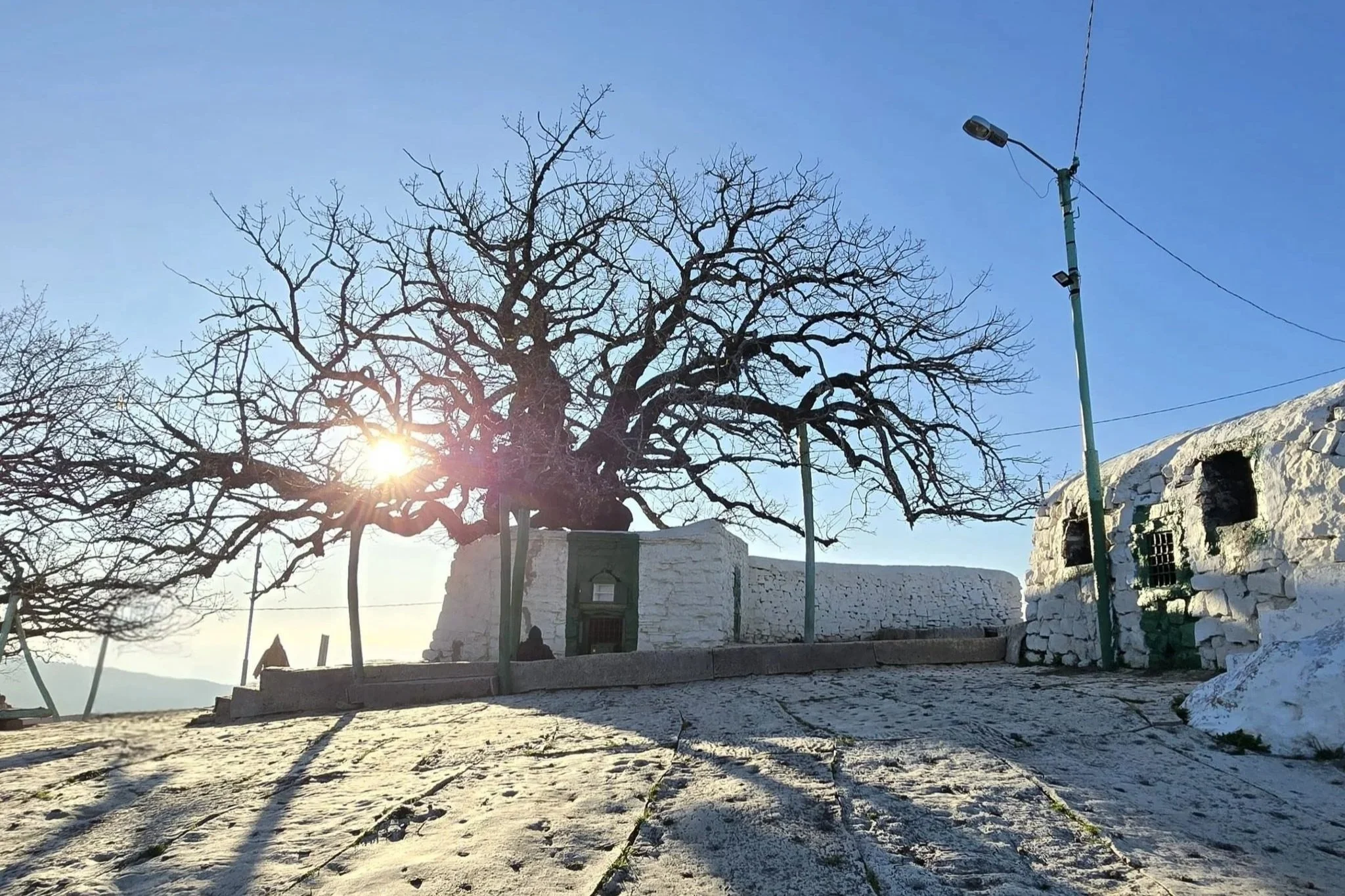
He established zawāyā along the route from Marrakesh to the mountain. He organized the annual ḥajj al-aṣghar — the lesser pilgrimage — as Morocco's substitute for the eastern ḥajj that Portuguese naval dominance and the political instability of the Mashriq had made inaccessible to most Moroccan Muslims. He built the rawḍa on the summit where pilgrims would recite the Ṣalāt al-Mashīshiyya — the prayer that al-Shādhilī had carried to Egypt and that al-Jazūlī had made the title of a cosmological portrait the Dalāʾil had painted. What al-Shādhilī had taken east, al-Ghazwānī brought back — and made the physical act of climbing the mountain, of standing where ibn Mashīsh had stood, of reciting at the rawḍa al-Ghazwānī himself had constructed, the devotional act that completed the Dalāʾil's textual praise with embodied presence.
Then came the question of the north. Al-Ghazwānī's own disciples in Ghumara — ʿAbd Allāh al-Habṭī (d. 963/1548), ʿAbd al-Raḥmān ibn Raysūn (d. 950/1536), and Muḥammad ibn Khajjū (d. 956/1541) — wrote to their shaykh asking him to support Ibrāhīm ibn ʿAlī ibn Rashīd (d. 947/1532), the amīr of Shafshāwan. The request was not unreasonable. Ibrāhīm and al-Sayyida al-Ḥurra — who had married al-Mandarī of Tétouan to forge a unified anti-Portuguese front along the northern coast — were conducting a genuine jihād. But al-Ghazwānī had already cast his lot with the Saʿdian sharīfs rising in the south, and the failure of the Jūṭī sharīfian bid in Fez had taught the Ghazwāniyya a hard lesson about backing the wrong claimant. In his reply, al-Ghazwānī was openly skeptical about the motives of the Banū Rashīd. His answer carried the sentence that would define the Jazūliyya's political theology for generations: it is the duty of the sharīfs to support the Jazūliyya, not the duty of the Jazūliyya to support the sharīfs. The ṭarīqa did not endorse dynasties. The ṭarīqa evaluated them — and the Banū Rashīd, in al-Ghazwānī's judgment, had not earned the endorsement their jihād credentials might otherwise have warranted.
“Tell our lords the sharīfs, as well as their legal scholars and fuqarāʾ: we love you with all of our heart and soul, and desire to look upon your faces. But we have smelled the scent of unbelief (kufr) overcoming and impairing faith. The ambition of the ṣāliḥīn is to dispel its oppression so that you may magnify the exalted word of God and attain the baraka of the Messenger of God ﷺ. Verily the word of God is exalted, while that of the unbelievers is lowly! We have not seen any counsel given by the sharīfs to the people of Tamesna or about conditions in Marrakesh that is not of benefit to the Wattasid rulers of this Maghrib of ours — may God maintain it and guide it to uphold the authority of the Sunna! Yet we have not, God willing, altered our regard for you despite what we have mentioned. We and all of our brothers the fuqarāʾ are happy about your dedication to invocation, friendship, self-sacrifice, and generosity. May God maintain ourselves and you in the manifest way of His saints — through the axial sainthood (quṭbāniyya) that is the legacy of your ancestor Mawlāy ʿAbd al-Salām ibn Mashīsh, the path of honor (ṭarīqat al-ikrām) of Sīdī Abū al-Ḥasan al-Shādhilī, who chose it for our lord (sayyidunā) and source of grace (barakatunā) Sīdī Muḥammad al-Jazūlī, out of all the Sufi paths. He inspired us with the truth and passed it on to us as a legacy from the lord of the God-fearing and the people of his age, the force of truth in all of God’s manifestations, Sīdī ʿAbd al-ʿAzīz al-Tabbāʿ. These shaykhs are our true means to God and our exemplars in loving the Messenger of God, our Prophet ﷺ Sayyidunā Muḥammad, both outwardly and inwardly.”
The Wattasid sultan — controlling Fez and the north, unable to project power south of the Middle Atlas, watching his eastern borders crumble under Portuguese and Ottoman pressure — could not afford to ignore what al-Ghazwānī was building in his backyard. Al-Ghazwānī was arrested by the Marīnid governor — the sources vary on the circumstances — and sent to Fez in chains. Al-Ghazwānī was arrested by the Marīnid governor and sent to Fez in chains. The sultan received him, recognized the danger of holding him and the greater danger of releasing him, and settled on the compromise that weak rulers always reach with awliyā’ they cannot kill: he built him a zawiya — at al-Qulayʿa, in the Andalusian quarter, between Bāb al-Ḥamra and Bāb al-Futūḥ. Under surveillance.
Al-Ghazwānī accepted the zawiya. He performed the miracle the sources remember: a canal that always flowed with water while the countryside around Fez dried in drought. The water was the argument. The sultan who had chained him could not make rain. The sharīf who had been chained could.
When the time came — when the political constellation shifted, when the Saʿdian movement in the south had grown strong enough to offer an alternative to the Wattasid order — al-Ghazwānī left Fez. He took his burnous in his right hand and pointed it first toward Fez and then toward the south: Ayā yā salṭana, ilā Marrākush! “Go with me, oh sultanate, to Marrakesh.” Sovereignty was not being seized. It was being relocated — by utterance, by the authority of the Bell Saint, by the fist that had closed on the empty air at al-Tabbāʿ's tomb and found a civilization inside it.
3. The Ghazwāniyya across Morocco
Al-Ghazwānī trained his disciples using the Rāʾiyya of Tāj al-Dīn al-Sharīshī — the 140-verse poem on the Ṭawīl meter that had encoded the Baghdadi Niẓāmī tarbiya in Maghribī verse two centuries earlier and that the Jazūliyya had adopted as its pedagogical scripture. The poem demanded exclusive companionship, total surrender of the murīd's will, the suspension of independent judgment, and the concentration of all spiritual loyalty on a single living master. Al-Ghazwānī stood at the intersection of two streams that the poem's original architects had never imagined converging: the Sharīshī disciplinary tradition, which produced obedient disciples through regulated apprenticeship, and the Jazūlī tradition, which claimed cosmic axial authority through sharīfian nasab and prophetic proximity. He fused them — training through the Baghdadi script while governing through the Jazūlī cosmology — and the fusion produced a school that filled Morocco.
The school did not spread through a single institutional channel. It spread through tribes — through the geographic and genealogical networks that the zawiya system was designed to activate and that al-Ghazwānī, as a bedouin sharīf from the Shāwiya, understood from the inside in a way no urban Fāsī scholar could have.
In Marrakesh, the zawiya at al-Quṣūr became the heartland — the institutional center from which al-Ghazwānī directed the order during the years he controlled the city. Students like Muḥammad al-Daqqāq (d. 970/1563), buried at Bāb Dukkāla, carried the Sharīshī commentary tradition within the city walls. ʿAbdallāh ibn Sāsī al-Sibāʿī (d.961/1552) received the transmission that would travel eastward to Tādla and produce consequences al-Ghazwānī could not have foreseen.
In the Ḥawz — the agricultural hinterland south of Marrakesh where the Atlas foothills meet the plains — ʿAbdallāh ibn Iḥsāyin (d. 977/1569), the Sharīf al-Amghārī, founded the zawiya of Tāmaṣlūḥt by al-Ghazwānī's direct instruction. The Amghārī lineage — the same Banū Amghār who had governed Ribāṭ ʿAyn al-Fiṭr for four centuries and whose institution had formed al-Jazūlī himself — now operated under the Ghazwānī umbrella, carrying the ribāṭ's ancient genealogical authority into the Jazūliyya's organizational structure. Ibn Iḥsāyin's grandson, Mawlāy Ibrāhīm ibn Aḥmad (d. 1072/1661)— called Ṭīr al-Jibāl, the Bird of the Mountains — would become one of the greatest saints of the Atlas, persecuted by the Saʿdian sultan Zaydān ibn al-Manṣūr, driven to Jabal Gīg in Sijtāna, and recognized by al-Ifrānī as among the signs of God in divine openings and truthful states.
In Fez, the Ghazwānī transmission entered the city through multiple channels. Mawlāy Būshta al-Khammār — another Shāwiya Idrīsī like al-Ghazwānī himself, buried in the village that now bears his name, near the Ourgha River in eastern Fez — carried the same tribal and genealogical identity as his shaykh: a bedouin sharīf operating inside the Wattasid capital. Through al-Khammār: ʿAlī Aḥmamūsh from Figuig, buried outside Bāb al-Futūḥ; and ʿAbd al-Karīm al-Fishtālī (d. 1049/1639), buried inside Bāb al-’Ḥamrāʾ, whose grandson Muḥammad al-ʿArabī al-Fishtālī, the uncle of Lalla Farīḥa — Mawlay ʿAbd al-ʿAzīz al-Dabbāgh's mother — lies beside Aḥmamūsh at Bāb al-Futūḥ. Jazūlī and Zarruqī shaykhs sharing the same burial ground, and the Ghazwānī chain converging physically with the family that would produce al-Dabbāgh — the same earth holding what the theological opposition tried to keep apart and what blood had already joined.
Alongside al-Khammār, Riḍwān ibn ʿAbdallāh al-Jinwī (d. 991/1583) — born, raised, and buried in Fez — became the Ghazwāniyya's most consequential presence in the Andalusian quarter. He met al-Ghazwānī as a youth, followed him to Marrakesh, stayed four months before the shaykh's death, and returned to Fez where Muḥammad al-Ṭālib al-Ḥarwī (d. 964/1557) was already leading the fuqarāʾ at al-Ghazwānī's zawiya at al-Qulayʿa — the same zawiya from which the Waẓīfa al-Jazūliyya al-Ghazwāniyya manuscript of 1011/1600, the only surviving manual of original Jazūlī ritual, would eventually be preserved. Al-Jinwī's influence extended into the Qarawiyyīn itself — his students included the khaṭīb of the Qarawiyyīn, the qāḍī of Shafshāwan, and scholars from Darʿa and the Andalusian diaspora. He was buried at Maṭraḥ al-Janna outside Bāb al-Futūḥ, his funeral attended by the heir apparent. Later hagiographers would rank him among the revivers of the Shādhilī path in the Maghrib.
In the Habt and the Jbāla — the tribal highlands where al-Ghazwānī had established his northern base — Abū al-Ḥajjāj al-Talīdī founded the zawiya of Banū Talīd near Shafshāwan and was described as al-Ghazwānī's wārith, his inheritor. ʿAbdallāh al-Habṭī maintained two teaching centers at his zawiya near the same city — one for himself teaching male disciples, one for his wife Āmina teaching women — preserving the Jazūlī tradition of female initiation that al-Jazūlī himself had established and that his ʿAqīda had made doctrinally explicit.
In Tādla — the broad valley of the Umm al-Rabīʿ between the Middle Atlas and the Shāwiya plains — the transmission traveled through Ibn Sāsī to Abū ʿUbayd al-Sharqī (d. 1010/1601), who had been raised at the Ṣawmaʿiyya zawiya in Banī Mallāl and completed his formation under al-Qusṭullī in Marrakesh. Al-Sharqī founded the Sharqāwiyya at Abī al-Jaʿd — the zawiya that would become one of the most powerful institutions in Morocco after al-Sharqī gave glad tidings of the Saʿdian victory and the Saʿdians, grateful, rewarded the Sharqāwiyya with privileges that transformed it from a local zawiya into a regional power. The Sharqāwiyya's main rival was not another Jazūlī branch but the emerging Fāsiyya of Abū al-Maḥāsin Yūsuf al-Fāsī (d. 1013/1604) — the Zarruqī zawiya in Fez that was institutionalizing the opposing current within the Qarawiyyīn's scholarly world at exactly the moment the Sharqāwiyya was institutionalizing al-Ghazwānī's baraka in Tādla.
In the Middle Atlas, the chain ran longer: al-Fallāḥ — who had claimed to be the order's provision at the convention and accepted al-Ghazwānī's sovereignty — initiated Abū ʿAmr al-Qusṭullī (d. 974/1567), the primary teacher of Abū Bakr Muḥammad al-Ḥājj ibn Abī Bakr al-Dilāʾī, the founder of the Dilāʾiyya — the zawiya-state that would, in the eleventh/seventeenth century, control the entire Middle Atlas, maintain its own army, mint its own coins, and come closer than any zawiya in Moroccan history to replacing the dynasty entirely. The chain from al-Tabbāʿ's tomb to the Dilāʾī state was direct, unbroken, and traceable through named shaykhs at every link. That the Dilāʾiyya established itself not far from Ayt ʿAttāb — the capital of al-Dabbāgh's ancestor ʿĪsā ibn Idrīs, whose mountain kingdom had been the last independent Idrīsid sovereignty before the central state crushed it — is an irony the sources do not comment on but the geography does not forget. Both states rose from the same corridor. Both were destroyed by the dynasty that could not tolerate a rival power in the mountains.
And alongside the organized zawāyā — parallel to them, sometimes intersecting, often exceeding them in popular impact — moved the majādhīb. Raḥḥāl al-Kūsh, the strongest among them, had companied al-Tabbāʿ and al-Ghazwānī and al-Fallāḥ before establishing himself at Anmāy, fifty kilometers from Marrakesh on the site of the famous Wattasid-Saʿdian battle of 935/1543. His path was malāma wa-jadhb — served by senior believing jinn, his distinctive rite the miqrāj of blessed hot water sprinkled on the possessed. When Muḥammad al-Shaykh al-Saʿdī imprisoned him and set an Atlas lion on him, Raḥḥāl spoke to the lion, rode it, and was released. He flew in the air — and threw the axe to ʿAlī ibn Ḥamdūsh of Jabal Zarhūn, saying take it, as long as it is with you, you are safe — the origin of the Ḥamādsha's axe-striking ritual that persists to this day. His lineage produced Būyā ʿUmar of Tassāwut, whose shrine on the bank of the river receives over a million visitors annually — one of the seven places in the world where the court of jinn is said to convene. In Meknès, Abū al-Rawāyīn — connected through al-Ḥārithī to al-Jazūlī himself — operated in the Malāmatī register: spoke obscenely, gave everything to the poor, told princes buy your walāya from me for such a price and delivered on the transaction. When the Wattasid sultan was pressing to take Fez, Abū al-Rawāyīn came and said: buy Fez from me for five hundred dinars. The sultan refused, then agreed. Within a year he entered the city.
Al-Ghazwānī controlled only Marrakesh. His school, through its students and their students, through the tribes they embedded in and the majādhīb who traveled between them, filled every region the Wattasids could not hold — and several they could. The corporate Jazūliyya ended with him. What survived was the infrastructure. And the infrastructure became Morocco.
4. Al-Ghazwānī and the Saʿdians
The question of whether al-Ghazwānī met the first Saʿdian sultan cannot be answered with certainty from the surviving sources, but the circumstantial evidence is overwhelming. Muḥammad al-Qāʾim bi-Amr Allāh — the Saʿdian founder who adopted the Mahdist title, who received the submission of the Sūs tribes at the zawiya of Sīdī Barakat at Tidsī, who ordered himself buried next to al-Jazūlī's body upon his own death in 923/1517 — rose through the Jazūlī networks that al-Ghazwānī directed. The jihād against the Portuguese at Āsafī and Agadir was organized through Jazūlī zawāyā. The Saʿdian claim to legitimacy rested on precisely the sharīfian theology that al-Jazūlī had articulated and that al-Ghazwānī had systematized: that Morocco required governance by the Prophet's ﷺ descendants because the dawla al-saʿāda was already constituted and only sharīfian blood could operate its sovereignty.
Al-Ghazwānī's final miracle was political. In 930/1524, when the Saʿdian takeover of Marrakesh was contested by the Wattasid sultan Muḥammad al-Burtuqālī, al-Ghazwānī and his senior disciples rode out through the Bāb Sīdī Abū al-ʿAbbās al-Sabtī — the gate named after the charitable saint whose ethic of feeding the poor had defined Marrakesh's sainthood for three centuries — to arrange a truce. A Wattasid arquebusier fired at him. The ball struck just above his heart, tore through his woolen tunic, and flattened against his chest without penetrating the skin. He took the hot fragment between his fingers and said: hādhā ākhir ḥarbihim — this is the end of their war. The next day Muḥammad al-Burtuqālī received word that his nephews had risen against him in Fez. He turned his army north and never threatened Marrakesh again.
The bullet that could not penetrate al-Ghazwānī's chest was the mashhad made physical — the demonstration that the Bell Saint's sovereignty was not merely theological but operational, that the man who had declared anā sulṭānukum at al-Tabbāʿ's tomb carried in his body what no Wattasid army could breach. The Saʿdians understood. Al-Qāʾim's son Aḥmad al-Aʿraj — who would complete the Saʿdian takeover of Marrakesh — recognized that al-Ghazwānī's authority was the foundation his dynasty needed: sharīfian sanctity as political infrastructure, the zawiya as the legitimizing institution that no army could replace.
Al-Ghazwānī died in 935/1528 — three years after the bullet, seven years before the Saʿdians unified Morocco under a single sharīfian banner, and a generation before the dynasty he had helped build turned against the order he had led.
The betrayal, when it came, was systematic. Muḥammad al-Shaykh (r. 956-964/1549-1557) — the Saʿdian sultan who finally unified Morocco — persecuted the Tabbāʿiyya and Ḥāhiyya factions of the Jazūliyya with the precision of a man who understood exactly what he was dismantling. He executed or drove out their most prominent shaykhs. He proclaimed himself the Just Ruler, Mahdī, and Imām of the Age — appropriating the cosmological vocabulary the Jazūliyya had built and using it to shut out the men who had built it. He imprisoned Raḥḥāl al-Kūsh and set the lion on him. He pursued Aḥmad al-ʿArūsī to the Sāqiya al-Ḥamrāʾ — and it was Raḥḥāl, flying through the air, who carried al-ʿArūsī to safety. The Jazūliyya had built the dynasty. The dynasty consumed the Jazūliyya.
Mūsā ibn ʿAlī al-Wazzānī — a fourth-generation Jazūlī shaykh of the Ghazwāniyya — wrote the letter that became the movement's formal surrender. He compared the state to a tree and the quṭb to water. Water softens the soil, enables roots, allows branches, produces fruit. The quṭb does not desire outward political power. He provides spiritual sustenance so that the state may live. It was theologically elegant and politically impossible. Water gives life. Water can also drown. And the Saʿdians had already decided which metaphor they preferred.
Al-Ghazwānī was buried near the Muwāssīn mosque in the quarter that would carry his name — Mūl al-Quṣūr, the Master of Palaces. When Mawlāy Ismāʿīl organized the Sabʿat Rijāl cult a century and a half later — redirecting the old Ragrāga Dawr pilgrimage toward Marrakesh and binding the city's sanctity to seven tombs — al-Ghazwānī was placed among them, alongside al-Jazūlī, al-Sabtī, Qāḍī ʿIyāḍ, al-Suhaylī, Yūsuf ibn ʿAlī, and Abū al-ʿAbbās al-Sabtī. The saint the Saʿdians had betrayed was canonized by the dynasty that replaced them.
5. The Nuqṭa al-Azaliyya: the Muḥammadan paradigm made doctrine
Mawlāy ʿAbd al-Salām ibn Mashīsh left one prayer. Al-Jazūlī painted its subject at full scale across the Dalāʾil al-Khayrāt. Al-Ghazwānī explained what both had done — and in explaining it, he created the theoretical architecture that Moroccan Sufism would inhabit for the next five centuries.
The Nuqṭa al-Azaliyya fī Sirr al-Dhāt al-Muḥammadiyya — the Eternal Point in the Secret of the Muḥammadan Essence — is not a commentary on the Muḥammadan Reality from outside. It is a writing from inside it. Al-Ghazwānī signs himself in the text as al-Jaras — the Bell — and addresses his reader as one who stands within the cosmological field the Bell generates, not as one observing it from a scholarly distance. The opening manifesto states what no previous Jazūlī text had stated with such systematic precision: If you knew the full truth of what lies within you, you would become a messenger to your peers and a divinely appointed leader because of the rights you possess over the one who seeks you out. The people of your time will make you the Prophet's successor, and you will have attained the perfection of the Muḥammadan Sunna.
This is al-Jazūlī's mashhad — the Prophet ﷺ is with me, his authority is in my hands — transformed from prophetic utterance into systematic doctrine. Al-Ghazwānī was not repeating the claim. He was building the theoretical architecture within which the claim became legible as cosmology rather than merely as charismatic declaration.
The Jaras theory is the center of this architecture. Al-Ghazwānī distinguishes three hierarchical stations of cosmic authority that standard Sufi cosmology had conflated: the Quṭb, the Ghawth, and the Jaras. The Quṭb indicates the wisdom of speech — bayān — at the appropriate time: the axial saint who governs through articulation, whose word organizes the spiritual order of his generation. The Ghawth indicates the wisdom of secrets — ḥikmat al-asrār — the saint who sustains creation through hidden operations that the Quṭb's visible governance cannot reach. The Jaras indicates the vision of the innermost heart — the fuʾād — and without the Ghawth, neither the Quṭb's speech nor the Jaras's vision would be recognizable. The three are named by a single name but distinguished by three manāhij — three methodologies — each anīs possessing his own rank within a hierarchy that converges on the Muḥammadan source.
The Bell peals the divine command — ajrasa — creating a reverberation in the universe that causes the archetypes of existing things to vibrate into manifestation. This is not metaphor. Al-Ghazwānī deploys the ḥadīth in which the Prophet ﷺ describes the experience of divine revelation as like the ringing of a bell — ṣalṣalat al-jaras — and transforms it from a description of prophetic experience into a cosmological principle: the shaykh al-wāṣil, the actualized master, uses this divine harmonic to tune his disciples toward the Prophetic Inheritance, each disciple receiving the reverberation according to his capacity and his distance from the Muḥammadan source.
Al-Ghazwānī then maps three categories of walāya — sainthood — each corresponding to a different mode of receiving the divine: walāyat al-ilhām, the walāya of inspiration, in which the saint receives guidance through interior promptings; walāyat al-fahm, the walāya of understanding, in which the saint comprehends what inspiration delivers; and walāyat al-kalām, the walāya of divine speech, in which God's own words reverberate through the saint's being. The Jaras operates at the third level — the level at which the distinction between the saint's speech and God's speech becomes, in al-Ghazwānī's formulation, vanishingly thin. This is the station that approached the ʿiṣma — the infallibility — that Shīʿī theology reserved for the Imām. Al-Ghazwānī did not claim infallibility in doctrine. He claimed something the Niẓāmī system had no category for: a mode of speaking in which the speaker was not the speaker, in which the Bell pealed what the divine commanded, in which the shaykh al-wāṣil's utterance was the cosmological event it described.
The Nuqṭa al-wujūd — the Point of Existence — completes the architecture. Al-Ghazwānī declares that every existence and every life revolves within the circle of the Quṭb's being. He deploys the tabāraka formula across seven Qurʾānic verses — tabāraka Allāhu aḥsan al-khāliqīn, tabāraka alladhī bi-yadihi al-mulk, tabāraka alladhī jaʿala fī al-samāʾ burūjan — to demonstrate that everything in creation traces to the point from which the Muḥammadan Reality unfolds. The Nuqṭa is not a concept. It is a cosmological position — the point at which the divine overflows into being, the point from which all fayḍ descends, the point that ibn Mashīsh had named in a single compressed prayer and that the Dalāʾil had painted in seven daily sections and that al-Ghazwānī now explained as the theoretical ground of Moroccan Sufism itself.
He reinterprets the Ṣalāt al-Wusṭā — the Middle Prayer that jurisprudence had debated as a fiqh category — as the prayer that completes the Muḥammadan Sunna. Without it, he says, no prayer is complete. The ṭarīqat al-sunna al-Muḥammadiyya — the Way of the Muḥammadan Sunna — is defined not as legal conformity but as sulūk al-naẓra al-azaliyya: the walking toward the perception of pre-eternal truths. The Muḥammadan Sunna, in this reading, is not the external imitation of the Prophet's ﷺ behavior. It is the progressive assimilation of the cosmological position the Prophet ﷺ occupies — the Nuqṭa from which all being flows — until the disciple's own being reverberates with the harmonic the Bell peals.
The six conditions of the Khalīfa in the Quṭbāniyya — which al-Ghazwānī maps with the precision of a constitutional theorist — define who can hold the position the Nuqṭa describes: the Khalīfa must be free from desire, must possess the wisdom of the prophets, must have a self-sustaining himma, must be attributed to everything without being attributed to anything himself, must have his name mentioned in every context, and must operate a pedagogy of taṣrīf — the spiritual governance of souls — that distinguishes between disciples who are gharīb (strangers to the path), maḥjūb (veiled from the light), and mawhūb (gifted with capacity to receive). Each category receives or is denied the light according to conditions the Bell Saint alone can diagnose.
The Nuqṭa al-Azaliyya is the doctrine that the Dalāʾil enacted and that the cult of ibn Mashīsh's visitation performed. Literature was not enough. The Ṣalāt al-Mashīshiyya compressed the Muḥammadan Reality into a key. The Dalāʾil painted the door the key opened. The Nuqṭa explained the architecture of the house behind the door — and then al-Ghazwānī, having written the explanation, went and built the pilgrimage that made the house walkable.
6. The Bell Saint of Marrakesh
After al-Ghazwānī, there was no further paramount shaykh al-jamāʿa of the Jazūliyya. The corporate order — the unified institution that had operated under al-Jazūlī, al-Tabbāʿ, and al-Ghazwānī as successive sovereign shaykhs — ended with his death. What survived was not an order but a civilization: the zawāyā, the Dalāʾil, the Nuqṭa, the pilgrimage, the majādhīb, the Sabʿat Rijāl, the tribal networks, the burial grounds where Jazūlī and Zarruqī shaykhs rest in the same earth.
Several shaykhs established regional authority in different parts of Morocco on a local basis — and several of the lineages they produced would become more institutionally powerful than the Jazūliyya itself had been. The Sharqāwiyya in Tādla, the Dilāʾiyyīn in the Middle Atlas, the ʿĪsāwiyya in Meknès, the Tāmaṣlūḥtiyya in the Ḥawz, the Ḥamādsha at Zarhūn through the axe Raḥḥāl threw to Ibn Ḥamdūsh, the Gnāwa through Raḥḥāl himself, the Būyā ʿUmar shrine through his son — each traceable to the constitutional convention at al-Tabbāʿ's tomb, each carrying a fragment of the architecture al-Ghazwānī had built, each demonstrating that the Jazūlī revolution did not end with al-Jazūlī or with al-Ghazwānī. It became Morocco.
Al-Ghazwānī's two works — al-Nuqṭa al-Azaliyya fī Sirr al-Dhāt al-Muḥammadiyya and Taḥbīr al-Ajrās fī Sirr al-Anfās — sit in the Bibliothèque Générale in Rabat as manuscripts 2617K and 2002D. When the American scholar who spent two years conducting participant observation with the Jazūliyya of Marrakesh visited al-Ghazwānī's tomb in the 1980s, the caretakers were not aware that these works existed. The man who had built the theoretical architecture of the Muḥammadan paradigm in Morocco — who had explained what ibn Mashīsh compressed and what al-Jazūlī painted, who had created the Jaras theory that every subsequent Moroccan master would inherit or metabolize, who had institutionalized the pilgrimage to Jabal al-ʿAlam, who had told his followers anā sulṭānukum and meant it cosmologically — rested in a shrine whose custodians did not know what he had written.
His mawsim is still held at the Muwāssīn. The Dalāʾil al-Khayrāt is still recited collectively, aloud, in memorized musical rhythm, after the ḥizb of the Qurʾān, across every region of the kingdom. The pilgrimage to Jabal al-ʿAlam still draws thousands every year to the mountain al-Ghazwānī put back on the map. The Sharqāwiyya still operates in Abī al-Jaʿd. The ʿĪsāwiyya still processes through the streets of Meknès. The Ḥamādsha still strike themselves with the axe Raḥḥāl threw. Būyā ʿUmar's shrine still receives its million visitors. The graves at Bāb al-Futūḥ still hold Jazūlī and Zarruqī shaykhs side by side.
Between al-Jazūlī's revolution and al-Dabbāgh's irruption — between the saint who declared the dawla already constituted and the saint who disclosed the interior of the universe from a dyer's workshop — there stands al-Ghazwānī. The man who built the infrastructure that made the first possible to sustain and the second possible to receive. The bedouin sharīf from the most persecuted tribal confederation in the kingdom, who said anā sulṭānukum and filled a country with zawāyā and then wrote the doctrine that explained why the country needed filling.
The Nuqṭa is still in the library. The custodians still do not know what it contains.
DAR.SIRR reads it now.