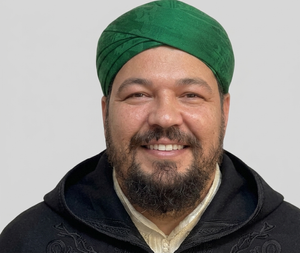
The Other Leg: Why Moroccan Sufism Is Incomplete Without Shaykh Zarrūq
"There is no shaykh after this beard." He said it. He meant it. And he was right. Abū al-ʿAbbās Aḥmad ibn Aḥmad ibn Muḥammad al-Barnūsī al-Fāsī — known to history as Zarrūq, the Blue — did not say this in a moment of vanity. He said it in a moment of diagnosis. He looked at the spiritual landscape of the 15th-century Islamic world, measured what he saw against what a shaykh was supposed to be, and issued his verdict with the precision of a jurist and the authority of a man who had earned the right to speak. Not because he was the greatest mystic of his age. But because he was the most complete — the one figure in whom fiqh, kalām, and ṭarīqa had fused so entirely that the three were no longer distinguishable. He was not a scholar who practiced Sufism. He was not a Sufi who had studied law. He was something rarer and more demanding: a man in whom the entire architecture of Sunni Islamic knowledge had become a single instrument, tuned and operational.
Fez made him. Not the romantic Fez of tourist imagination — the blue doors and the tanneries and the smell of cedar — but Fez at its most consequential and most dangerous: Fez in 869/1465, the year the Marinid dynasty collapsed, the year Muḥammad al-Jazūlī's network ignited the sharīfian revolution that would permanently reshape Moroccan civilization, the year a city that had spent two centuries building the most sophisticated institutional framework in the Islamic West chose, in a single violent moment, to replace institutions with bloodlines. It was in this Fez — fractured, electrified, choosing — that Aḥmad Zarrūq came of age, formed his convictions, and made the choice that would define him: he refused to follow the current.
His formation had been total. His grandmother, a Mālikī jurist of standing, was his first teacher — the law entered him before he could read. Al-Qarawiyyīn gave him the rest: a decade inside the most rigorous scholarly institution in the Maghrib, at the precise moment the Marinid investment in that institution was at its peak. Then the Shādhilī transmission through Sīdī Muḥammad al-Zaytūnī — a second-generation disciple of al-Jazūlī himself — completed what the madrasa had begun. By the time he was in his twenties he carried, in a single person, what the Niẓāmī system had taken two centuries and a dynasty's worth of patronage to construct: Mālikī fiqh as lived practice, Ashʿarī theology as intellectual spine, and organized Sufism as disciplined interior science. He was, in the precise structural sense, the Triplex walking.
What made him Zarrūq — what made him singular — was what he did with this formation when the world around him began to dissolve. Where others accommodated, he diagnosed. Where others followed the tide of popular Sufism — the baraka-economies, the marketplace saints, the crowds pressing against robes for blessing — he named what he saw with a word that would define his entire intellectual legacy: bidʿa. Not in the crude Wahhābī sense that would later appropriate and deform the term, but in its precise classical meaning: the substitution of performance for principle, of spectacle for transmission, of the shaykh's personality for the law he was supposed to serve. He did not hate Sufism. He loved it with the severity of a man who cannot bear to watch something he loves degrade into its own parody.
But the current he refused was not anonymous. It had a name, a face, a genealogy, and twelve thousand followers. Muḥammad ibn Sulaymān al-Jazūlī — sharīf, Sufi, and in his own muḥādathāt the Mahdī whose dawla had already arrived — had done something that no amount of juridical precision could undo: he had grounded his authority not in transmission chains subject to verification but in sharīfian nasab itself, in the biological line connecting him to the Prophet ﷺ through the Ahl al-Bayt, in a credential that preceded all scholarly judgment and answered to none of it. You cannot critique a nasab with an isnād. Zarruq knew this. He critiqued anyway — with Udat al-Murīd al-Ṣādiq, with the Radd ʿalā ahl al-bidʿa, with a body of reformist writing that remains the most rigorous legal engagement with Jazūlite Sufism ever produced. And Morocco looked at the corrected shaykh Zarruq offered, then looked at the shaykh who carried prophetic blood and declared the polity of salvation already open, and chose. It was not a choice made in ignorance. It was a choice made in full recognition of what nasab meant in a civilization that had been built, from its earliest Idrīsī foundations, on the principle that prophetic descent was the deepest form of authority there was. Zarruq lost not because he was wrong but because he was right about something Morocco had already decided it did not want to be right about. That is a harder thing to lose.
This love cost him everything that Moroccan civilization awards its spiritual giants: a shrine, a mawsim, a geography of visitation, a place in the sacred map that generations of Moroccans travel to renew. Al-Jazūlī rests in Marrakesh. Al-Dabbāgh rests at Bāb al-Futūḥ. Zarrūq rests — or rested — in Misrāta, Libya. Outside Morocco. Outside the circuit of Moroccan sacred memory. Buried in the city he chose not because it was his destination but because it was, finally, the only place that did not expel him.
Morocco celebrates the Shādhiliyya. It has done so for five centuries. But the Shādhiliyya, properly understood, does not stand on one leg. It stands on two — the Jazūlī and the Zarruqī. One fills the shrines. The other built the discipline without which the shrines become a theater. This article is about the other leg. It is, in the most direct sense possible, a visitation — the kind Morocco never made.
1. Fez: The City That Made Him
Fez in the mid-ninth/fifteenth century was not merely a capital. It was a civilization at the peak of its own institutional achievement — and at the edge of its own undoing.
For two centuries the Marinid sultans had built, with extraordinary intentionality, the most sophisticated scholarly infrastructure the Islamic West had ever produced. They raised the great madrasas — the Bū ʿInāniyya, the ʿAṭṭārīn, the Sahrīj — not as acts of piety alone but as acts of political architecture, anchoring Mālikī scholarship at the center of Moroccan public life. They endowed al-Qarawiyyīn, systematized its curriculum, and drew scholars from across the Mālikī world into its orbit. They recognized in organized Sufism a third pillar of social cohesion alongside fiqh and theology, and patronized its early transmission into Morocco accordingly. What they built — though they had no name for it — was the Niẓāmī system transplanted to Moroccan soil: the triple architecture of law, rational theology, and regulated spiritual life that Niẓām al-Mulk had designed two centuries earlier as the Sunni answer to Shīʿī-Fāṭimid civilization. In Fez, by the middle of the ninth/fifteenth century, that system had reached its fullest Moroccan expression.
It was into this Fez that Aḥmad ibn Aḥmad ibn Muḥammad al-Barnūsī arrived at age sixteen, in approximately 862/1458, to study.
He came from Tiliwan — a mountain region between Fez and Taza, home of the Amazigh Barnūsī tribe — carrying nothing except an orphan's determination and a formation that had already begun before he could read. His mother had died two days after his birth. His father died five days after that. His grandmother, Umm al-Banīn, a Mālikī jurist of standing in her community, raised him from the first week of his life. She was his first teacher. The law entered him not as curriculum but as the atmosphere of a household — the language his grandmother used when she spoke seriously, the framework through which she understood the world and passed that understanding to the child in her care. He worked as a leatherworker — a kharrāz — until age sixteen, when he made the decision that would define everything: he put down the craft and walked to Fez.
Al-Qarawiyyīn received him at the precise moment the Marinid investment in that institution was at its peak. He enrolled simultaneously in al-Qarawiyyīn and the Bū ʿInāniyya madrasa, and what followed was one of the most intensive scholarly formations the fifteenth-century Maghrib could offer. His teachers numbered thirty — a list that reads like a map of every discipline the Niẓāmī system encompassed. In fiqh and hadith he sat before ʿAbd Allāh al-Qūrī (d. 872/1467), the most celebrated Mālikī jurist of the city, a man who received him at home and debated religion with him personally. He studied under Muḥammad ibn ʿAlī al-Qalṣādī (d. 891/1486), Aḥmad ibn Saʿīd al-Ḥabbāk (d. 870/1465), Muḥammad ibn Qāsim al-Raṣṣāʿ (d. after 890/1485), and Abū al-Ḥasan al-Mughīlī (d. 866/1461). In the Sufi sciences, he read Ibn ʿAṭāʾ Allāh al-Iskandarī's al-Tanwīr — the signal that his contact with the Shādhilī tradition began in Fez, not in the East. Among his teachers was ʿAbd al-ʿAzīz al-Wariyāghlī (d. 881/1476) — the man who would lead the sharīfian revolution of 1465 — a detail that tells you everything about the density and tension of the world Zarrūq was being formed inside.
Then he took the Shādhilī path. His shaykh was Muḥammad al-Zaytūnī (d. after 900/1485)— master of Zāwiyat Bū Laqṭūṭ in Fez, a man of strong personality and sharp temperament, and a disciple of ʿAlī ibn Ṣāliḥ al-Andalusī (d. 903/1488). Ibn Ṣāliḥ had himself never met al-Jazūlī directly — his initiation into the Jazūlī path came through ʿAbd al-ʿAzīz al-Tabbāʿ (d. 914/1499), al-Jazūlī's foremost khalīfa in Marrakesh, who traveled personally to Fez to give him the ṭarīqa. Ibn Ṣāliḥ rests today at Rawḍat al-Anwār outside Bāb al-Futūḥ — the same spot that would later receive Mawlāy ʿAbd al-ʿAzīz al-Dabbāgh (d. 1131/1719), as if the sacred geography of Fez had decided to keep its Jazūlī transmission and its deepest spiritual secrets in the same ground.
It was through this chain — al-Tabbāʿ, ibn Ṣāliḥ, al-Zaytūnī — that Zarrūq first entered the Shādhilī path. His first Sufi hand was held by a man three transmissions removed from al-Jazūlī, inside the very world that was building the revolution around him. He entered the path not from outside that world but from inside it — as a second-generation inheritor of the very transmission that was, at that same moment, building the political and spiritual infrastructure for the revolution. He was twenty-two or twenty-three years old. He was reading Ibn ʿAṭāʾ Allāh and sitting at the feet of al-Zaytūnī and studying fiqh with al-Qūrī and attending the lessons of the man who would overthrow the Marinid sultan. He was, in every sense, a product of his city — formed by every tension it contained, shaped by every current running through it.
In 870/1465, at age twenty-four, he wrote his first commentary on the Ḥikam of Ibn ʿAṭāʾ Allāh al-Iskandarī. It was the year of the revolution.
He was still in Fez when it happened. Still inside the Jazūlī transmission. Still a student of Muḥammad al-Zaytūnī, whose own teacher had made the revolution possible. And yet he opposed it — not from the outside, not as a critic of the Jazūlī tradition in the abstract, but from within the very network that had fueled it. When ʿAbd al-Ḥaqq was killed and the Idrīsid sharīf placed on the seat of power, Zarrūq refused to endorse what he saw. He refused to follow the prayer of al-Wariyāghlī — his own teacher — when al-Wariyāghlī led the Friday prayers in the name of the new order. He said, as al-Nāṣirī records: "lā āmīn ʿalā ṣalātī" — I will not say Āmīn upon my prayer behind this man. It was not a defense of the Marinid sultan. It was a refusal of the logic that baraka could substitute for legitimacy, that genealogy was sufficient qualification for authority. The Niẓāmī system — the very system that had formed him — required more than blood. He said so. He paid for it immediately.
The accusation came fast: he was a Jew. It followed him from the first day he left Fez on the forty-day siyāḥa that the rupture with al-Zaytūnī forced upon him. In Meknes a man called after him in the street: "yā yahūdī." In Taza, the tribal chief expelled him. In Tlemcen, he found temporary shelter at the shrine of Abū Madyan, the great Andalusian-Moroccan Sufi master whose baraka was available even to those the living rejected. He completed his forty days. He returned to Fez. The city had not softened.
But he was not yet finished with Fez. He had been formed here. Everything he was — the law his grandmother had given him, the fiqh al-Qarawiyyīn had sharpened, the Shādhilī path al-Zaytūnī had opened — had been given to him by this city. He would spend the next years of his life trying to understand what to do with a formation whose city had rejected the man it produced. The answer would come not in Fez but in Cairo, not from al-Zaytūnī but from a Yemeni master sitting on the bank of the Nile — a man whose silsila ran through a completely different Shādhilī river, from a completely different direction, back to the same source.
That journey is the next chapter of his life. But its beginning — the formation, the contradiction, the first rupture — belongs entirely to Fez.
2. Cairo: Where He Became Himself
In 873/1468, at age twenty-six, Aḥmad Zarrūq left Fez for Ḥajj.
He left as a man already marked. The forty-day siyāḥa was behind him. The accusation of being a Jew had followed him through Meknes and Taza and Tlemcen. The rupture with al-Zaytūnī had begun — not yet complete, not yet named, but present as a fracture running through everything he thought he knew about his own formation. He had opposed the revolution from inside the very transmission that had fueled it. He had written his first commentary on the Ḥikam in the year the city chose baraka over institution. He was carrying, in a single person, a contradiction that Fez could not resolve: a man formed by the Jazūlī world who could not follow where that world was going.
Cairo was his first stop on the road to Mecca — the great city of North African Ḥajj caravans, home to al-Azhar and its networks, a natural waystation for a Fāsī scholar seeking teachers and intellectual company before the desert crossing. But the Cairo Zarrūq entered in 873/1468 was a city in the late stages of Mamlūk exhaustion — the sultanate that had stopped the Mongols and expelled the Crusaders was hollowed out from within, factional and financially strained, its institutional capacity visibly failing. The Ottoman conquest was forty years away. The disease it would finish was already present. Zarrūq arrived and found what that disease produced in the spiritual marketplace: a Sufi world in full spectacular collapse alongside a genuine tradition of extraordinary depth — both visible simultaneously, to anyone with eyes trained to distinguish them.
He encountered Aḥmad ibn ʿUqba al-Ḥaḍramī.
Al-Ḥaḍramī was a Yemeni master who had settled in Cairo, building around himself a circle of Maghribī disciples — he believed, and said so repeatedly, that the people of the Maghrib were the men most prepared to receive what he carried. This was not sentiment. His own silsila was Moroccan at its root: the chain ran through the Wafāʾī masters of Egypt back to Muḥammad Wafāʾ (d. 765/1363) — himself an Idrīsid sharīf of Moroccan origin, whose grandfather had settled in Alexandria and whose descendants built the Wafāʾiyya as an independent Shādhilī transmission. Muḥammad Wafāʾ had broken from his own teacher, declaring: "We were directed first by Dāwūd, but now this connection is broken" — an act Zarrūq would one day repeat, and for the same reason. Al-Sakhāwī described al-Ḥaḍramī as a man wholly dominated by the Sufi state — "al-ghālib ʿalayhi al-taṣawwuf" — to the point where fiqh and ṭarīqa were inseparable in him. Zarrūq's own sources place him at the apex of the invisible hierarchy of saints: rās al-abdāl al-sabʿa — the head of the seven substitutes. He was not a shaykh among shaykhs. He was the shaykh of an age.
Zarrūq spent eight months with al-Ḥaḍramī on this first visit, before continuing to Mecca. He sat in his lessons. He received his instruction. He observed him in every state. And what he observed was the thing he had been trained, since childhood in his grandmother's household, to identify and protect: the genuine article. A man in whom fiqh and ṭarīqa were not in tension but were the same discipline viewed from different angles, a man whose spiritual authority was inseparable from his legal accountability, a man who could not be purchased, performed, or replicated by spectacle. Al-Ḥaḍramī told him, when Zarrūq asked which ṭarīqa he followed, something that would stay with him for the rest of his life. He gave no direct answer. Instead he said: "wa-alladhī afhamahu an salawmī hiya al-sharīʿa" — what I understand my peace to be is the sharīʿa itself. The ṭarīqa had no name because it needed none. It was the law, lived from the inside.
Zarrūq performed Ḥajj and spent time in Medina in mujāwara, studying under the scholars of the Ḥijāz. He returned to Cairo in 876/1471 for a second extended stay — this time settling for nearly a year, attending al-Azhar, deepening his relationship with al-Ḥaḍramī, and extending his scholarly networks across eighteen named teachers including al-Sakhāwī himself, Shams al-Dīn al-Jawjarī, and Nūr al-Dīn al-Sanḥūrī. It was during this second Cairo stay that two things happened simultaneously that would define the rest of his intellectual life.
The first was the formal abandonment of al-Zaytūnī. Word had reached Fez that Zarrūq had given his hand to al-Ḥaḍramī. Al-Zaytūnī was furious. In the vocabulary of the ṭarīqa, leaving your shaykh without permission was a serious breach — not merely a personal discourtesy but a fracture in the spiritual contract that the path required. Al-Zaytūnī sent what the sources describe as spiritual warfare against Zarrūq from Fez — daʿawāt, curses dispatched across the Mediterranean through the interior channels of the ṭarīqa. He appeared to Zarrūq in a dream: "innaka masjūn arbaʿīn yawman" — you are imprisoned for forty days. Zarrūq recorded his own response to this in al-Kunnāsh with the precision of a man who understood he was living a defining crisis: the guilt was real, the spiritual pressure was real, and the choice he had made — al-Ḥaḍramī over al-Zaytūnī, the Wafāʾī Egyptian transmission over the Jazūlī Moroccan one — was irreversible. He completed his forty days of seclusion. He emerged confirmed. Al-Ḥaḍramī, when he learned what al-Zaytūnī had done, raised his broken hand — broken, Zarrūq records, from al-Zaytūnī's spiritual blow — and said: "al-ḥamdu li-Allāh alladhī ʿaṣamak yā Aḥmad. Wa-hādhihi ākhiru ʿuqūbat al-Zaytūnī lak. Fa-innahu ḍarabak ḍarbatayn min aqṣā al-Maghrib fa-dafaʿtuhā ʿanka bi-yadī." Praise be to God who protected you, O Aḥmad. This is the last punishment al-Zaytūnī will send you. He struck you twice from the farthest end of the Maghrib and I deflected them from you with my hand. His hand was broken and it was broken.
The second thing that happened in Cairo was the marketplace.
He recorded it himself, in ʿUddat al-Murīd al-Ṣādiq, with the precision of a man who understood that the specific detail matters more than the general complaint. In the market of Bayn al-Qaṣrayn — the great artery of Fatimid Cairo — he witnessed a man claiming spiritual authority through the occult tradition of al-Bawnī, opening his eyes theatrically before a gathered crowd. A woman emerged from the bathhouse nearby. The crowd surged toward her robe, fighting to touch it, believing that baraka had settled in the fabric. The scene resolved itself into a tableau of everything he had been trained, since childhood, to identify as the precise opposite of what the path required. He fainted.
His biographers preserved this scene not because fainting was unusual but because what caused it was the turning point of his entire mature project. The man who had said "lā shaykhа baʿda hādhihi al-liḥya" — there is no shaykh after this beard — was not speaking from arrogance. He was speaking from the market of Bayn al-Qaṣrayn. He had looked at what passed for Sufism in the most important city in the Islamic world and made his diagnosis: the shaykh — the real shaykh, the transmitting shaykh, the shaykh who carries fiqh in one hand and ṭarīqa in the other and is accountable to both — had effectively disappeared. What remained in his place was performance. Spectacle. The systematic substitution of the invented for the transmitted, the theatrical for the real, the personality of the saint for the law he was supposed to serve. He gave this disease its name — bidʿa — not in the crude later sense that Wahhābī appropriation would deform the term into, but in its precise classical meaning: innovation without Qurʾānic or Sunnaic grounding, the counterfeit passed off as the genuine in a marketplace whose customers could not always tell the difference.
He gave this diagnosis a form, and that form became a book. Qawāʿid al-Taṣawwuf — the Principles of Sufism — was the most ambitious juridical response to spiritual collapse since al-Ghazālī's Iḥyāʾ ʿUlūm al-Dīn. But where al-Ghazālī had rebuilt the Niẓāmī synthesis from inside a civilization still capable of producing masters — writing for a reader who could still find a living shaykh to guide him through the stages — Zarrūq wrote from inside a severed transmission. His premise was declared in the most consequential sentence he ever produced:
“Formal spiritual instruction (al-tarbiya bi-l-iṣṭilāḥ) has been severed. What remains is only the cultivation of the soul through aspiration (himma) and spiritual state (ḥāl). Hold therefore to the Book and the Sunna — nothing added, nothing subtracted.”
Al-Ghazālī had written the Iḥyāʾ as a map for travelers who still had guides. Zarrūq wrote the Qawāʿid as a survival manual for travelers who did not. The difference is architectural. The Iḥyāʾ assumes a living shaykh at the center of the path — a human presence who reads the murīd's states, adjusts his prescriptions, and carries the transmission in his person. The Qawāʿid assumes that man is gone. What replaces him is principle: one hundred and ninety-six maxims, each one a legal instrument turned inward, each one defensible before the same scrutiny as a ruling in fiqh. It was not a mystical text. It was a technical manual — the fiqh of the soul, written for an age of spiritual orphanhood.
This was the Niẓāmī synthesis pushed to its logical extreme. Where the system had originally required three columns — fiqh, kalām, and organized Sufism — held together by living institutional transmission, Zarrūq reduced it to one: the text itself, held precisely, applied rigorously, with nothing added and nothing subtracted. It was the most demanding thing anyone had ever asked of a Sufi. And it made everything that followed more complicated.
Zarrūq's two sentences did not settle the question — they opened it permanently. For three centuries every serious Moroccan Sufi master had to answer the same two questions his diagnosis had made unavoidable: who is the shaykh of the ṭarīqa, and what is tarbiya when the institutional chain has been severed? Al-Dabbāgh was confronted with them directly by his own disciple Aḥmad ibn al-Mubārak in Al-Ibrīz. Al-Darqāwī spent forty years unable to resolve the beard-sentence before God showed him its true meaning. The Tijāniyya built an entire doctrine of initiation around the same wound. This was not coincidence. The Niẓāmī synthesis had done its work — Sufism had spread so widely, become so institutionalized, so bureaucratized, so available to fraudulent claimants, that the original Shīʿī-Sunnī tension that had animated it was no longer the urgent question. The urgent question was simpler and more dangerous: in a world full of shaykhs, how do you know which one is real? Zarrūq had answered first. Everyone else was still answering after him.
The title that subsequent generations gave him captures the full weight of what Cairo made him: Muḥtasib al-ʿUlamāʾ wa-l-Awliyāʾ — the market inspector of scholars and saints. The muḥtasib in classical Islamic governance was the official responsible for ensuring that what was sold in the marketplace was what it claimed to be — that the bread was bread, that the cloth was the weight the merchant said it was, that no one was passing off the false as the genuine to a public that could not tell the difference. Zarrūq claimed the same function for the interior marketplace of Islamic spiritual life. He would weigh every claim. He would inspect every transaction. He would name the counterfeit.
He was thirty years old. He had eight months with al-Ḥaḍramī, one Ḥajj, one year in Medina, two Cairo stays, eighteen Azhari teachers, one severed transmission in Fez still sending its reverberations across the sea, one marketplace scene that made him faint, and one book that would outlast everything. He was ready to go back to Morocco. Morocco was not ready for him.
3. The Return and the Permanent Exile
He came back to Fez in 878/1474 as a different man entering a different Morocco.
The Marinid dynasty that had built the city's institutional framework was gone. In its place sat the Wattasids — the family of viziers who had administered the Marinid state and now, after the sharīfian revolution of 1465, inherited its shell. They were capable administrators without the spiritual legitimacy the moment required. They could not claim prophetic descent. They could not mobilize the Jazūlī networks that had made the revolution possible. They could not stop the Portuguese. Sabta was already lost. Melilla was being fortified. Asilah would fall in 886/1481 — the same year Zarrūq settled permanently in Misrāta. The Canary Islands were gone. Anfa had been destroyed by a Portuguese fleet in 881/1476. Morocco's Atlantic coastline was being converted, port by port, into a Portuguese imperial infrastructure, and the Wattasids could only watch.
The Idrīsid sharīfs of Fez — the family that had always been present in the city, whose shrines the Marinids had rebuilt and whose baraka they had borrowed — were watching too. The Dabbāgh family was among them: an Idrīsid household whose presence in Fez predated the dynasties that had come and gone around them, who would produce, two and a half centuries later, the greatest Fāsī saint of the post-Marinid era. They were watching the Wattasids fail. They were watching the Portuguese advance. They were watching the Jazūlī networks reorganize themselves after 1465 and begin moving south — into the Sūs, into the Drāʿa, into the Sahara — following the trans-Saharan trade routes that were Morocco's last functioning economic arteries, the gold and salt roads the Portuguese could not reach. The Jazūlī campaign in the Sahara was not a spiritual expansion. It was a civilization retreating to its last viable geography, organized by its most effective spiritual infrastructure.
Into this Fez — compressed, besieged, reorganizing around sharīfian legitimacy and Jazūlī networks — Zarrūq returned carrying the Qawāʿid and the beard-sentence and a Wafāʾī-Shādhilī transmission that the city had no framework to receive. The social boycott was immediate. The scholars who had known him as a student kept their distance. The accusation of being a Jew — which had followed him from Meknes to Taza to Tlemcen on his first departure — was waiting at the gate. He reconciled briefly with al-Zaytūnī. It changed nothing. Fez had made its choice in 1465 and was not inclined to revisit it. He left. This time without a plan to return.
What the Morocco he was leaving looked like from the inside can be read in the voice of a man who stayed: Muḥammad ibn Yājbash al-Tāzī (d. 920/1505), a student of al-Zaytūnī himself — the same shaykh Zarrūq had left — writing from Taza in the same generation. His Kitāb al-Jihād, composed in direct response to the Portuguese capture of Asilah, is one of the most precise documents of Moroccan civilizational crisis in the ninth/fifteenth century. He wrote of a Morocco whose elites had sold their religion for the world and the dirham, whose social bonds had dissolved, whose Muslims were divided against each other while the Portuguese investigated every weakness and sent their spies to every land. He called for a leader capable in both religion and the sword — an imam and amīr whose religious expertise the scholars acknowledged and who could guide Muslims in battle as a true successor to the Prophet ﷺ. It was no coincidence, as the scholars of DAR.SIRR's tradition have noted, that the sharīfian families of Morocco were at precisely this moment beginning to present themselves as exactly that leader.
Two students of al-Zaytūnī's world. One stayed in Morocco and wrote the call to resistance. The other left for Misrāta and wrote the regulatory framework. Ibn Yājbash understood the emergency. Zarrūq understood the disease beneath the emergency. Both were right. Neither alone was sufficient.
The road from Fez to Misrāta ran through Tlemcen and Tunis — cities that were themselves in the process of being absorbed into the Ottoman imperial project. Baba Arūj and the Barbarossa brothers had not yet arrived in the western Mediterranean — that would come in the years immediately after Zarrūq's death — but the Ottoman pressure building from the east was already visible in the political fragility of the Hafsids in Tunis and the Ziyānids in Tlemcen. Egypt was still Mamlūk — it would not fall to the Ottomans until 922/1517 — but Mamlūk exhaustion was the condition Zarrūq had already diagnosed in Cairo's spiritual marketplace in the 1470s. The political conclusion of that disease was forty years away. Its symptoms were everywhere.
Zarrūq passed through Tlemcen. Through Tunis. He did not stay in either. This was not indecision. Tunisia and Algeria were falling toward the Ottoman orbit — not yet absorbed, but already in motion toward it. A man who had spent his life refusing to be conscripted into institutional frameworks that could not sustain their own integrity was not going to plant himself in a political order he could already see collapsing. He needed ground that was outside every empire — Portuguese, Ottoman, Wattasid — and on every caravan route simultaneously.
Misrāta was that ground.
Third city of Libya, on the Mediterranean coast between Tripoli and Benghazi, ancient enough to have been settled before the Arab conquest but not important enough to have become anyone's imperial prize. Its name came from the Berber tribe whose people had always lived there. There was nothing romantic about it. It was simply the place that sat at the intersection of everything Zarrūq needed: outside the Portuguese coastal empire, outside the Ottoman absorption that was consuming Tunisia and would eventually consume Tripolitania, on the North African Ḥajj caravan route that brought pilgrims from across the Maghrib through its territory twice a year, and close enough to the Saharan trade networks that connected Morocco's surviving southern economy to the rest of the Islamic world. From Misrāta he could correspond with disciples in Fez, Bijāya, Tunis, and the Ḥijāz simultaneously. He could receive Ḥajj pilgrims from across North Africa and send them back carrying the Qawāʿid. He could build — slowly, carefully, without the noise of collapsing empires pressing against him — the transmission network that would eventually re-enter Morocco through Aḥmad ibn Yūsuf al-Milyānī and produce, two centuries later, the figure of al-Dabbāgh.
Misrāta was not a retreat. It was the most geopolitically precise decision of his biography.
He did not arrive there directly. On the road west of Tripoli a tribe of bandits that had been robbing caravans encountered Zarrūq and his companions and stripped them of everything but their clothes. One companion pointed to his trousers. Zarrūq turned to the bandits and said: "Tubnā ilā Allāh" (We repent to God).
The bandits repented. On the spot. They followed him to Misrāta. They became known as Khuddām Zarrūq — Zarrūq's servants — and their descendants carried that name for generations. The man who had written the strictest regulatory framework for Sufi practice in the fifteenth century converted a band of highway robbers with four words. This was not despite the Qawāʿid. It was the himma the Qawāʿid had been written to protect — operating at full force, in the absence of any institutional apparatus whatsoever.
He arrived in Misrāta in 886/1481. He settled near a jābiya — a water basin — close to his house, and made it his classroom. He sat there at dawn and at dusk. An orphan boy from Misrāta became his regular companion — the detail carries its own weight: the man who had been orphaned in the first week of his life, raised by a grandmother-jurist in the mountains between Fez and Taza, ended his days teaching beside a water basin with an orphan boy at his side. He refused to build a zāwiya. This refusal was structural, the direct application of his own diagnostic framework: a zāwiya required a shaykh at its center, and a shaykh at the center of an institution in an age of severed transmission was precisely the condition he had devoted his life to preventing. He would teach. He would write. He would transmit. But he would not build the machine that could outlast his own discernment and become, after his death, one more vehicle for the fraudulent claimants he had exposed.
His disciples built anyway. In Misrāta and Ajdābiya and Tiliwan and Awlād Ṭarīf. The man who refused to found an institution founded thirteen ṭarīqa branches. This too was the himma operating where the iṣṭilāḥ had set the boundary.
He wrote in Misrāta with the pace he had maintained since his twenties — half a page per day, every day, for fifty-one years. The Qawāʿid reached its final form here. The ʿUddat al-Murīd was completed here. Letters went out to disciples in Fez and Bijāya and Tunis and the Ḥijāz. Each letter a piece of the tarbiya he was conducting at a distance, across a Mediterranean that was being divided between empires he had refused to join.
He died in Misrāta in 899/1493. Fifty-one years old. His disciples built a mosque in his name. The people of Misrāta built a shrine. For five centuries travelers came — Ḥajj pilgrims from North Africa stopped to receive his baraka before the desert crossing, believing that visiting him guaranteed safe passage. The people of Tripoli called him Ḥāmī Awjala — the protector of the oasis. Then an ISIS-affiliated militia exhumed his grave, burned half his mosque, and reburied his remains in an unknown location.
The man who said there is no shaykh after this beard rests in an unmarked grave somewhere in Libya. His address in the next world is classified. His address in this one has been deliberately erased. And Morocco — the country that formed him, expelled him, sent his disciples back carrying his transmission, built the second leg of its Shādhilī tradition on the framework he constructed from Misrāta — Morocco has never made the visitation his stature required.
This article is that visitation.
4. The Network He Never Built But Left Behind
Aḥmad Zarrūq died in Misrāta in 899/1493, having refused, for the entirety of his twelve years there, to build a zāwiya. The refusal was not modesty. It was the direct application of his own diagnostic framework: a zāwiya required a shaykh at its center, and a shaykh at the center of an institution in an age of severed transmission was precisely the condition he had devoted his intellectual life to preventing. He would teach. He would write. He would transmit. But he would not build the apparatus that could outlast his own discernment and become, after his death, one more vehicle for the fraudulent claimants he had named and exposed.
His disciples built anyway. Many ṭarīqa branches, across the full breadth of the Mālikī world, each carrying his name and his principles into geographies and human forms he could not have predicted and, in some cases, could not have certified. The man who said there is no shaykh after this beard gave rise to more shaykhs than any figure of his generation. This was not a contradiction. It was the himma operating precisely where the iṣṭilāḥ had set its limit — at the boundary between what principle can build and what God places in a man beyond his own framework.
The transmission re-entered Morocco through three completely different bodies, carrying two completely different kinds of authority. None of them was what the Qawāʿid described. All of them succeeded.
The first was ʿAbd Allāh ibn Ibrāhīm al-Faḥḥām (d. 939/1524)— a direct disciple, one of the men who had sat before Zarrūq in person and received the transmission from his hand. He returned to Morocco as a majdhūb: a man seized by God entirely outside the institutional framework, drawn out of rational consciousness into a state that looked, to the outside eye, like madness, and to the inside eye like the most direct possible encounter with what the path was actually for. He settled at Zarḥūn — the mountain above Meknes, the sanctuary of Mawlāy Idrīs al-Akbar, the most charged site of Idrīsid baraka in Morocco. The man who had received the most juridically rigorous Sufi transmission of the fifteenth century planted it in the most genealogically sacred landscape in the country. Whether this was calculation or divine arrangement, the structural effect was the same: the Zarruqī iṣṭilāḥ entered Morocco inside the baraka that Zarrūq himself had refused to endorse as a sufficient basis for authority.
From al-Faḥḥām, the transmission passed to ʿAlī al-Dawwār al-Sanhājī al-Fāsī (d. 950/1535) — the most celebrated saint of sixteenth-century Wattasid Fez, a man who possessed neither home nor family, who entered the houses of governers and merchants without invitation, received costly garments and jewellery, walked out and gave everything away, brushed past oil merchants so his fine clothes became spotted, sat on the threshold of al-Qarawiyyīn at dawn eating cucumbers. When a merchant passing for the Ṣubḥ prayer thought to himself that the majdhūb would do better to pray than eat, al-Dawwār called after him without turning: "Better a cucumber breakfast than a donkey prayer." He saw through everything. He cared for neither praise nor blame. He was buried outside Bāb al-Futūḥ — the same sacred precinct that holds ʿAlī ibn Ṣāliḥ, the shaykh of al-Zaytūnī who first gave Zarrūq the Shādhilī path.
From al-Dawwār, the line passed to ʿAbd al-Raḥmān al-Majdhūb (d. 976/1561) — whose vernacular quatrains became the moral language of an entire civilization, still recited today — and from him to Abū Māḥasin Yūsuf al-Fāsī (d. 1013/1598), where the transmission entered the Qarawiyyīn scholarly world for the first time. From Abū Māḥasin it passed to ʿAbd al-Raḥmān al-Fāsī (d. 1027/1612), to ʿAbd al-Qādir al-Fāsī (d. 1091/1676), and through the Zāwiya of al-Makhfiyya, and eventually the men who would carry the Zarruqī tradition into the Darqāwiyya and the Tijāniyya. The city that had expelled Zarrūq in 1465 became, two centuries later, the primary institutional home of everything he had tried to build.
The ʿĪsāwiyya adds the second dimension of irony. Muḥammad al-Hādī ibn ʿĪsā (d. 933/1518), known as al-shaykh al-kāmil, was an Idrīsid sharīf of the Banū Sibāʿ, a clan located between Chichaoua and Essaouira — a man who carried prophetic descent and the full weight of the sharīfian baraka tradition before he ever entered a Sufi circle. He received the Zarruqī transmission through Muḥammad al-Ḥārithī, a direct disciple of Zarrūq — and received the Jazūlī transmission through ʿAbd al-ʿAzīz al-Tabbāʿ, al-Jazūlī's foremost khalīfa in Marrakesh. He held both legs simultaneously — Zarruqī discipline and Jazūlī prophetic love — in the body of an Idrīsid sharīf. And what he founded became the most carnivalesque popular order in Morocco — famous for its trance ceremonies, its ecstatic public performances, its snake-charmers and lion-tamers. The ʿĪsāwiyya is the earliest point in Moroccan Sufi history where the two legs met in a single figure. What they generated together — held inside a sharīfian body — was something neither leg alone could have produced or predicted.
The third carrier was a different kind of man entirely. Aḥmad ibn Yūsuf al-Milyānī (d. 929/1523) was an Idrīsid sharīf whose family had migrated from Marrakesh to the Figuig — deep in the Moroccan Eastern Sahara. He had received the transmission directly from Zarrūq in Bijāya. He returned to Milyāna to build the Zarruqī presence into what the sources call the Rāshidiyya — the most active Zarruqī branch in the Eastern Sahara, transmitting simultaneously in the scholarly register for the learned and through himma and ḥāl for the tribes. He carried two things Zarrūq had never possessed: Idrīsid genealogical baraka and the trust of the Eastern Saharan tribal world. His roots in the Dar’a-Sijilmāsa geography were precisely why the transmission could establish itself there and hold.
From al-Milyānī, the chain moved through Abū al-Qāsim al-Ghāzī al-Sijilmāsī (d. 919/1504) and ʿAlī ibn ʿAbd Allāh al-Sijilmāsī (d. after 929/1514) until it reached a figure of a completely different genealogical origin: Aḥmad ibn ʿAlī al-Ḥājjī al-Darʿī — known as jabbār al-maksūr, buried in Zagora — a Ḥammūdī Idrīsid whose ancestors had ruled Córdoba and Málaga before dispersing across the Maghrib after the fall of their Andalusian caliphate. He settled in Zagora, built a Qurʾānic zāwiya, taught, fed students. From his circle came ʿAbd Allāh ibn Ḥusayn al-Rāqī al-Darʿī (d. after 977/1562), and through him Muḥammad ibn Nāṣir al-Darʿī (d. 1085/1670), who founded at Tamegroute the greatest library and scholarly institution in the Eastern Saharan world — the Nāṣiriyya. The zāwiya Zarrūq refused to build arrived in Tamegroute two centuries after his death.
The transmission did not stop at Tamegroute. From Muḥammad ibn Nāṣir (d. 1085/1670) emerged the incomparable al-Ḥasan ibn Masʿūd al-Yūsī (d. 1102/1687) — the greatest Moroccan Islamic intellectual of the seventeenth century, whose al-Muḥāḍarāt stands as the fullest literary expression the Zarruqī scholarly tradition ever achieved in Morocco. The Nāṣirī web extended further still into Fez through al-ʿArabī al-Fishtālī (d. 1090/1679) — mother's uncle of Mawlāy ʿAbd al-ʿAzīz al-Dabbāgh — who transmitted the chain to ʿUmar ibn Muḥammad al-Hawwārī (d. 1125/1713), custodian of the shrine of Sīdī ʿAlī ibn Ḥirzihim, one of the oldest spiritual landmarks of Fez. From al-Hawwārī it passed to al-Dabbāgh himself.
Three bodies. One seized by God at Zarḥūn. One fusing both legs of Moroccan Shādhiliyya in a single figure at Meknes. One Idrīsid sharīf whose family came from Marrakesh and whose transmission fanned across four geographic webs simultaneously — from Figuig to Sijilmāsa to the Drāʿa to Fez — before arriving, through a shrine custodian and a mother's uncle, in the person of al-Dabbāgh. None of them was what the Qawāʿid had described as the qualified shaykh. All of them carried the Qawāʿid further into Morocco than any certified man could have reached. Zarrūq had said formal instruction was severed and only himma and ḥāl remained. Al-Faḥḥām walked on ḥāl. Ibn ʿĪsā held both legs at once. Al-Milyānī walked on himma — and the network he planted in the Eastern Sahara took two centuries to complete its journey north into Fez, arriving precisely where Zarrūq had begun: in the city that had expelled him, in the shrine of one of its oldest saints, in the man whose words would become Al-Ibrīz.
5. The Pen as Instrument of Reform
Half a page per day for fifty-one years. Al-Kūhan, who calculated this figure, was not recording a biographical curiosity. He was identifying the structural fact of Zarrūq's life: the writing was not separate from the path. It was the path. Every displacement — Fez to Tlemcen, Tlemcen to Cairo, Cairo to Mecca, Mecca to Bijāya, Bijāya to Misrāta — produced text. Every crisis — the rupture with al-Zaytūnī, the marketplace of Bayn al-Qaṣrayn, the social boycott of Fez — became diagnosis. The corpus that resulted is not the byproduct of a scholarly career. It is the primary instrument of a reform project that had no institutional home and no political patron and required, therefore, that the text itself carry everything the institution could not.
To understand what Zarrūq contributed to Islamic intellectual history, it is necessary to distinguish between two kinds of Sufi writing that his corpus both exemplifies and complicates. The first is experiential — the record of interior states, the poetry of union and annihilation, the hagiographical account of the saint's miracles and stations. The second is critical — the systematic analysis of the tradition's principles, its pathologies, and the criteria by which the genuine can be distinguished from the counterfeit. Before Zarrūq, Moroccan Sufi writing had been almost entirely of the first kind. He introduced the second — not as a rejection of the first but as its necessary complement, the instrument without which the experiential tradition had no defense against its own most persistent vulnerability: the fraudulent shaykh.
The Qawāʿid al-Taṣawwuf is the fullest expression of this project, and it is worth understanding precisely what it is and what it is not. It is not a mystical text. It is not a guide to spiritual states. It is not a manual for the stages of the interior journey. It is, in the most precise possible sense, a work of jurisprudence applied to the interior life — 196 principles, each one defensible before the same critical scrutiny as a ruling in fiqh, each one designed to answer a specific question that the tradition had been answering inconsistently or not at all. What constitutes a valid claim to spiritual authority? What are the signs that distinguish the genuine shaykh from the impostor? What obligations does the murīd have toward the shaykh, and what obligations does the shaykh have toward the murīd? What renders a spiritual practice legitimate, and what renders it bidʿa — innovation without Qurʾānic or Sunnaic grounding? These are legal questions. Zarrūq answered them with legal instruments. No one before him in the Mālikī-Shādhilī tradition had done this with such systematic rigor.
The full title of the work is revealing: Tāsīs al-Qawāʿid wa-l-Uṣūl wa-Taḥṣīl al-Fawāʾid li-dhī al-Wuṣūl fī Umūr Aʿammahā al-Taṣawwuf wa-mā fīhi min Wujūh al-Taʿarruf — abbreviated by later scholars to simply Qawāʿid al-Taṣawwuf wa-Shawāhid al-Taʿarruf ʿalā Wajh Yajmaʿ bayna al-Sharīʿa wa-l-Ḥaqīqa wa-Yaṣilu al-Uṣūl wa-l-Fiqh bi-l-Ṭarīqa. The long title is the argument: principles and foundations, establishing the connection between sharīʿa and ḥaqīqa, between the roots of fiqh and the path. The Qawāʿid is the Niẓāmī synthesis — fiqh, kalām, and organized Sufism — not merely described but operationalized. It does not tell you that fiqh and ṭarīqa should coexist. It shows you, principle by principle, how they coexist and what happens when they fail to.
The ʿUddat al-Murīd al-Ṣādiq is the Qawāʿid's clinical companion — and in some ways the more radical document. Where the Qawāʿid establishes the principles, the ʿUdda addresses the most urgent practical question of Zarrūq's era: how does the sincere seeker navigate the path in the absence of a qualified shaykh? This is the question that his era had made unavoidable. He had declared the institutional chain severed. He had said that what remained was only al-tarbiya bi-l-himma wa-l-ḥāl. The ʿUdda is his answer to the question that declaration immediately raised: what then? It is, in the vocabulary of our moment, a manual for spiritual self-navigation under conditions of institutional failure — the most demanding thing he asked of his readers, and the most honest thing he wrote.
The thirty-six commentaries on Ibn ʿAṭāʾ Allāh al-Iskandarī's Ḥikam require a different kind of attention. They are not repetition. Each commentary is a different instrument applied to the same text from a different moment in Zarrūq's life — different city, different crisis, different interlocutor, different angle on the central tension the Ḥikam embodies: the interior life held accountable to the exterior law, the saint's knowledge held accountable to the jurist's methodology. The first commentary was written at age twenty-four in Fez in 870/1465 — in the year of the revolution, while the city was erupting around him and his position within the Jazūlī world was becoming untenable. The final commentaries were refined in Misrāta. Between them lie thirty years of displacement, rupture, and deepening engagement with a text he never finished with — because the question it posed was never finished. How do you hold the interior life of Islam accountable without destroying the interiority that makes it Islam? This is the question the thirty-six commentaries are collectively answering. No single answer was sufficient. Each commentary is a new attempt.
This sustained critical engagement with the Ḥikam places Zarrūq in a precise position within the history of Islamic thought. Ibn ʿAṭāʾ Allāh had written the Ḥikam in the thirteenth century as the Shādhilī tradition's most refined articulation of the interior life — aphoristic, dense, resistant to reduction. Al-Ghazālī had written the Iḥyāʾ in the eleventh century as the synthesis that held the interior and exterior dimensions of Islam together within a single systematic framework. Zarrūq read both — and understood that the Ḥikam needed what the Iḥyāʾ had provided for fiqh and kalām: a critical apparatus that could distinguish the genuine interior life from its simulation. His thirty-six commentaries are that apparatus applied to the most important Shādhilī text. They are, in this precise sense, the completion of a project al-Ghazālī had begun but applied only to the exterior dimensions of the tradition.
The comparison with al-Ghazālī is the one that the subsequent tradition most consistently made — and it is accurate but requires precision. Al-Ghazālī rebuilt the Niẓāmī synthesis after the crisis of the fifth/eleventh century by showing that the interior and exterior dimensions of Islamic practice were not in tension but were the same discipline viewed from different angles. He wrote for an age that still had living masters capable of guiding readers through the stages he described. Zarrūq wrote for an age that did not — an age in which the institutional transmission had been severed and the marketplace of fraudulent spiritual authority had filled the vacuum. His instrument was therefore different from al-Ghazālī's: not the encyclopedia that assumed a functioning institution, but the regulatory framework that could operate in the institution's absence. The Iḥyāʾ is a map. The Qawāʿid is a compass — smaller, more precise, designed for the man who has lost his guide and must navigate alone.
What Zarrūq established as an intellectual legacy was not a school of mysticism but a methodology of Sufi criticism — the application of rigorous analytical tools to the interior tradition from within, by someone who was himself a practitioner of that tradition and could not therefore be dismissed as an outsider. This is the most consequential aspect of his contribution. The critics of Sufism from outside — the Hanbali literalists, the later Wahhābi tradition — attacked the tradition's forms without understanding its substance. Zarrūq attacked the tradition's corruptions from inside, with the precision of someone who understood the substance and was defending it against the forms that were degrading it. The muḥtasib al-ʿulamāʾ wa-l-awliyāʾ — the market inspector of scholars and saints — was not hostile to the market. He was its most rigorous defender.
The letters complete the picture. The Rasāʾil — to ʿAbd Allāh al-Maghrawī, to ʿAbd al-Nabī al-Aṣfar, to his disciples scattered across Fez, Bijāya, Tunis, and the Ḥijāz — are the Qawāʿid applied personally, case by case, to specific human situations that no regulatory framework could fully anticipate. A disciple in Fez asking whether he should remain with a compromised shaykh or seek another. A student in Bijāya uncertain about the authenticity of his spiritual states. A correspondent in the Ḥijāz asking about the legitimacy of a particular devotional practice. Each letter is a fatwā of the interior life — the muḥtasib function exercised at its most intimate, the regulatory framework brought to bear on the irreducible particularity of a single human situation. Together they constitute the most human dimension of his corpus: the evidence that behind the 196 principles was a man who understood that principles alone were never sufficient, and that the gap between the framework and the person required, always, the exercise of judgment that no text could fully provide.
6. Two Legs, One Path
The Shādhiliyya needed both legs not to stand still but to walk.
This is the argument that the five centuries between 869/1465 and the consolidation of the ʿAlawi dynasty make irrefutable. At the beginning of that period, a city chose between two readings of what Moroccan Sufism was for — and chose the Jazūlī. At the end of it, what Morocco had built was not the Jazūlī vision alone but an intricate, productive, sometimes violent conversation between two transmissions that had come from the same Shādhilī source, traveled through completely different human chains, and met in Morocco at the moment of maximum civilizational pressure.
What the Jazūlī leg gave Morocco no single formula can exhaust, but its essential contribution was this: it made the interior life of Islam available to everyone simultaneously. The Dalāʾil al-Khayrāt required no literacy, no shaykh, no institutional structure, no genealogical credentials. A shepherd in the Sūs and a merchant in Fez and a Saharan tribesman could all recite the same text and participate in the same devotional universe. This democratization of prophetic love — al-ḥaqīqa al-Muḥammadiyya made portable, recitable, transmissible without mediation — was the most consequential spiritual technology Morocco ever produced. It was also the infrastructure of an empire. The Saʿdian dynasty did not build itself — the Jazūlī network built it. When ʿAbd Allāh ibn Mubārak of the Sūs directed the tribes to pledge to the first Saʿdian imam in 916/1510, he was converting decades of Jazūlī devotional mobilization into political legitimacy. Al-Tabbāʿ, al-Ghazwānī, al-Fallāḥ — the three great quṭbs of the Tabbāʿiyya — had built the mass popular base. The Saʿdians inherited it. The Battle of the Three Kings in 984/1578 — the greatest military victory in Moroccan history — was fought by a dynasty whose legitimacy rested entirely on a Sufi network that had been organizing the countryside for a century before its sultans were born.
The Jazūlī leg also built the sacred geography of Morocco as it is still experienced today — not through texts but through bodies. Al-Jazūlī 's own body moved five times after his death, each burial site becoming a node in a national map of baraka. The mawsim culture, the shrine economy, the territorial networks of devotion — these are Jazūlī constructions. So is the Dila' zāwiya, which effectively governed Morocco through the chaos of the Saʿdian collapse in the mid-eleventh/seventeenth century. And so is the Wazzāniyya — which became the dominant sharīfian spiritual authority in northern Morocco, whose House of Guarantee exercised a quasi-political function that no Moroccan dynasty could afford to ignore. The transition from the local tribal ribāṭs of the pre-Jazūlī period — geographically fixed, tribal-specific, embedded in particular landscapes — to the national organized ṭarīqa that could move across tribal boundaries and reach any community in Morocco: this transition was the Jazūlī leg's institutional achievement. It converted the ribāṭ's local baraka economy into a national devotional infrastructure. Without it, Moroccan Islam would have remained a collection of regional spiritual traditions with no common devotional language.
The Jazūlī leg was also the primary architect of the sharīfian political theology that defined Morocco from the Saʿdian period onward. It was sharīfian at every level of its transmission — al-Jazūlī himself, al-Tabbāʿ, al-Ghazwānī, the Wazzāniyya, the Sharqiyya. It kept the Idrīsid heritage alive not as genealogical record but as lived spiritual and political reality, fusing prophetic descent with territorial baraka in a way that made the sharīfian imam — and eventually the ʿAlawi sultan — the natural heir of the entire Sufi mobilization network.
What the Zarruqī leg gave Morocco was the thing the Jazūlī leg could not give itself: a self-correcting mechanism. But it gave Morocco something else simultaneously that no one expected — including Zarrūq himself. It gave Morocco its majādhīb.
This is the paradox at the heart of the Zarruqī transmission. The man who wrote the strictest regulatory framework for Sufi practice in the fifteenth century, who declared himself the last shaykh, who diagnosed the corruption of popular Sufism with surgical precision — sent Morocco the wildest men the tradition produced. Al-Faḥḥām, al-Dawwār, al-Majdhūb — the majādhīb of the Faḥḥāmī line — carried the transmission through states that no Qawāʿid could certify and no fraudulent claimant could imitate. And through al-Ḥārithī, Zarrūq's direct disciple, the same current reached al-Hādī ibn ʿĪsā whose heir Abū al-Rawāʾin Muḥammad ibn Ḥusayn al-ʿAbdalī al-Maḥjūb (d. 963/1555) pushed the jadhb to its furthest extreme: a man who woke each morning wealthy and went to sleep destitute, who gave everything immediately to the poor, who told princes to buy back their own souls or face their end — and whose prophecies, the sources record, were fulfilled precisely. These were not accidents of the Zarruqī transmission. They were its hidden face — the face Zarrūq himself had named when he said: "inqaṭaʿat al-tarbiya bi-l-iṣṭilāḥ wa-lam yabqa illā al-tarbiya bi-l-himma wa-l-ḥāl." The majādhīb were that ḥāl in its most extreme form. When the institutional channel was closed, God opened the channel of seizure. The Zarruqī leg produced both the judge and the fool, both the text and the seizure, both the iṣṭilāḥ and the ḥāl — and both were necessary, and both were authentically Zarruqī.
The Qawāʿid itself was the Zarruqī leg's primary intellectual contribution — one hundred and ninety-six principles, each a legal instrument turned inward, each defensible before the same scrutiny as a ruling in fiqh. Where the Jazūlī leg gave Morocco the Dalāʾil — a text to recite — the Zarruqī leg gave it the Qawāʿid — a text to think with. This was the Niẓāmī synthesis — fiqh, kalām, and organized Sufism — pushed to its logical extreme: when the living shaykh can no longer be certified, the text itself must carry the framework. Al-Ghazālī had written the Iḥyāʾ for an age that still had masters. Zarrūq wrote the Qawāʿid for an age that did not. Both were responses to the same structural problem — the collapse of institutional transmission under civilizational pressure — but from different moments in the same long crisis.
The Zarruqī leg's sacred geography was built not of bodies but of manuscripts. Tamegroute is its supreme expression — the greatest library and scholarly institution in the Eastern Saharan world, a zāwiya that trained scholars, copied texts, and circulated knowledge across the Drāʿa, the Tāfilālt, and the trans-Saharan trade routes to Timbuktu for three centuries. The Nāṣiriyya converted the Eastern Saharan tribal world from oral baraka transmission to literate scholarly transmission — building, along the same trade routes where the Jazūlī mawsim culture circulated devotional practice, a parallel infrastructure of textual knowledge. The two geographies — the shrine and the library, the saint's body and the transmitted manuscript — are complementary maps of the same civilization.
The Zarruqī leg's fullest scholarly expression was al-Ḥasan ibn Masʿūd al-Yūsī — the greatest Moroccan Islamic intellectual of the seventeenth century, in whose al-Muḥāḍarāt the Niẓāmī synthesis reached its most refined Moroccan literary form. His famous confrontation with Mawlāy Ismāʿīl — writing to the sultan accusing him of tyranny, refusing to be silenced — is the muḥtasib function in its most direct political expression: the Zarruqī tradition holding power accountable precisely when the Jazūlī network had become too embedded in the sharīfian political structure to do so.
The contribution of both legs to the Muḥammadan paradigm — al-ṭarīqa al-Muḥammadiyya — is the most consequential dimension of their joint legacy. The Jazūlī leg provided its devotional infrastructure: prophetic love as the organizing principle of spiritual life, the Dalāʾil as the technology of that love. The Zarruqī leg provided its intellectual scaffolding and, through al-Dabbāgh, its metaphysical apex. Al-Dabbāgh's al-Khaḍiriyya — the direct Muḥammadan transmission bypassing the early Sufi masters — grew from a man whose spiritual lineage ran through the Zarruqī Eastern Saharan chain via al-Fishtālī and ʿUmar al-Hawwārī. The Tijāniyya — which represents the apex of the Muḥammadan ṭarīqa concept in all its literature and institutional ambition — carries both legs simultaneously: the Zarruqī Fāsī transmission through the Ibn ʿAbd Allāh family, and the devotional Jazūlī infrastructure through the Fāsī sharīfian networks within which al-Tijānī first moved. Both legs were necessary conditions for what the Tijāniyya became. Neither was sufficient alone.
Would either leg have survived without the other? The Jazūlī leg alone had the popular mobilization and the devotional technology — but no self-correcting mechanism. The fraudulent shaykh was its permanent vulnerability. Every Mahdist movement in Moroccan history — from Ibn Maḥalli (d. 1022/1613) onward — exploited the Jazūlī framework's inability to distinguish the genuine quṭb from his imitation. The Qawāʿid existed to make this distinction, but without the Zarruqī institutional tradition to apply it, the distinction could not hold. The contemporary degradation of Moroccan Sufism — state management, folk practice, the reduction of the great ṭarīqas to ceremonial functions — is the long-term consequence of the Jazūlī leg being elevated to cultural heritage status while the Zarruqī regulatory tradition was progressively marginalized.
The Zarruqī leg alone had the regulatory framework and the intellectual tradition — but no popular roots. Without the Jazūlī leg's popular infrastructure — the mawsim culture, the baraka economy, the sharīfian legitimacy — the Qawāʿid would have remained a manuscript in a Libyan library. Zarrūq himself could not re-enter Morocco. His transmission needed the majādhīb of the Faḥḥāmī line and the Idrīsid genealogy of al-Milyānī to carry it back. The Zarruqī leg survived because it was received into a world the Jazūlī leg had already prepared — a Morocco organized around baraka networks, shrine geography, and sharīfian devotional culture that could recognize and absorb even the wildest majdhūb as a legitimate spiritual presence.
Together they built what neither could have built alone: a Sufi civilization capable of surviving Portuguese siege, Ottoman pressure, Saʿdian absolutism, Saʿdian collapse, ʿAlawi consolidation, colonial penetration, and the long attrition of modernity. Not because they agreed — they did not agree, and the tension between them was real and productive and sometimes violent — but because Morocco needed both the body that radiates baraka and the text that regulates it, both the saint's robe and the judge's bench, both the Dalāʾil recited at dawn and the Qawāʿid read by lamplight.
The Shādhiliyya does not stand on one leg. It never did. What Morocco forgot, when it expelled Zarrūq and kept al-Jazūlī, was not a man — it forgot the other half of its own architecture. This article is the beginning of remembering.
Conclusion — A Saint Without an Address
In August 2012, an armed extremist group entered Misrāta and destroyed the shrine of Aḥmad Zarrūq al-Fāsī. They exhumed his grave. They transferred his remains to a location that has not been publicly identified. The mosque attached to the shrine and its library were not touched — only the grave, only the body, only the address.
The Libyan interior minister, asked to intervene, declined. He did not want, he said, to kill people over a grave.
This was not the first time Zarrūq's body had been treated as a problem. Fez expelled him in 869/1465. Tlemcen gave him temporary shelter. Tunis received him and let him pass. Tripoli watched him convert bandits and move on. Misrāta was simply the last city on a long list of cities — the one that did not drive him away. He had built nothing there except a circle around a water basin and a body of writing that would outlast every institution his disciples built in his name across four geographic webs and five centuries. He had refused the zāwiya precisely so that no one could mistake the building for the transmission. And now the building was gone, and the transmission — the Nāṣiriyya, the Fāsiyya, the Darqāwiyya, the Tijāniyya, al-Ibrīz itself — was still everywhere.
The man who said there is no shaykh after this beard rests in an unmarked grave somewhere in Libya. His address in the next world is beyond verification. His address in this one has been deliberately erased. The Zarruqī ethic — avoid governance and governors, neither assist them nor act against them — was applied to him posthumously by the very forces his tradition had always named as the disease: men who confused the destruction of a form with the destruction of a substance, who thought that removing the grave would remove the transmission it contained.
It did not. The transmission had already left Misrāta — two centuries before the extremists arrived — through al-Milyānī in Bijāya and al-Faḥḥām at Zarḥūn and Jabbār al-Maksūr in Zagora and ʿUmar al-Hawwārī at the shrine of Ibn Ḥirzihim in Fez. It had arrived at Tamegroute and at Zāwiyat al-Makhfiyya and at the Zāwiya of Lablīda and at the house in Fez where Aḥmad ibn Mubārak sat with Mawlāy ʿAbd al-ʿAzīz al-Dabbāgh and recorded in Al-Ibrīz what a man who had no credentials and no institutional affiliation knew about the interior of the universe. By the time the extremists reached Misrāta, Zarrūq had been gone from there for five centuries. Only his body remained. They took his body. They could not take what his body had carried.
Morocco never went to Misrāta. This is the other erasure — quieter, longer, more consequential than the one the armed group performed in August 2012. For five centuries Morocco benefited from the Zarruqī transmission — through the majādhīb who carried it back, through the Fāsī scholarly tradition that institutionalized it, through the Eastern Saharan zāwiyas that preserved it, through al-Dabbāgh who received it and al-Darqāwī who revived it and al-Tijānī who built the most globally expansive Sufi order in history on its foundations — without making the visitation that the man's stature required. No royal delegation. No scholarly pilgrimage. No formal acknowledgment that what Morocco is, in its deepest Sufi architecture, was built on two legs — and that the second leg ended in a city on the Libyan coast that Morocco was too busy celebrating al-Jazūlī to visit.
The city that expelled Zarrūq chose, in 1465, to walk on one leg. It chose well — the Jazūlī leg gave Morocco more than any single spiritual tradition has given any civilization in the Islamic West: a devotional technology that reached every class, a sharīfian legitimacy that survived every dynastic collapse, a sacred geography that organized the country around the bodies of its saints, a prophetic love that could be recited by the illiterate and the learned alike. But to understand what was chosen, one must understand what was refused. Al-Jazūlī said: follow me because my sharīfian nasab connects me to the Prophet ﷺ and his ḥukm is in my hands. Zarrūq said: follow no one until you have verified his transmission, tested his sobriety, and measured his conformity to the law — and even then, follow cautiously. Morocco heard both sentences in the same year and chose the first. DAR.SIRR has told that story. This article tells the other one. They are not opposites. They are the two legs. And Morocco has been standing on both of them for five centuries.
Zarrūq diagnosed this disease in Cairo in 876/1471. He wrote the prescription in Misrāta between 886/1481 and 899/1493. Morocco received the prescription — through the majādhīb and the Eastern Saharan sharīfs who carried it back — and benefited from it for five centuries without reading it carefully. The prescription is still available. The Qawāʿid is still in print. Al-Ibrīz is still in circulation. Al-Majdhūb's quatrains are still on Moroccan lips. The Nāṣiriyya library is still in Tamegroute. The transmission is still alive — battered, institutionally marginalized, stripped of much of its regulatory function, but alive.
This article is the visitation Morocco never made. It goes to Misrāta — not to the grave, which is gone, but to the man whose grave it was. It stands before the water basin where he taught at dawn and at dusk with an orphan boy at his side. It reads the beard-sentence not as arrogance but as obligatory counsel to a civilization that was about to make a choice it would spend five centuries partially regretting. It asks the question Zarrūq asked from inside the Jazūlī world in 1465, and that al-Darqāwī spent forty years unable to answer, and that al-Dabbāgh engaged in Al-Ibrīz, and that every generation of Moroccan Sufi masters has had to answer in its own terms: in a world full of shaykhs, how do you know which one is real?
Zarrūq answered first. The answer is still waiting.