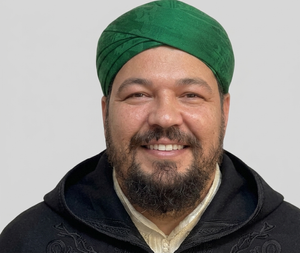
What No Scholar Can Earn: The Inviolable Station of Ahl al-Bayt in Moroccan Islam
The Islamic world has never resolved the question of where authority goes after prophecy ends. The Shīʿa answered with the Imām — divinely appointed, infallible, the continuing axis of cosmic governance. The Sunnī mainstream answered with consensus, jurisprudence, and the caliph as administrator of a law already sealed. Both answers were historically coherent. Both were also, in different ways, insufficient. The Imāmate required a revolutionary seizure of power that never came, or came too late, or came and was drowned in blood. The caliphate became a rotating title held by military dynasties whose legitimacy rested on force more than on any principle the Prophet ﷺ would have recognized.
Morocco posed the question differently — and answered it differently. Over twelve centuries, through ribāṭs and shrines, through dynasties that rose and fell while the sanctuaries endured, Morocco built a civilization on a single theological conviction: that prophetic kinship is not ornamental but constitutive, that the blood of the Prophet ﷺ carries an authority no institution granted and therefore no institution can revoke. This conviction was not merely practiced. It was defended, refined, and transmitted. But its fullest doctrinal articulation came late — written not in Fez but in Ottoman North Africa, by a Saharan Ḥasanī sharīf who had observed, from outside the Moroccan empire, what a world looked like when this conviction had no institutional home.
His name was Muḥammad ibn Muḥammad ibn al-Mashrī al-Ḥasanī al-Sibāʿī, and his treatise Nuṣrat al-Shurafāʾ fī al-Radd ʿalā Ahl al-Jafāʾ — The Defense of the Sharīfs in Refutation of Those Who Show Them Contempt — is the subject of this article. It is a work of systematic theology dressed as polemic, a complete philosophy of prophetic kinship compressed into a treatise that Moroccan tradition has never fully examined on its own terms. DAR.SIRR reads it here as what it is: the doctrinal foundation that the Moroccan civilizational synthesis had always required and never, until Ibn al-Mashrī, fully articulated.
1. The Polemic and What It Reveals
The Nuṣrat al-Shurafāʾ begins with an admission. Ibn al-Mashrī did not write it in a vacuum of pure scholarship. He wrote it because someone, somewhere in his circle, had said something — or repeated something they had heard — that struck him as both theologically wrong and socially dangerous. The claim, as he reconstructs it, was this: that al-sharaf al-kasbī, excellence acquired through learning, piety, and spiritual attainment, is superior to al-sharaf al-nasabī, excellence of prophetic lineage. The person who made it had, in Ibn al-Mashrī's reading, encountered a genuine principle in Islamic ethics — that earned virtue exceeds inherited status, that the God-fearing non-Arab outranks the complacent Arab, that piety is the true measure of human worth — and had generalized it incorrectly, applying to the Shurafāʾ a principle that was never meant to govern their case.
The Shurafāʾ — the plural of sharīf, the noble — are, in Ibn al-Mashrī's usage, synonymous with Ahl al-Bayt: the People of the House of the Prophet ﷺ. The term is not honorific in the loose sense in which it is sometimes used in popular culture, designating any person of distinguished ancestry or social standing. It designates, with theological precision, the believing descendants of Banū Hāshim — the clan of the Prophet ﷺ — in whom the divine act of purification announced in the Qurʾānic verse of taṭhīr is permanently invested. In Morocco, where the Shurafāʾ have functioned for twelve centuries as the axis of political legitimacy and spiritual authority, the term carries the full weight of this theological content: to be sharīf is not to belong to a social elite but to stand within the innermost circle of proximity to the Muḥammadan light, by divine decree and prophetic blood rather than by any achievement of one's own. It is this station — ontological, permanent, irreducible to any curriculum or credential — that Ibn al-Mashrī's interlocutor had subjected to the logic of earned merit, and it is this station that the Nuṣrat al-Shurafāʾ exists to defend.
Ibn al-Mashrī does not respond with outrage. He responds with architecture. The Nuṣrat is organized into seven wujūh — aspects or faces — each building on the last, together constituting not a defense of sharīfian privilege but a complete theology of prophetic kinship. The first wajh defines who the Shurafā are and settles, on the basis of hadith and jurisprudence, that all believing descendants of Banū Hāshim fall within the circle of taṭhīr — the divine purification announced in the Qurʾān. The second establishes their precedence over all others in creation. The third ranks them among themselves. The fourth describes the station of those who love them. The fifth details the condemnation awaiting those who oppose them. The sixth addresses their preservation from dying in unbelief. The seventh describes their condition at the final gathering.
This structure is significant. Ibn al-Mashrī is not writing a passionate defense of family honor. He is writing a systematic theology — a kalām of prophetic kinship that addresses every dimension of the question, from the sociological (who counts as Ahl al-Bayt) to the eschatological (what awaits them at resurrection). The Nuṣrat is, in this sense, unprecedented in the literature of Moroccan Sufism: no previous text had attempted to treat the station of the Shurafā with this degree of systematic completeness, grounding every claim in hadith transmitted by al-Ṭabarānī, al-Bayhaqī, al-Ḥākim, Muslim, and Tirmidhī, and bringing Ibn ʿArabī in as the metaphysical witness whose authority no Sufi could dismiss.
But what makes the Nuṣrat more than a theological exercise is its context. Ibn al-Mashrī was not writing in Fez, where the argument he was making was architecturally self-evident — where the shrine of the sharīfian founder stood at the city's center, where the ʿAlawī dynasty governed through precisely the prophetic lineage he was defending, where every institution of learning and sanctity existed within a landscape saturated with the social reality of what he was arguing theologically. He was writing in the Ottoman Maghrib — in Tlemcen and its orbit, in a world where sharīfs were honored as individuals but where the structural claim of prophetic lineage had no institutional anchor, where a sharīf could be venerated on Tuesday and bypassed on Wednesday, where the theological foundation of the Moroccan synthesis was absent and its absence was visible to anyone who had experienced the alternative.
“The most excellent among Ahl al-Bayt are: our master ʿAlī, may God ennoble his countenance, then Fāṭima, then al-Ḥasan and al-Ḥusayn, may God be pleased with them all — then all others who follow. They are ranks, ascending one above the next... For his station ﷺ stands among the highest degrees of the Garden in its entirety, and in this singular distinction no Qutb, and no one else from this community or any other, can be counted his equal or theirs.”
Ibn al-Mashrī had experienced the alternative. His own biography is the article's first evidence. Born in Tiārat in western Ottoman Tunisia to a family of Ḥasanī sharīfs from the Sāʾiḥī Sibāʿī line — a family that combined prophetic descent with a living tradition of Sufi formation — he met al-Tijanī in Tlemcen in 1188/1774, when al-Tijanī was returning from his Ḥijāz journey. He was, by the testimony of Jawāhir al-Maʿānī, the first person to meet al-Tijanī among what would become the order's major disciples. Over thirty-six years of companionship, he served as al-Tijanī's imam in the five daily prayers, his scribe, his confidant, and the keeper of his most intimate teaching. Al-Tijanī described him as khāzin asrārih — the keeper of his secrets. When al-Tijanī moved from the eastern Sahara to Fez in 1213/1798, Ibn al-Mashrī accompanied him. When he eventually left Fez for the desert — sent away, as Ibn al-Mashrī understood it, by a Prophetic instruction that al-Tijanī could not refuse — he died of grief in ʿAyn Māḍī in 1224/1809, buried between the parents of the shaykh he had never stopped longing to rejoin.
This biography matters because it means the Nuṣrat al-Shurafāʾ was written by a man who was himself the embodiment of its thesis. Ibn al-Mashrī was sharīf by nasab and saint by kasb — he combined prophetic lineage with the highest level of Sufi formation, thirty-six years under the most spiritually potent master of his age. He was not arguing for the superiority of inherited status over earned excellence from a position of inherited status alone. He was arguing, from a position that included both, that when the two are present together in a single person, the nasab remains ontologically prior — and that when only one is present, the absence of the other creates a specific kind of incompleteness that no amount of additional kasb can fully compensate.
The polemic of the Nuṣrat, in other words, reveals something larger than the occasion that prompted it. It reveals that the question of nasab versus kasb — of prophetic kinship versus acquired excellence — is not merely a dispute about social precedence or scholarly rank. It is a question about the nature of holiness itself: whether sanctity is fundamentally achievable or fundamentally given, whether the highest stations of proximity to God are open to any servant who strives sufficiently or whether they are, in some irreducible dimension, a matter of origin. Ibn al-Mashrī's answer is carefully calibrated. For most of creation, kasb can and does exceed nasab. But for the specific case of the Shurafā — those within the innermost circle of proximity to the Muḥammadan light — the nasab is dhātī (essential, intrinsic), not ʿāriḍī (accidental, contingent), and no kasb, however extraordinary, reaches what is already given at the source.
This is the theological claim that Morocco institutionalized and that Ibn al-Mashrī articulated. It is the claim this article examines.
2. The Idrīsid Institution: Nasab as Political Theology
The Maghrib that Ibn al-Mashrī inhabited in the late eighteenth century was not the Maghrib that had produced the Nuṣrat al-Shurafāʾ's central question. It was the Ottoman Maghrib — Algiers, Tunis, Tripoli governed as regencies, their political theology rooted in Sunnī caliphal delegation and military competence, their relationship to sharīfian families one of honorific respect rather than structural necessity. A sharīf in Ottoman Tunisia was venerated. He was not, however, constitutive. He could be honored and bypassed. His lineage was a distinction, not an axis.
Morocco was different. And Ibn al-Mashrī, a Saharan Ḥasanī sharīf who had spent decades in the Tijanī milieu moving between the eastern Sahara, Tlemcen, and Fez, had observed this difference with the precision of a man for whom it was personally consequential. In Morocco, sharīfian descent was not one source of authority among many. It was the foundation beneath every other claim. No dynasty had ruled Morocco without either possessing prophetic lineage, marrying into it, or building its legitimacy around proximity to those who carried it. This was not political convention. It was theological conviction, embedded so deeply in Moroccan collective life that it functioned as constitutional fact.
The Nuṣrat al-Shurafāʾ is Ibn al-Mashrī's attempt to demonstrate that this conviction is correct — not merely as Moroccan practice but as Islamic truth. The treatise opens by identifying its occasion: someone in Ibn al-Mashrī's circle has heard a claim, or encountered an argument, that sharaf kasbī — excellence acquired through learning, piety, and spiritual attainment — is superior to sharaf nasabī, excellence of lineage. The claim was not invented by a provocateur. It had genuine theological roots: a recognized principle in Islamic ethics holds that earned virtue exceeds inherited status, that the pious non-Arab outranks the impious Arab, that God honors the most God-fearing regardless of tribe. Ibn al-Mashrī does not dispute this principle. He accepts it — and then demonstrates, with systematic rigor, that it does not apply to the Shurafā.
His argument proceeds in what he calls seven wujūh (aspects) each adding a dimension to a single overarching claim: that the station of the Prophet's ﷺ family is not a prize awarded for performance but an ontological fact established before creation and sustained until the end of time. The first wajh defines who the Shurafā are. The second establishes their precedence over all others. The third ranks them among themselves. The fourth describes the station of those who love them. The fifth details the condemnation awaiting those who oppose them. The sixth addresses their preservation from dying in unbelief. The seventh describes their condition at the resurrection. Together, these seven faces constitute not a hagiographical defense but a complete theology of prophetic kinship — a systematic account of what it means, in every register from the social to the eschatological, to carry the blood of the Prophet ﷺ.
What makes the Nuṣrat remarkable as a document of Moroccan Sufism is that it was written by a man who had no need to make this argument for personal advantage. Ibn al-Mashrī was already, by the time of its composition, the most trusted companion of the greatest Sufi master of his era. His position within the Tijanī order was unassailable. His scholarly reputation was beyond question — al-Tijanī himself had chosen him as imam for eleven years, had entrusted him with the transmission of the order's most sensitive knowledge, had described him as khāzin asrārih (the keeper of his secrets). Ibn al-Mashrī did not write the Nuṣrat to elevate himself. He wrote it because he had witnessed, in the Ottoman lands, a world where the theological foundation of sharīfian authority had been allowed to erode — where sharīfs were respected as individuals but where the structural claim of prophetic lineage had no institutional home — and he recognized in this erosion a theological error with civilizational consequences.
The Morocco he knew through al-Tijanī's years in Fez was proof that another arrangement was possible. In Morocco, the nasab al-nabawī was not a private distinction. It was a public architecture. The shrine of Mawlāy Idrīs II at the center of Fez, the network of sharīfian families controlling the city's most sacred institutions, the ʿAlawī dynasty claiming authority through precisely the prophetic lineage Ibn al-Mashrī was defending — all of this was what a culture looked like when it had correctly understood the theological argument he was making. The Nuṣrat al-Shurafāʾ is therefore not merely a polemical treatise. It is the doctrinal explanation of why Morocco is constituted as it is — and why that constitution is not historical accident but theological necessity.
3. The Ghazālian Synthesis and the Ceiling Problem
The achievement of the Niẓāmī Triplexwas not primarily theological. It was institutional. The niẓām he consolidated in the late fifth/eleventh century — organized Sufism brought into alignment with Shāfi’ī fiqh and Ashʿarī kalām — did not merely reconcile mysticism with orthodoxy. It created an economy of holiness: a system in which sanctity became legible, teachable, transmissible, and reproducible. Before the Ghazālian synthesis, the walī was an exceptional figure whose authority derived from direct divine election, unpredictable in its appearance and irreducible to any curriculum. After it, sainthood had pathways. It could be approached through disciplined practice, through initiation into a ṭarīqa, through sustained murābaṭa under a recognized shaykh. Holiness became, without ceasing to be extraordinary, also in some sense achievable.
This was the synthesis's great accomplishment. It was also the source of a problem it could not solve from within its own logic.
If holiness is achievable through kasb — through study, practice, renunciation, and spiritual formation — then the hierarchy of sanctity becomes in principle open. The Persian scholar can outrank the Arab tribesman. The Amazigh saint can exceed the Qurashī jurist. The walī born in obscurity can surpass the nobleman born to every advantage. This egalitarian implication was not incidental to the Niẓāmī Triplex — it was one of its deepest appeals, and one of the reasons it spread so rapidly across the Islamic world. It democratized proximity to God. It made the path available to anyone willing to walk it with sufficient sincerity and endurance.
But the synthesis contained a tension it could not resolve. If the path is open to all, what distinguishes the saint of prophetic lineage from the saint without it? If kasb is the operative principle, then a non-sharīf who achieves the highest stations of walāya should, in principle, stand equal to or above a sharīf who achieves less. The logic of earned merit demands this. And yet the entire cultural weight of Moroccan practice — the shrines, the mawāsim, the ziyāra circuits, the dynastic legitimacy of every ruling house from the Saʿdians to the ʿAlawīs — insisted otherwise. Morocco did not merely honor sharīfs as pious individuals. It treated prophetic lineage as a category of authority that kasb could complement but never replace. The synthesis needed a theological ceiling — a point at which the hierarchy of holiness culminated in something that the economy of earned merit could not reach, a station that was given rather than achieved and that therefore stood permanently above whatever kasb could produce.
Ibn al-Mashrī saw this clearly. The Nuṣrat al-Shurafāʾ is, among other things, the argument that supplies what the Ghazālian synthesis required but did not provide: a rigorous demonstration that the station of the Shurafā constitutes precisely this ceiling, and that its theological basis is not sentiment or social convention but the nature of the Muḥammadan light itself.
His argument turns on a distinction that the synthesis had always implicitly acknowledged but never formally theorized: the distinction between dhātī and ʿāriḍī qualities. A dhātī quality is essential — intrinsic to the thing itself, inseparable from it, not dependent on circumstances for its existence or persistence. An ʿāriḍī quality is accidental — real, perhaps even excellent, but ultimately contingent, dependent on conditions that may change, vulnerable to deterioration and loss. All acquired excellence, however great, is ʿāriḍī in this sense. The scholar may lose his knowledge through neglect or corruption. The saint may fall from his station through spiritual catastrophe. The ruler may forfeit his legitimacy through injustice. These are not merely theoretical possibilities — Ibn al-Mashrī cites the hadith traditions warning that the most severely punished on the Day of Judgment will be the scholar who did not act on his knowledge, the very person whose kasb appeared most formidable. The ʿāriḍī nature of earned excellence means that its apparent height is never guaranteed depth.
“The Arabs are the most noble of God’s creation. It is therefore the obligation of all other nations to receive them as lords, to exalt them above themselves, to stand before them as the destitute stand before the prosperous, as a trust committed to their keeping, as retainers and clients bound to their service — acknowledging that they are not their peers. They must honor them with the fullness of honor and love them with the fullness of love, for their Messenger ﷺ, their guide, and their intercessor on the Day of Return is from among them. To love them is to love him ﷺ. To hate them is to hate him ﷺ.”
The nasab of the Shurafā is dhātī. It does not respond to the moral performance of its bearer in the same register that earned excellence does. Ibn al-Mashrī is precise here: he is not arguing that a sharīf's wickedness is without consequence, or that prophetic lineage exempts anyone from divine accountability. He is arguing something more subtle and more theologically significant — that the taṭhīr (purification) announced in the Qurʾānic verse of purification (āyat al-taṭhīr) is a permanent divine act, not a conditional one, and that Ibn ʿArabī himself — the Shaykh al-Akbar, whose authority in Sufi metaphysics no serious practitioner could dismiss — had confirmed this explicitly: the purification of the Shurafā persists until the end of time, not because they are individually infallible, but because the divine act that established their station is not subject to revision.
This is the ceiling the Niẓāmī Triplex needed. Not an arbitrary social hierarchy dressed in religious language, but a metaphysical distinction between two entirely different categories of excellence — one earned and therefore contingent, one given and therefore permanent — that explains why the Moroccan civilization organized itself around prophetic lineage rather than scholarly achievement as its ultimate axis of sanctity. The ṭarīqa system the synthesis produced, with its chains of transmission and its hierarchies of spiritual attainment, was the ladder. The sharīfian station was the ceiling the ladder leaned against. The two were not in competition. They were structurally related: the ladder made sense only because the ceiling was real, and the ceiling was accessible only through the ladder — or through the blood that placed one there from the beginning.
Morocco understood this before it could articulate it. The Jazūlī revolution of the ninth/fifteenth century made it explicit, declaring sharīfian descent not merely honorific but ontologically necessary — that the quṭb, the axial saint around whom the spiritual order of the cosmos turns, was in Morocco always and necessarily a sharīf, and that attachment to sharīfian masters was the condition of access to the highest stations of proximity to God. Al-Ghazwānī, the Idrīsī sharīf who formalized Jazūlī theology in the tenth/sixteenth century, articulated the summit of this argument: a saint of sufficiently advanced station possessed ʿiṣma — a quality approaching the infallibility reserved in Shīʿī theology for the Imām — not because Sunnī theology had changed its position on prophetic authority, but because the Ghazālian synthesis, followed to its logical conclusion within a civilization structured around sharīfian nasab, arrived at a point where the distinction between the highest walāya and the lowest nubuwwa became vanishingly thin.
Ibn al-Mashrī was writing within this tradition and beyond it simultaneously. The Nuṣrat al-Shurafāʾ does not make the maximalist Jazūlī claim. It does not assert that sharīfs possess ʿiṣma or that their authority supersedes scholarly consensus in matters of law. It operates within recognizably Sunnī parameters, citing the canonical hadith collections, honoring the Companions, acknowledging the precedence of the Ṣaḥāba over all who came after them. But within those parameters, it drives the argument about nasab as far as it can go — to the point where it demonstrates, rigorously and without sentimentality, that the Ghazālian synthesis was always incomplete without a theology of prophetic kinship, and that Morocco, in building its civilization around the shrine and the sharīf, had been doing theology correctly all along.
5. Ibn al-Mashrī as Comparative Witness
Muḥammad ibn al-Mashrī was born in Tiārat, in a region that belonged culturally and genealogically to the world of the Jarid — the eastern Saharan frontier that French colonialism would later partition between Algeria and Tunisia, but which in Ibn al-Mashrī's time was a continuous space organized by trade routes, tribal confederations, and scholarly networks that recognized no such boundary. His family's Sāʾiḥī Sibāʿī line was itself a product of that mobile, trans-Saharan world: sāʾiḥ — the wandering, the traveling — names a tradition of movement across the Saharan interior, from the oasis belt of the Jarid through the Mzāb corridor into the pre-Saharan Maghrib, a tradition in which sharīfian families functioned as the spiritual anchors of communities that had no fixed political center. The Sāʾiḥī Sibāʿī line to which he belonged was not a genealogical abstraction — it was a functioning social institution, a family whose nasab was locally recognized, whose members were sought for arbitration and blessing, and whose identity as descendants of the Prophet ﷺ shaped their position within the tribal and scholarly landscape of the Saharan frontier.
The geography of his formation was not neutral. To the south lay the Mzāb valley and its Ibāḍī Mozabite cities — Ghardāya, Beni Isguen, El Atteuf — communities whose doctrine al-Tijanī would later describe in terms that leave no ambiguity: “their land, their soil, and the sky above them would all enter the Fire, because they had been constitutionally formed on hatred of Sayyidunā ʿAlī ibn Abī Ṭālib, their doctrine being that of Ibn Muljam, whom God will bridle with a bridle of fire”. The Ibāḍī rejection of ʿAlī was not a historical grievance preserved in texts. It was a living theological orientation, sustained across centuries in communities that functioned as self-enclosed doctrinal worlds, refusing the Sunnī synthesis that the broader Islamic world had reached and maintaining, in the Saharan interior, a hostility to Ahl al-Bayt that Ibn al-Mashrī could observe at close range throughout his formation. For a Ḥasanī sharīf writing a defense of prophetic kinship, this was not distant background. It was the landscape he had grown up inside.
To the north and east lay the Ottoman Maghrib — and the Ottoman relationship to sharīfian families was not one of veneration with structural bypassing. It was one of active institutional contempt. The regency of Algiers was governed by Albanian Janissaries elected by their own corps, not by Ottoman elites, not by Arab scholars, not by sharīfian families. The children born to Ottoman soldiers from Arab or Amazigh mothers were called Karaghuli — son of a slave — a designation that encoded, in a single word, the Ottoman assessment of Algerian lineage as a social liability rather than a theological asset. Across the broader Ottoman Arab lands the pattern was consistent: sharīfian families played no structural role in governance, in legal administration, or in the religious establishment that Istanbul promoted through Ḥanafī scholarly networks. A sharīf in Tlemcen could be venerated on the basis of his personal piety and his family's reputation. He could not, however, claim that his lineage alone entitled him to a position in the political-religious architecture of the state. The Ottomans had no theological need for him. Their legitimacy flowed from different sources — military supremacy, caliphal delegation, Ḥanafī scholarly endorsement — and those sources did not include prophetic kinship as a constitutive element. The Ottoman system did not merely lack a theology of prophetic kinship. It was organized in a way that made such a theology actively inconvenient.
To the west lay the Moroccan makhzan. And the Moroccan makhzan was organized on an entirely different principle. Ibn al-Mashrī had experienced this difference directly: al-Tijanī spent his final years in Fez, and Ibn al-Mashrī accompanied him, living within the civilizational reality that his treatise would articulate theoretically. The ʿAlawī sultan who ruled Morocco was Amīr al-Muʾminīn — a title whose content in the Moroccan context was inseparable from prophetic descent. His authority was not caliphal in the Abbasid or Ottoman sense, resting on military supremacy and scholarly endorsement. It was sharīfian in the Moroccan sense: rooted in the nasab al-nabawī that the entire civilizational architecture of Morocco had treated as the ultimate source of legitimate authority for twelve centuries. Every shrine, every zāwiya, every mawsim, every dynasty Morocco had produced or absorbed reinforced the same theological conviction: that proximity to the Prophet ﷺ through blood was a category of authority that no other qualification could replace.
Crucially, this conviction had been sustained not by Arab populations imposing their genealogical theology on reluctant Amazigh subjects, but by Amazigh tribes who had chosen, generation after generation, to recognize sharīfian baraka as the one form of authority worth organizing political life around. The Maghrib is Amazigh land. Its mountains, its trade routes, its tribal confederations, its languages — all of this preceded Islam and shaped the terrain into which Islam arrived. The sharīfian synthesis that Morocco produced was never an Arab imposition. It was a negotiation in which Amazigh agency was not the backdrop but the engine. The Awraba gave Mawlāy Idrīs I the bayʿa. The Kutāma built the Fatimid state. The Maṣmūda built the Almohad empire behind an Idrīsī sharīf. The Sanhāja of the Sūs built the Almoravid movement through an Idrīsī ribāṭ. What the Amazigh tribes of Morocco recognized in prophetic kinship was not foreign authority but a form of sanctity that answered something their own political theology had always required: a legitimacy rooted not in force but in origin, not in what a man had conquered but in what he carried in his blood.
Ibn al-Mashrī saw all three worlds simultaneously — and this is what makes the Nuṣrat al-Shurafāʾ more than a conventional defense of sharīfian privilege. It is a comparative theological observation: the Ibāḍī south showed him what a cult built on rejection of ʿAlī produced — enclosed, self-righteous, theologically frozen, cut off from the living transmission of Prophetic authority that the Sufi tradition carried. The Ottoman north showed him what a world built on indifference to prophetic kinship produced — administratively competent, militarily formidable, calling the children of Algerian mothers slaves, governing Arab lands whose populations never fully recognized its legitimacy. The Moroccan west showed him what a civilization built on prophetic kinship correctly understood produced — durable, self-renewing, capable of surviving the fall of every dynasty that had tried to rule it, because its deepest sources of authority resided not in palaces or armies but in shrines and lineages that no army had ever successfully destroyed.
The Nuṣrat opens its formal argument with a tamhīd on the excellence of the Arabs over all other peoples. This might appear to a modern reader as ethnic chauvinism dressed in religious language. It is not. Ibn al-Mashrī's argument about Arab excellence is structural, not racial: he is establishing the hierarchy of circles of proximity to the Muḥammadan light, beginning from the outermost circle and moving inward through progressively narrower selections until he arrives at the innermost circle, Banū Hāshim, and at its center, the Prophet ﷺ himself. The Arab excellence he defends is not a permanent civilizational superiority of the Arab peoples as an ethnic group. It is the theological consequence of the Prophet ﷺ having emerged from among them — a proximity that radiates outward through his lineage and, to a lesser degree, through the broader community of which he was part.
This structure allows Ibn al-Mashrī to address the hadith his opponents invoke against him: lā faḍla li-ʿarabiyyin ʿalā ʿajamiyyin — there is no superiority of an Arab over a non-Arab. He reads it with the precision of a trained jurist: it refers to equality in the application of divine law, in the obligations and rights of the sharīʿa, in the accountability every human being bears before God regardless of lineage. It does not negate the ontological proximity to the Muḥammadan light that the circles of divine selection have established. These are two different registers — legal equality and metaphysical proximity — and to collapse them is to commit the category error that the Nuṣrat exists to correct.
His witness is most acute in the section where he addresses the social consequences of getting the theology wrong. Ibn al-Mashrī had watched, in the Ottoman Maghrib, what happened when the kasb/nasab hierarchy was inverted or flattened: scholars who had acquired considerable learning began to speak of sharīfian families with a condescension that would have been unthinkable in Morocco, treating prophetic descent as a biographical footnote rather than a theological fact. The result was not merely a social slight. It was a spiritual danger — to the scholars themselves, whose kasb, however impressive, rested on the foundation of a tradition whose ultimate source was the Prophet ﷺ and whose transmission passed through the very lineage they were dismissing. To denigrate the vessel through which the Prophetic inheritance had flowed was, Ibn al-Mashrī argued, to saw the branch on which one was sitting.
The figure of Salmān al-Fārsī runs through the Nuṣrat as its most powerful counterexample. Salmān was Persian, non-Arab, the son of a Zoroastrian household — everything that the ethnic reading of Arab superiority would position at the bottom of the hierarchy. Yet he was one of the greatest of the Companions, declared minnā by the Prophet ﷺ himself — belonging to the House. And yet this same Salmān — elevated beyond most Arabs by his kasb, admitted into the Prophet's ﷺ family by explicit Prophetic declaration — explicitly refused to lead prayer over Arabs, explicitly deferred to the structural precedence of Arab lineage even when his personal station exceeded that of most Arabs around him. Ibn al-Mashrī's reading of Salmān is devastating in its elegance: here is the limit case, the man who should, if kasb truly supersedes nasab, have stood above every Arab. And he refused the position. Not out of false modesty, but out of correct theological understanding — the understanding that his personal excellence operated in a different register from the structural proximity to the Muḥammadan light that Hāshimī lineage encoded.
Ibn al-Mashrī himself was this argument made biographical. A sharīf by nasab, a wali by kasb, the closest companion of one of the greatest masters of his age — he carried both registers simultaneously and understood their relationship from the inside. The Nuṣrat al-Shurafāʾ is not the work of a man defending an inheritance he did not earn. It is the work of a man who had earned everything the kasb tradition could offer and who, precisely because of that, understood with unusual clarity why nasab remained prior — and why the civilization that understood this had built something more durable than anything the Ottoman system, for all its power, had managed to produce.
5. The Cosmological Argument: Circles of Election and the Muḥammadan Light
The doctrinal core of the Nuṣrat al-Shurafāʾ is a cosmology. Before Ibn al-Mashrī argues about social precedence, before he addresses the kasb/nasab polemic, before he works through the seven wujūh of the Shurafā's station, he establishes the metaphysical architecture within which alone the argument makes sense. This architecture is the hadith of divine selection — ḥadīth al-ikhtiyār — transmitted through multiple chains by al-Ṭabarānī, al-Bayhaqī, Abū Nuʿaym, and al-Ḥākim, on the authority of Ibn ʿUmar: “God created creation, and selected from it the children of Adam. He selected from the children of Adam the Arabs. He selected from the Arabs Muḍar. He selected from Muḍar Quraysh. He selected from Quraysh Banū Hāshim. He selected from Banū Hāshim ʿAbd al-Muṭṭalib. And He selected me from ʿAbd al-Muṭṭalib. I am the best of the best in selection. Whoever loves the Arabs loves them through love of me. Whoever hates the Arabs hates them through hatred of me.”
Ibn al-Mashrī reads this hadith as a cosmological diagram. The structure of successive selection — each stage narrowing the circle, each narrowing moving closer to a single point — describes a geometry of proximity to the Muḥammadan light. The Prophet ﷺ is not the product of the selections that precede him. He is their purpose. God did not create the Arabs and then, as a separate decision, select the Prophet ﷺ from among them. The selections are retroactive revelations of a prior reality: the Muḥammadan light existed before creation, the circles of election were always already organized around it, and the successive narrowings from humanity to Arab to Muḍar to Quraysh to Hāshim to ʿAbd al-Muṭṭalib to the Prophet ﷺ are the historical unfolding of a metaphysical fact that preceded history.
This reading, which Ibn al-Mashrī draws from the Sufi metaphysical tradition and anchors in hadith, transforms the question of nasab entirely. Prophetic lineage is not proximity to a historical person, however great. It is proximity to the source from which all faḍl — all excellence, all grace, all light — flows into creation. The circles of election are concentric rings around that source, and one's position within them determines not one's social rank in a human hierarchy but one's ontological proximity to what the source radiates. Banū Hāshim are not the most privileged of humans because an accident of history placed the Prophet ﷺ among them. They are Banū Hāshim because the cosmological organization of creation placed the source of all faḍl at their center, and their lineage is the human form of that proximity.
This is why, for Ibn al-Mashrī, the nasab of the Shurafā is dhātī and not ʿāriḍī. It is not a quality they acquired or a status they earned. It is a cosmological position — their location within the geometry of creation relative to its luminous center. No amount of kasb can change one's cosmological position. A man born at a certain distance from the sun cannot move closer to it through effort, however extraordinary. What he can do — and what kasb achieves — is increase his own luminosity, his capacity to receive and transmit the light that reaches him at his position. This is genuine and valuable and may, in individual cases, produce a brightness that outshines those who are cosmologically closer but have done less with their proximity. But it does not change the geometry. The circles of election remain what they are.
Ibn al-Mashrī then moves to the first of the seven wujūh: who, precisely, constitutes the Shurafā? This question had generated significant scholarly disagreement, with some restricting the designation to the five people of the ḥadīth al-kisāʾ — the Prophet ﷺ, ʿAlī, Fāṭima, al-Ḥasan, and al-Ḥusayn — and others extending it more broadly. Ibn al-Mashrī's answer is grounded in a jurisprudential argument rather than a partisan one: the Shurafā are all believing descendants of Banū Hāshim, as established by the prohibition of zakāt upon them. The logic is precise. The zakāt prohibition rests on the explicit Prophetic statement that al-zakāt is the purification of wealth — awsākh al-nās, the filth of the people — and that the Shurafā, being muṭahharūn (purified), cannot receive what carries impurity. If the prohibition extends to all of Banū Hāshim, as the jurisprudential consensus establishes, then the taṭhīr that grounds it extends equally broadly. The circle of purification is as wide as the circle within which zakāt is forbidden — no narrower, no wider.
This has a consequence that Ibn al-Mashrī makes explicit and that the Moroccan civilizational tradition had always implicitly understood: the taṭhīr of the Shurafā is not a spiritual achievement of individuals but a divine act applied to a lineage. The verse of purification — innmā yurīdu Allāhu li-yudhhiba ʿankum al-rijsa ahl al-bayt wa-yuṭahhirakum taṭhīrā — is a divine declaration, not a conditional promise. It does not say God will purify those members of the household who earn purification. It announces that purification has been established for the household as such. The individual members of the Shurafā may fall short of the spiritual reality that their lineage encodes — they may commit sins, neglect obligations, fail the standards their position demands. But the taṭhīr is not revoked by individual failure. It persists because it was never contingent on individual performance. It was a divine act addressed to a lineage, and it remains addressed to that lineage until the end of time.
“The excellence of Ahl al-Bayt does not cease among the branches of this blessed tree. The proof is that the awaited Mahdi, through whom God will lift injustice from the earth, is from among them — as is the renewing Qutb who appears at the head of each century. Among those whom the masters have recognized as branches of this blessed tree are: the pearl of the Maghrib Mawlāy Idrīs al-Akbar; his son the sultan Mawlāy Idrīs al-Azhar; Mawlāy ʿAbd al-Salām ibn Mashīsh and his disciple al-Shādhilī; al-Jazūlī the author of the Dalāʾil; al-Jīlānī; al-Rifāʿī; Abū ʿAbd Allāh al-Wazzānī and his sons; Mawlāy ʿAbd al-ʿAzīz al-Dabbāgh; Mawlāy Aḥmad al-Ṣiqlī; Sīdī Aḥmad ibn Mūsā al-Sūsī; and Mawlāy ʿAbd Allāh ibn Ḥusayn.”
It is at this point that Ibn al-Mashrī introduces Ibn ʿArabī — and the introduction is structurally decisive. The Shaykh al-Akbar was not a sharīf. No genealogical claim connects him to Banū Hāshim. His authority in Islamic mysticism rests entirely on kasb — on the extraordinary spiritual attainments he achieved through decades of practice, vision, and writing, not on any proximity of blood to the Muḥammadan light. He is, in the terms of the Nuṣrat's argument, the limit case of what kasb alone can accomplish. And yet Ibn ʿArabī, in his own corpus, affirms without qualification that the taṭhīr of the Shurafā is permanent — that it persists after the disappearance of the believers, after the death of ʿĪsā ibn Maryam, after every condition that might seem to make its continuation contingent. It does not end because it was never contingent. The greatest non-sharīfian authority in the history of Islamic mysticism, the man whose kasb reached perhaps the highest point any kasb has reached in this tradition, looks at the question of nasab and confirms the sharīfian claim from outside it.
Ibn al-Mashrī's deployment of Ibn ʿArabī is not decorative. It is the article's strongest logical move. The objection that the defense of nasab is self-interested special pleading — that sharīfs argue for the superiority of lineage because they happen to possess lineage — collapses when the argument is confirmed by someone who possesses nothing of the kind and has every scholarly incentive to argue for the supremacy of kasb. Ibn ʿArabī's confirmation of permanent taṭhīr is not the testimony of a partisan. It is the testimony of the opposing counsel, and it runs against his own apparent interest. This is why Ibn al-Mashrī cites him at precisely this moment in the Nuṣrat — not as decoration but as the logical clincher that removes the ad hominem from the debate.
The cosmological argument culminates in the hadith of the two weighty things — ḥadīth al-thaqalayn — transmitted from over twenty Companions: I am leaving among you two things; you will not go astray as long as you hold to them: the Book of God and my ʿitra, my Ahl al-Bayt. They will not separate from each other until they come to me at the Pool. Ibn al-Mashrī reads this hadith with the full weight of its implications. The ʿitra is paired with the Qurʾān — not with the Sunna, not with the scholarly tradition, not with the ṭarīqa system, but with the Book of God itself. This pairing is not rhetorical. It establishes a structural equivalence: as the Qurʾān is the external, textual form of the Prophetic transmission, the ʿitra is its living, genealogical form. The two are inseparable — lan yaftariqā ḥattā yaridā ʿalayya al-ḥawḍ — because they are two aspects of a single reality. The Qurʾān without the ʿitra is text without its living interpretation. The ʿitra without the Qurʾān is lineage without its content. Together, they constitute the complete form of the Prophetic inheritance — and this inheritance, Ibn al-Mashrī insists, does not end with any generation. It continues until the final gathering, because the Qurʾān continues, and what the Qurʾān cannot end, the ʿitra cannot end either.
This is the cosmological foundation of the Nuṣrat al-Shurafāʾ — and of the Moroccan civilizational synthesis it articulates. Morocco did not build its civilization around prophetic lineage out of tribal sentiment or dynastic convenience. It built it around prophetic lineage because the theological argument, correctly made, leads nowhere else. The circles of election converge on a single point. The taṭhīr is permanent. The ʿitra is paired with the Qurʾān until the end of time. And the greatest mystic the tradition has produced, a man with nothing personally to gain from the conclusion, confirms it from outside the lineage entirely. The Moroccan synthesis was not an accident of geography or history. It was, Ibn al-Mashrī argues, the inevitable consequence of taking the theology seriously.
6. The Nasab/Kasb Polemic: What Acquired Excellence Cannot Reach
The intellectual center of the Nuṣrat al-Shurafāʾ is a single sustained argument that Ibn al-Mashrī builds with the patience of a jurist and the precision of a metaphysician. It can be stated simply: for all of humanity outside the Shurafā, earned excellence can and does exceed inherited status. For the Shurafā specifically, it cannot — not because their members are individually superior to every non-sharīf who has ever lived, but because the station their lineage encodes operates in a register that acquired excellence, by its nature, cannot enter.
Ibn al-Mashrī begins by fully conceding the egalitarian principle. He does not dispute that a pious Persian outranks an impious Arab. He does not dispute that the walī born in obscurity may, through his kasb, surpass the sharīf who has done nothing with his proximity. He does not dispute that the hadith lā faḍla li-ʿarabiyyin ʿalā ʿajamiyyin illā bi-al-taqwā — there is no superiority of an Arab over a non-Arab except through God-consciousness — is authentic and carries genuine normative weight. The egalitarian principle is real. The Nuṣrat is not arguing against it. It is arguing for the precise boundary of its application.
That boundary is located through the distinction between dhātī and ʿāriḍī — between what is essential and what is accidental. Every quality that can be acquired can also be lost. The scholar may corrupt his knowledge by using it for worldly gain. The saint may fall from his station through spiritual catastrophe. The ruler may forfeit his legitimacy through persistent injustice. These are not theoretical possibilities invoked to diminish the genuine achievement that kasb represents. They are structural features of acquired excellence — its contingency is inseparable from its character as something earned rather than given. What kasb produces is always, in this precise sense, maẓnūn: probable, hoped for, strongly indicated by the evidence of a life well lived, but never metaphysically guaranteed. The greatest scholar, the most accomplished saint, the most rigorous practitioner — none of them can be certain, in the way that certainty functions as a theological category, that their kasb will hold at the moment it is most needed.
The station of the Shurafā is maqṭūʿ bihi — certain, sealed, beyond the contingency that attaches to everything earned. Ibn al-Mashrī is careful about what this certainty covers. It is not a guarantee of individual moral performance. It is not a promise that every sharīf will be a saint or that prophetic lineage protects its bearers from sin or error. It is something more specific and more theologically significant: the taṭhīr established by the divine declaration of the verse of purification is a permanent act, applied to a lineage, and it carries consequences at the eschatological level — in the final accounting, in the structure of intercession, in the condition of the Shurafā at the resurrection — that the most elevated kasb cannot replicate, because kasb operates in the register of the probable and the taṭhīr operates in the register of the certain.
The practical consequence Ibn al-Mashrī draws from this distinction is uncomfortable and deliberately so. He cites a cluster of hadith traditions about the dangers of scholarly excellence unaccompanied by genuine ʿamal — practice, humility, and the recognition of one's position within a hierarchy one did not create. The scholar who teaches for reputation rather than God is among the first whose case is examined on the Day of Judgment, and the examination does not go well. The most severely punished among those who carried knowledge are those who did not act on it. The three whose punishment is exemplary — the scholar, the generous man, and the warrior — all shared a common failure: they performed their excellence for human recognition rather than divine orientation, and in doing so transformed their kasb from a ladder into a trap.
Ibn al-Mashrī is not using these traditions to diminish scholarship. He is using them to establish a point that the kasb/nasab debate had obscured: that kasb is dangerous in a way that nasab is not. The sharīf who does nothing with his proximity to the Muḥammadan light is spiritually incomplete. But the scholar who does everything with his kasb for the wrong reasons is in active danger. The egalitarian logic that elevates kasb above nasab — that treats earned excellence as the supreme criterion of spiritual rank — inadvertently removes the very humility that makes kasb safe. When the scholar believes his learning places him above those born to prophetic proximity, he has precisely inverted the relationship between kasb and nasab that the theological tradition, correctly read, establishes. And this inversion, Ibn al-Mashrī suggests, is not a minor doctrinal error. It is a spiritual orientation that places its holder at risk of the exact fate the hadith traditions describe.
The figure of Salmān al-Fārsī returns here as the argument's moral center. Salmān had been declared minnā by the Prophet ﷺ himself — belonging to the House, grafted into the prophetic lineage through spiritual adoption in a way that no one else in Islamic history was granted so explicitly. His kasb was extraordinary: decades of searching for truth across multiple traditions before finding it in Islam, an intimacy with the Prophet ﷺ that produced the famous attribution Salmān al-muḥammadī — Salmān the Muḥammadan. If anyone had grounds to claim that his earned excellence placed him above the structural precedence of Arab lineage, it was Salmān. And Salmān refused. He refused to lead prayer over Arabs. He refused to seek Arab women in marriage without the full consent that their lineage demanded. He said explicitly: we honor you, O community of Arabs, with the honor that the Messenger of God ﷺ gave you. We do not marry your women without your permission, and we do not lead you in prayer.
Ibn al-Mashrī's reading of this is precise: Salmān understood that his personal excellence and his structural position were two different things, and that acknowledging the latter was not a diminishment of the former but a theological clarity about the nature of each. His kasb was real and extraordinary. The structural precedence of Arab, and above all Hāshimī, lineage was also real and of a different order entirely. To confuse the two registers — to imagine that his personal elevation through kasb superseded the cosmological geometry of circles of election — would have been, for Salmān, not humility abandoned but theology misunderstood. He did not defer to Arab lineage despite his excellence. He deferred to it because of his excellence — because genuine spiritual attainment produces, among its fruits, the clarity to see what one's kasb can and cannot reach.
Ibn al-Mashrī then addresses the position some scholars had taken — that the argument for sharīfian precedence, taken to its conclusion, would imply that a non-Arab scholar of the highest attainment could not marry an Arab woman of modest circumstances, since the Arab lineage would exceed his kasb. He treats this position with a jurist's care: the inference is not entirely wrong, he says, but it represents a kind of scrupulousness (tawarruʿ) rather than a binding legal ruling. The scholar who holds back from such a marriage out of recognition that Arab lineage deserves its due is not being excessive. He is, like Salmān, giving a right its proper weight. The scholar who insists that his kasb makes the question irrelevant has misunderstood what kasb is.
The polemic's conclusion circles back to Morocco without naming it. Ibn al-Mashrī observes that in his time, some of those who had acquired learning had begun to speak and act in ways that implied the superiority of kasb over nasab — not as a formal theological position but as a lived orientation, a social practice of treating sharīfian families as historically interesting but spiritually optional. He identifies this orientation as a form of jafāʾ — the contempt or coldness of the treatise's title — and he is clinical about its danger. It is not merely a social slight to families who deserve better. It is a theological misorientation that, in the tradition of the hadith he has cited, tends to accompany and accelerate the corruption of the kasb it celebrates. The civilization that gets this wrong does not merely dishonor the Prophet's ﷺ family. It undermines the very foundation on which its claim to spiritual excellence rests — because that excellence flows, ultimately, from the Prophetic transmission, and the Prophetic transmission flows, in its living form, through the lineage the civilization has chosen to dismiss.
The Nuṣrat al-Shurafāʾ ends not with a triumphalist declaration but with a prayer — for God to grant understanding of the station of the Shurafā and love for them, to protect the reader from the jafāʾ that has given the treatise its name, and to include all who receive the argument rightly in the community of those for whom the Prophet ﷺ will intercede first, beginning with his household, then those nearest to them, then outward through the circles of election until the intercession reaches the furthest edge of the community he was sent to gather. The geometry of the cosmological argument returns at the end as a devotional reality: the circles of election are not merely a theological diagram. They are the structure of salvation, and knowing one's position within them — with clarity, humility, and love — is, Ibn al-Mashrī suggests, itself a form of proximity to the light at their center.
7. The Living Synthesis and Its Pressures
The Nuṣrat al-Shurafāʾ was written in Ottoman North Africa in the late eighteenth century. It addressed a theological error Ibn al-Mashrī observed in his immediate context. But the argument it makes is not time-bound, and the civilization it implicitly defends — Morocco as the theater where prophetic kinship was most fully institutionalized as the basis of legitimate authority — faces in the present moment precisely the pressures Ibn al-Mashrī's polemic anticipated.
The first pressure is bureaucratization. The Moroccan state maintains official genealogical registers — sijillāt al-nasab — that certify sharīfian descent for administrative purposes. The intention is preservative. The effect is reductive. When prophetic kinship becomes a bureaucratic category — a status conferred by a state document, subject to the verification procedures of a ministry, revocable through administrative challenge — it has been translated from the register in which Ibn al-Mashrī argued for it into a register he would not recognize. The nasab he defended is ontological, not administrative. Its reality does not depend on state certification, and no state certification can produce it where it is absent. The bureaucratization of sharīfian identity does not honor the theological claim of the Nuṣrat. It domesticates it — which is a more effective form of neutralization than outright rejection.
The second pressure is commodification. The shrines of Morocco's sharīfian saints attract millions of visitors annually, many of whom arrive within the framework of heritage tourism rather than devotional ziyāra. The mawsim has not disappeared, but it increasingly coexists with a tourist economy that reframes baraka as cultural patrimony — something to be experienced, photographed, and consumed rather than sought, transmitted, and lived. The commodification of sacred geography is a slow erosion of the distinction Ibn al-Mashrī's argument depends on — the distinction between the dhātī station of the Shurafā and the merely ʿāriḍī qualities that human institutions can grant, revoke, package, and sell.
The third pressure is ideological, and it is the most direct challenge to the Nuṣrat's argument. Salafī frameworks reject the theological architecture Ibn al-Mashrī constructs on the grounds that it introduces a hierarchy of human worth incompatible with Qurʾānic egalitarianism. The Salafī reading of lā faḍla li-ʿarabiyyin ʿalā ʿajamiyyin is precisely the universal application that Ibn al-Mashrī refused — treating the hadith as a comprehensive negation of lineage-based precedence rather than as a statement about legal equality within the sharīʿa. Ibn al-Mashrī addressed this category error in the Nuṣrat and the response has not aged. But the social force of Salafī ideology in contemporary Morocco does not depend on the quality of its theological argument. It depends on institutional infrastructure, on the prestige of apparent textual literalism, and on the appeal of a framework that flatters the scholar's kasb by removing the ceiling that sharīfian nasab places above it.
Yet the most searching challenge to the Nuṣrat al-Shurafāʾ comes not from its external critics but from the biography of its own author — and it is recorded in Kashf al-Ḥijāb with a precision that hagiography would normally suppress. Ibn al-Mashrī, the Nuṣrat's author, the man who argued that sharīfian nasab is inviolable and that those who show contempt for the shurafāʾ are ahl al-jafāʾ — used his taṣarruf, the cosmic dispositive power that flows from the levels of walāya, to harm a fellow companion of al-Tijanī in Fez. The companion he harmed was himself a sharīf — al-Filālī, who had been in al-Tijanī's circle for nearly two decades. A calamity descended on Ibn al-Mashrī's hands. A great affliction befell him. When he came before al-Tijanī seeking intercession and cure, the shaykh's response was unsparing: anta ādhāyta nafsaka wa ādhāytanī fī aṣḥābī — you have harmed yourself and you have harmed me through my companions. Now rise and seek reconciliation with them wherever they may be.
Ibn al-Mashrī was expelled from Fez. Al-Tijanī sent him away — to Tlemcen, to Abū Samghūn, and finally to ʿAyn Māḍī — carrying in his hands the very affliction his taṣarruf had unleashed, writing to al-Tijanī from exile in letters of devastating longing. “The earth has become narrow for me despite its vastness. My heart has fallen ill from this condition — your separation, every year, which I cannot bear.” He died in ʿAyn Māḍī of that illness, buried between the parents of the shaykh he spent his final years longing to rejoin. Al-Tijanī, after his death, ordered that the authorization to receive the wird be renewed for all those who had taken it through Ibn al-Mashrī — a gesture of continuity that honored the transmission while acknowledging the fracture.
The irony is structural and irreducible. Ibn al-Mashrī wrote the most rigorous defense of sharīfian station in the literature of Moroccan Sufism — and then committed jafāʾ against a sharīf. He argued that nasab is dhātī and permanent — and then demonstrated, through his own nafs, that kasb, even at its highest level, even in a man who combined prophetic lineage with thirty-six years under the greatest master of his age, remains ʿāriḍī. The jealousy that moved his taṣarruf against al-Filālī did not emerge from ignorance of the theology he had written. It emerged despite it — from the crack that neither nasab nor kasb can seal, the crack of the nafs that persists in every human being regardless of lineage or attainment.
But the irony does not refute the Nuṣrat. It confirms its deepest argument. Ibn al-Mashrī never claimed that nasab guaranteed moral performance or that kasb eliminated the nafs. He claimed that they operated in different registers — that the taṭhīr of the Shurafā is a permanent divine act and that the station of prophetic kinship is maqṭūʿ bihi at the eschatological level, regardless of individual failure. His own failure is the proof that this distinction is real and not merely convenient: even the man who understood the theology most completely, who embodied its synthesis most fully, could not live up to it without remainder. The Nuṣrat al-Shurafāʾ is not the autobiography of a saint who had transcended his nafs. It is the testimony of a man who saw the truth clearly and whose life demonstrated, at painful cost, that seeing clearly and living accordingly are two different things — and that the gap between them is precisely where the mercy of the Prophet ﷺ operates, through the intercession that begins, as the ḥadīth al-thaqalayn promises, with his household.
Morocco built a civilization on this truth — imperfectly, as all civilizations are built. The Nuṣrat al-Shurafāʾ articulates its doctrinal foundation. Ibn al-Mashrī's life and death illuminate its human cost. Together they constitute what DAR.SIRR reads as the complete statement: that prophetic kinship is not ornamental, that the blood of the Prophet ﷺ is a living cosmological fact, and that the civilization which forgets this does not merely lose a cultural heritage. It loses its orientation toward the light at the center of the circles of election — the light that Ibn al-Mashrī saw clearly, defended rigorously, failed humanly, and spent his final years in the desert longing to approach once more.