The Culture That Produced al-Dabbāgh: Fez, Civilization, and ‘Alawi Morocco
There is a persistent temptation in the study of Islamic sainthood to treat the walī as a figure who transcends his world — a man so thoroughly inhabited by the divine that the particulars of his historical moment become incidental, mere backdrop to a drama whose real action unfolds in the unseen. Al-Dabbāgh resists this reading at every turn. His sanctity was not despite Fez but because of it. The city produced him — its architecture, its crafts, its social codes, its sacred geography, its particular way of organizing the relationship between knowledge, lineage, and divine proximity — and he in turn condensed those civilizational energies into a form so concentrated that three centuries have not exhausted it.
Before any disciple gathered at his door, Mawlāy ʿAbd al-ʿAzīz had already established a zāwiya unlike any in Morocco. It did not stand in stone, nor rise on endowments, nor collect seekers into a ritual enclosure. Its architecture was presence itself. Wherever he walked — markets, orchards, alleyways, or the threshold of his modest home — the space around him thickened into a subtle order, a field in which hearts were rearranged before a word was spoken. His life did not display miracles; it proceeded by them. The karāmāt that followed were not exceptions to his life — they were its grammar.
To speak of al-Dabbāgh's karāmāt is therefore also to speak of the civilization that produced him. His miracles unfolded not in the abstract space of metaphysics but in the embodied world of Moroccan life. This civilization — with all its refinement, humility, beauty, and discipline — was not the setting of his sanctity. It was one of its sources. This article traces that relationship: between the saint and the city, between the man and the material culture that formed him, and between Moroccan civilization at its most refined and the kind of sainthood it was capable of generating.
1. Fez as Spiritual Ecology
The concept of ecology — the study of how living organisms are shaped by and in turn shape their environments — applies with unusual precision to the relationship between al-Dabbāgh and Fez. Cities do not merely house saints; they produce them, providing the material conditions, social structures, symbolic vocabularies, and sacred geographies through which charisma takes recognizable form. Fez produced more saints per century, across more centuries, than any other city in the western Islamic world — and it did so not by accident but because its particular configuration of institutions, lineages, crafts, and sacred sites created conditions uniquely favorable to the emergence of wilāya.
Fez was a city organized around three overlapping axes of sacred space. The mosque of al-Qarawiyyīn anchored the scholarly axis — the world of transmitted knowledge, juridical authority, and intellectual prestige that gave the city its reputation as the Baghdad of the West. The shrine of Mawlāy Idrīs II anchored the genealogical axis — the world of prophetic descent, sharīfian baraka, and the deep historical memory of the Idrīsid foundation that gave Fez its spiritual legitimacy. And the network of neighborhood zāwiyas, shrines, and sacred thresholds scattered across the medina's quarters anchored the charismatic axis — the world of living saints, miraculous intercession, and the ongoing mediation between the human and the divine that gave Fez its reputation as a city permanently inhabited by the unseen.
Al-Dabbāgh inhabited all three axes simultaneously — by lineage, by neighborhood, and by the quality of his presence. His home in Ḥūmat al-ʿUyūn (the Quarter of Springs) placed him within a neighborhood that had been associated with Idrīsid shurafāʾ since the earliest resettlement of Fez. His family's custodianship of the shrine of Sīdī ʿAlī ibn Ḥarazim positioned him at the intersection of ʿAlawī dynastic authority and Fāsī saintly prestige. And his daily movement through the city's markets, workshops, and alleyways embedded him in the lived texture of Fāsī urban life in ways that no institutional position could have achieved.
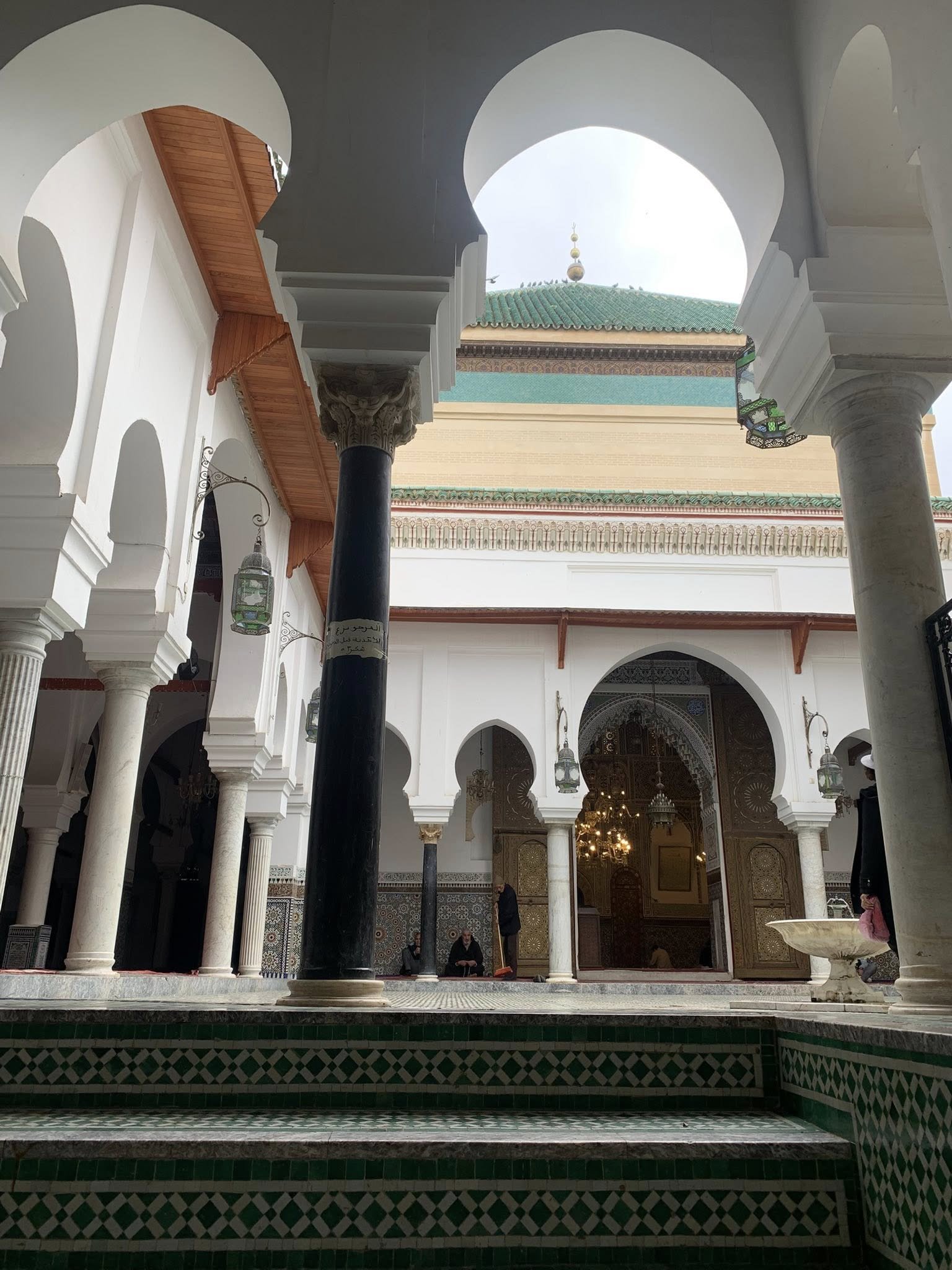
Figure 1: The interior courtyard of the shrine of Mawlāy Idrīs II in the heart of Fez al-Bālī, the Idrīsid founder whose lineage al-Dabbāgh shared through the Dabbāghī-Idrīsī branch of the Fāsī shurafāʾ. The carved stucco, zellige tilework, and cedarwood screens embody the genealogical axis of Fāsī sacred space — the bloodline and baraka that gave Fez its spiritual legitimacy and that al-Dabbāgh inhabited by right of birth.
The narrow streets of Fez al-Bālī — where a man could not pass another without touching — created conditions of enforced proximity that no other urban form could replicate. In such a city, the quality of a person's presence was immediately and continuously legible to those around him. There was no distance between the saint and the city; he moved through it as through his own body, and the city moved through him in return. The zellige-lined walls, the sound of water in the carved fountains, the smell of leather from the tanneries, the call to prayer ricocheting between minarets — all of this was the medium through which al-Dabbāgh's charisma expressed itself, finding in the city's sensory richness a vocabulary adequate to its depth.
The city's zellige patterns deserve particular attention in this context. Zellige — the intricate geometric tilework that lines the walls, floors, and fountains of Fez's mosques, madrasas, and private homes — is not merely decorative. It is a cosmological statement: an assertion that the visible world, properly arranged, reflects the hidden order of divine intelligence. Each tile, cut individually, contributes to a pattern that only becomes legible from a distance — a pattern that could not have been predicted from the tile alone. This is also the logic of al-Dabbāgh's karāmāt: individual events, each apparently isolated, that together compose a pattern of divine arrangement that only the saint — who sees from the distance that kashf affords — can perceive in full. The city taught its inhabitants to read the visible world as a surface beneath which pattern operates. Al-Dabbāgh embodied the principle the city had been teaching for centuries.
2. The Material Culture of Moroccan Sainthood
The saint emerges in the sources not as an ethereal figure suspended above society but as a man anchored in the textures of Moroccan material life. This anchoring was not incidental. In the classical Moroccan understanding of wilāya, the saint's relationship to the material world is not one of renunciation but of transformation: he inhabits ordinary things — cloth, food, water, garments, thresholds — and by inhabiting them charges them with a different quality of presence. The material world does not disappear in the saint's proximity; it becomes more itself, more precisely what it was always meant to be.
Al-Dabbāgh's dress — burnous, jellaba, and shashiya — was not incidental. These garments expressed a refined urban ethos that balanced modesty with ancestral dignity. They signalled a spirituality embedded in the lived world, not withdrawn from it. Across Fez, a man marked by such garments was recognized instantly as someone who belonged to the old moral aristocracy: the world of the zāwiyas, the craft guilds, and the scholarly families. Al-Dabbāgh fit this world instinctively, embodying a style in which the outward comportment of the body served as an ethical extension of the inner state.
The significance of this sartorial legibility cannot be overstated. In a city as densely organized as Fez — where the absence of open spaces meant that social interaction was almost entirely conducted in movement, at doorways, in workshops, and along the paths between them — clothing was the primary medium through which identity, status, and spiritual affiliation were communicated. The burnous, with its deep hood and flowing lines, carried associations of scholarship, prayer, and the kind of deliberate withdrawal from spectacle that Moroccan spiritual culture valued above almost all other virtues. To wear it with the ease that al-Dabbāgh did — while working in workshops, walking markets arm-in-arm with scholars, pruning the trees of his small orchard — was to demonstrate that the spiritual and the practical were not separate registers but a single, continuous mode of being in the world.
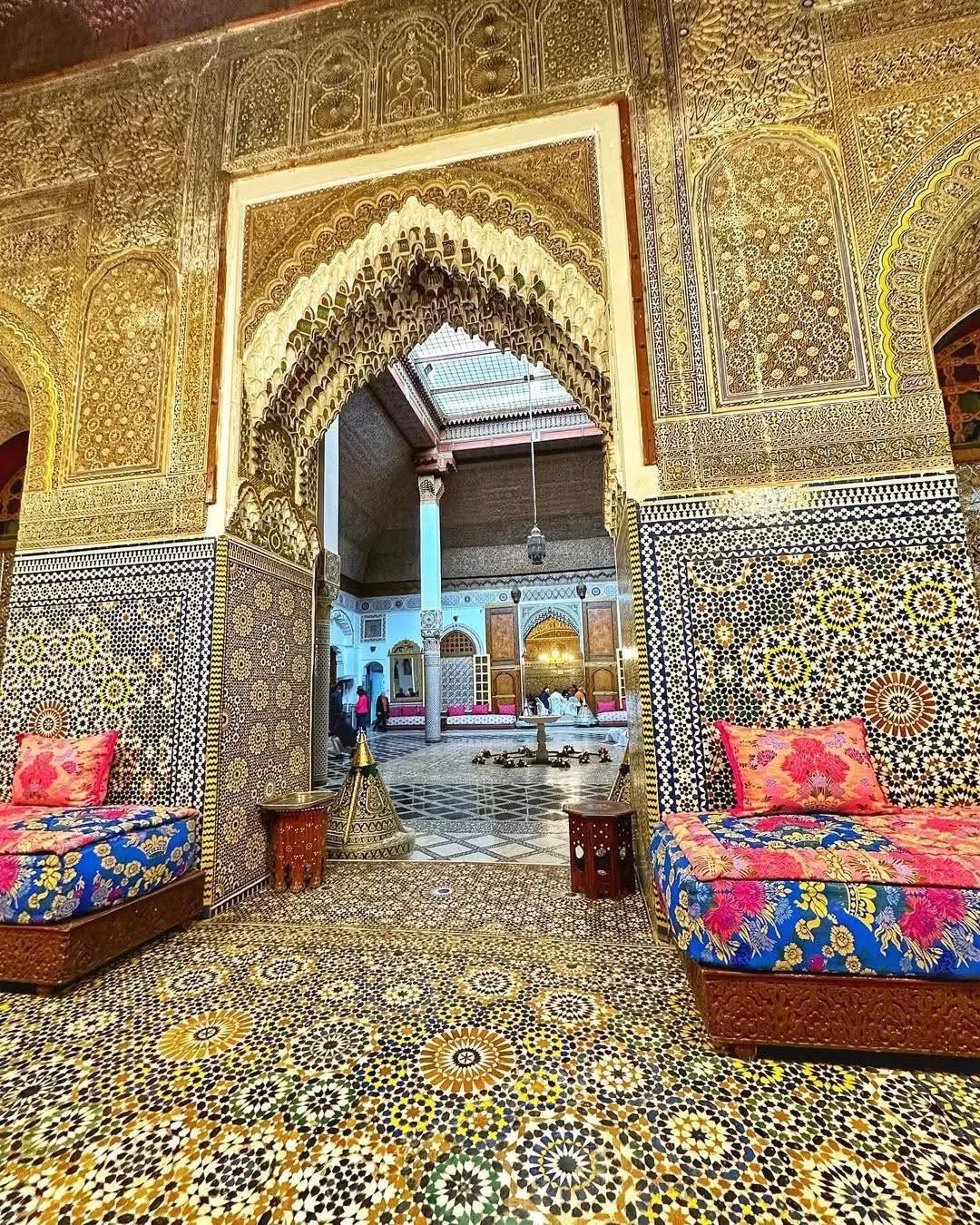
Figure 2: A close detail of traditional Fāsī zellige geometric tilework, as found on the walls and fountains of Fez's mosques, madrasas, and private homes. The interlocking geometric patterns — individually cut, collectively coherent — encode the same cosmological logic that al-Dabbāgh embodied through kashf: the visible surface as the interface of a hidden order that only becomes legible from the perspective of the whole.
The subḥa — the prayer beads that hung in the entry of his home — participates in the same material logic. It was not worn ostentatiously but placed, like a threshold object, at the boundary between the interior life of the household and the exterior world of the street. In classical Islamic material culture, the threshold is a liminal space charged with particular spiritual significance: it is the place where the visible and the invisible, the public and the private, the known and the unknown, meet and negotiate. Al-Dabbāgh's subḥa hanging at the entry was a material statement: this house is a place of dhikr, the remembrance that occurs here does not end when the door opens, and whoever crosses this threshold enters not merely a domestic space but a field of spiritual practice.
His reading through spectacles deserves particular attention as a detail that cuts against the grain of hagiographical convention. In the Moroccan tradition, the illiterate saint is a recurring figure — the man whose ummiyya (literacy-lessness) is understood as the sign of a knowledge that transcends the transmitted sciences, a knowledge received directly from God rather than acquired through study. Al-Dabbāgh himself claimed this station, and the tradition honored his claim. Yet the image of him reading through spectacles — an object associated precisely with the scholarly culture of transmitted knowledge — complicates the picture in productive ways. It situates him not outside the learned culture of Fez but within it, as a man who had internalized its habits and its objects even as his mode of knowing exceeded its categories. He did not oppose the scholarly world. He inhabited it from a different depth.
3. Craft, Labor, and the Artisanal Texture of Sanctity
Al-Dabbāgh was a craftsman by trade, working in the weaving workshops of Fez al-Bālī for most of his adult life. This fact, so often noted as a biographical detail, is more properly understood as a civilizational one. In Fez, craft was not merely an economic activity. It was a moral discipline — a form of practice that, at its highest, shared structural features with the spiritual disciplines of the Sufi path: attention to detail, patience with process, the subordination of the self to the demands of the material, and the aspiration toward a perfection that only the most skilled could achieve but that even the apprentice could recognize.
The Fāsī craft guilds were organized around principles that would be entirely recognizable to a student of Sufi tarbiya. The relationship between master craftsman and apprentice mirrored in its external structure the relationship between shaykh and murīd: the apprentice submitted to the master's authority, observed his practice, absorbed his methods through proximity rather than through explicit instruction, and gradually internalized a set of skills and dispositions that could not be conveyed through words alone. The craft was transmitted not through manuals but through presence — through the accumulation of hours spent watching, practicing, failing, and trying again in the field of the master's witnessing gaze.
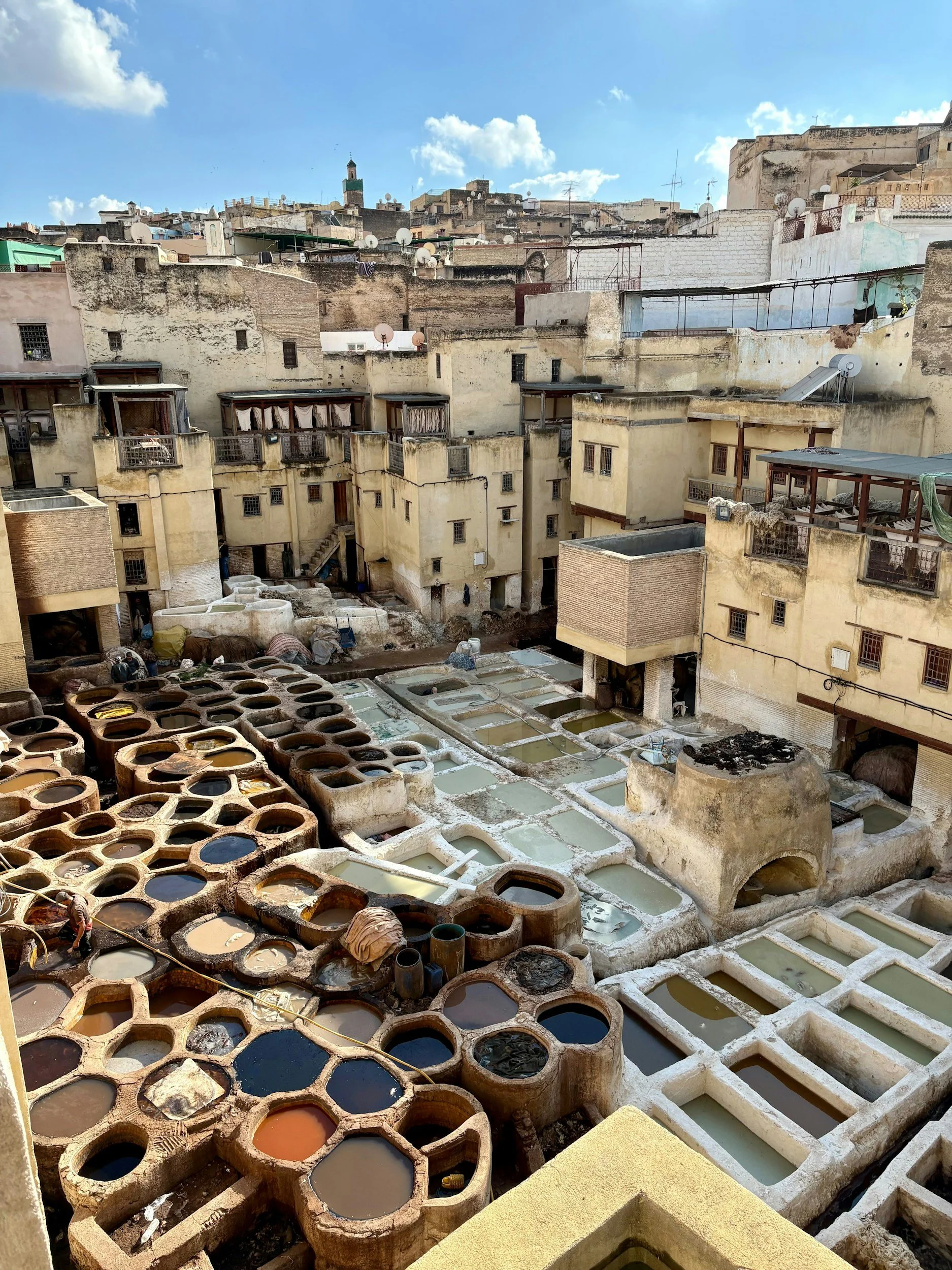
Figure 3: The Chouara tanneries of Fez al-Bālī, the oldest working tanneries in the world, where the leather trade — one of the principal crafts of medieval Fez — has been practiced continuously since the Marinid period. Al-Dabbāgh worked as a craftsman in the weaving workshops of Fez for most of his adult life; this image evokes the world of skilled manual labor — organized by guilds, transmitted through proximity, and structured by the same disciplines of attention, patience, and subordination to material that define the Sufi path.
Al-Dabbāgh's years in the workshops were therefore not a period of waiting before his spiritual life began. They were a period of formation — a sustained encounter with the demands of skilled manual labor that shaped the quality of attention he would later bring to the tarbiya of his disciples. The discipline of the hand — its precision, its patience, its sensitivity to the resistance of material — is the same discipline that the heart requires in the work of spiritual formation. A man who has spent years learning to feel the tension of threads between his fingers, to sense when the pattern is drifting before the drift becomes visible, to maintain concentration across the hours of a working day without losing the thread — such a man has already been trained, in a particular and embodied way, in the art of attention that Sufism names murāqaba.
This is why al-Dabbāgh treated workers generously — fed them from his own meals, gave them more than their agreed wage, and attended to their needs with the same care he brought to his disciples. He recognized in the craftsman's labor a form of spiritual practice, even when the craftsman himself did not. The dignity he extended to workers was not charity in the conventional sense. It was a recognition: that the man who bends over his loom with full attention, who refuses to cut corners when he is unseen, who brings to his work the same quality of presence in the thousandth hour as in the first, is already, in some sense, engaged in the work of the path.
From seeing through walls and across distances, to protecting disciples from the arbitrary violence of the ʿAlawī court, to multiplying bread for twenty-two from five loaves, to pulling a departing soul back across the threshold of death — al-Dabbāgh's wonders answered every human need that Fez's political, economic, and spiritual landscape could generate. They were not decorations on his sainthood. They were its substance, its evidence, and its most direct expression of what Moroccan Sufism at its highest has always claimed: that divine care is not abstract and deferred but locally accessible, personally specific, and mediated through a man who had already seen what you came to say before you knocked on his door.
4. Sacred Geography: Between Fez, Jabal al-ʿĀlam, and Taza
Al-Dabbāgh's physical movement through Morocco traced what might be called a sacred geography — a set of routes and sites whose significance was not merely devotional but cosmological, encoding in spatial form the invisible architecture of the tradition he embodied. His path between Fez, Jabal al-ʿĀlam, and Taza was not incidental travel but a sustained engagement with the sacred landscape of the Moroccan north, binding the medina to the highland sanctuaries and the far-eastern edge of the realm in a single continuous field of spiritual presence.
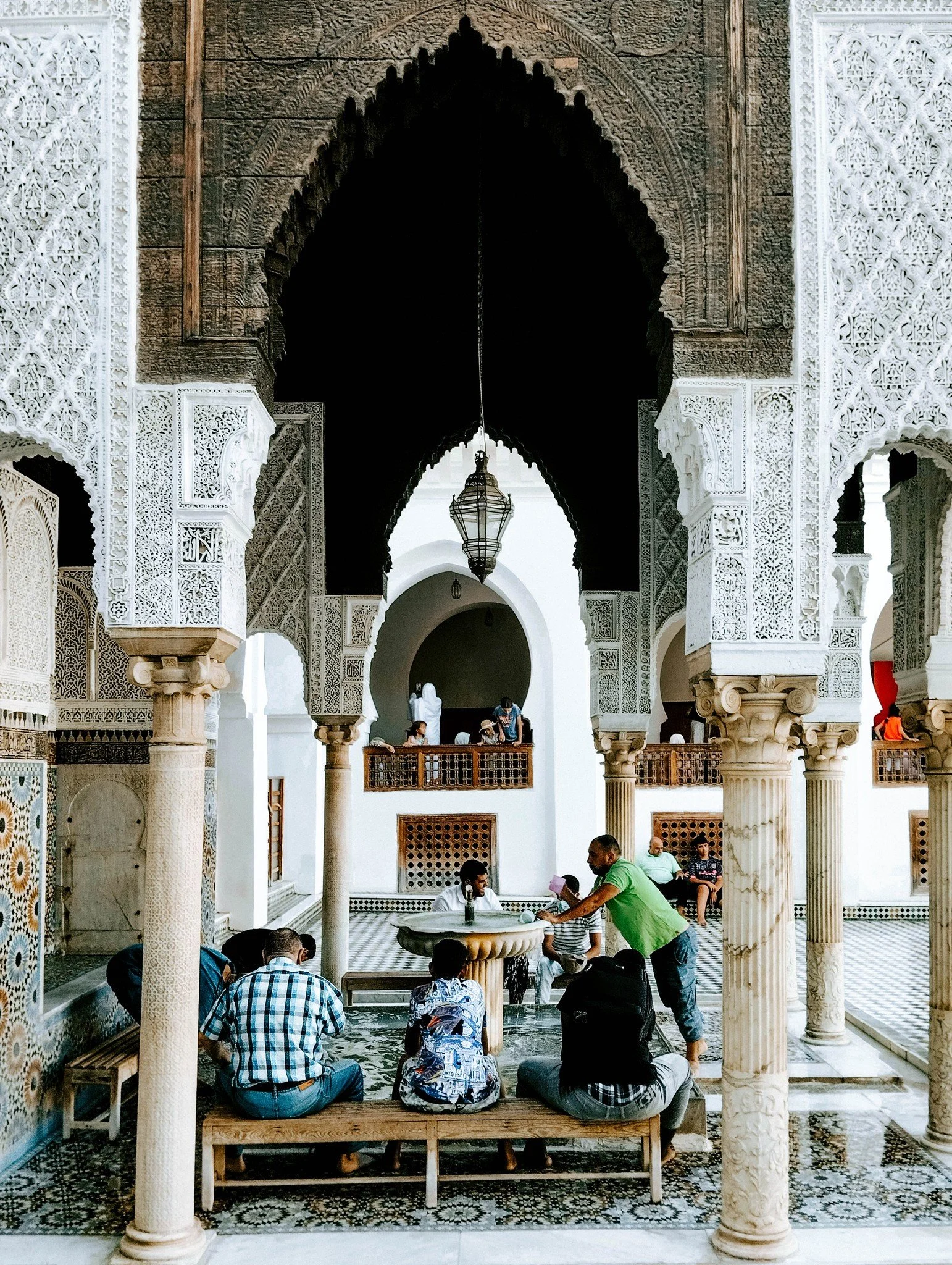
Figure 4: The courtyard of the Qarawiyyīn mosque and university, founded in 245/859 and the oldest continuously operating university in the world, which anchored the scholarly axis of Fāsī sacred space. Al-Dabbāgh moved within this world of transmitted knowledge — walking its alleyways arm-in-arm with scholars — even as his ummiyya placed him outside and beyond it. The Qarawiyyīn represents the institutional prestige against which al-Dabbāgh's non-institutional authority became most legible.
Fez itself was the anchor — the city of his birth, his formation, his opening, his disciples, his death, and his burial. It was the city in which every significant event of his interior life unfolded, and the city to which every other location in his geography referred back. Bāb al-Futūḥ — the Gate of Openings, through which he walked on the night of his great fatḥ, and outside which he was eventually buried — was not merely an architectural landmark. It was the threshold par excellence: the point where the interior world of Fez al-Bālī met the open landscape beyond the walls, where the contained and the boundless encountered each other, and where al-Dabbāgh's own life enacted, in spatial form, the movement between interiority and cosmic expansion that defined his spiritual station.
Jabal al-ʿĀlam — the Mountain of the Flag, rising from the Rif chain to the north of Fez — was associated with the saint Mawlāy ʿAbd al-Salām ibn Mashīsh (d. 622/1225), the pole of the Moroccan north and the shaykh of Abū al-Ḥasan al-Shādhilī. To travel to Jabal al-ʿĀlam was to situate oneself within the longest and deepest current of Moroccan sainthood — to acknowledge the chain of transmission that connected the living tradition to its earliest Moroccan formulation. Al-Dabbāgh's presence on that mountain placed him in dialogue with Ibn Mashīsh across the centuries, as if the mountain itself served as a medium through which the tradition spoke to its own continuity.
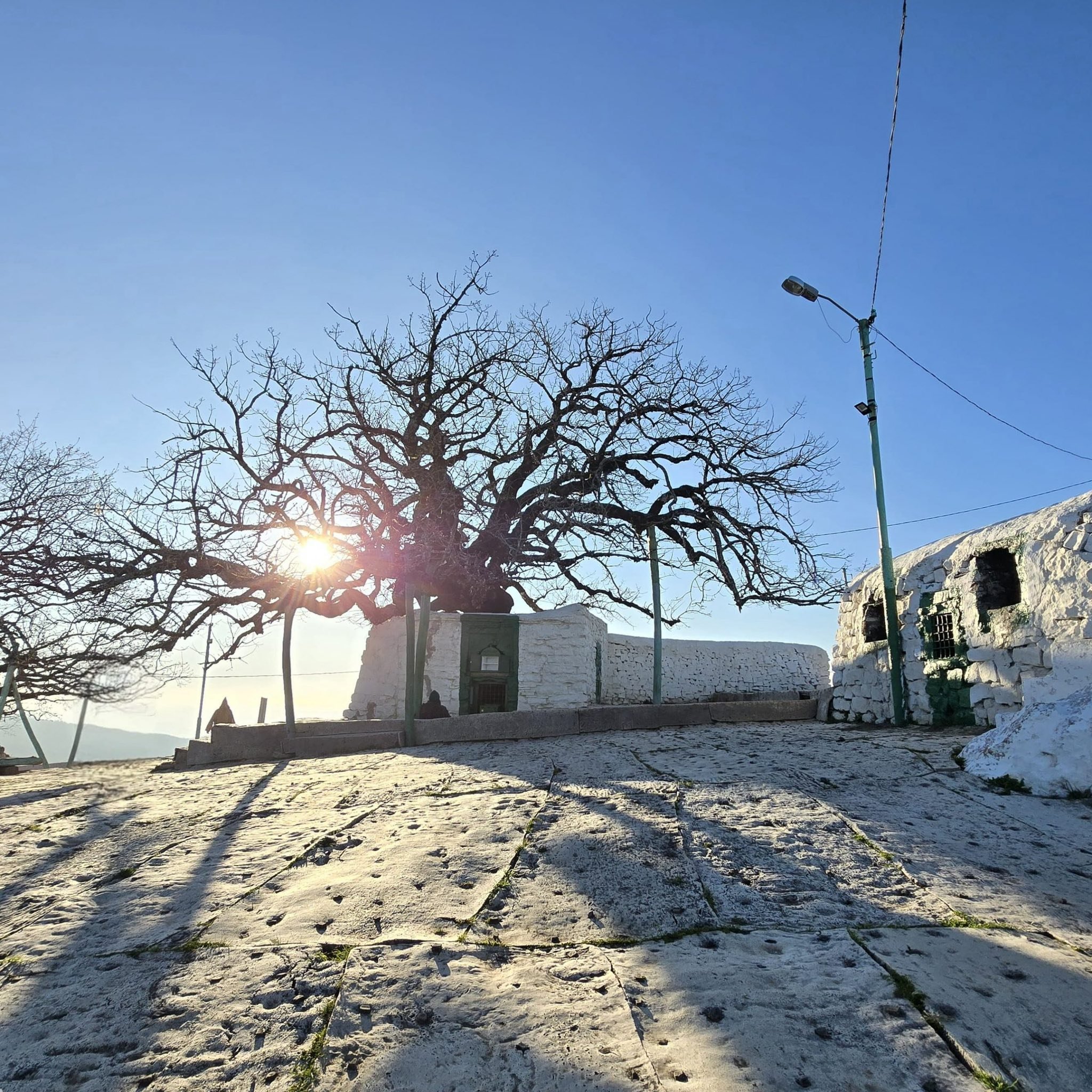
Figure 5: The summit of Jabal al-ʿĀlam (the Mountain of the Flag) in the northern Rif, site of the shrine of Sīdī ʿAbd al-Salām ibn Mashīsh (d. 622/1225), the pole of Moroccan sainthood and shaykh of Abū al-Ḥasan al-Shādhilī. Al-Dabbāgh's journeys to this mountain placed him in direct dialogue with the deepest current of the Moroccan saintly tradition — the mountain functioning as a medium through which the living tradition spoke to its own continuity across centuries.
Taza, the ancient city guarding the eastern passes of the Rif, extended al-Dabbāgh's sacred geography toward the frontier — the edge of the Moroccan cultural world where the medina's refined civilization met the rougher, more tribal landscape of the eastern highlands. His baraka left a visible trace across this terrain: whether feeding dozens in the small rooms of his Fez home or, as in Taza, multiplying a simple morning meal until waves of townspeople and tribesmen ate their fill while the food miraculously remained. The miracle of provision was not confined to the city; it followed him wherever he moved, demonstrating that the divine arrangement he perceived was not an urban phenomenon but a cosmic one, operative across every landscape through which he passed.
This sacred geography — Fez, Jabal al-ʿĀlam, Taza — traces a triangle whose center is not a place but a quality of presence: the capacity to perceive the divine arrangement operative in every location, to align the people of that location with it at the precise moment when alignment is possible, and to leave behind, in each site, a trace that pilgrims could still find generations later. Al-Dabbāgh was a walker of sacred geographies before the phrase existed — a man who understood that the invisible architecture of Morocco's spiritual tradition was encoded in its landscape, and who made that encoding legible through the particular quality of his passage through it.
5. Civility, Power, and the Politics of Comportment
Al-Dabbāgh's style of interaction marked him as a product of deeply rooted Moroccan civility — a tradition that understood the relationship between spiritual authority and political power not as opposition or submission but as a form of creative navigation, in which the saint shaped the moral horizon of the powerful without ever directly confronting it.
His humility before makhzen officials reflects a cultural intelligence rather than submission. When he addressed commanders or administrators, he did so with the language of a man who understood the unwritten codes of his society. Moroccan sainthood has long lived at the creative intersection of the spiritual and the political — never confronting authority directly, yet subtly shaping its moral horizon. Al-Dabbāgh represents this tradition at its most refined: a saint who moved quietly within the structures of power, yet whose hidden influence was later remembered as decisive.
This civility was not performance. It was the natural expression of a man whose inner life was so settled that he had nothing to prove to any external authority. The sultan could command armies, confiscate properties, and execute princes — but he could not command the quality of another man's attention, the depth of another man's knowledge, or the extent of another man's care for the people around him. Al-Dabbāgh's civility before power was therefore a form of radical self-possession: he engaged the structures of authority on their own terms, using their language and observing their protocols, precisely because he knew that these structures had no jurisdiction over the domain in which he actually operated.
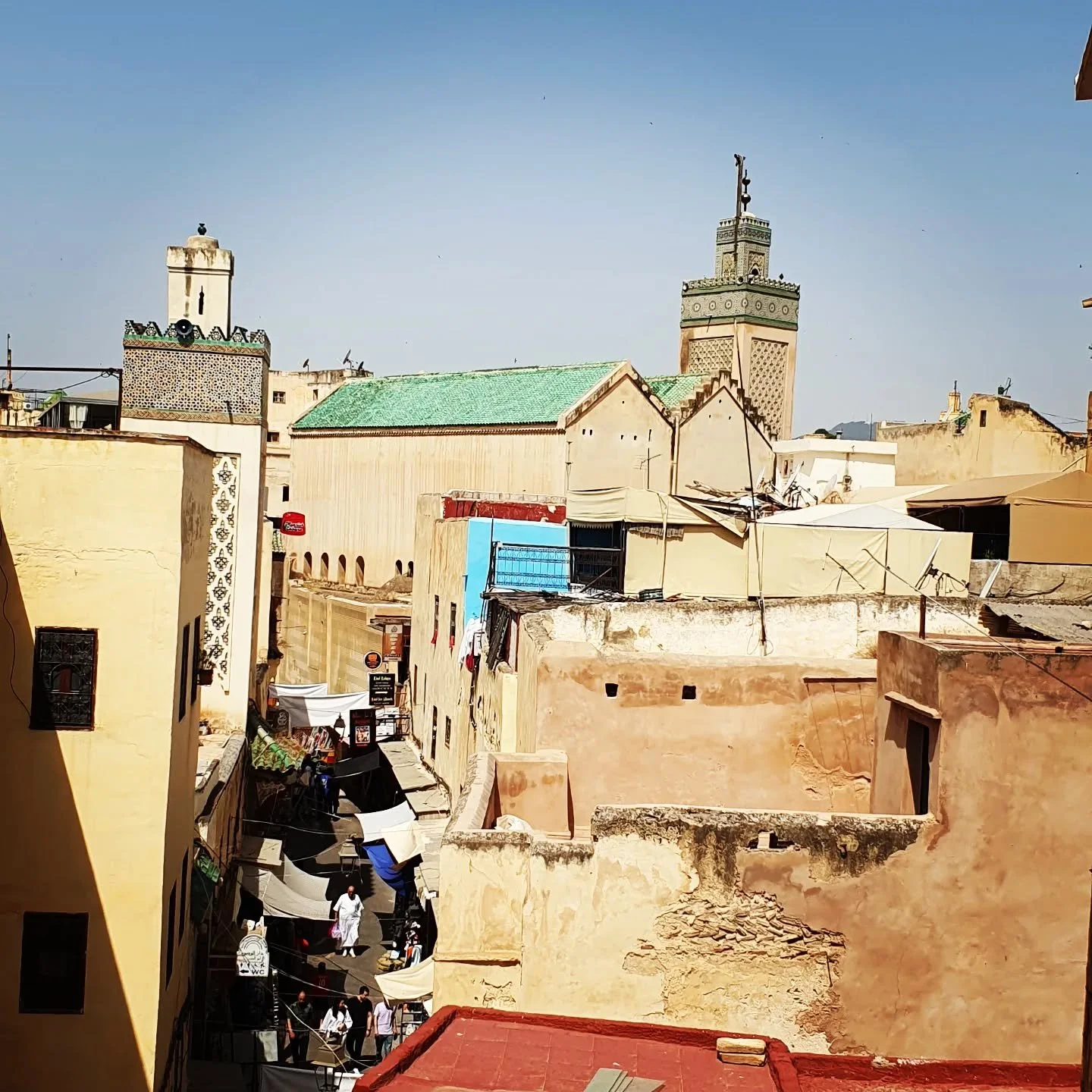
Figure 6: A rooftop view over the commercial heart of Fez al-Bālī, looking northwest along the ascending artery of al-Ṭalʿa al-Kabīra toward Bāb Bū Jalūd. To the right rises the Marinid madrasa of Bū ʿInāniyya (completed c. 756/1355), its zellige-crowned roofline and tiled minaret marking one of the supreme monuments of Fāsī sacred architecture. To the left stands the minaret of the mosque of al-Sharābliyyīn, the cordwainers' mosque embedded in the craft quarter. Below, the narrow covered pathway threads between workshops and vendors — the very corridor along which Sīdī ʿAbd al-ʿAzīz al-Dabbāgh and his disciple Aḥmad ibn al-Mubārak al-Lamaṭī walked in conversation, their exchanges forming the living substance of what would become al-Dhahab al-Ibrīz. The image captures the defining spatial condition of al-Dabbāgh's sanctity: not a retreat from the urban world, but a saint fully immersed in its density, its sound, its movement — and transforming it from within.
The contrast with conventional models of saintly authority is instructive. Many Moroccan saints of the period — particularly those associated with the great zawiya complexes of the Dilāʾī or Shādhilī tradition — exercised their authority through institutional means: endowments, disciples in positions of political influence, networks of affiliated shaykhs across the countryside. Their power was, in a sense, legible by the same instruments that measured sultanic power: land, followers, buildings, income. Al-Dabbāgh had none of these. His authority was illegible to the instruments of conventional power measurement — which was precisely what made it unassailable.
When Mawlāy Ismāʿīl's officials arrived at his circle, they encountered a man who received them with impeccable courtesy, spoke to them in the language they understood, and gave them nothing they could use against him — because what he possessed could not be confiscated, copied, or destroyed. This is the deepest meaning of the Moroccan civilizational tradition of which al-Dabbāgh was the supreme expression: the understanding that true authority requires no institutional support, that the most durable forms of power are those that leave no institutional trace, and that the most dangerous thing a saint can do for the powerful is to demonstrate, through the simple quality of his presence, that their power is not ultimate.
6. The Humanity of the Saint: Shamāʾil and the Fullness of Presence
The classical Islamic genre of shamāʾil — the description of a prophet's or saint's physical appearance, habits, and personal qualities — serves a function that is often misunderstood. It is not primarily hagiographical in the sense of celebration or idealization. It is epistemological: it records the observable evidence through which the saint's interior state becomes legible to those around him. The shamāʾil of al-Dabbāgh, scattered across al-Ibrīz and Taysīr al-Mawāhib, compose a portrait whose defining quality is not miraculousness but completeness — the sense that one is encountering a human being in his full depth and texture, without the flattening that hagiographical idealization typically produces.
His tarbiya operated through an intimacy so disarming that his disciples felt sheltered inside his very presence. He carried their worries before they named them, shouldered their fears in both religion and worldly life, and promised to answer for their missteps on the Day of Judgment. Nothing, he insisted, should be hidden — not sins, not doubts — because true companionship cannot survive secrecy. In return, he unveiled his own inner states with radical honesty, convinced that concealing them would be a betrayal of trust.
His style dissolved hierarchy. He joked with his disciples, removed the stiffness of reverence, and urged them to treat him as a brother rather than a distant master. Yet his protection was fierce: he intercepted temptations, redirected dangers, and sometimes manifested in moments of crisis with the suddenness of a guardian spirit. Even his playful tests — like confronting a disciple with a visiting saint in the form of a lion — became lessons in courage and reliance.
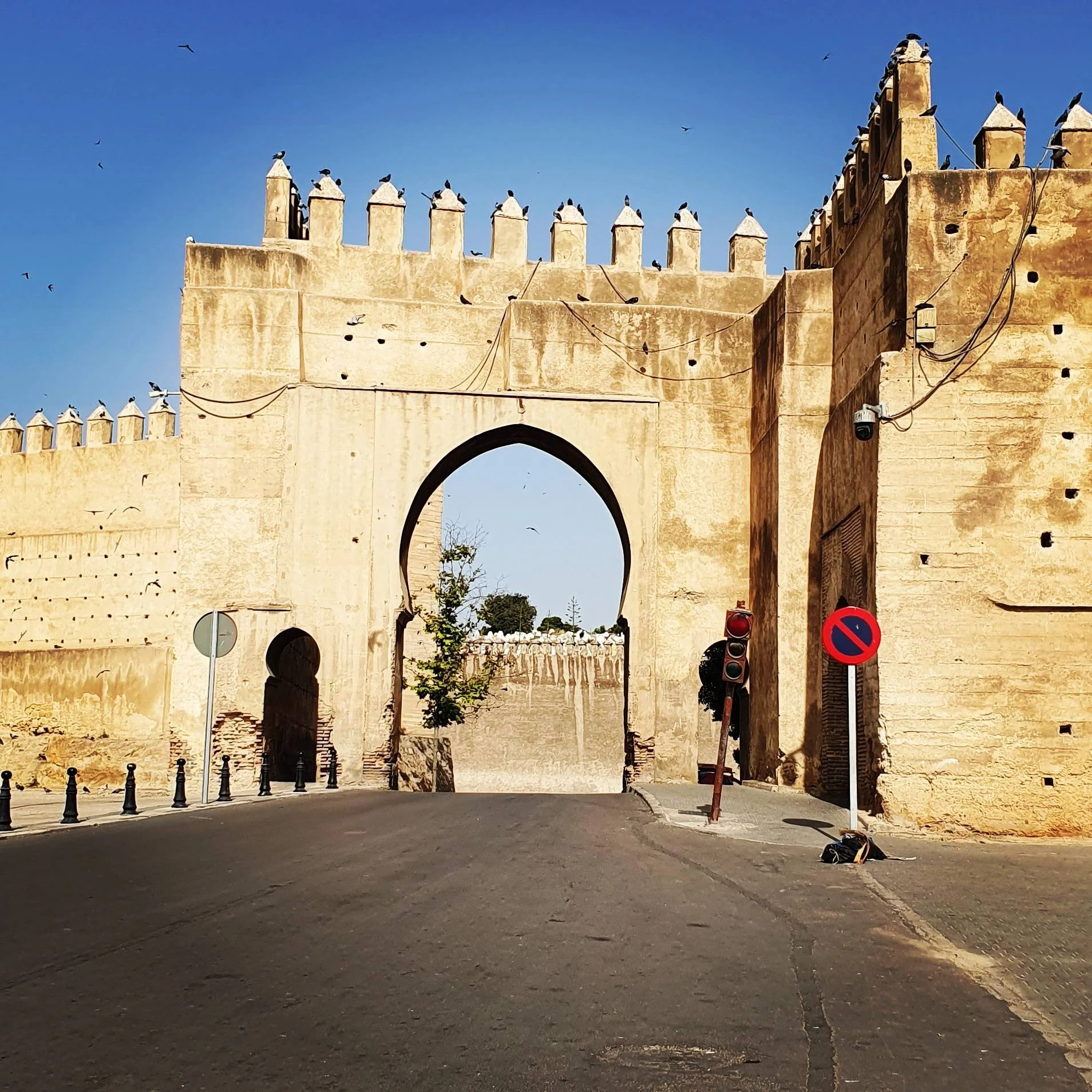
Figure 7: The northern gate of Fez al-Bālī known as Bāb al-Ḥamra (the Red Gate), outside which al-Dabbāgh's dome and shrine stand to this day. It was through this gate that al-Dabbāgh walked on the night of his great spiritual fatḥ, and outside its walls that he was buried at his death in 1131/1719. The gate is both topographical and cosmological: the threshold where the contained interior of the medina opens toward the boundless, encoding in architectural form the movement between interiority and cosmic expansion that defined his station.
He wept with his family during moments of emotional strain. He read through spectacles. He fed workers from his own meals. He sat on the threshold of his house conversing with companions. He walked austere markets arm-in-arm with scholars. He pruned the trees of his small orchard while responding to questions about cosmology, prophecy, and the Last Day.
These details, precisely because they are mundane, are the most revealing of all. They show a man for whom the distinction between the sacred and the ordinary had simply ceased to function as a boundary. The orchard and the cosmos occupied the same plane of attention; the pruning of a tree and the explanation of prophetic reality were equally available to the same quality of presence. This is what Moroccan civilization at its highest produced when it produced a saint: not a man removed from the world, but a man so fully in the world that the world, in his proximity, revealed its own hidden depth.
Among the most telling of his shamāʾil was his practiced simplicity. His subḥa hung in the entry of his home. He sat on the threshold of his house conversing with companions. He walked markets arm-in-arm with scholars and pruned the trees of his small orchard while responding to questions about cosmology, prophecy, and the Last Day. These details reveal the full humanity of the saint: grounded, accessible, and unmistakably Moroccan.
Conclusion: The Saint as Civilization's Flower
In the botanical metaphor that classical Islamic thought occasionally employed for the relationship between a tradition and its greatest representatives, the saint is the flower of a civilization — the point at which centuries of accumulated cultivation produce a form of human excellence so concentrated and so fully realized that it seems, to those who encounter it, not the product of history but the manifestation of a timeless possibility. Al-Dabbāgh was Fez's flower in this sense: the point at which the city's particular configuration of lineage, scholarship, craft, sacred geography, and civilizational civility converged in a single human being and produced something that no one of those elements could have generated alone.
The civilization that produced al-Dabbāgh was not incidental to his sanctity. It was its precondition. The zellige patterns taught him to read the visible world as the surface of a hidden order. The craft workshops taught him the discipline of attention that murāqaba requires. The scholarly culture of al-Qarawiyyīn gave him the tradition against which his ummiyya could be measured and found to exceed. The sacred geography of the Moroccan north gave his presence a landscape adequate to its range. The tradition of Moroccan civility gave him the social intelligence to navigate structures of power without ever submitting to them. And the Idrīsid lineage of Fez — the bloodline that connected the city to its founding act — gave him a genealogical depth that no institutional appointment could have substituted.
All of this came together in a man who sat at the threshold of his house in Ḥūmat al-ʿUyūn, who had already seen what you came to say before you knocked, who would answer for your missteps on the Day of Judgment, and who would tell you, with complete honesty and complete love, everything about himself that you needed to know in order to trust him entirely. That man was what Moroccan civilization was capable of producing. And that possibility — the possibility of such a man, in such a city, in such a tradition — is what the dome outside Bāb al-Futūḥ continues to mark, for those who know how to read it, three centuries after the man himself is gone.